
BuddhistCatholicContemplativeEvangelicalGeneral ChristianHinduJewishLatter-day SaintMuslimNew VisionsProgressive Christian
Beliefs
- Buddhist
- Catholic
- Contemplative
- Evangelical
- General Christian
- Hindu
- Jewish
- Latter-day Saint
- More Voices
- Muslim
- New Visions
- Pagan
- Progressive Christian
Topics
- Religion News
- Food and Religion
- Sports and Religion
- Religious Art
- Religious Music and Entertainment
- Religious Events
- History and Religion
- Style and Religion
- Politics and Religion
- Women in Religion
- Recreation Outdoors and Religion
- Business Finance and Religion
- Careers Workplace and Religion
- Education and Religion
- Family Parenting and Religion
- Health Fitness and Religion
- Home and Religion
- Relationships and Religion
- Technology and Religion
- Travel and Religion
Columnists
- Buddhist Columnists
- Business Finance and Religion Columnists
- Careers Workplace and Religion Columnists
- Catholic Columnists
- Contemplative Columnists
- Education and Religion Columnists
- Evangelists Columnists
- Family Parenting and Religion Columnists
- General Christian Columnists
- Health Fitness and Religion Columnists
- Hindu Columnists
- History and Religion Columnists
- Home and Religion Columnists
- Jewish Columnists
- More Voices Columnists
- Latter Day Columnists
- Muslim Columnists
- New Visions Columnists
- Nonreligious Columnists
- Pagan Columnists
- Politics and Religion Columnists
- Progressive Columnists
- Recreation Outdoors and Religion Columnists
- Relationships and Religion Columnists
- Religion News Columnists
- Religious Art Columnists
- Religious Events Columnists
- Religious Music and Entertainment Columnists
- Sports and Religion Columnists
- Style and Religion Columnists
- Technology and Religion Columnists
- Travel and Religion Columnists
- Women in Religion Columnists
Resource Library
- 2026 Calendar
- Library of World Religions
- The 100 Most Holy Places on Earth
- Patheos Answers
- Podcasts
- Videos
- Faith Leaders Database
- Anglican Episcopalian
- Bahai
- Baptist
- Buddhism
- Christianity
- Confucianism
- Eastern Orthodoxy
- Hinduism
- Holiness and Pentecostal
- ISKCON
- Islam
- Judaism
- Lutheran
- Methodist
- The Church of Jesus Christ of Latter-day Saints
- New Age
- Paganism
- Presbytarian and Reformed
- Protestantism
- Religion Behind the Scenes
- Roman Catholic
- Scientology
- Shia Islam
- Sikhism
- Sufism
- Sunni Islam
- Taoism
- Zen
- See all religions
Research Tools
 Ad-Free & Subscriber Log-In Subscription Support
Ad-Free & Subscriber Log-In Subscription Support
Follow Patheos 

- Trending:
- Forgiveness
- |
- Marriage
- |
- Consciousness
- |
- Death Penalty
- |
- Election
- |
- Halloween
 Cosmos The In Lost
- Home
- Catholic
- David Bentley Hart Makes a Productive Mess of the Concept of God
David Bentley Hart Makes a Productive Mess of the Concept of God
Last updated on: October 9, 2013 at 12:45 pm by Artur Rosman
David Bentley Hart Makes a Productive Mess of the Concept of God 2013-10-09T12:45:43-07:00 Artur Rosman
Patheos Explore the world's faith through different perspectives on religion and spirituality! Patheos has the views of the prevalent religions and spiritualities of the world.
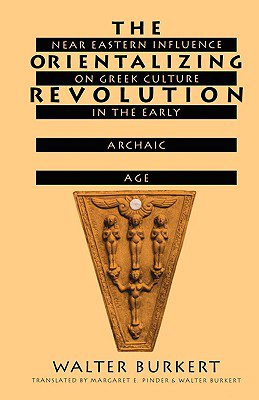
The Orientalizing Revolution maintains that the achievement of the Greeks wasn’t as pure and unprecedented as 19th century German scholars with agendas would like you to believe.
Recent exchanges (starting with a comment on The Eviscerated Public Square piece) with a reader who describes himself as a lapsed Catholic who advocates a global spirituality spurned me to once again consider the impurity of Christianity.
I’ve spent a considerable amount of time fighting the post-Reformation attempts to recover a pure Christianity shorn of papist additions. Reformation Day is only twenty-two days away, so maybe it’s time to enter the fray in the spirit of Rabelaisian Catholicism, Pagan-Folk Christianity, cocktail sipping, Greek-speaking spirituality?

On the God of the Christians argues that, “The religion of Israel is a history that led to a book; Christianity is a history recounted in a book; Islam is a book that led to a history.”
The notion of a global spirituality does unhinge me a bit, because it presupposes that all the religions actually aim for the same thing differently. This is troublesome given how much the notion of religion has been taken apart by recent traditions as a construct that hamstrings living traditions by imposing vague general assumptions that ignore the real difference between them.
As this post about Remi Brague’s fascinating new book suggests, something is lost in papering over the differences between Christianity, Islam, and Judaism by throwing them all under the umbrella of monotheism and religions of the book.
There is a great charm to the Rabelaisian mess of distinctions that Brague makes, because they break up the overly tidy taxonomies of comparative religion. It’s equally disquieting to point out the commonalities between historical traditions. David Bentley Hart does this in his most recent book The Experience of God: Being, Consciousness, and Bliss by riffing on the notion of God Aquinas labeled as ipsum esse subsistens (God as the transcendent source of being itself, rather than merely yet another being, albeit a really, really, really, big one, within the world):
What exactly is The Experience of God?
‘Several of the religious cultures that we sometimes inaccurately characterize as “polytheistic” have traditionally insisted upon an absolute differentiation between the one transcendent Godhead from whom all being flows and the various “divine” beings who indwell and govern the heavens and the earth. Only the one God, says Swami Prabhavananda, speaking more or less for the whole of developed Vedantic and Bhaktic Hinduism, is “the uncreated”: “gods, though supernatural, belong … among the creatures. Like the Christian angels, they are much nearer to man than to God.”
Conversely, many creeds we correctly speak of as “monotheistic” embrace the very same distinction. The Adi Granth of the Sikhs, for instance, describes the One God as the creator of Brahma, Vishnu, and Shiva. In truth, Prabhavananda’s comparison of the gods of India to Christianity’s angels is more apt than many modern Christians may realize.
Late Hellenistic pagan thought often tended to draw a clear demarcation between the one transcendent God (or, in Greek, ho theos, God with the definite article) and any particular or local god (any mere “inarticular” theos) who might superintend this or that people or nation or aspect of the natural world; at the same time, late Hellenistic Jews and Christians recognized a multitude of angelic “powers” and ,,principalities,” some obedient to the one transcendent God and some in rebellion, who governed the elements of nature and the peoples of the earth. To any impartial observer at the time, coming from some altogether different culture, the theological cosmos of a great deal of pagan “polytheism” would have seemed all but indistinguishable from that of a great deal of Jewish or Christian “monotheism.”
To speak of “God” properly, then -to use the word in a sense consonant with the teachings of orthodox Judaism, Christianity, Islam, Sikhism, Hinduism, Baha’i, a great deal of antique paganism, and so forth -is to speak of the one infinite source of all that is: eternal, omniscient, omnipotent, omnipresent, untreated, uncaused, perfectly transcendent of all things and for that very reason absolutely immanent to all things.’ [Sorry, that was rather long, but I broke it up for you into paragraphs to make it easier to follow.]
So why not keep both the distinctions and commonalities together in productive mess? Hart provides you with the resources you need to explore the pole of particularity in a much more actively combative account of the uniqueness of Christianity in his Atheist Delusions.
It seems that global religious syncretism would iron out these creative tensions.
The de Deo trino of Atheist Delusions is actively aggressive counterpart to the passively aggressive musing of the de Deo uno of The Experience of God.
Monty Python on where conceiving God as yet another thing in the universe leads you:
While you’re at it, why not browse through the Cosmos TOP 10 Booklist archives?
Previous Post

October 8, 2013
The iCharist and the Methodist
Next Post
October 11, 2013 Ingmar Bergman on the Apologetic Value of Human Holiness
Browse Our Archives
Select a Category #WhyRemainCatholic Abortion Advent Anti-Catholicism Arts Atheism Beauty Benedict XVI Bible Book Review Catholic Cinema Comedy Cosmos: A Space-Time Odyssey Czesław Miłosz Dariusz Karłowicz Devil Easter Eastern Orthodoxy Economics Environment Family Famous Atheists Who Weren't Atheists Guest Post Hans Urs von Balthasar HHS Mandate History Imagination Interview Islam Jean-Luc Marion John Paul II Judaism Just War Lent Literature Little Sisters of the Poor Liturgy Martyrdom Music News Paganism Patristics Phenomenology Philosophy Pierre Hadot Poetry Poland Pop Culture Pope Francis Poverty Prayer Protestantism Rabelais Race Remi Brague Rene Girard Russia Sam Rocha Science & Religion SCOTUS Secularization Sexual Abuse Sexuality Silence Solidarity Stratford Caldecott Synod14 Terrorism Top 10 Uncategorized Walker Percy War Weakened Edition World War II World Youth Day WYD Krakow
Select a Month July 2017 June 2017 May 2017 April 2017 March 2017 February 2017 January 2017 December 2016 October 2016 September 2016 August 2016 July 2016 June 2016 May 2016 April 2016 March 2016 February 2016 January 2016 December 2015 November 2015 October 2015 September 2015 August 2015 July 2015 June 2015 May 2015 April 2015 March 2015 February 2015 January 2015 December 2014 November 2014 October 2014 September 2014 August 2014 July 2014 May 2014 April 2014 March 2014 February 2014 January 2014 December 2013 November 2013 October 2013 September 2013 August 2013 July 2013 June 2013 May 2013
Follow Us!
TAKE THE
Religious Wisdom Quiz
What does Siloam mean?
Select your answer to see how you score.
Gift Sent Received Love
Related posts from Cosmos The In Lost

Pokémon is Anti-Christian, but It's Not Anti-Catholic
Catholic Gore Galore on the Synod's Sidelines

EXCLUSIVE: Kenneth L. Woodward's Rapid-Fire Reflections on Francis...

Pythagoras, Rocks, the Divine, Heidegger: This is Frozen...
TRENDING AT PATHEOS Catholic

Rejecting Doom: Christian Hope And Human Action
Christianity is a religion of hope. We are to have hope and...

It’s What Comes From Within Which Matters
One of the most difficult things for us to understand is why...

Why I Choose the Eucharist Over the Sermon
Choose the Eucharist, Not the Sermon What are we supposed to get...

5 Design Elements Found in Spiritually Rooted Homes
Putting Spirituality Into Home Decor Our homes are more than our living...

Credo: A Story of God Told with the...
About 10 years ago, I began to imagine a personal "Credo" that...

The Anatomy of Divine Revelation in Catholic Thought
The claim that God has made Himself known to human beings is...
view all Catholic blogs
Ad-Free & Subscriber Log-In Subscription Support
- About Us
- 2026 Calendar
- Videos
- Podcasts
- Library of World Religions
- Faith In Media Tracker
- Advertise With Us
- Write for Us
- Privacy Policy
- Terms of Service
- Do Not Sell My Data
- Contact Us
- Radiant Digital
- Manage Newsletter Subscriptions
- Unsubscribe From Notifications
- Sitemap
Copyright 2008-2026, Patheos. All rights reserved.
Subscription Support Ad-Free & Subscriber Log-In
Follow Patheos