
BuddhistCatholicContemplativeEvangelicalGeneral ChristianHinduJewishLatter-day SaintMuslimNew VisionsProgressive Christian
Beliefs
- Buddhist
- Catholic
- Contemplative
- Evangelical
- General Christian
- Hindu
- Jewish
- Latter-day Saint
- More Voices
- Muslim
- New Visions
- Pagan
- Progressive Christian
Topics
- Religion News
- Food and Religion
- Sports and Religion
- Religious Art
- Religious Music and Entertainment
- Religious Events
- History and Religion
- Style and Religion
- Politics and Religion
- Women in Religion
- Recreation Outdoors and Religion
- Business Finance and Religion
- Careers Workplace and Religion
- Education and Religion
- Family Parenting and Religion
- Health Fitness and Religion
- Home and Religion
- Relationships and Religion
- Technology and Religion
- Travel and Religion
Columnists
- Buddhist Columnists
- Business Finance and Religion Columnists
- Careers Workplace and Religion Columnists
- Catholic Columnists
- Contemplative Columnists
- Education and Religion Columnists
- Evangelists Columnists
- Family Parenting and Religion Columnists
- General Christian Columnists
- Health Fitness and Religion Columnists
- Hindu Columnists
- History and Religion Columnists
- Home and Religion Columnists
- Jewish Columnists
- More Voices Columnists
- Latter Day Columnists
- Muslim Columnists
- New Visions Columnists
- Nonreligious Columnists
- Pagan Columnists
- Politics and Religion Columnists
- Progressive Columnists
- Recreation Outdoors and Religion Columnists
- Relationships and Religion Columnists
- Religion News Columnists
- Religious Art Columnists
- Religious Events Columnists
- Religious Music and Entertainment Columnists
- Sports and Religion Columnists
- Style and Religion Columnists
- Technology and Religion Columnists
- Travel and Religion Columnists
- Women in Religion Columnists
Resource Library
- 2026 Calendar
- Library of World Religions
- The 100 Most Holy Places on Earth
- Patheos Answers
- Podcasts
- Videos
- Faith Leaders Database
- Anglican Episcopalian
- Bahai
- Baptist
- Buddhism
- Christianity
- Confucianism
- Eastern Orthodoxy
- Hinduism
- Holiness and Pentecostal
- ISKCON
- Islam
- Judaism
- Lutheran
- Methodist
- The Church of Jesus Christ of Latter-day Saints
- New Age
- Paganism
- Presbytarian and Reformed
- Protestantism
- Religion Behind the Scenes
- Roman Catholic
- Scientology
- Shia Islam
- Sikhism
- Sufism
- Sunni Islam
- Taoism
- Zen
- See all religions
Research Tools
 Ad-Free & Subscriber Log-In Subscription Support
Ad-Free & Subscriber Log-In Subscription Support
Follow Patheos 

- Trending:
- Forgiveness
- |
- Marriage
- |
- Consciousness
- |
- Death Penalty
- |
- Election
- |
- Halloween
 Cosmos The In Lost
- Home
- Catholic
- Christianity Is Neither a Monotheism Nor a Religion of the Book (Remi Brague)
Christianity Is Neither a Monotheism Nor a Religion of the Book (Remi Brague)
Last updated on: September 5, 2013 at 11:29 am by Artur Rosman
Christianity Is Neither a Monotheism Nor a Religion of the Book (Remi Brague) 2013-09-05T11:29:46-07:00 Artur Rosman
Patheos Explore the world's faith through different perspectives on religion and spirituality! Patheos has the views of the prevalent religions and spiritualities of the world.
Don’t. Drop. It.
This blog began with a series of posts debunking some common myths about Christianity. There are two posts about the troubled history of the concept of religion here and here, one about the positive relationship of early Christianity to money here, and finally three about the questionable notion of a pure Christianity here, here, and finally here.
Rémi Brague has built a distinguished career making important distinctions about the Christian heritage in the West.
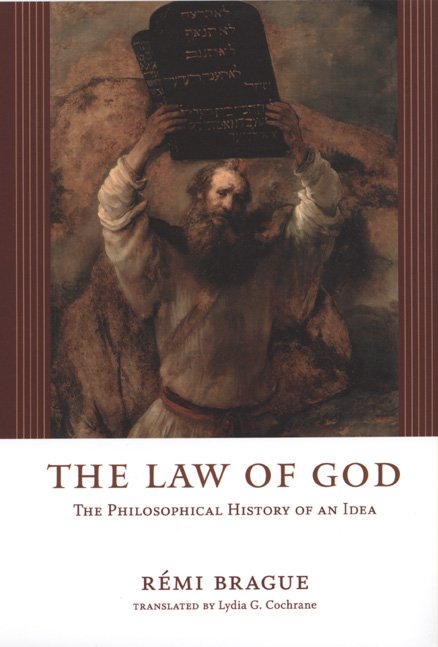
For example, in the classic The Wisdom of the World: The Human Experience of the Universe in Western Thought he charts how Western thought originated in an affirmation of the world as a source of wisdom. He then demonstrates how our ambivalence toward the world as a source wisdom is rooted in the ambivalence (not to be confused with an outright rejection) of Christianity toward the world. His The Law of God: The Philosophical History of an Idea narrates the relationship between the law and religion in Western thought and the different roles Judaism, Islam, and Christianity play in these debates. The importance of these books cannot be underestimated, if only because they help us recover and better understand the role Islam plays in the West’s ex definitio Eccentric Culture.
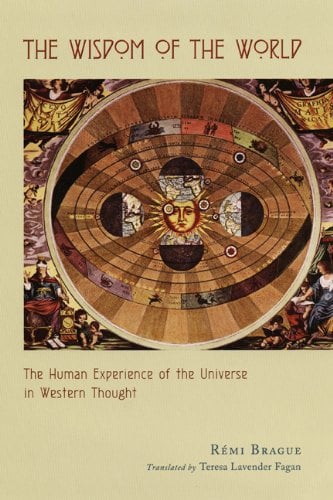
“Man therefore is not meant to govern himself according to the phenomena of the world, but must seek elsewhere for a model of behavior. In the final analysis that model is God himself. God manifests himself less through his creation than through a more direct intervention: He can either give the world his law, as in Judaism and Islam, or he can indeed enter into that world through incarnation, as in Christianity,” says Brague in The Wisdom of the World.
But why is Christianity not really a monotheism, nor a religion of the book?
According to Brague’s latest book, On the God of the Christians (And on One or Two Others), the simple answer is that both of these phrases came into existence very late. They appeared only around the 17th and 18th centuries and were used by polemicists against Christianity (plus Judaism and Islam). They are not part of, if you will, the natural self-identification of these groups.
Now If we were serious about how Christianity understands itself then it would make much more sense to call it a trinitarianism rather than a monotheism. On the other hand, the label “monotheism” has always trucked in negative presuppositions about the religions it describes. This is evident in how it’s been historically paired with a positive evaluation of a mythical (historically non-existent) tolerant “polytheism,” especially since the writings of the German Romantics.
Finally, the label “monotheist” is so wide and useless that it obviously applies to both Aristotle’s lonely introvert god and the watchmaker god of the deists. The label monotheism only requires one occupant of the set of divinity without any other qualifications. You might as well say that you have no preference between a Rolls-Royce and a Yugo, because they’re both cars.
Brague also dismisses the label “religions of the book” for much the same reason. It completely ignores the incompatible understandings of what the book means for each one of these religions. Plus, there are plenty of other religions with books (Zoroastrianism, Hinduism, Mormonism, pretty much every religion has its own sacred text).
Here’s Brague’s succinct formulation of the key differences: “The religion of Israel is a history that led to a book; Christianity is a history recounted in a book; Islam is a book that led to a history.” The author obviously develops this argument in much more detail in On the God of the Christians by considering how these three religions have different notions of revelation and have wildly divergent understandings of how their sacred texts function. The most curious fact is that the whole notion of the “people of the book” derives from Islamic law and is not in any way value neutral. Furthermore, the divinized role Islam assigns to the Koran, on top of the role it played in generating Islamic history, means that of the three religions it is probably the best candidate for being labeled a religion of the book.
Brague also goes into detail why the notion of the “religions of Abraham” is a misnomer before unfolding his own exposition of unique features of Christianity. You’ll have to dig into his argument if you want to figure out why Abraham is not a figure that brings those three religions together.
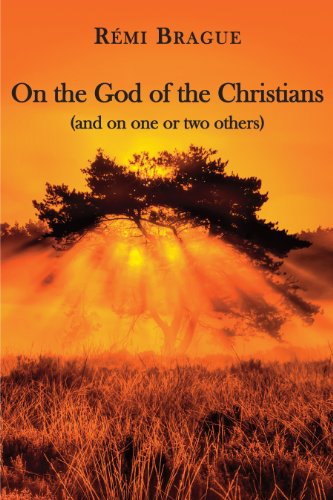
On the God of the Christians claims that, “The religion of Israel is a history that led to a book; Christianity is a history recounted in a book; Islam is a book that led to a history.”
Finally,, here’s a lecture where professor Brague make yet another hard-hitting argument: “Atheism has failed, hence it is doomed to disappear in the long run.”

Next Post

September 9, 2013 Considerations for a (Violent &) Secular Age
Browse Our Archives
Select a Category #WhyRemainCatholic Abortion Advent Anti-Catholicism Arts Atheism Beauty Benedict XVI Bible Book Review Catholic Cinema Comedy Cosmos: A Space-Time Odyssey Czesław Miłosz Dariusz Karłowicz Devil Easter Eastern Orthodoxy Economics Environment Family Famous Atheists Who Weren't Atheists Guest Post Hans Urs von Balthasar HHS Mandate History Imagination Interview Islam Jean-Luc Marion John Paul II Judaism Just War Lent Literature Little Sisters of the Poor Liturgy Martyrdom Music News Paganism Patristics Phenomenology Philosophy Pierre Hadot Poetry Poland Pop Culture Pope Francis Poverty Prayer Protestantism Rabelais Race Remi Brague Rene Girard Russia Sam Rocha Science & Religion SCOTUS Secularization Sexual Abuse Sexuality Silence Solidarity Stratford Caldecott Synod14 Terrorism Top 10 Uncategorized Walker Percy War Weakened Edition World War II World Youth Day WYD Krakow
Select a Month July 2017 June 2017 May 2017 April 2017 March 2017 February 2017 January 2017 December 2016 October 2016 September 2016 August 2016 July 2016 June 2016 May 2016 April 2016 March 2016 February 2016 January 2016 December 2015 November 2015 October 2015 September 2015 August 2015 July 2015 June 2015 May 2015 April 2015 March 2015 February 2015 January 2015 December 2014 November 2014 October 2014 September 2014 August 2014 July 2014 May 2014 April 2014 March 2014 February 2014 January 2014 December 2013 November 2013 October 2013 September 2013 August 2013 July 2013 June 2013 May 2013
Follow Us!
TAKE THE
Religious Wisdom Quiz
What ritual involved ashes of a red heifer?
Select your answer to see how you score.
Inheritance Marriage Purification Harvest
Related posts from Cosmos The In Lost

The Surprising Anti-Capitalist Logic Behind the Catholic Church's...

Where Does the Body of Christ Go After...

How is Classical Philosophy is Like War?

Why Does the World's Leading Philosopher Remain a...
TRENDING AT PATHEOS Catholic

The Parable Of The Sower And The Word...
One of Christ’s most famous parables is that of the sower who...

Rejecting Doom: Christian Hope And Human Action
Christianity is a religion of hope. We are to have hope and...

Why I Choose the Eucharist Over the Sermon
Choose the Eucharist, Not the Sermon What are we supposed to get...

5 Design Elements Found in Spiritually Rooted Homes
Putting Spirituality Into Home Decor Our homes are more than our living...

Credo: A Story of God Told with the...
About 10 years ago, I began to imagine a personal "Credo" that...

The Anatomy of Divine Revelation in Catholic Thought
The claim that God has made Himself known to human beings is...
view all Catholic blogs
Ad-Free & Subscriber Log-In Subscription Support
- About Us
- 2026 Calendar
- Videos
- Podcasts
- Library of World Religions
- Faith In Media Tracker
- Advertise With Us
- Write for Us
- Privacy Policy
- Terms of Service
- Do Not Sell My Data
- Contact Us
- Radiant Digital
- Manage Newsletter Subscriptions
- Unsubscribe From Notifications
- Sitemap
Copyright 2008-2026, Patheos. All rights reserved.
Subscription Support Ad-Free & Subscriber Log-In
Follow Patheos