
BuddhistCatholicContemplativeEvangelicalGeneral ChristianHinduJewishLatter-day SaintMuslimNew VisionsProgressive Christian
Beliefs
- Buddhist
- Catholic
- Contemplative
- Evangelical
- General Christian
- Hindu
- Jewish
- Latter-day Saint
- More Voices
- Muslim
- New Visions
- Pagan
- Progressive Christian
Topics
- Religion News
- Food and Religion
- Sports and Religion
- Religious Art
- Religious Music and Entertainment
- Religious Events
- History and Religion
- Style and Religion
- Politics and Religion
- Women in Religion
- Recreation Outdoors and Religion
- Business Finance and Religion
- Careers Workplace and Religion
- Education and Religion
- Family Parenting and Religion
- Health Fitness and Religion
- Home and Religion
- Relationships and Religion
- Technology and Religion
- Travel and Religion
Columnists
- Buddhist Columnists
- Business Finance and Religion Columnists
- Careers Workplace and Religion Columnists
- Catholic Columnists
- Contemplative Columnists
- Education and Religion Columnists
- Evangelists Columnists
- Family Parenting and Religion Columnists
- General Christian Columnists
- Health Fitness and Religion Columnists
- Hindu Columnists
- History and Religion Columnists
- Home and Religion Columnists
- Jewish Columnists
- More Voices Columnists
- Latter Day Columnists
- Muslim Columnists
- New Visions Columnists
- Nonreligious Columnists
- Pagan Columnists
- Politics and Religion Columnists
- Progressive Columnists
- Recreation Outdoors and Religion Columnists
- Relationships and Religion Columnists
- Religion News Columnists
- Religious Art Columnists
- Religious Events Columnists
- Religious Music and Entertainment Columnists
- Sports and Religion Columnists
- Style and Religion Columnists
- Technology and Religion Columnists
- Travel and Religion Columnists
- Women in Religion Columnists
Resource Library
- 2026 Calendar
- Library of World Religions
- The 100 Most Holy Places on Earth
- Patheos Answers
- Podcasts
- Videos
- Faith Leaders Database
- Anglican Episcopalian
- Bahai
- Baptist
- Buddhism
- Christianity
- Confucianism
- Eastern Orthodoxy
- Hinduism
- Holiness and Pentecostal
- ISKCON
- Islam
- Judaism
- Lutheran
- Methodist
- The Church of Jesus Christ of Latter-day Saints
- New Age
- Paganism
- Presbytarian and Reformed
- Protestantism
- Religion Behind the Scenes
- Roman Catholic
- Scientology
- Shia Islam
- Sikhism
- Sufism
- Sunni Islam
- Taoism
- Zen
- See all religions
Research Tools
 Ad-Free & Subscriber Log-In Subscription Support
Ad-Free & Subscriber Log-In Subscription Support
Follow Patheos 

- Trending:
- Forgiveness
- |
- Marriage
- |
- Consciousness
- |
- Death Penalty
- |
- Election
- |
- Halloween
 Cosmos The In Lost
- Home
- Catholic
- Top 10 Recent Books: 5 on Heaven, 5 on Hell
Top 10 Recent Books: 5 on Heaven, 5 on Hell
Last updated on: August 6, 2013 at 1:02 pm by Artur Rosman
Top 10 Recent Books: 5 on Heaven, 5 on Hell 2013-08-06T13:02:00-07:00 Artur Rosman
Patheos Explore the world's faith through different perspectives on religion and spirituality! Patheos has the views of the prevalent religions and spiritualities of the world.

You’ve been warned.
I’ve recently written on both heaven and on hell. My own readings on these topics might be idiosyncratic. I’m not sure whether these books get read in seminaries or comparative religion programs. I don’t even know whether these topics are of any interest to academics in those disciplines. I, for one, went through most of the classes offered on Christianity at the University of Washington’s excellent Comparative Religion program and didn’t encounter, or discuss, anything about these topics. What follows is a list of books (in no particular order) I’ve found helpful for thinking about heaven and hell (along with their publisher blurbs).
Please order books via the links provided here if you’d like to help put some diapers on little Rosman butts!
HELL
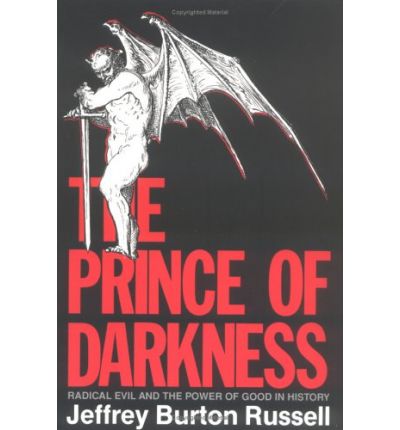
JBR is the dean of devil studies. This is the summary book from his five volume history of the topic.
“[In The Prince of Darkness] Russell recreates the arcane images of good and evil we all once understood perfectly well as children. From the moment the cover is lifted on this beautifully produced book, the world darkens. Russell presents story after story, using them like a descending staircase, drawing us down into archetypal memories of unending battles with the Evil One.”—Bloomsbury Review
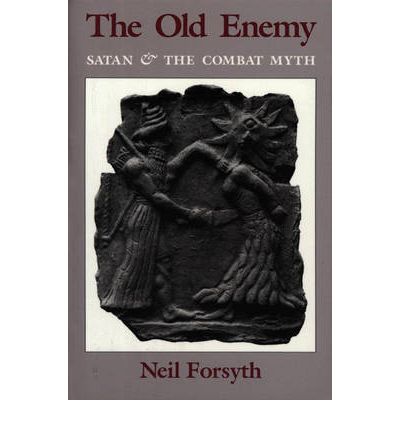
Are you ready to RUMBLE?!
“[The Old Enemy is a] learned . . . but also robust book. . . . Forsyth is much at home amid the heroics, graphic laments and winged enormities and leviathans of the Sumerian, Hittite and Canaanite epic fables. . . . He sees the narrative links between Marduk and Zeus, between the death-king Mor and the classical underworld. At the close of the study, the chapters on Augustine glow with intelligence and sympathy.”—George Steiner, The Times Literary Supplement

What the?
“This book displays the breath and breadth of life in history more than any merely analytical study could do. [The Formation of Hell] illuminates and deepens us with its humanity and its rare lucidity of style.”—Jeffrey Burton Russell
The prince of philosophical prose. Nobody keeps you interested in abstruse problems like Kolakowski.
“[Kolakowski’s] exploration of the philosophy of religion covers the historical discussions of the nature and existence of evil, the importance of the concepts of failure and eternity to the religious impulse, the relationship between skepticism and mysticism, and the place of reason, understanding, and in models of religious thought. He examines why people, throughout known history, have cherished the idea of eternity and existence after death, and why this hope has been dependent on the worship of an eternal reality. He confronts the problems of meaning in religious language.”
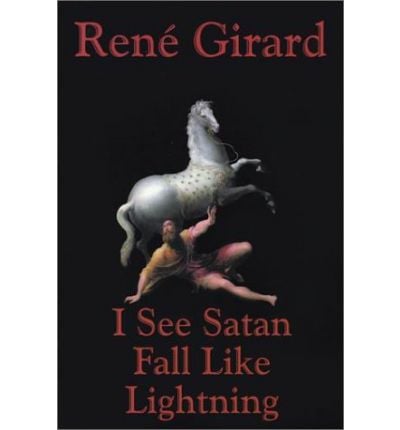
He’ll make you a believer in the (non?-)existence of Satan.
“Rene Girard is beyond question one of the seminal Christian thinkers of our time. Few, if any, have more imaginatively engaged the dominant ideas of modernity and post-modernity by exploring the bilical telling of the human story. He is one of those writers who, once discovered, leaves an indelible mark on one’s mind and soul. Read I See Satan Fall Like Lightning, and be prepared to be changed.”—Richard John Neuhaus, First Things
HEAVEN
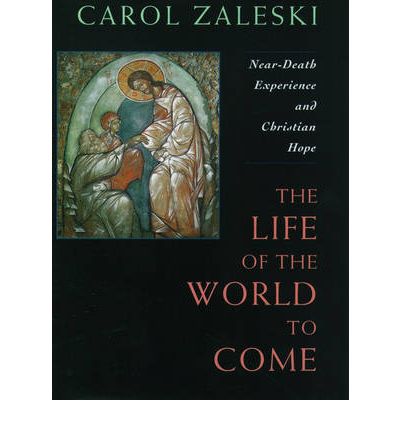
Zaleski is our premier guide to otherworld journeys.
“Critics of religion have argued that Christianity’s success stems from its promise of eternal life, that people become Christian at bottom merely to cope with their fear of death. Contemporary theologians and philosophers, highly sensitive to this charge, tend to skirt the issue of life after death. To speak of the afterlife is at best to engage in wishful thinking, at worst to descend to the level of pop religion, encounters with angels, and UFO abductions. In The Life of the World to Come, however, Carol Zaleski asks the question, ‘Are we rationally and morally entitled to believe in life after death?’ and answers with a spirited and emphatic ‘yes.'”

Much more fun than his book on sin and guilt. Also one of the nicest people I’ve ever met.
“With erudition and wit, Jean Delumeau’s History of Paradise explores the medieval conviction that paradise existed in a precise although unreachable earthly location. Delving into the writings of dozens of medieval and Renaissance thinkers, from Augustine to Dante, Delumeau presents a luminous study of the meaning of Original Sin and the human yearning for paradise. The finest minds of the Middle Ages wrote about where paradise was to be found, what it was like, and who dwelt in it. Explorers sailed into the unknown in search of paradisal gardens of wealth and delight that were thought to be near the original Garden.Cartographers drew Eden into their maps, often indicating the wilderness into which Adam and Eve were cast, along with the magical kingdom of Prester John, Jerusalem, Babel, the Happy Isles, Ophir, and other places described in biblical narrative or borrowed from other cultures. Later, Renaissance thinkers and writers meticulously reconstructed the details of the original Eden, even providing schedules of the Creation and physical descriptions of Adam and Eve. Even when the Enlightenment, with its discovery of fossils and pre-Darwinian theories of evolution, gradually banished the dream of paradise on earth, a nostalgia for Eden shaped elements of culture from literature to gardening.In our own time, Eden’s hold on the Western imagination continues to fuel questions such as whether land should be conserved or exploited and whether a return to innocence is possible.”

The man who brought you the ultimate itinerary of the Devil also has a handle on heaven.
“At minimum, it is the most rigorous modern study of the various strains of Western tradition that culminate in [Dante’s] Paradiso. But its introductory chapter [of A History of Heaven] goes beyond that to sketch out an apologia for passionate heavenly belief. In effect, Russell tries to re-establish the honor of the Christian mystical tradition. . . . Like Dante’s, Russell’s paradise is deeply God-oriented. . . .”—David Van Biema, Time
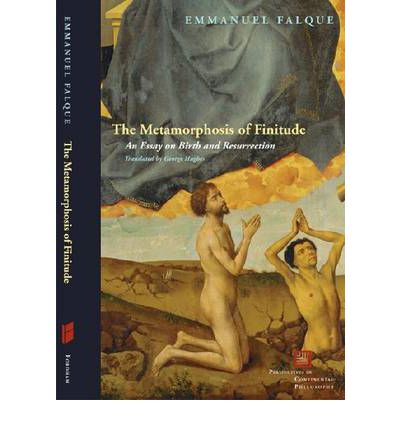
A slightly more philosophical guide through the significance of the afterlife for the present life.
“Nicodemus first posed the question “How can anyone be born after having grown old? Can one enter a second time into the mother’s womb and be born?” This book reads that problem in the context of contemporary philosophy (particularly the thought of Husserl, Heidegger, Sartre, Merleau-Ponty, and Deleuze). The phenomenology of the body born ‘from below’ is seen as a paradigm for a theology of spiritual rebirth, and for rebirth of the body from ‘on high.’ [The Metamorphosis of Finitude argues] the Resurrection changes everything in Christianity–but it is also our own bodies that must be transformed in resurrection, as Christ is transfigured. And the way in which I hope to be resurrected bodily in God, in the future, depends upon the way in which I live bodily today.”
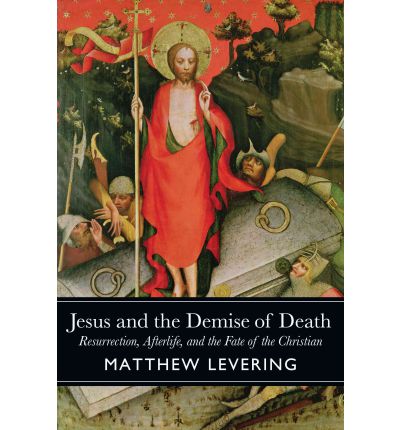
Death, you lose!
“Levering brings the best of current biblical scholarship into a creative interface with theological reflection informed by one of the Church’s greatest minds, Thomas Aquinas. In Jesus and the Demise of Death the core tenets of classical Christian eschatology, recently jettisoned by many theologians as allegedly outdated, make a surprising and come-back. Levering adds an important and timely Catholic contribution to the lively contemporary theological debate about Christian eschatology.”—Reinhard Huetter
Don’t miss our top 10 books (that I’ve read) of the last 10 years.
But remember, a different faith means a different afterlife:
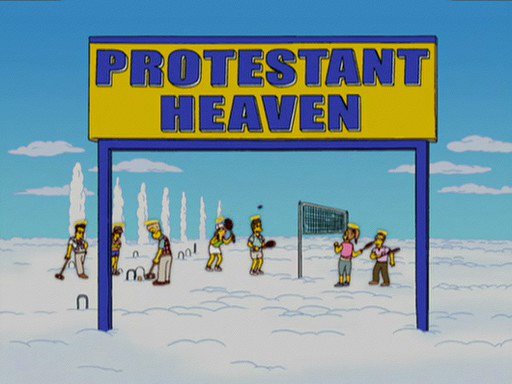
I couldn’t get a preview of the video link below. So here’s a sneak peak.
http://en.gloria.tv/?media=93470
Previous Post

August 6, 2013
Constantine, Socrates, and Other Saints
Next Post
August 7, 2013 What Does Love Know?
Browse Our Archives
Select a Category #WhyRemainCatholic Abortion Advent Anti-Catholicism Arts Atheism Beauty Benedict XVI Bible Book Review Catholic Cinema Comedy Cosmos: A Space-Time Odyssey Czesław Miłosz Dariusz Karłowicz Devil Easter Eastern Orthodoxy Economics Environment Family Famous Atheists Who Weren't Atheists Guest Post Hans Urs von Balthasar HHS Mandate History Imagination Interview Islam Jean-Luc Marion John Paul II Judaism Just War Lent Literature Little Sisters of the Poor Liturgy Martyrdom Music News Paganism Patristics Phenomenology Philosophy Pierre Hadot Poetry Poland Pop Culture Pope Francis Poverty Prayer Protestantism Rabelais Race Remi Brague Rene Girard Russia Sam Rocha Science & Religion SCOTUS Secularization Sexual Abuse Sexuality Silence Solidarity Stratford Caldecott Synod14 Terrorism Top 10 Uncategorized Walker Percy War Weakened Edition World War II World Youth Day WYD Krakow
Select a Month July 2017 June 2017 May 2017 April 2017 March 2017 February 2017 January 2017 December 2016 October 2016 September 2016 August 2016 July 2016 June 2016 May 2016 April 2016 March 2016 February 2016 January 2016 December 2015 November 2015 October 2015 September 2015 August 2015 July 2015 June 2015 May 2015 April 2015 March 2015 February 2015 January 2015 December 2014 November 2014 October 2014 September 2014 August 2014 July 2014 May 2014 April 2014 March 2014 February 2014 January 2014 December 2013 November 2013 October 2013 September 2013 August 2013 July 2013 June 2013 May 2013
Follow Us!
TAKE THE
Religious Wisdom Quiz
What did God tell Moses from the burning bush?
Select your answer to see how you score.
That he would be king of Israel That he would lead Israel out of Egypt That he would become Pharaoh That he would build the temple
Related posts from Cosmos The In Lost

The Surprising Anti-Capitalist Logic Behind the Catholic Church's...

How is Classical Philosophy is Like War?

Why Does the World's Leading Philosopher Remain a...

Biblical Authority After Babel Cannot Be Built Upon...
TRENDING AT PATHEOS Catholic

Creation, Preservation, and Teleology in Catholic Theology
As I write this, it is very early Monday morning. Like millions...

The Parable Of The Sower And The Word...
One of Christ’s most famous parables is that of the sower who...

Rejecting Doom: Christian Hope And Human Action
Christianity is a religion of hope. We are to have hope and...

Why I Choose the Eucharist Over the Sermon
Choose the Eucharist, Not the Sermon What are we supposed to get...

5 Design Elements Found in Spiritually Rooted Homes
Putting Spirituality Into Home Decor Our homes are more than our living...

Credo: A Story of God Told with the...
About 10 years ago, I began to imagine a personal "Credo" that...
view all Catholic blogs
Ad-Free & Subscriber Log-In Subscription Support
- About Us
- 2026 Calendar
- Videos
- Podcasts
- Library of World Religions
- Faith In Media Tracker
- Advertise With Us
- Write for Us
- Privacy Policy
- Terms of Service
- Do Not Sell My Data
- Contact Us
- Radiant Digital
- Manage Newsletter Subscriptions
- Unsubscribe From Notifications
- Sitemap
Copyright 2008-2026, Patheos. All rights reserved.
Subscription Support Ad-Free & Subscriber Log-In
Follow Patheos