
BuddhistCatholicContemplativeEvangelicalGeneral ChristianHinduJewishLatter-day SaintMuslimNew VisionsProgressive Christian
Beliefs
- Buddhist
- Catholic
- Contemplative
- Evangelical
- General Christian
- Hindu
- Jewish
- Latter-day Saint
- More Voices
- Muslim
- New Visions
- Pagan
- Progressive Christian
Topics
- Religion News
- Food and Religion
- Sports and Religion
- Religious Art
- Religious Music and Entertainment
- Religious Events
- History and Religion
- Style and Religion
- Politics and Religion
- Women in Religion
- Recreation Outdoors and Religion
- Business Finance and Religion
- Careers Workplace and Religion
- Education and Religion
- Family Parenting and Religion
- Health Fitness and Religion
- Home and Religion
- Relationships and Religion
- Technology and Religion
- Travel and Religion
Columnists
- Buddhist Columnists
- Business Finance and Religion Columnists
- Careers Workplace and Religion Columnists
- Catholic Columnists
- Contemplative Columnists
- Education and Religion Columnists
- Evangelists Columnists
- Family Parenting and Religion Columnists
- General Christian Columnists
- Health Fitness and Religion Columnists
- Hindu Columnists
- History and Religion Columnists
- Home and Religion Columnists
- Jewish Columnists
- More Voices Columnists
- Latter Day Columnists
- Muslim Columnists
- New Visions Columnists
- Nonreligious Columnists
- Pagan Columnists
- Politics and Religion Columnists
- Progressive Columnists
- Recreation Outdoors and Religion Columnists
- Relationships and Religion Columnists
- Religion News Columnists
- Religious Art Columnists
- Religious Events Columnists
- Religious Music and Entertainment Columnists
- Sports and Religion Columnists
- Style and Religion Columnists
- Technology and Religion Columnists
- Travel and Religion Columnists
- Women in Religion Columnists
Resource Library
- 2026 Calendar
- Library of World Religions
- The 100 Most Holy Places on Earth
- Patheos Answers
- Podcasts
- Videos
- Faith Leaders Database
- Anglican Episcopalian
- Bahai
- Baptist
- Buddhism
- Christianity
- Confucianism
- Eastern Orthodoxy
- Hinduism
- Holiness and Pentecostal
- ISKCON
- Islam
- Judaism
- Lutheran
- Methodist
- The Church of Jesus Christ of Latter-day Saints
- New Age
- Paganism
- Presbytarian and Reformed
- Protestantism
- Religion Behind the Scenes
- Roman Catholic
- Scientology
- Shia Islam
- Sikhism
- Sufism
- Sunni Islam
- Taoism
- Zen
- See all religions
Research Tools
 Ad-Free & Subscriber Log-In Subscription Support
Ad-Free & Subscriber Log-In Subscription Support
Follow Patheos 

- Trending:
- Forgiveness
- |
- Marriage
- |
- Consciousness
- |
- Death Penalty
- |
- Election
- |
- Halloween
 Cosmos The In Lost
- Home
- Catholic
- Coetzee on the Stillbirth of the Humanities Out of Theology
Coetzee on the Stillbirth of the Humanities Out of Theology
Last updated on: July 20, 2013 at 12:04 pm by Artur Rosman
Coetzee on the Stillbirth of the Humanities Out of Theology 2013-07-20T12:04:17-07:00 Artur Rosman
Patheos Explore the world's faith through different perspectives on religion and spirituality! Patheos has the views of the prevalent religions and spiritualities of the world.

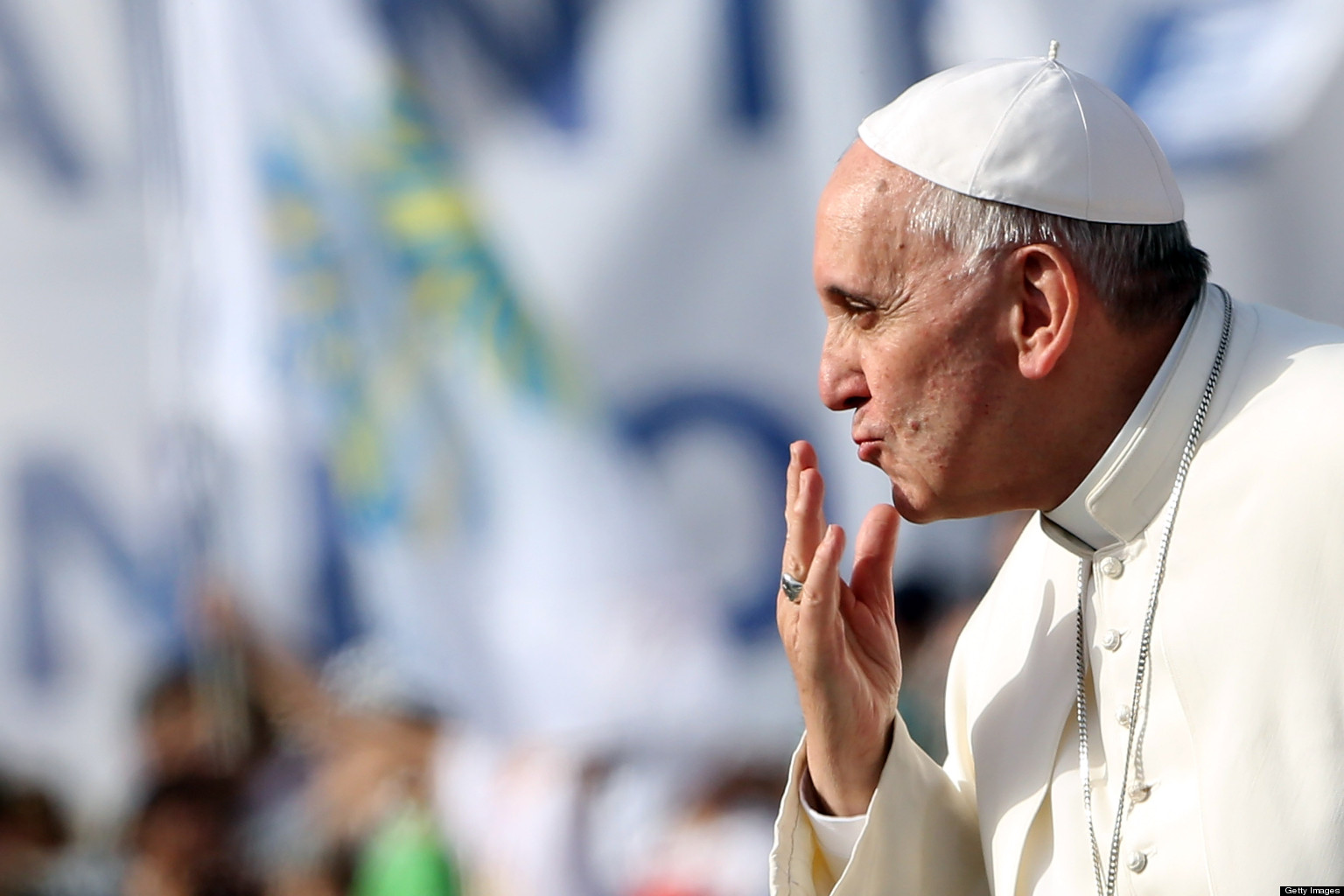
You dropped something.
I suspect the endless essays about the rethinking, protecting, death, in other words, the “crisis,” of the humanities in The Chronicle of Higher Education (if only) have cleared more than one forest.
I’ve written about the religious uses of the “secular” academy elsewhere in my post about Warhol and Blau. As you can tell from the post it’s not like I’m first in line to bust up the idols of the secular academy. On the other hand, the disappointing exchange surrounding yesterday’s post about (classical liberal) ideology in what passes for theology in America brought me back to Coetzee’s Elizabeth Costello. (See: comment section)
I would like to highlight this novelistic account with the qualification that there is no reason to identify it with Coetzee’s own opinions, or to totally dismiss them as having no connection with them.
The argument presented by his character, Sr. Bridget Costello, in her lecture “The Humanities in Africa,” is that the humanities were a stillborn child of theology, even perhaps more so than futile academic projects such as the Death of God movement of a/theology. Without further ado, here’s a large chunk of her lecture:
‘Textual scholarship, I would want to say if I had more time, was the living breath of humane studies while humane studies were what we can properly call a movement in history, namely the humanist movement. But it did not take long for the living breath in textual scholarship to be snuffed out. The story of textual scholarship since then has been the story of one effort after another to resuscitate that life, in vain.
‘The text for the sake of which textual scholarship was invented was the Bible. Textual scholars saw themselves as servants in the recovery of the true message of the Bible, specifically the true teaching of Jesus. The
figure they employed to describe their work was the figure of rebirth or resurrection. The reader of the New Testament was to encounter face to face for the first time the risen, reborn Christ, Christus renascens, obscured no longer by a veil of scholastic gloss and commentary. It was with this goal in mind that scholars taught themselves first Greek, then Hebrew, then (later) other languages of the Near East. Textual scholarship meant, first, the recovery of the true text, then the true translation of that text; and true translation turned out to be inseparable from true interpretation, just as true interpretation turned out to be inseparable from true understanding of the cultural and historical matrix from which the text had emerged. That is how linguistic studies, literary studies (as studies in interpretation), cultural studies and historical studies–the studies that form the core of the so-called humanities–came to be bound up together.
‘Why, you may justly ask, call this constellation of studies devoted to the recovery of the true word of the Lord studia humanitatis? Asking this question will, it turns out, be much the same as asking, Why did the studia humanitatis come into flower only in the fifteenth century of our dispensation and not hundreds of years earlier?
‘The answer has much to do with historical accident: with the decline and eventual sack of Constantinople and the flight of Byzantine men of learning to Italy. (Observing your Dean’s fifteen-minute rule, I will pass over the living presence of Aristotle, Galen and other Greek philosophers in medieval Western Christendom, and the role of Arab Spain in transmitting their teachings.)
‘Timeo Danaos et dona ferentes. The gifts brought by the men from the East were not only grammars of the Greek language but texts by authors from Greek antiquity. The linguistic command that was intended to be applied to the Greek New Testament could be perfected only by immersing oneself in these seductive pre-Christian texts. In no time, as one might expect, the study of these texts, later to be called the classics, had become an end in itself.
‘More than that: the study of the texts of antiquity came to be justified not only on linguistic grounds but on philosophical grounds too. Jesus was sent to redeem mankind, the argument went. To redeem mankind from what? From an unredeemed state, of course. But what do we know of mankind in an unredeemed state? The only substantial record that covers all aspects of life is the record of antiquity. So to grasp the purpose behind the Incarnation–that is to say, to grasp the meaning of redemption–we must embark, through the classics, on studia humanitatis.
‘Thus, in the brief and crude account I give, did it come about that biblical scholarship and studies in Greek and Roman antiquity came to be coupled in a relationship never without antagonism, and thus did it come about that textual scholarship and its attendant disciplines came to fall under the rubric “the humanities”.
‘So much for history. So much for why you, diverse and ill-assorted as you may privately feel yourselves to be, find yourselves assembled this morning under a single roof as graduates-to-be in the humanities. Now, in the few minutes left to me, I am going to tell you why I do not belong among you and have no message of comfort to bring to you, despite the generosity of the gesture you have extended to me.
‘The message I bring is that you lost your way long ago, perhaps as long as five centuries ago. The handful of men among whom the movement originated of which you represent, I fear, the sad tail–those men were animated, at least at first, by the purpose of finding the True Word, by which they understood then, and I understand now, the redemptive word.
‘That word cannot be found in the classics, whether you understand the classics to mean Homer and Sophocles or whether you understand them to mean Homer and Shakespeare and Dostoevsky In a happier age than our own it was possible for people to bluff themselves into believing that the classics of antiquity offered a teaching and a way of life. In our own times we have settled, rather desperately, for the claim that the study of the classics in itself might offer a way of life, or if not a way of life then at least a way of earning a living which, if it cannot be proved to do any positive good, at least is on no side claimed to do any harm.
‘But the impulse behind the first generation of textual scholars cannot be diverted so easily from its proper goal. I am a daughter of the Catholic Church, not of the Reformed Church, but I applaud Martin Luther when he turns his back on Desiderius Erasmus, judging that his colleague, despite his immense gifts, has been seduced into branches of study that do not, by the standards of the ultimate, matter. The studia humanitatis have taken a long time to die, but now, at the end of the second millennium of our era, they are truly on their deathbed. All the more bitter should be that death, I would say, since it has been brought about by the monster enthroned by those very studies as first and animating principle of the universe: the monster of reason, mechanical reason. But that is another story for another day.’
Previous Post

July 19, 2013
The Ideological Winters of American Catholicism
Next Post
July 21, 2013 Introducing Alfred Delp, SJ
Browse Our Archives
Select a Category #WhyRemainCatholic Abortion Advent Anti-Catholicism Arts Atheism Beauty Benedict XVI Bible Book Review Catholic Cinema Comedy Cosmos: A Space-Time Odyssey Czesław Miłosz Dariusz Karłowicz Devil Easter Eastern Orthodoxy Economics Environment Family Famous Atheists Who Weren't Atheists Guest Post Hans Urs von Balthasar HHS Mandate History Imagination Interview Islam Jean-Luc Marion John Paul II Judaism Just War Lent Literature Little Sisters of the Poor Liturgy Martyrdom Music News Paganism Patristics Phenomenology Philosophy Pierre Hadot Poetry Poland Pop Culture Pope Francis Poverty Prayer Protestantism Rabelais Race Remi Brague Rene Girard Russia Sam Rocha Science & Religion SCOTUS Secularization Sexual Abuse Sexuality Silence Solidarity Stratford Caldecott Synod14 Terrorism Top 10 Uncategorized Walker Percy War Weakened Edition World War II World Youth Day WYD Krakow
Select a Month July 2017 June 2017 May 2017 April 2017 March 2017 February 2017 January 2017 December 2016 October 2016 September 2016 August 2016 July 2016 June 2016 May 2016 April 2016 March 2016 February 2016 January 2016 December 2015 November 2015 October 2015 September 2015 August 2015 July 2015 June 2015 May 2015 April 2015 March 2015 February 2015 January 2015 December 2014 November 2014 October 2014 September 2014 August 2014 July 2014 May 2014 April 2014 March 2014 February 2014 January 2014 December 2013 November 2013 October 2013 September 2013 August 2013 July 2013 June 2013 May 2013
Follow Us!
TAKE THE
Religious Wisdom Quiz
Who said, "Come to me, all you who are weary and burdened, and I will give you rest"?
Select your answer to see how you score.
Paul David Jesus Moses
Related posts from Cosmos The In Lost

The Surprising Anti-Capitalist Logic Behind the Catholic Church's...

How is Classical Philosophy is Like War?

Why Does the World's Leading Philosopher Remain a...

Biblical Authority After Babel Cannot Be Built Upon...
TRENDING AT PATHEOS Catholic

Creation, Preservation, and Teleology in Catholic Theology
As I write this, it is very early Monday morning. Like millions...

The Parable Of The Sower And The Word...
One of Christ’s most famous parables is that of the sower who...

Rejecting Doom: Christian Hope And Human Action
Christianity is a religion of hope. We are to have hope and...

Why I Choose the Eucharist Over the Sermon
Choose the Eucharist, Not the Sermon What are we supposed to get...

5 Design Elements Found in Spiritually Rooted Homes
Putting Spirituality Into Home Decor Our homes are more than our living...

Credo: A Story of God Told with the...
About 10 years ago, I began to imagine a personal "Credo" that...
view all Catholic blogs
Ad-Free & Subscriber Log-In Subscription Support
- About Us
- 2026 Calendar
- Videos
- Podcasts
- Library of World Religions
- Faith In Media Tracker
- Advertise With Us
- Write for Us
- Privacy Policy
- Terms of Service
- Do Not Sell My Data
- Contact Us
- Radiant Digital
- Manage Newsletter Subscriptions
- Unsubscribe From Notifications
- Sitemap
Copyright 2008-2026, Patheos. All rights reserved.
Subscription Support Ad-Free & Subscriber Log-In
Follow Patheos