
BuddhistCatholicContemplativeEvangelicalGeneral ChristianHinduJewishLatter-day SaintMuslimNew VisionsProgressive Christian
Beliefs
- Buddhist
- Catholic
- Contemplative
- Evangelical
- General Christian
- Hindu
- Jewish
- Latter-day Saint
- More Voices
- Muslim
- New Visions
- Pagan
- Progressive Christian
Topics
- Religion News
- Food and Religion
- Sports and Religion
- Religious Art
- Religious Music and Entertainment
- Religious Events
- History and Religion
- Style and Religion
- Politics and Religion
- Women in Religion
- Recreation Outdoors and Religion
- Business Finance and Religion
- Careers Workplace and Religion
- Education and Religion
- Family Parenting and Religion
- Health Fitness and Religion
- Home and Religion
- Relationships and Religion
- Technology and Religion
- Travel and Religion
Columnists
- Buddhist Columnists
- Business Finance and Religion Columnists
- Careers Workplace and Religion Columnists
- Catholic Columnists
- Contemplative Columnists
- Education and Religion Columnists
- Evangelists Columnists
- Family Parenting and Religion Columnists
- General Christian Columnists
- Health Fitness and Religion Columnists
- Hindu Columnists
- History and Religion Columnists
- Home and Religion Columnists
- Jewish Columnists
- More Voices Columnists
- Latter Day Columnists
- Muslim Columnists
- New Visions Columnists
- Nonreligious Columnists
- Pagan Columnists
- Politics and Religion Columnists
- Progressive Columnists
- Recreation Outdoors and Religion Columnists
- Relationships and Religion Columnists
- Religion News Columnists
- Religious Art Columnists
- Religious Events Columnists
- Religious Music and Entertainment Columnists
- Sports and Religion Columnists
- Style and Religion Columnists
- Technology and Religion Columnists
- Travel and Religion Columnists
- Women in Religion Columnists
Resource Library
- 2026 Calendar
- Library of World Religions
- The 100 Most Holy Places on Earth
- Patheos Answers
- Podcasts
- Videos
- Faith Leaders Database
- Anglican Episcopalian
- Bahai
- Baptist
- Buddhism
- Christianity
- Confucianism
- Eastern Orthodoxy
- Hinduism
- Holiness and Pentecostal
- ISKCON
- Islam
- Judaism
- Lutheran
- Methodist
- The Church of Jesus Christ of Latter-day Saints
- New Age
- Paganism
- Presbytarian and Reformed
- Protestantism
- Religion Behind the Scenes
- Roman Catholic
- Scientology
- Shia Islam
- Sikhism
- Sufism
- Sunni Islam
- Taoism
- Zen
- See all religions
Research Tools
 Ad-Free & Subscriber Log-In Subscription Support
Ad-Free & Subscriber Log-In Subscription Support
Follow Patheos 

- Trending:
- Forgiveness
- |
- Marriage
- |
- Consciousness
- |
- Death Penalty
- |
- Election
- |
- Halloween
 Cosmos The In Lost
- Home
- Catholic
- The Ideological Winters of American Catholicism
The Ideological Winters of American Catholicism
Last updated on: July 19, 2013 at 2:22 pm by Artur Rosman
The Ideological Winters of American Catholicism 2013-07-19T14:22:13-07:00 Artur Rosman
Patheos Explore the world's faith through different perspectives on religion and spirituality! Patheos has the views of the prevalent religions and spiritualities of the world.
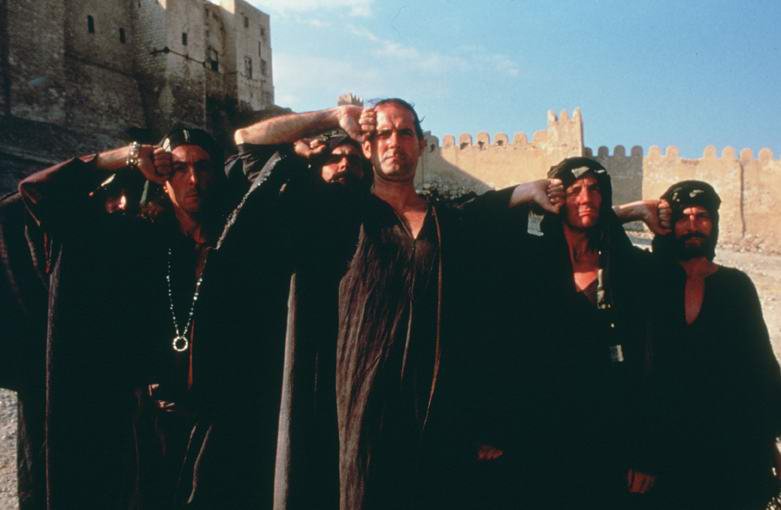
“Excuse me. Are you the Judean People’s Front?”
The average American parishioner is more faithful to the Democratic and Republican platforms than the Credo. Alasdair MacIntyre pithily noted this (classical) liberal creep in his classic Whose Justice? Which Rationality?:
“Liberalism is often successful in preempting the debate . . . so that [objections to it] appear to have become debates within liberalism. . . . So-called conservatism and so-called radicalism in these contemporary guises are in general mere stalking-horses for liberalism: The contemporary debates within modern political systems are almost exclusively between conservative liberals, liberal liberals, and radical liberals. There is little place in such political systems for the criticism of the system itself, that is, for putting liberalism in question.”
Our political picture isn’t red or blue, it’s more like grey.
If you want proof the unity of opposites (on the classical liberal spectrum) then go no further than the recent ecclesiological suggestions of Ross Douthat and Anthony Paul Smith.
First, pay careful attention to the wording of Smith’s latest bit of writing for a general audience:
“To simplify the big and messy thing called Catholicism, let us just talk about one major split: between the official church leaders charged with safeguarding its teaching and the estimated 1.2 billion everyday believers around the world.”
Now compare this with the takeaway from Douthat’s February takedown of the Neuhaus Catholic Moment:
“Nothing that happens in Rome over the next few months is likely to convert the Acela Corridor’s donors and strategists and think tankers to a more Catholic-friendly worldview. The next pope may be more effective than Benedict, or he may be clumsier; he may improve the church’s image in this country, or he may worsen it.
But if there is another Catholic moment waiting in our nation’s future, it can only be made by Americans themselves.”
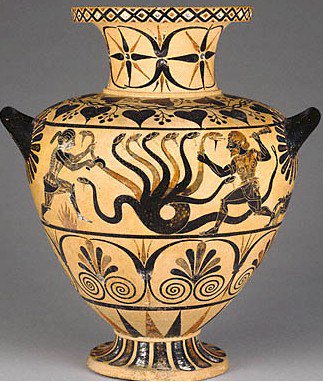
There are many heads, but only one Ύδρα.
Are we seriously supposed to entertain the possibility that a fight where the laity slays the hierarchy is the only tactically viable maneuver for the Catholic Church?! This sounds like suicide through competition to me. It echoes the fight between the People’s Front of Judea against the Judean People’s Front in Monty Python’s “Life of Brian.” The film is a comedy for those of you who missed it.
Michael Sean Winters, in a recent repost of a long-lost article, proposes the work of David Schindler as one possible way to do an end-around the whole classical liberal Hydra represented by Smith and Douthat:
“The usual view of contemporary Catholic theology sees two camps the liberals who succeeded in opening the Church to the world at Vatican II and who have been in decline in the era of John Paul II, and the conservatives who think the Church went too far in the 1960s to accommodate the world, and support what they see as John Paul’s restorationist program. Schindler argues for (if you’ll pardon the expression) a third way. In his analysis, the liberals want more accommodation with the world and conservatives want less accommodation with the world, but they are still arguing about the rules of engagement. And both fail to appreciate the radicalness of the scriptural claim that ‘in [Jesus] everything in heaven and on earth was created.’
For Schindler, the Christian must always consider the claims of faith first, and those claims extend to the entirety of his or her life. Classical liberalism claims that in the realms of the ontological and the sectarian, the polity has no preference: a Christian is free to pursue his faith and any citizen can make whatever truth claims about the universe that he wishes. To use Murray’s distinction, the Bill of Rights are not ‘articles of faith’ but ‘articles of peace.’ But, Schindler asks, are there not truth claims, religious truth claims, already implicit in this putatively ‘neutral’ state?
Specifically, Schindler argues that Thomistic dualism is the sine qua non of liberal political regimes and, therefore, the neutrality of the liberal state is a sham. Murray’s “articles of peace” formulation assumes a logical priority for freedom before truth, and inevitably issues in a ‘privatization’ of religion. Since the Church is prevented from approaching the world ‘as Church’ (welcome, but please leave your dogma at the door!) it is reduced to the role of an ethical authority. This role, in turn, shapes the Church’s self-understanding so that what results is not only the secularization of society that the neo-conservatives decry, but also the secularization of religion itself. Being ‘Christian’ is reduced to being kind.”

The classic text where Schindler makes these arguments.
Working out his project seems to be the only viable alternative to this:
Previous Post

July 18, 2013
Coetzee Demolishes Greek Harmony With Christian Agony
Next Post
July 20, 2013 Coetzee on the Stillbirth of the Humanities Out of Theology
Browse Our Archives
Select a Category #WhyRemainCatholic Abortion Advent Anti-Catholicism Arts Atheism Beauty Benedict XVI Bible Book Review Catholic Cinema Comedy Cosmos: A Space-Time Odyssey Czesław Miłosz Dariusz Karłowicz Devil Easter Eastern Orthodoxy Economics Environment Family Famous Atheists Who Weren't Atheists Guest Post Hans Urs von Balthasar HHS Mandate History Imagination Interview Islam Jean-Luc Marion John Paul II Judaism Just War Lent Literature Little Sisters of the Poor Liturgy Martyrdom Music News Paganism Patristics Phenomenology Philosophy Pierre Hadot Poetry Poland Pop Culture Pope Francis Poverty Prayer Protestantism Rabelais Race Remi Brague Rene Girard Russia Sam Rocha Science & Religion SCOTUS Secularization Sexual Abuse Sexuality Silence Solidarity Stratford Caldecott Synod14 Terrorism Top 10 Uncategorized Walker Percy War Weakened Edition World War II World Youth Day WYD Krakow
Select a Month July 2017 June 2017 May 2017 April 2017 March 2017 February 2017 January 2017 December 2016 October 2016 September 2016 August 2016 July 2016 June 2016 May 2016 April 2016 March 2016 February 2016 January 2016 December 2015 November 2015 October 2015 September 2015 August 2015 July 2015 June 2015 May 2015 April 2015 March 2015 February 2015 January 2015 December 2014 November 2014 October 2014 September 2014 August 2014 July 2014 May 2014 April 2014 March 2014 February 2014 January 2014 December 2013 November 2013 October 2013 September 2013 August 2013 July 2013 June 2013 May 2013
Follow Us!
TAKE THE
Religious Wisdom Quiz
What is the name of the first book in the New Testament?
Select your answer to see how you score.
Mark John Matthew Luke
Related posts from Cosmos The In Lost

The Surprising Anti-Capitalist Logic Behind the Catholic Church's...

How is Classical Philosophy is Like War?

Why Does the World's Leading Philosopher Remain a...

It's a Good Friday to Leave Calypso's Island
TRENDING AT PATHEOS Catholic

The Parable Of The Sower And The Word...
One of Christ’s most famous parables is that of the sower who...

Rejecting Doom: Christian Hope And Human Action
Christianity is a religion of hope. We are to have hope and...

Why I Choose the Eucharist Over the Sermon
Choose the Eucharist, Not the Sermon What are we supposed to get...

5 Design Elements Found in Spiritually Rooted Homes
Putting Spirituality Into Home Decor Our homes are more than our living...

Credo: A Story of God Told with the...
About 10 years ago, I began to imagine a personal "Credo" that...

The Anatomy of Divine Revelation in Catholic Thought
The claim that God has made Himself known to human beings is...
view all Catholic blogs
Ad-Free & Subscriber Log-In Subscription Support
- About Us
- 2026 Calendar
- Videos
- Podcasts
- Library of World Religions
- Faith In Media Tracker
- Advertise With Us
- Write for Us
- Privacy Policy
- Terms of Service
- Do Not Sell My Data
- Contact Us
- Radiant Digital
- Manage Newsletter Subscriptions
- Unsubscribe From Notifications
- Sitemap
Copyright 2008-2026, Patheos. All rights reserved.
Subscription Support Ad-Free & Subscriber Log-In
Follow Patheos