
BuddhistCatholicContemplativeEvangelicalGeneral ChristianHinduJewishLatter-day SaintMuslimNew VisionsProgressive Christian
Beliefs
- Buddhist
- Catholic
- Contemplative
- Evangelical
- General Christian
- Hindu
- Jewish
- Latter-day Saint
- More Voices
- Muslim
- New Visions
- Pagan
- Progressive Christian
Topics
- Religion News
- Food and Religion
- Sports and Religion
- Religious Art
- Religious Music and Entertainment
- Religious Events
- History and Religion
- Style and Religion
- Politics and Religion
- Women in Religion
- Recreation Outdoors and Religion
- Business Finance and Religion
- Careers Workplace and Religion
- Education and Religion
- Family Parenting and Religion
- Health Fitness and Religion
- Home and Religion
- Relationships and Religion
- Technology and Religion
- Travel and Religion
Columnists
- Buddhist Columnists
- Business Finance and Religion Columnists
- Careers Workplace and Religion Columnists
- Catholic Columnists
- Contemplative Columnists
- Education and Religion Columnists
- Evangelists Columnists
- Family Parenting and Religion Columnists
- General Christian Columnists
- Health Fitness and Religion Columnists
- Hindu Columnists
- History and Religion Columnists
- Home and Religion Columnists
- Jewish Columnists
- More Voices Columnists
- Latter Day Columnists
- Muslim Columnists
- New Visions Columnists
- Nonreligious Columnists
- Pagan Columnists
- Politics and Religion Columnists
- Progressive Columnists
- Recreation Outdoors and Religion Columnists
- Relationships and Religion Columnists
- Religion News Columnists
- Religious Art Columnists
- Religious Events Columnists
- Religious Music and Entertainment Columnists
- Sports and Religion Columnists
- Style and Religion Columnists
- Technology and Religion Columnists
- Travel and Religion Columnists
- Women in Religion Columnists
Resource Library
- 2026 Calendar
- Library of World Religions
- The 100 Most Holy Places on Earth
- Patheos Answers
- Podcasts
- Videos
- Faith Leaders Database
- Anglican Episcopalian
- Bahai
- Baptist
- Buddhism
- Christianity
- Confucianism
- Eastern Orthodoxy
- Hinduism
- Holiness and Pentecostal
- ISKCON
- Islam
- Judaism
- Lutheran
- Methodist
- The Church of Jesus Christ of Latter-day Saints
- New Age
- Paganism
- Presbytarian and Reformed
- Protestantism
- Religion Behind the Scenes
- Roman Catholic
- Scientology
- Shia Islam
- Sikhism
- Sufism
- Sunni Islam
- Taoism
- Zen
- See all religions
Research Tools
 Ad-Free & Subscriber Log-In Subscription Support
Ad-Free & Subscriber Log-In Subscription Support
Follow Patheos 

- Trending:
- Forgiveness
- |
- Marriage
- |
- Consciousness
- |
- Death Penalty
- |
- Election
- |
- Halloween
 Cosmos The In Lost
- Home
- Catholic
- Top 10 Theology Books of the Last 10 Years (That I've Read)
Top 10 Theology Books of the Last 10 Years (That I've Read)
Last updated on: July 12, 2013 at 11:33 am by Artur Rosman
Top 10 Theology Books of the Last 10 Years (That I've Read) 2013-07-12T11:33:57-07:00 Artur Rosman
Patheos Explore the world's faith through different perspectives on religion and spirituality! Patheos has the views of the prevalent religions and spiritualities of the world.
Here is a list of what I consider to be the ten most important theology-related books (I’ve read) of the past ten years. They’re in no particular order (kinda). If given another chance to make this list I’d probably choose (mostly) the same books, or I’d make the list longer. The books are accompanied by publisher blurbs, which should explain why these books are so important. I’d like to see what your top 10/10 list looks like. Feel free to submit one in the comment section of this post. Please order books via the links provided here if you’d like to help put some diapers on little Rosman butts!
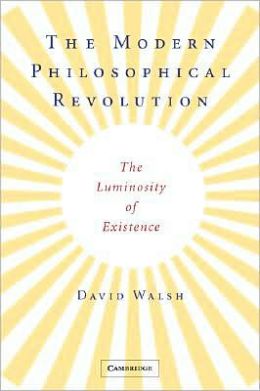
There’s plenty of theology in there.
The Modern Philosophical Revolution breaks new ground by demonstrating the continuity of European philosophy from Kant to Derrida. Much of the literature on European philosophy has emphasized the breaks that have occurred in the course of two centuries of thinking. But as David Walsh argues, such a reading overlooks the extent to which Kant, Hegel, and Schelling were already engaged in the turn toward existence as the only viable mode of philosophizing. Where many similar studies summarize individual thinkers, this book provides a framework for understanding the relationships between them. Walsh thus dispels much of the confusion that assails readers when they are only exposed to the bewildering range of positions taken by the philosophers he examines. His book serves as an indispensable guide to a philosophical [and theological] tradition that continues to have resonance in the post-modern world.
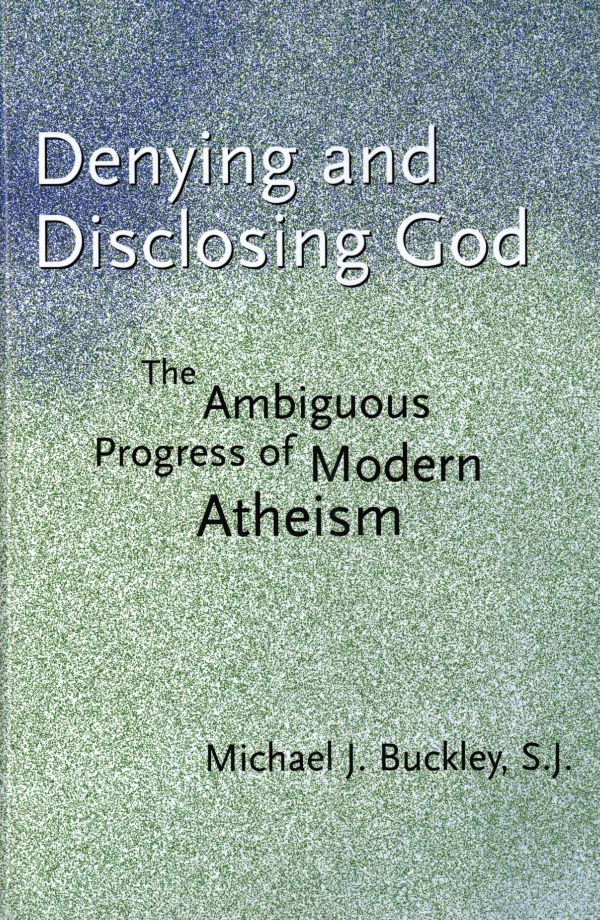
Hug an atheist today.
In this stimulating book, Denying and Disclosing God, distinguished theologian Michael J. Buckley, S.J., reflects upon the career of atheism from the beginnings of modernity to the present day. Extending the discussion he began in his highly acclaimed At the Origins of Modern Atheism, the author argues that atheism as ideology was generated neither by the rise of hostile sciences in the Renaissance nor by the medieval and inferential theology of Thomas Aquinas.
Professor Buckley locates the origins of atheistic consciousness in modernity’s bracketing of interpersonal religious experience as of no cognitive value. Atheism was generated by the very strategies formulated to counter it. This dialectical character of modern atheism suggests the further possibility of the negation of this negation, thereby bringing about the retrieval of the religious in form and content along with a new admission of the cogency of religious experience.
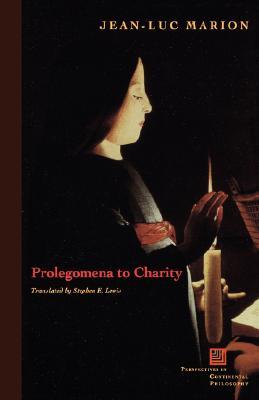
Lovely.
In seven essays that draw from metaphysics, phenomenology, literature, Christological theology, and Biblical exegesis,Marion sketches several prolegomena to a future fuller thinking and saying of love’s paradoxical reasons, exploring evil, freedom, bedazzlement, and the loving gaze; crisis, absence, and knowing.
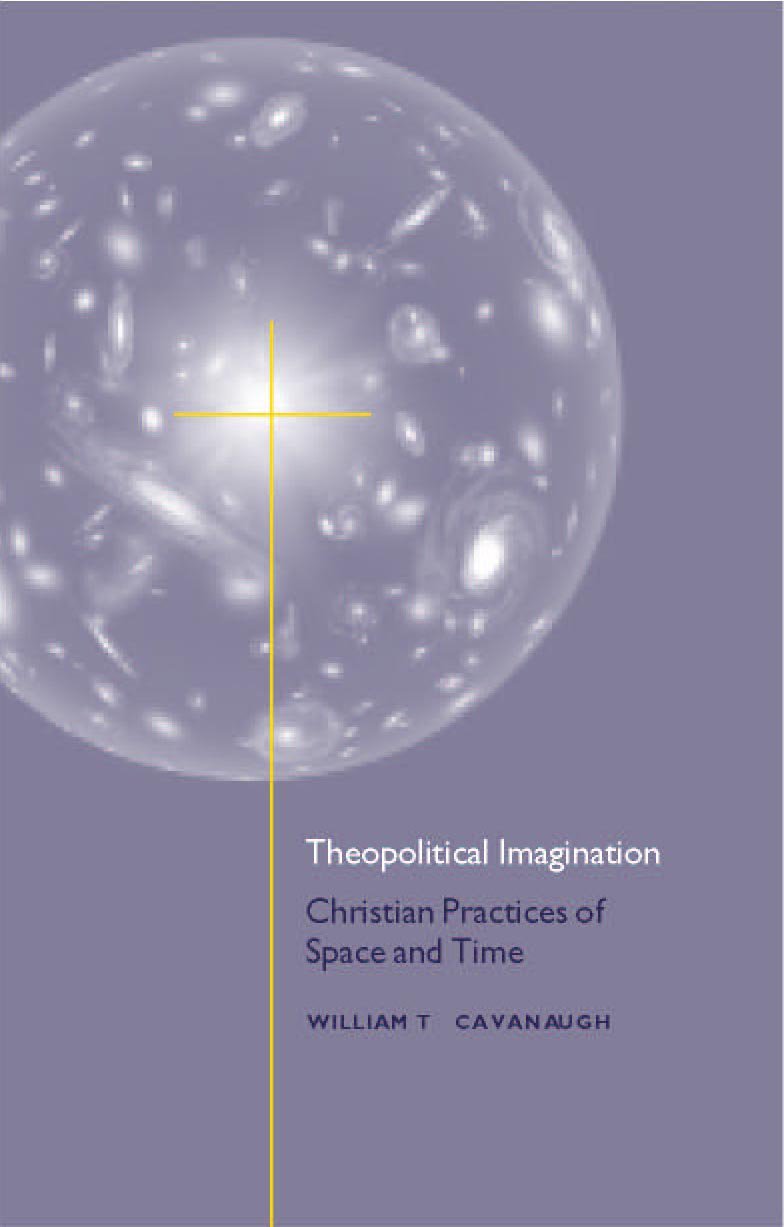
Swirly things and a cross.
Theopolitical Imagination is a critique of modern Western civilization, including contemporary concerns of consumerism, capitalism, globalization, and poverty, from the perspective of a believing Catholic.
Responding to Enlightenment and Postmodernist views of the social and economic realities of our time, Cavanaugh engages with contemporary concerns–consumerism, late capitalism, globalization, poverty–in a way reminiscent of Rowan Williams (Lost Icons), Nicholas Boyle (Who Are We Now?) and Michel de Certeau. “Consumption of the Eucharist,” he argues, “consumes one into the narrative of the pilgrim City of God, whose reach extends beyond the global to embrace all times and places.” He develops the theme of the Eucharist as the basis for Christian resistance to the violent disciplines of state, civil society and globalization.
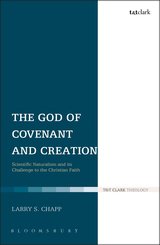
Trust me, this book is big.
In The God of Covenant and Creation Larry Chapp develops a true ‘theology of nature’ that begins and ends with strictly confessional Christian warrants. He begins by showing how modern naturalism arose out of a theological matrix and how it lost its way specifically as naturalism as soon as it rejected that theological matrix. Indeed, modern naturalism is not so much a-theological as it is a rival theology to that of the Church. All claims of ultimacy, including those of natural science, have inherently theological orientations embedded within them – however unconsciously. Therefore, what confronts us in the modern world is not so much a choice between a non-theological naturalism and a theological naturalism. Rather, what confronts us is a choice between two rival theologies – one agnostic and a-theistic in its implications while the other is revelocentric and Christian.
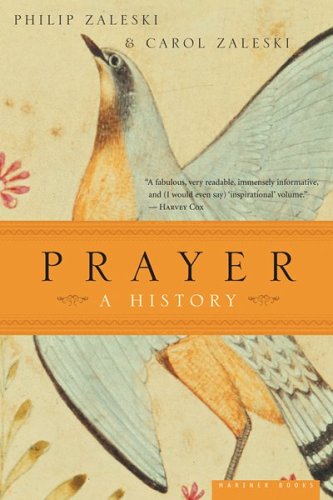
Not for the birds.
This landmark work presents prayer in all its richness and variety throughout history, across traditions, and around the globe. In a thorough and fascinating look at this spiritual practice, two of today’s most versatile and admired authorities on religion probe the language and fruits of prayer, its controversies, and its prospects for the future. With a focus on extraordinary stories of lives changed by prayer and on great works of literature and art inspired by it, Prayer: A History promises to be the standard on the subject for readers of all faiths.
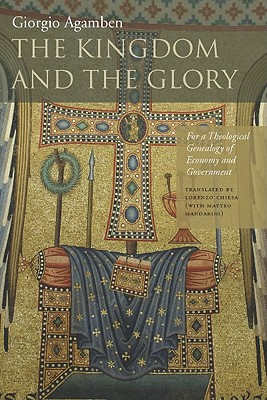
Empty throne.
Why has power in the West assumed the form of an “economy,” that is, of a government of men and things? If power is essentially government, why does it need glory, that is, the ceremonial and liturgical apparatus that has always accompanied it?
In the early centuries of the Church, in order to reconcile monotheism with God’s threefold nature, the doctrine of Trinity was introduced in the guise of an economy of divine life. It was as if the Trinity amounted to nothing more than a problem of managing and governing the heavenly house and the world. Agamben shows that, when combined with the idea of providence, this theological-economic paradigm unexpectedly lies at the origin of many of the most important categories of modern politics, from the democratic theory of the division of powers to the strategic doctrine of collateral damage, from the invisible hand of Smith’s liberalism to ideas of order and security.
But the greatest novelty to emerge from The Kingdom and the Glory is that modern power is not only government but also glory, and that the ceremonial, liturgical, and acclamatory aspects that we have regarded as vestiges of the past actually constitute the basis of Western power.
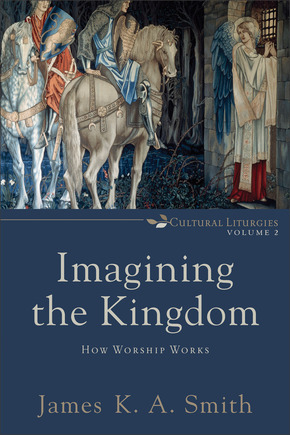
King Artur?
How does worship work? How exactly does liturgical formation shape people? And how does the Spirit marshal the dynamics of such transformation? In the second of James K. A. Smith’s three-volume theology of culture, the author expands and deepens the analysis of cultural liturgies and Christian worship he developed in his acclaimed Desiring the Kingdom. Drawing on the work of Maurice Merleau-Ponty and Pierre Bourdieu, Imagining the Kingdom helps readers understand and appreciate the bodily basis of habit formation and how liturgical formation–both “secular” and Christian–affects one’s fundamental orientation to the world. Worship “works” by leveraging one’s body to transform his or her imagination, and it does this through stories understood on a register that is closer to body than mind. This has critical implications for thinking about the nature of Christian formation and the role of the arts in Christian mission.
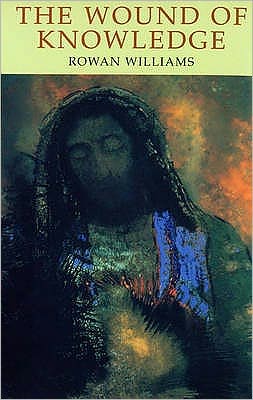
Hurts so good.
In this classic treatise on Christian spirituality, Rowan Williams takes us with a new eye along a road marked out by Paul, John, Ignatius, Irenaeus, Clement of Alexandria, Origen, Athanasius, Basil, Gregory of Nyssa, Augustine, and finally to Luther and St. John of the Cross. The Wound of Knowledge is a penetrating psychological and intellectual analysis of Christian spirituality.

Monkey see, monkey don’t.
According to British scholar Conor Cunningham, the debate today between religion and evolution has been hijacked by extremists: on one side stand fundamentalist believers who reject evolution outright; on the opposing side are fundamentalist atheists who claim that Darwin’s theory rules out the possibility of God. Both sides are dead wrong, argues Cunningham, who is at once a Christian and a firm believer in the theory of evolution. In Darwin’s Pious Idea Cunningham puts forth a trenchant, compelling case for both creation and evolution, drawing skillfully on an array of philosophical, theological, historical, and scientific sources to buttress his arguments.
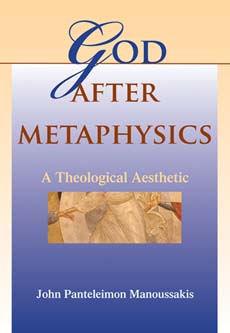
Glowing blurbs all over the back of this one.
And 1. I’ll be reading this soon:
While philosophy believes it is impossible to have an experience of God without the senses, theology claims that such an experience is possible, though potentially idolatrous. In this engagingly creative book, John Panteleimon Manoussakis ends the impasse by proposing an aesthetic allowing for a sensuous experience of God that is not subordinated to imposed categories or concepts. In God After Metaphysics Manoussakis draws upon the theological traditions of the Eastern Church, including patristic and liturgical resources, to build a theological aesthetic founded on the inverted gaze of icons, the augmented language of hymns, and the reciprocity of touch. Manoussakis explores how a relational interpretation of being develops a fuller and more meaningful view of the phenomenology of religious experience beyond metaphysics and onto-theology.
Nota Bene: Cosmos The In Lost also features a top 10 list of books about heaven and hell.
Musical coda:
Denying and Disclosing God: The Ambiguous Progress of Modern Atheism
Next Post

July 14, 2013 Anti-Catholicism: America's Last Acceptable Prejudice
Browse Our Archives
Select a Category #WhyRemainCatholic Abortion Advent Anti-Catholicism Arts Atheism Beauty Benedict XVI Bible Book Review Catholic Cinema Comedy Cosmos: A Space-Time Odyssey Czesław Miłosz Dariusz Karłowicz Devil Easter Eastern Orthodoxy Economics Environment Family Famous Atheists Who Weren't Atheists Guest Post Hans Urs von Balthasar HHS Mandate History Imagination Interview Islam Jean-Luc Marion John Paul II Judaism Just War Lent Literature Little Sisters of the Poor Liturgy Martyrdom Music News Paganism Patristics Phenomenology Philosophy Pierre Hadot Poetry Poland Pop Culture Pope Francis Poverty Prayer Protestantism Rabelais Race Remi Brague Rene Girard Russia Sam Rocha Science & Religion SCOTUS Secularization Sexual Abuse Sexuality Silence Solidarity Stratford Caldecott Synod14 Terrorism Top 10 Uncategorized Walker Percy War Weakened Edition World War II World Youth Day WYD Krakow
Select a Month July 2017 June 2017 May 2017 April 2017 March 2017 February 2017 January 2017 December 2016 October 2016 September 2016 August 2016 July 2016 June 2016 May 2016 April 2016 March 2016 February 2016 January 2016 December 2015 November 2015 October 2015 September 2015 August 2015 July 2015 June 2015 May 2015 April 2015 March 2015 February 2015 January 2015 December 2014 November 2014 October 2014 September 2014 August 2014 July 2014 May 2014 April 2014 March 2014 February 2014 January 2014 December 2013 November 2013 October 2013 September 2013 August 2013 July 2013 June 2013 May 2013
Follow Us!
TAKE THE
Religious Wisdom Quiz
What does the name "Samuel" mean?
Select your answer to see how you score.
The Lord saves God has heard Chosen one God is my judge
Related posts from Cosmos The In Lost

The Surprising Anti-Capitalist Logic Behind the Catholic Church's...

Where Does the Body of Christ Go After...

How is Classical Philosophy is Like War?

Why Does the World's Leading Philosopher Remain a...
TRENDING AT PATHEOS Catholic

Creation, Preservation, and Teleology in Catholic Theology
As I write this, it is very early Monday morning. Like millions...

The Parable Of The Sower And The Word...
One of Christ’s most famous parables is that of the sower who...

Rejecting Doom: Christian Hope And Human Action
Christianity is a religion of hope. We are to have hope and...

Why I Choose the Eucharist Over the Sermon
Choose the Eucharist, Not the Sermon What are we supposed to get...

5 Design Elements Found in Spiritually Rooted Homes
Putting Spirituality Into Home Decor Our homes are more than our living...

Credo: A Story of God Told with the...
About 10 years ago, I began to imagine a personal "Credo" that...
view all Catholic blogs
Ad-Free & Subscriber Log-In Subscription Support
- About Us
- 2026 Calendar
- Videos
- Podcasts
- Library of World Religions
- Faith In Media Tracker
- Advertise With Us
- Write for Us
- Privacy Policy
- Terms of Service
- Do Not Sell My Data
- Contact Us
- Radiant Digital
- Manage Newsletter Subscriptions
- Unsubscribe From Notifications
- Sitemap
Copyright 2008-2026, Patheos. All rights reserved.
Subscription Support Ad-Free & Subscriber Log-In
Follow Patheos