
BuddhistCatholicContemplativeEvangelicalGeneral ChristianHinduJewishLatter-day SaintMuslimNew VisionsProgressive Christian
Beliefs
- Buddhist
- Catholic
- Contemplative
- Evangelical
- General Christian
- Hindu
- Jewish
- Latter-day Saint
- More Voices
- Muslim
- New Visions
- Pagan
- Progressive Christian
Topics
- Religion News
- Food and Religion
- Sports and Religion
- Religious Art
- Religious Music and Entertainment
- Religious Events
- History and Religion
- Style and Religion
- Politics and Religion
- Women in Religion
- Recreation Outdoors and Religion
- Business Finance and Religion
- Careers Workplace and Religion
- Education and Religion
- Family Parenting and Religion
- Health Fitness and Religion
- Home and Religion
- Relationships and Religion
- Technology and Religion
- Travel and Religion
Columnists
- Buddhist Columnists
- Business Finance and Religion Columnists
- Careers Workplace and Religion Columnists
- Catholic Columnists
- Contemplative Columnists
- Education and Religion Columnists
- Evangelists Columnists
- Family Parenting and Religion Columnists
- General Christian Columnists
- Health Fitness and Religion Columnists
- Hindu Columnists
- History and Religion Columnists
- Home and Religion Columnists
- Jewish Columnists
- More Voices Columnists
- Latter Day Columnists
- Muslim Columnists
- New Visions Columnists
- Nonreligious Columnists
- Pagan Columnists
- Politics and Religion Columnists
- Progressive Columnists
- Recreation Outdoors and Religion Columnists
- Relationships and Religion Columnists
- Religion News Columnists
- Religious Art Columnists
- Religious Events Columnists
- Religious Music and Entertainment Columnists
- Sports and Religion Columnists
- Style and Religion Columnists
- Technology and Religion Columnists
- Travel and Religion Columnists
- Women in Religion Columnists
Resource Library
- 2026 Calendar
- Library of World Religions
- The 100 Most Holy Places on Earth
- Patheos Answers
- Podcasts
- Videos
- Faith Leaders Database
- Anglican Episcopalian
- Bahai
- Baptist
- Buddhism
- Christianity
- Confucianism
- Eastern Orthodoxy
- Hinduism
- Holiness and Pentecostal
- ISKCON
- Islam
- Judaism
- Lutheran
- Methodist
- The Church of Jesus Christ of Latter-day Saints
- New Age
- Paganism
- Presbytarian and Reformed
- Protestantism
- Religion Behind the Scenes
- Roman Catholic
- Scientology
- Shia Islam
- Sikhism
- Sufism
- Sunni Islam
- Taoism
- Zen
- See all religions
Research Tools
 Ad-Free & Subscriber Log-In Subscription Support
Ad-Free & Subscriber Log-In Subscription Support
Follow Patheos 

- Trending:
- Forgiveness
- |
- Marriage
- |
- Consciousness
- |
- Death Penalty
- |
- Election
- |
- Halloween
 Cosmos The In Lost
- Home
- Catholic
- Zbigniew Herbert Tempers the Rational Fury
Zbigniew Herbert Tempers the Rational Fury
Last updated on: June 25, 2013 at 12:04 pm by Artur Rosman
Zbigniew Herbert Tempers the Rational Fury 2013-06-25T12:04:41-07:00 Artur Rosman
Patheos Explore the world's faith through different perspectives on religion and spirituality! Patheos has the views of the prevalent religions and spiritualities of the world.

The groundbreaking anthology that brought Herbert and the rest of modern Polish poetry to the West.
Zbigniew Herbert (1924-1998) is one of the two greatest Polish poets of the 20th century. He is part of a poetic duo, or duel, with Czeslaw Milosz. Milosz was more of a mystic, Herbert a skeptic. Milosz was almost always critical of Poland, whereas Herbert entrenched himself within the Polish tradition. I want to avoid the dreaded words “nationalist” or “patriot,” but Hebert was both in the best sense. It’s possible to be both without undercutting the universal reach of one’s writing. Michael Hofman, the translator of German literature (oh the irony!), confirms this what he said in Poetry some years back:
“Zbigniew Herbert died in 1998. He was a very great and idiosyncratic poet—something in me wants to say a peerless poet—and, it is reported, a perennial Nobel bridesmaid. It was ironic—and no doubt wounding—that during the period of his expectations, in 1980 and 1996, two other Poles of, as I see it, manifestly lesser gifts and importance, Czeslaw Milosz and Wislawa Szymborska, were chosen by the Academy and decorated by Carl Gustav.”
The rivalry with Milosz resurfaces in those comments. There’s even a quasi-mythological dinner party quarrel between the two poets documented by Cynthia Haven here in the post on “The Worst Dinner-Party Ever.”
More biographical and bibliographical information is available here.

Spinoza’s home.
“Mr. Cogito Tells of the Temptation of Spinoza” [Mr. Cogito is a persona Herbert frequently used to disabuse his readers of their Cartesian prejudices. While reading this poem it’s important to remember how much Spinoza fought the biblical notion of a personal God. Spinoza’s god was an impersonal force. Think back to Simone Weil’s comments in yesterday’s post here.]
Baruch Spinoza of Amsterdam
was seized by a desire to reach God
in the attic
cutting lenses
he suddenly pierced a curtain
and stood face to face
he spoke for a long time
(and as he so spoke
his mind enlarged
and his soul)
he posed questions
about the nature of man
–distracted God stroked his beard
he asked about the first cause
–God looked into infinity
he asked about the final cause
—God cracked his knuckles
cleared his throat
when Spinoza became silent
God spake
—you talk nicely Baruch
I like your geometric Latin
and the clear syntax
the symmetry of your arguments
let’s speak however
about Things Truly
Great
—look at your hands
cut and trembling
—you destroy your eyes
in the darkness
—you are badly nourished
you dress shabbily
buy a new house
forgive the Venetian mirrors
that they repeat surfaces
—forgive flowers in the hair
the drunken song
—look after your income
like your colleague Descartes
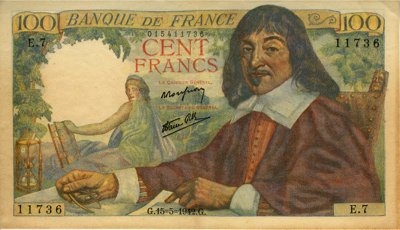
For Sale: Descartes
—be cunning
like Erasmus
—dedicate a treatise
to Louis XIV
he won’t read it anyway
—temper the rational fury
thrones will fall because of it
and stars turn black
—think
about the woman
who will give you a child
—you see Baruch
we are speaking about Great Things
—I want to be loved
by the uneducated and the violent
they are the only ones
who really hunger for me

Foolishness to the wise.
now the curtain falls
Spinoza remains alone
he does not see the golden cloud
the light on the heights
he sees darkness
he hears the creaking of the stairs
footsteps going down
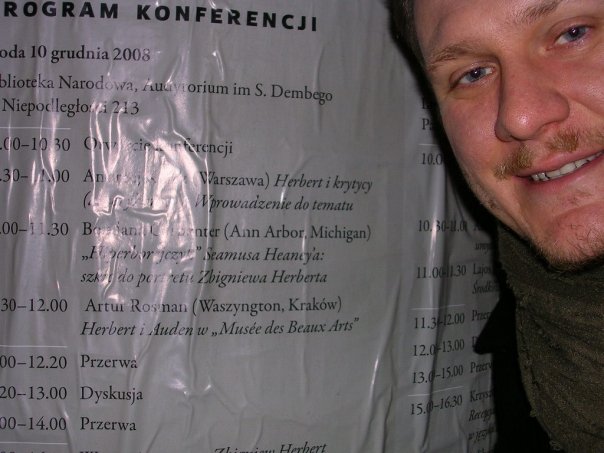
Oh look, there’s my name! Herbert reads well alongside with Auden.
What follows is a short-short story, a favorite genre of Herbert’s. You can find some more of them on the Artful Dodge page here.
“Spinoza’s Bed”
by Zbigniew Herbert
IT IS AN amazing thing that our memory best retains images of great philosophers when their lives were coming to an end. Socrates raising the chalice with hemlock to his mouth, Seneca whose veins were opened by a slave (there is a painting of this by Rubens), Descartes roaming cold palace rooms with a foreboding that his role of teacher of the Swedish Queen would be his last, old Kant smelling a grated horseradish before his daily walk (the cane preceding him, sinking deeper and deeper into the sand), Spinoza consumed by tuberculosis and patiently polishing lenses, so weak he is unable to finish his Treatise on the Rainbow. . .A gallery of noble moribunds, pale masks, plaster casts.
In the eyes of his biographers Spinoza was unmistakably an ideal wise man: exclusively concentrated on the precise architecture of his works, perfectly indifferent to material affairs, and liberated from all passions. But an episode in his life is passed over in silence by some biographers, while others consider it only an incomprehensible, youthful whim.
Spinoza’s father died in 1656. In his family Baruch had the reputation of an eccentric young man who had no practical sense and wasted precious time studying incomprehensible books. Due to clever intrigues (his stepsister Rebecca and her husband Casseres played the main role in this) he was deprived of his inheritance. She hoped the absentminded young man would not even notice. But it happened otherwise.
Baruch initiated a lawsuit in court with an energy no one suspected him to have. He hired lawyers, called witnesses, was both matter-of-fact and passionate, extremely well-oriented in the most subtle details of procedure and convincing as a son injured and stripped of his rights.
They settled the division of the estate relatively quickly (clear legal rules existed in this matter). But then a second act of the trial unexpectedly followed, causing a general sense of unpleasantness and embarrassment.
As if the devil of possessiveness had entered him, Baruch began to litigate over almost each object from his father’s house. It started with the bed in which his mother, Deborah, had died (he did not forget about its dark green curtains). Then he requested objects without any value, explaining he had an emotional attachment to them. The judges were monumentally bored, and could not understand where this irresistible desire in the ascetic young man came from. Why did he wish to inherit a poker, a pewter pot with a broken handle, an ordinary kitchen stool, a china figure representing a shepherd without a head, a broken clock which stood in the vestibule and was a home for mice, or a painting that hung over the fireplace and was so completely blackened it looked like a self-portrait of tar?
Baruch won the trial. He could now sit with pride on his pyramid of spoils, casting spiteful glances at those who tried to disinherit him. But he did not do this. He only chose his mother’s bed (with the dark green curtain), giving the rest away to his adversaries defeated at the trial.
No one understood why he acted this way. It seemed an obvious extravagance, but in fact had a deeper meaning. It was as if Baruch wanted to say that virtue is not at all an asylum for the weak. The act of renunciation is an act of courage-it requires the sacrifice of things universally desired (not without regret and hesitation) for matters that are great, and incomprehensible.
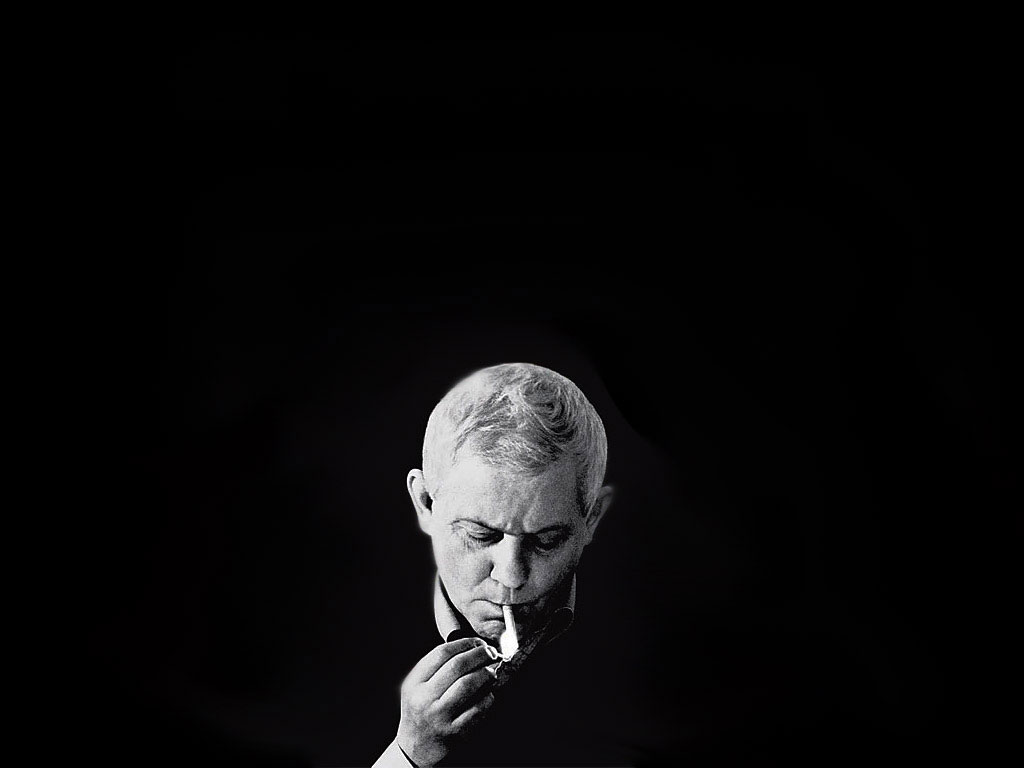
Herbert: calming the rational fury.
Finally, you might want to read a great article on the continuing influence of Spinoza upon what’s called the “turn to religion” in French philosophy. It’s by my professor Douglas Collins and has more citations per hour than anything else on the face of the earth. It’s called “L’Amour intellectuel de Dieu: Lacan’s Spinozism and Religious Revival in Recent French Thought” and I think it’s invaluable. Doug is also famous for getting some eccentric student reviews–see what I mean here.
Previous Post

June 23, 2013
Sunday Spoiler: The Liturgy Is *Not* Sacred
Browse Our Archives
Select a Category #WhyRemainCatholic Abortion Advent Anti-Catholicism Arts Atheism Beauty Benedict XVI Bible Book Review Catholic Cinema Comedy Cosmos: A Space-Time Odyssey Czesław Miłosz Dariusz Karłowicz Devil Easter Eastern Orthodoxy Economics Environment Family Famous Atheists Who Weren't Atheists Guest Post Hans Urs von Balthasar HHS Mandate History Imagination Interview Islam Jean-Luc Marion John Paul II Judaism Just War Lent Literature Little Sisters of the Poor Liturgy Martyrdom Music News Paganism Patristics Phenomenology Philosophy Pierre Hadot Poetry Poland Pop Culture Pope Francis Poverty Prayer Protestantism Rabelais Race Remi Brague Rene Girard Russia Sam Rocha Science & Religion SCOTUS Secularization Sexual Abuse Sexuality Silence Solidarity Stratford Caldecott Synod14 Terrorism Top 10 Uncategorized Walker Percy War Weakened Edition World War II World Youth Day WYD Krakow
Select a Month July 2017 June 2017 May 2017 April 2017 March 2017 February 2017 January 2017 December 2016 October 2016 September 2016 August 2016 July 2016 June 2016 May 2016 April 2016 March 2016 February 2016 January 2016 December 2015 November 2015 October 2015 September 2015 August 2015 July 2015 June 2015 May 2015 April 2015 March 2015 February 2015 January 2015 December 2014 November 2014 October 2014 September 2014 August 2014 July 2014 May 2014 April 2014 March 2014 February 2014 January 2014 December 2013 November 2013 October 2013 September 2013 August 2013 July 2013 June 2013 May 2013
Follow Us!
TAKE THE
Religious Wisdom Quiz
Who was Boaz's kinsman-redeemer?
Select your answer to see how you score.
Elimelech Naomi Unnamed relative Ruth
Related posts from Cosmos The In Lost

Childlike Wonder in a Misbegotten World

TOP10 Booklist: What Theology, Science & Philosophy Should...

Religion: Either Everything, or Nothing
Let Despair be Known as my Ebb-tide
TRENDING AT PATHEOS Catholic

Rejecting Doom: Christian Hope And Human Action
Christianity is a religion of hope. We are to have hope and...

It’s What Comes From Within Which Matters
One of the most difficult things for us to understand is why...

Why I Choose the Eucharist Over the Sermon
Choose the Eucharist, Not the Sermon What are we supposed to get...

5 Design Elements Found in Spiritually Rooted Homes
Putting Spirituality Into Home Decor Our homes are more than our living...

Credo: A Story of God Told with the...
About 10 years ago, I began to imagine a personal "Credo" that...

The Anatomy of Divine Revelation in Catholic Thought
The claim that God has made Himself known to human beings is...
view all Catholic blogs
Ad-Free & Subscriber Log-In Subscription Support
- About Us
- 2026 Calendar
- Videos
- Podcasts
- Library of World Religions
- Faith In Media Tracker
- Advertise With Us
- Write for Us
- Privacy Policy
- Terms of Service
- Do Not Sell My Data
- Contact Us
- Radiant Digital
- Manage Newsletter Subscriptions
- Unsubscribe From Notifications
- Sitemap
Copyright 2008-2026, Patheos. All rights reserved.
Subscription Support Ad-Free & Subscriber Log-In
Follow Patheos