
BuddhistCatholicContemplativeEvangelicalGeneral ChristianHinduJewishLatter-day SaintMuslimNew VisionsProgressive Christian
Beliefs
- Buddhist
- Catholic
- Contemplative
- Evangelical
- General Christian
- Hindu
- Jewish
- Latter-day Saint
- More Voices
- Muslim
- New Visions
- Pagan
- Progressive Christian
Topics
- Religion News
- Food and Religion
- Sports and Religion
- Religious Art
- Religious Music and Entertainment
- Religious Events
- History and Religion
- Style and Religion
- Politics and Religion
- Women in Religion
- Recreation Outdoors and Religion
- Business Finance and Religion
- Careers Workplace and Religion
- Education and Religion
- Family Parenting and Religion
- Health Fitness and Religion
- Home and Religion
- Relationships and Religion
- Technology and Religion
- Travel and Religion
Columnists
- Buddhist Columnists
- Business Finance and Religion Columnists
- Careers Workplace and Religion Columnists
- Catholic Columnists
- Contemplative Columnists
- Education and Religion Columnists
- Evangelists Columnists
- Family Parenting and Religion Columnists
- General Christian Columnists
- Health Fitness and Religion Columnists
- Hindu Columnists
- History and Religion Columnists
- Home and Religion Columnists
- Jewish Columnists
- More Voices Columnists
- Latter Day Columnists
- Muslim Columnists
- New Visions Columnists
- Nonreligious Columnists
- Pagan Columnists
- Politics and Religion Columnists
- Progressive Columnists
- Recreation Outdoors and Religion Columnists
- Relationships and Religion Columnists
- Religion News Columnists
- Religious Art Columnists
- Religious Events Columnists
- Religious Music and Entertainment Columnists
- Sports and Religion Columnists
- Style and Religion Columnists
- Technology and Religion Columnists
- Travel and Religion Columnists
- Women in Religion Columnists
Resource Library
- 2026 Calendar
- Library of World Religions
- The 100 Most Holy Places on Earth
- Patheos Answers
- Podcasts
- Videos
- Faith Leaders Database
- Anglican Episcopalian
- Bahai
- Baptist
- Buddhism
- Christianity
- Confucianism
- Eastern Orthodoxy
- Hinduism
- Holiness and Pentecostal
- ISKCON
- Islam
- Judaism
- Lutheran
- Methodist
- The Church of Jesus Christ of Latter-day Saints
- New Age
- Paganism
- Presbytarian and Reformed
- Protestantism
- Religion Behind the Scenes
- Roman Catholic
- Scientology
- Shia Islam
- Sikhism
- Sufism
- Sunni Islam
- Taoism
- Zen
- See all religions
Research Tools
 Ad-Free & Subscriber Log-In Subscription Support
Ad-Free & Subscriber Log-In Subscription Support
Follow Patheos 

- Trending:
- Forgiveness
- |
- Marriage
- |
- Consciousness
- |
- Death Penalty
- |
- Election
- |
- Halloween
 Cosmos The In Lost
- Home
- Catholic
- Sunday Spoiler: The Liturgy Is *Not* Sacred
Sunday Spoiler: The Liturgy Is *Not* Sacred
Last updated on: May 31, 2015 at 11:09 am by Artur Rosman
Sunday Spoiler: The Liturgy Is *Not* Sacred 2015-05-31T11:09:17-07:00 Artur Rosman
Patheos Explore the world's faith through different perspectives on religion and spirituality! Patheos has the views of the prevalent religions and spiritualities of the world.
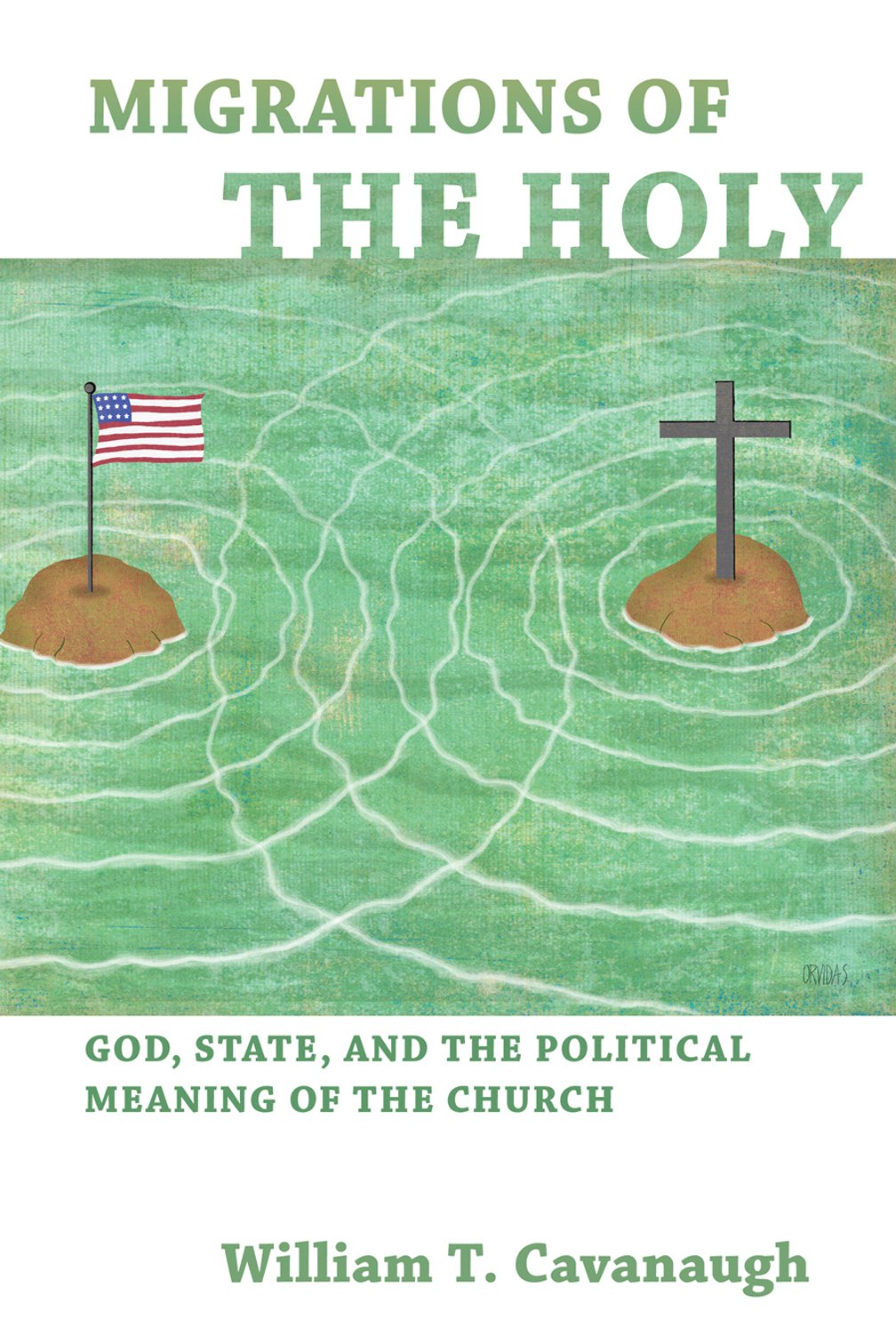
This book is huge.
If you’re looking for a book which is a huge difference-maker in how you view Christianity, then you should look no further than Cavanaugh’s Migrations of the Holy. The point he makes here opens up several lines of thinking:
“Today the most significant misunderstanding of the Christian liturgy is that it is sacred. Let me clarify. The problem is that ‘sacred’ has been opposed to ‘secular,’ and the two are presumed to describe two separate—but occasionally related—orbits. The problem is not simply that this separation leaves the church’s liturgy begging for relevance to the ‘real world.’ The problem is rather that the supposedly ‘secular’ world invents its own liturgies, with pretensions every bit as ‘sacred’ as those of the Christian liturgy, and these liturgies can come to rival the church’s liturgy for our bodies and our minds. In this brief essay I want to explore in particular some of the liturgies of the American nation-state. I will suggest first that such liturgies are not properly called ‘secular,’ and second, that the Christian liturgy is not properly cordoned off into the realm of the ‘sacred.'”
These comments come from the chapter “Liturgies of Church and State,” which happens to be available as a standalone .pdf read right here.
This expanded notion of liturgy might be useful for literary criticism, probably also political science, or at least for the reading of Czeslaw Milosz in my case. Charles Taylor is onto the same insight in A Secular Age with his notion of cross-pressuring:
“Our age is very far from settling into a comfortable unbelief. The secular age is schizophrenic, or better, deeply cross-pressured.”
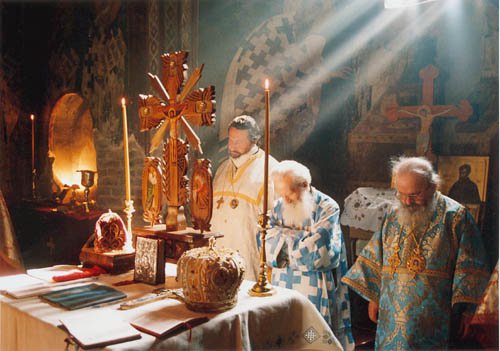
Liturgy: It’s not what it looks like.
The cross-pressuring by both the liturgy of the church and the liturgy of the state (and modernity as scientism) is especially strong in the Milosz poem below. What’s remarkable about it is how the two liturgies are presented as overlapping, even coinciding. The secularizing withdrawal of judgment and punishment turns into a hellish Divine punishment in itself.
Oeconomia Divina
I did not expect to live in such an unusual moment.
When the God of thunders and of rocky heights,
The Lord of hosts, Kyrios Sabaoth,
Would humble people to the quick,
Allowing them to act whatever way they wished,
Leaving to them conclusions, saying nothing.
It was a spectacle that was indeed unlike
The agelong cycle of royal tragedies.
Roads on concrete pillars, cities of glass and cast iron,
Airfields larger than tribal dominions
Suddenly ran short of their essence and disintegrated
Not in a dream but really, for, subtracted from themselves,
They could only hold on as do things which should not last.
Out of trees, field stones, even lemons on the table,
Materiality escaped and their spectrum
Proved to be a void, a haze on a film.
Dispossessed of its objects, space was swarming.
Everywhere was nowhere and nowhere, everywhere.
Letters in books turned silver-pale, wobbled, and faded
The hand was not able to trace the palm sign, the river sign, or the sign of ibis.
A hullabaloo of many tongues proclaimed the mortality of the language.
A complaint was forbidden as it complained to itself.
People, afflicted with an incomprehensible distress,
Were throwing off their clothes on the piazzas so that nakedness might call
For judgment.
But in vain they were longing after horror, pity, and anger.
Neither work nor leisure
Was justified,
Nor the face, nor the hair nor the loins
Nor any existence.
The line “Letters in books turned silver-pale, wobbled and faded” cannot but remind me of this tragically magical scene from Fellini’s Roma:
More literature on Cosmos the in Lost can be found here, here, here, here, and in plenty of other places.
Previous Post

June 22, 2013
Colm Toibin's Regensburg Moment & Macauley's Catholic Dissidents
Next Post
June 25, 2013 Zbigniew Herbert Tempers the Rational Fury
Browse Our Archives
Select a Category #WhyRemainCatholic Abortion Advent Anti-Catholicism Arts Atheism Beauty Benedict XVI Bible Book Review Catholic Cinema Comedy Cosmos: A Space-Time Odyssey Czesław Miłosz Dariusz Karłowicz Devil Easter Eastern Orthodoxy Economics Environment Family Famous Atheists Who Weren't Atheists Guest Post Hans Urs von Balthasar HHS Mandate History Imagination Interview Islam Jean-Luc Marion John Paul II Judaism Just War Lent Literature Little Sisters of the Poor Liturgy Martyrdom Music News Paganism Patristics Phenomenology Philosophy Pierre Hadot Poetry Poland Pop Culture Pope Francis Poverty Prayer Protestantism Rabelais Race Remi Brague Rene Girard Russia Sam Rocha Science & Religion SCOTUS Secularization Sexual Abuse Sexuality Silence Solidarity Stratford Caldecott Synod14 Terrorism Top 10 Uncategorized Walker Percy War Weakened Edition World War II World Youth Day WYD Krakow
Select a Month July 2017 June 2017 May 2017 April 2017 March 2017 February 2017 January 2017 December 2016 October 2016 September 2016 August 2016 July 2016 June 2016 May 2016 April 2016 March 2016 February 2016 January 2016 December 2015 November 2015 October 2015 September 2015 August 2015 July 2015 June 2015 May 2015 April 2015 March 2015 February 2015 January 2015 December 2014 November 2014 October 2014 September 2014 August 2014 July 2014 May 2014 April 2014 March 2014 February 2014 January 2014 December 2013 November 2013 October 2013 September 2013 August 2013 July 2013 June 2013 May 2013
Follow Us!
TAKE THE
Religious Wisdom Quiz
Where was Jesus Born?
Select your answer to see how you score.
Bethlehem Shiloh Jerusalem Nazareth
Related posts from Cosmos The In Lost

The Surprising Anti-Capitalist Logic Behind the Catholic Church's...

How is Classical Philosophy is Like War?

Why Does the World's Leading Philosopher Remain a...

Post-Execution Church: Rise Up from the Electric Chair!
TRENDING AT PATHEOS Catholic

Creation, Preservation, and Teleology in Catholic Theology
As I write this, it is very early Monday morning. Like millions...

The Parable Of The Sower And The Word...
One of Christ’s most famous parables is that of the sower who...

Rejecting Doom: Christian Hope And Human Action
Christianity is a religion of hope. We are to have hope and...

Why I Choose the Eucharist Over the Sermon
Choose the Eucharist, Not the Sermon What are we supposed to get...

5 Design Elements Found in Spiritually Rooted Homes
Putting Spirituality Into Home Decor Our homes are more than our living...

Credo: A Story of God Told with the...
About 10 years ago, I began to imagine a personal "Credo" that...
view all Catholic blogs
Ad-Free & Subscriber Log-In Subscription Support
- About Us
- 2026 Calendar
- Videos
- Podcasts
- Library of World Religions
- Faith In Media Tracker
- Advertise With Us
- Write for Us
- Privacy Policy
- Terms of Service
- Do Not Sell My Data
- Contact Us
- Radiant Digital
- Manage Newsletter Subscriptions
- Unsubscribe From Notifications
- Sitemap
Copyright 2008-2026, Patheos. All rights reserved.
Subscription Support Ad-Free & Subscriber Log-In
Follow Patheos