
BuddhistCatholicContemplativeEvangelicalGeneral ChristianHinduJewishLatter-day SaintMuslimNew VisionsProgressive Christian
Beliefs
- Buddhist
- Catholic
- Contemplative
- Evangelical
- General Christian
- Hindu
- Jewish
- Latter-day Saint
- More Voices
- Muslim
- New Visions
- Pagan
- Progressive Christian
Topics
- Religion News
- Food and Religion
- Sports and Religion
- Religious Art
- Religious Music and Entertainment
- Religious Events
- History and Religion
- Style and Religion
- Politics and Religion
- Women in Religion
- Recreation Outdoors and Religion
- Business Finance and Religion
- Careers Workplace and Religion
- Education and Religion
- Family Parenting and Religion
- Health Fitness and Religion
- Home and Religion
- Relationships and Religion
- Technology and Religion
- Travel and Religion
Columnists
- Buddhist Columnists
- Business Finance and Religion Columnists
- Careers Workplace and Religion Columnists
- Catholic Columnists
- Contemplative Columnists
- Education and Religion Columnists
- Evangelists Columnists
- Family Parenting and Religion Columnists
- General Christian Columnists
- Health Fitness and Religion Columnists
- Hindu Columnists
- History and Religion Columnists
- Home and Religion Columnists
- Jewish Columnists
- More Voices Columnists
- Latter Day Columnists
- Muslim Columnists
- New Visions Columnists
- Nonreligious Columnists
- Pagan Columnists
- Politics and Religion Columnists
- Progressive Columnists
- Recreation Outdoors and Religion Columnists
- Relationships and Religion Columnists
- Religion News Columnists
- Religious Art Columnists
- Religious Events Columnists
- Religious Music and Entertainment Columnists
- Sports and Religion Columnists
- Style and Religion Columnists
- Technology and Religion Columnists
- Travel and Religion Columnists
- Women in Religion Columnists
Resource Library
- 2026 Calendar
- Library of World Religions
- The 100 Most Holy Places on Earth
- Patheos Answers
- Podcasts
- Videos
- Faith Leaders Database
- Anglican Episcopalian
- Bahai
- Baptist
- Buddhism
- Christianity
- Confucianism
- Eastern Orthodoxy
- Hinduism
- Holiness and Pentecostal
- ISKCON
- Islam
- Judaism
- Lutheran
- Methodist
- The Church of Jesus Christ of Latter-day Saints
- New Age
- Paganism
- Presbytarian and Reformed
- Protestantism
- Religion Behind the Scenes
- Roman Catholic
- Scientology
- Shia Islam
- Sikhism
- Sufism
- Sunni Islam
- Taoism
- Zen
- See all religions
Research Tools
 Ad-Free & Subscriber Log-In Subscription Support
Ad-Free & Subscriber Log-In Subscription Support
Follow Patheos 

- Trending:
- Forgiveness
- |
- Marriage
- |
- Consciousness
- |
- Death Penalty
- |
- Election
- |
- Halloween
 Cosmos The In Lost
- Home
- Catholic
- Colm Toibin's Regensburg Moment & Macauley's Catholic Dissidents
Colm Toibin's Regensburg Moment & Macauley's Catholic Dissidents
Last updated on: June 22, 2013 at 12:39 pm by Artur Rosman
Colm Toibin's Regensburg Moment & Macauley's Catholic Dissidents 2013-06-22T12:39:24-07:00 Artur Rosman
Patheos Explore the world's faith through different perspectives on religion and spirituality! Patheos has the views of the prevalent religions and spiritualities of the world.
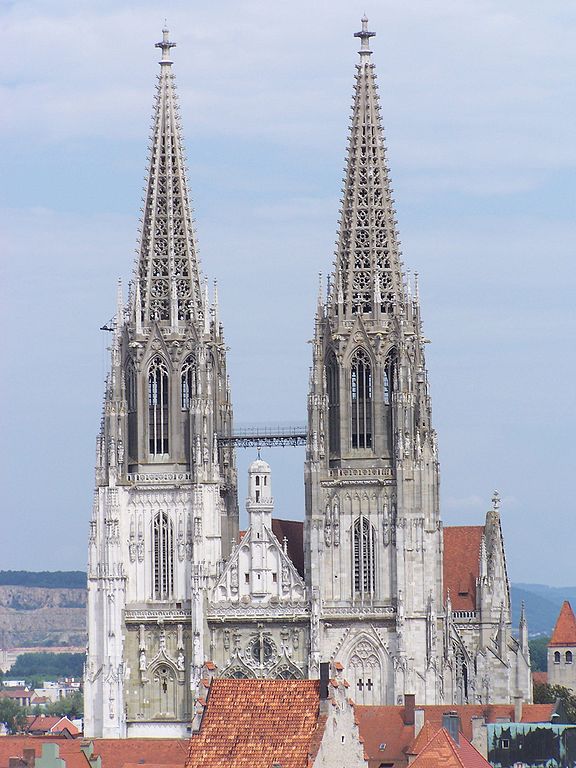
Regensburg solid.
Colm Tóibín’s The Sign of the Cross: Travels in Catholic Europe is a real treat. There’s nothing like seeing the familiar, in this case Catholicism, from an eccentric standpoint. It’s a roller-coaster ride where the memoirist simultaneously plays the role of Catholic insider and outsider. Tóibín frequently rubs me the wrong way with his pronouncements about Polish Catholicism (which I partially registered here).
His speculation that John Paul II would not even know how to fathom the profound depths of Bultmannian demythologization in the watered-down secondhand version Tóibín got from the first-rate second-rate theologian Norbert Brox is (hopefully) unintentionally comical. Note the Dowdish bathos (again, comedy?) when he obliquely references Hamlet in his evaluation of Brox vs. Wojtyla:
“It struck me that these new ideas [of gnostic provenance, only about 1900 years older than Bultmann (my own interjection)] were being fostered once more in the fertility of the German mind, and were so far from what is dreamed of in John Paul II’s philosophy that he probably would not know how to counteract them.”
These revelations are usually followed in the memoir by serious (wink, wink, nudge, nudge) reluctance to submit to Catholic discipline and mysteriously combined with mind-numbingly uncritical acceptance of Primal Scream therapy along with a heavy dose of ketamine.
I’m having too much fun here, but he does get serious and insightful:
“‘Protestants one, Catholics nil,’ I said to myself as I went to midnight Mass the following evening in the Catholic cathedral in Regensburg. But then I thought about it: they won on music and sheer, solemn style, and their churches were charming and pretty and neat. But their churches were small. Our Catholic cathedral in Regensburg, on the other hand, was a big soaring, shadowy Gothic structure, by far the most imposing building in the city. They had Bach; we had buttressing.”
[Video courtesy of Fr. Joseph Koczera, SJ who runs a respectable and noteworthy blog “The City and the World.” Give it a spin here.]
The solidity of the popish institutional buttressing came into sharp focus in yet another great column by Philip Jenkins, “Macaulay’s Catholic Dissenters” over at Real Clear Religion. Borrowing heavily from Macauley’s review of von Ranke’s book on the popes, Jenkins notes Rome’s effectiveness in flexibly absorbing and directing the energies of eccentric figures and movements in ways Protestantism doesn’t:
“Macaulay notes that Christianity inevitably inspires great thinkers and activists, what we might call spiritual entrepreneurs. The enthusiasm of such individuals can make them hard to live with, and institutions find it very difficult to keep them within reasonable bounds. As these people know, absolutely, that they are serving God, they see no point in following merely human instructions. Inevitably, charismatic or prophetic individuals often desert their former institutions to set up new churches, sects or denominations, and that process has recurred frequently within the Protestant tradition. In fact, it is a trademark of that tradition.
The Catholic Church, in contrast, has always shown its ability to absorb an amazing range of dissidents. Its inclusive powers are not absolute — witness Martin Luther, and the various spiritual leaders condemned as heretics throughout the years. But in countless cases, the church succeeded. The Catholic genius was to provide means to absorb and channel virtually any form of charisma or inspired spirituality, while at the same time presenting itself as an unchanging and even inflexible hierarchical institution, semper eadem–always the same. We think how the wild, anarchic, spirituality of St. Francis was channeled and disciplined into the Franciscan Order. Eventually, even a pope would take his name.”
On the eve of the 500th anniversary of the Reformation (2017) Jenkins has the following to say to his Protestant colleagues:
“Macaulay’s vision [of Catholicism] could offer a practical recipe for modern-day churches contemplating how to survive and flourish in apparently impossible circumstances.
Not that this is new, but the formulation is striking. Many Protestants have been moving toward a rapprochement with Rome ever since the pathbreaking pontificate of John Paul II. This is evidenced by initiatives like Evangelicals and Catholics Together, or the intellectually vibrant Anglican and Roman Catholic scholarly cooperation under the banner of Radical Orthodoxy. There are also many recent instances of Protestant intellectuals crossing the Tiber, among them, Christian Smith (the sociologist), Paul J. Griffiths, and Reinhard Hutter.

Get it?
This institutional flexibility is the best example of Hegel’s most famous concept, Aufhebung, that I can think of. What a great historical irony given how Hegel saw Catholicism as but a stage on the way to universal Protestant individualism!
Yet a Chrome browser auto-correct reminds me that indeed some things are necessarily rejected in the dialectic. Whenever I try to type “syncretism” into this very blog entry it gets a red underlining. The suggested replacement is, get this, “cretinism.”
So perhaps Alasdair MacIntyre is a necessary supplement to what I’ve been saying here? In this video he reminds us that Catholicism always defines itself as being an alternative to, “instead of,” some other movement. The most famous example is Augustine who chose Catholic Christianity instead of continued adherence to neo-Platonic gnosticism. A more recent example is pope Francis continuing the severe critiques of capitalism of his two predecessors by presenting Catholicism as an alternative.
Here is MacIntyre:
http://www.youtube.com/watch?v=j7WWMkIOlsw
And so in the end . . . “Let me tell you, I stand with two-thousand years of darkness and bafflement and hunger behind me. My kind have harvested the souls of a million peasants! And I couldn’t give a [rat’s ass] for your Internet-assembled philosophy!” Check out the whole “Evil Vicar” clip below:
Previous Post

June 20, 2013
Pagan Symbols and the Coming Christianity
Next Post
June 23, 2013 Sunday Spoiler: The Liturgy Is *Not* Sacred
Browse Our Archives
Select a Category #WhyRemainCatholic Abortion Advent Anti-Catholicism Arts Atheism Beauty Benedict XVI Bible Book Review Catholic Cinema Comedy Cosmos: A Space-Time Odyssey Czesław Miłosz Dariusz Karłowicz Devil Easter Eastern Orthodoxy Economics Environment Family Famous Atheists Who Weren't Atheists Guest Post Hans Urs von Balthasar HHS Mandate History Imagination Interview Islam Jean-Luc Marion John Paul II Judaism Just War Lent Literature Little Sisters of the Poor Liturgy Martyrdom Music News Paganism Patristics Phenomenology Philosophy Pierre Hadot Poetry Poland Pop Culture Pope Francis Poverty Prayer Protestantism Rabelais Race Remi Brague Rene Girard Russia Sam Rocha Science & Religion SCOTUS Secularization Sexual Abuse Sexuality Silence Solidarity Stratford Caldecott Synod14 Terrorism Top 10 Uncategorized Walker Percy War Weakened Edition World War II World Youth Day WYD Krakow
Select a Month July 2017 June 2017 May 2017 April 2017 March 2017 February 2017 January 2017 December 2016 October 2016 September 2016 August 2016 July 2016 June 2016 May 2016 April 2016 March 2016 February 2016 January 2016 December 2015 November 2015 October 2015 September 2015 August 2015 July 2015 June 2015 May 2015 April 2015 March 2015 February 2015 January 2015 December 2014 November 2014 October 2014 September 2014 August 2014 July 2014 May 2014 April 2014 March 2014 February 2014 January 2014 December 2013 November 2013 October 2013 September 2013 August 2013 July 2013 June 2013 May 2013
Follow Us!
TAKE THE
Religious Wisdom Quiz
Who was Saul's son?
Select your answer to see how you score.
Jonathan Absalom Samuel David
Related posts from Cosmos The In Lost

The Surprising Anti-Capitalist Logic Behind the Catholic Church's...

Where Does the Body of Christ Go After...

How is Classical Philosophy is Like War?

Why Does the World's Leading Philosopher Remain a...
TRENDING AT PATHEOS Catholic

Creation, Preservation, and Teleology in Catholic Theology
As I write this, it is very early Monday morning. Like millions...

The Parable Of The Sower And The Word...
One of Christ’s most famous parables is that of the sower who...

Rejecting Doom: Christian Hope And Human Action
Christianity is a religion of hope. We are to have hope and...

Why I Choose the Eucharist Over the Sermon
Choose the Eucharist, Not the Sermon What are we supposed to get...

5 Design Elements Found in Spiritually Rooted Homes
Putting Spirituality Into Home Decor Our homes are more than our living...

Credo: A Story of God Told with the...
About 10 years ago, I began to imagine a personal "Credo" that...
view all Catholic blogs
Ad-Free & Subscriber Log-In Subscription Support
- About Us
- 2026 Calendar
- Videos
- Podcasts
- Library of World Religions
- Faith In Media Tracker
- Advertise With Us
- Write for Us
- Privacy Policy
- Terms of Service
- Do Not Sell My Data
- Contact Us
- Radiant Digital
- Manage Newsletter Subscriptions
- Unsubscribe From Notifications
- Sitemap
Copyright 2008-2026, Patheos. All rights reserved.
Subscription Support Ad-Free & Subscriber Log-In
Follow Patheos