
BuddhistCatholicContemplativeEvangelicalGeneral ChristianHinduJewishLatter-day SaintMuslimNew VisionsProgressive Christian
Beliefs
- Buddhist
- Catholic
- Contemplative
- Evangelical
- General Christian
- Hindu
- Jewish
- Latter-day Saint
- More Voices
- Muslim
- New Visions
- Pagan
- Progressive Christian
Topics
- Religion News
- Food and Religion
- Sports and Religion
- Religious Art
- Religious Music and Entertainment
- Religious Events
- History and Religion
- Style and Religion
- Politics and Religion
- Women in Religion
- Recreation Outdoors and Religion
- Business Finance and Religion
- Careers Workplace and Religion
- Education and Religion
- Family Parenting and Religion
- Health Fitness and Religion
- Home and Religion
- Relationships and Religion
- Technology and Religion
- Travel and Religion
Columnists
- Buddhist Columnists
- Business Finance and Religion Columnists
- Careers Workplace and Religion Columnists
- Catholic Columnists
- Contemplative Columnists
- Education and Religion Columnists
- Evangelists Columnists
- Family Parenting and Religion Columnists
- General Christian Columnists
- Health Fitness and Religion Columnists
- Hindu Columnists
- History and Religion Columnists
- Home and Religion Columnists
- Jewish Columnists
- More Voices Columnists
- Latter Day Columnists
- Muslim Columnists
- New Visions Columnists
- Nonreligious Columnists
- Pagan Columnists
- Politics and Religion Columnists
- Progressive Columnists
- Recreation Outdoors and Religion Columnists
- Relationships and Religion Columnists
- Religion News Columnists
- Religious Art Columnists
- Religious Events Columnists
- Religious Music and Entertainment Columnists
- Sports and Religion Columnists
- Style and Religion Columnists
- Technology and Religion Columnists
- Travel and Religion Columnists
- Women in Religion Columnists
Resource Library
- 2026 Calendar
- Library of World Religions
- The 100 Most Holy Places on Earth
- Patheos Answers
- Podcasts
- Videos
- Faith Leaders Database
- Anglican Episcopalian
- Bahai
- Baptist
- Buddhism
- Christianity
- Confucianism
- Eastern Orthodoxy
- Hinduism
- Holiness and Pentecostal
- ISKCON
- Islam
- Judaism
- Lutheran
- Methodist
- The Church of Jesus Christ of Latter-day Saints
- New Age
- Paganism
- Presbytarian and Reformed
- Protestantism
- Religion Behind the Scenes
- Roman Catholic
- Scientology
- Shia Islam
- Sikhism
- Sufism
- Sunni Islam
- Taoism
- Zen
- See all religions
Research Tools
 Ad-Free & Subscriber Log-In Subscription Support
Ad-Free & Subscriber Log-In Subscription Support
Follow Patheos 

- Trending:
- Forgiveness
- |
- Marriage
- |
- Consciousness
- |
- Death Penalty
- |
- Election
- |
- Halloween
 Cosmos The In Lost
- Home
- Catholic
- The Early Church? Show Me the Money!
The Early Church? Show Me the Money!
Last updated on: January 11, 2015 at 8:23 pm by Artur Rosman
The Early Church? Show Me the Money! 2015-01-11T20:23:40-07:00 Artur Rosman
Patheos Explore the world's faith through different perspectives on religion and spirituality! Patheos has the views of the prevalent religions and spiritualities of the world.
Early Christian history is usually presented as the parade of a motley crew of peasants, slaves, manual laborers, that is, the impoverished and uneducated masses. We imagine them to be the equivalent of our local labor organizers, homeless, and hipsters; folks to whom most First World people can’t relate.
Curiously enough there is a consensus between the detractors of Christianity (Engels, Marx, NIetzsche) and it boosters (Deismann, Troeltsch, Rauschenbusch) regarding this detail of Christian history. The only difference is that the boosters want to call their contemporaries back to a pure pre-Constantinian (communist or Anabaptist) past, whereas the detractors, usually following on the coattails of Nietzsche, want their contemporaries to escape from the soiled chains of a resentful slave-mentality.
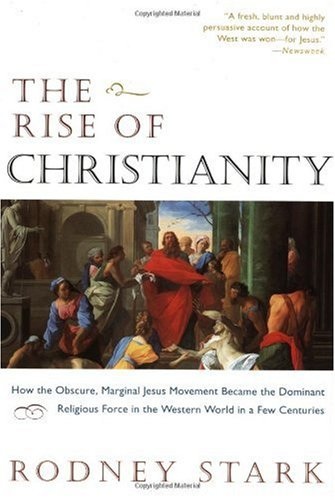
Rodney Stark’s The Rise of Christianity rains on both of these parades. He notes how the recent (last fifty years or so) scholarly consensus is a return to an earlier (pre-19th century) consensus about the early Church as a movement full of well-educated and well-placed urban dwellers (See: Wayne A. Meeks, The First Urban Christians: The Social World of the Apostle Paul, 1983).
Stark draws the following historical conclusions from this historical fact:
“Finally, what difference does it make whether early Christianity was a movement of the relatively privileged or of the downtrodden? In my judgment it matters a great deal. Had Christianity actually been a proletarian movement, it strikes me that the state necessarily would have responded to it as a political threat rather than simply as an illicit religion.”
In other words the early Christians had friends and relatives in high places who made sure the lions were being fed with unbaptized food.
The implications for Modern day Christianity are, I believe, even more interesting. If these conclusions stand the test of time (there is no indication they won’t), then we’ve always had (to borrow a book title from Ron Sider) rich Christians in an age of hunger. This leveling out of the sociological differences means there are more similarities between the Patristic age and ours. We might be best served by learning from the comprehensive Church aid and wealth redistribution programs of those times, which drove Roman Emperor Julian the Apostate crazy:
“Whilst the pagan priests neglect the poor, the hated Galileans devote themselves to works of charity, and by a display of false compassion have established and given effect to their pernicious errors. See their love-feasts, and their tables spread for the indigent. Such practice is common among them, and causes a contempt for our gods.”
Real Church history always is a lot more interesting, challenging, and perhaps kinder to Constantine, but more about that tomorrow.
Early Christianity was a lot more like this than you suspected.
http://www.youtube.com/watch?v=mCwcPnseyuM
Previous Post

June 1, 2013
"No Religion" Is Not a Concept
Next Post
June 3, 2013 Latour: Rejoicing – Or the Torments of Religious Speech
Browse Our Archives
Select a Category #WhyRemainCatholic Abortion Advent Anti-Catholicism Arts Atheism Beauty Benedict XVI Bible Book Review Catholic Cinema Comedy Cosmos: A Space-Time Odyssey Czesław Miłosz Dariusz Karłowicz Devil Easter Eastern Orthodoxy Economics Environment Family Famous Atheists Who Weren't Atheists Guest Post Hans Urs von Balthasar HHS Mandate History Imagination Interview Islam Jean-Luc Marion John Paul II Judaism Just War Lent Literature Little Sisters of the Poor Liturgy Martyrdom Music News Paganism Patristics Phenomenology Philosophy Pierre Hadot Poetry Poland Pop Culture Pope Francis Poverty Prayer Protestantism Rabelais Race Remi Brague Rene Girard Russia Sam Rocha Science & Religion SCOTUS Secularization Sexual Abuse Sexuality Silence Solidarity Stratford Caldecott Synod14 Terrorism Top 10 Uncategorized Walker Percy War Weakened Edition World War II World Youth Day WYD Krakow
Select a Month July 2017 June 2017 May 2017 April 2017 March 2017 February 2017 January 2017 December 2016 October 2016 September 2016 August 2016 July 2016 June 2016 May 2016 April 2016 March 2016 February 2016 January 2016 December 2015 November 2015 October 2015 September 2015 August 2015 July 2015 June 2015 May 2015 April 2015 March 2015 February 2015 January 2015 December 2014 November 2014 October 2014 September 2014 August 2014 July 2014 May 2014 April 2014 March 2014 February 2014 January 2014 December 2013 November 2013 October 2013 September 2013 August 2013 July 2013 June 2013 May 2013
Follow Us!
TAKE THE
Religious Wisdom Quiz
What type of building was Jesus born in?
Select your answer to see how you score.
A castle A cave A stable A tent
Related posts from Cosmos The In Lost

Post-Execution Church: Rise Up from the Electric Chair!

2 Reasons Why the March for Science is...

Famous Atheists Who Aren't Atheist: Facebook Creator Mark...
TRENDING AT PATHEOS Catholic

Rejecting Doom: Christian Hope And Human Action
Christianity is a religion of hope. We are to have hope and...

It’s What Comes From Within Which Matters
One of the most difficult things for us to understand is why...

Why I Choose the Eucharist Over the Sermon
Choose the Eucharist, Not the Sermon What are we supposed to get...

5 Design Elements Found in Spiritually Rooted Homes
Putting Spirituality Into Home Decor Our homes are more than our living...

Credo: A Story of God Told with the...
About 10 years ago, I began to imagine a personal "Credo" that...

The Anatomy of Divine Revelation in Catholic Thought
The claim that God has made Himself known to human beings is...
view all Catholic blogs
Ad-Free & Subscriber Log-In Subscription Support
- About Us
- 2026 Calendar
- Videos
- Podcasts
- Library of World Religions
- Faith In Media Tracker
- Advertise With Us
- Write for Us
- Privacy Policy
- Terms of Service
- Do Not Sell My Data
- Contact Us
- Radiant Digital
- Manage Newsletter Subscriptions
- Unsubscribe From Notifications
- Sitemap
Copyright 2008-2026, Patheos. All rights reserved.
Subscription Support Ad-Free & Subscriber Log-In
Follow Patheos