
BuddhistCatholicContemplativeEvangelicalGeneral ChristianHinduJewishLatter-day SaintMuslimNew VisionsProgressive Christian
Beliefs
- Buddhist
- Catholic
- Contemplative
- Evangelical
- General Christian
- Hindu
- Jewish
- Latter-day Saint
- More Voices
- Muslim
- New Visions
- Pagan
- Progressive Christian
Topics
- Religion News
- Food and Religion
- Sports and Religion
- Religious Art
- Religious Music and Entertainment
- Religious Events
- History and Religion
- Style and Religion
- Politics and Religion
- Women in Religion
- Recreation Outdoors and Religion
- Business Finance and Religion
- Careers Workplace and Religion
- Education and Religion
- Family Parenting and Religion
- Health Fitness and Religion
- Home and Religion
- Relationships and Religion
- Technology and Religion
- Travel and Religion
Columnists
- Buddhist Columnists
- Business Finance and Religion Columnists
- Careers Workplace and Religion Columnists
- Catholic Columnists
- Contemplative Columnists
- Education and Religion Columnists
- Evangelists Columnists
- Family Parenting and Religion Columnists
- General Christian Columnists
- Health Fitness and Religion Columnists
- Hindu Columnists
- History and Religion Columnists
- Home and Religion Columnists
- Jewish Columnists
- More Voices Columnists
- Latter Day Columnists
- Muslim Columnists
- New Visions Columnists
- Nonreligious Columnists
- Pagan Columnists
- Politics and Religion Columnists
- Progressive Columnists
- Recreation Outdoors and Religion Columnists
- Relationships and Religion Columnists
- Religion News Columnists
- Religious Art Columnists
- Religious Events Columnists
- Religious Music and Entertainment Columnists
- Sports and Religion Columnists
- Style and Religion Columnists
- Technology and Religion Columnists
- Travel and Religion Columnists
- Women in Religion Columnists
Resource Library
- 2026 Calendar
- Library of World Religions
- The 100 Most Holy Places on Earth
- Patheos Answers
- Podcasts
- Videos
- Faith Leaders Database
- Anglican Episcopalian
- Bahai
- Baptist
- Buddhism
- Christianity
- Confucianism
- Eastern Orthodoxy
- Hinduism
- Holiness and Pentecostal
- ISKCON
- Islam
- Judaism
- Lutheran
- Methodist
- The Church of Jesus Christ of Latter-day Saints
- New Age
- Paganism
- Presbytarian and Reformed
- Protestantism
- Religion Behind the Scenes
- Roman Catholic
- Scientology
- Shia Islam
- Sikhism
- Sufism
- Sunni Islam
- Taoism
- Zen
- See all religions
Research Tools
 Ad-Free & Subscriber Log-In Subscription Support
Ad-Free & Subscriber Log-In Subscription Support
Follow Patheos 

- Trending:
- Forgiveness
- |
- Marriage
- |
- Consciousness
- |
- Death Penalty
- |
- Election
- |
- Halloween
 Convivium Salon
- Home
- Catholic
- Holy Thursday Catechesis: The Cenacle
Holy Thursday Catechesis: The Cenacle
Last updated on: April 18, 2019 at 6:23 am by Suzanne M. Lewis
Holy Thursday Catechesis: The Cenacle 2019-04-18T06:23:48-05:00 Suzanne M. Lewis
Patheos Explore the world's faith through different perspectives on religion and spirituality! Patheos has the views of the prevalent religions and spiritualities of the world.
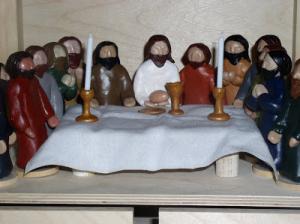
Since 1997, I have belonged to five parishes, but no matter where I am during the Triduum, each year* I have offered a series of three catechetical lessons, open to any children and their parents. In almost every case, these parishes have welcomed these presentations into the church proper (one year we had to retire to the church basement), and I have done them for the children at the foot of the altar. The first presentation is called “The Cenacle/Celebration of the Last Supper.” To introduce this scripture, I begin by discussing the meaning of the Passover: an annual meal and great prayer that the Jews observe to celebrate that God sent Moses to free them from slavery. We dwell together on the amazing fact that the Passover Jesus celebrated at his Last Supper was the same one that had been celebrated for thousands of years, except that this time Jesus spoke some new words, great and loving and precious words that had never been said during a Passover before. Then I use the model, pictured above, and read from the Gospel (from the “real” Bible) account of the Last Supper. First the figures of St. Peter and St. John are sent to the city to prepare the room, then Jesus and the Twelve file into the model cenacle. The scripture ends with Jesus and the apostles singing a hymn and then going off to the Mount of Olives. The table, with its plate of bread and its cup and unlit candles are left alone in the room. We sing a hymn ourselves. Then I ask the children if they know what happened to Jesus as he was praying on the Mount of Olives that night. Once we establish that Jesus was arrested and died on the cross, I place a small standing crucifix on the little table. “But what happened on the third day?” All the children are bursting to share the news: “He rose from the dead!” So then I light the candles. The model cenacle now looks like this:

Then I ask the children, “What were those new, surprising, and loving words that Jesus said during the Last Supper that had never been said before at a Passover celebration?” The children, even the three year-olds, are so eager to tell me: “This is my body, take and eat…This is my blood…drink it in memory of me.” We revel in the moment and then I ask them, “Where do we hear these same words today? Who says them?” Someone knows: it is the priest. I ask, “But whose words are they?” They all seem to understand that these words don’t really belong to the priest, that he is repeating the words of Jesus. “He promised that he would always be with us, and he is! Jesus is with us still!” We sing some more, and then I invite the children to say something to Jesus for this amazing gift of himself that he gives to us. “Thank you;” “I love you;” “Thank you for feeding the sheep” (from a child who is familiar with St. John’s parable of the good shepherd); “I want to be worthy of this;” “You’re the greatest!”
When this presentation is over, we spread a large white sheet on the ground, I place a plate with a matzoh cracker on it and a chalice filled with grape juice on the sheet, and we each choose an apostle to be at the Last Supper. Each year I use a different method for deciding who will get to be Jesus (youngest child there, oldest child there, guessing numbers, etc.). After I begin reading the Gospel again, it is that child’s job to repeat the words of Jesus after I read them and to break the matzoh into enough pieces that everyone can have one. We pass the plate and the cup (with a napkin to wipe the lip). We sing another hymn when it is time for Jesus and his followers to go to the Mount of Olives. Then we remember his death and Resurrection again (placing a large standing crucifix on our “table” and two full-sized candles and lighting them). We recall again the new, loving words Jesus spoke that night and try to imagine what it was like to be there, hearing them for the first time. We sing and pray some more, and then we all process to the church vestibule for more matzoh and grape juice until everyone’s had their fill and is ready to go home.
From Catechesis of the Good Shepherd presentations developed by Sofia Cavalletti and her collaborators in her catechetical center in Rome.
- There have been years when I have been unable to offer these lessons.
Catechesis of the Good Shepherd
Previous Post

April 16, 2019
Our Body
Next Post
April 19, 2019 Good Friday Catechesis: The City of Jerusalem
Browse Our Archives
Select a Category Academic Freedom Catechesis of the Good Shepherd Enormous Room Eucharist Music School of Community songs Uncategorized Vitamin Drops Way of the Cross
Select a Month July 2019 April 2019 March 2019 February 2019 January 2019 December 2018
Follow Us!
TAKE THE
Religious Wisdom Quiz
True or False: Jeremiah was thrown into a cistern for prophesying against Jerusalem.
Select your answer to see how you score.
FALSE TRUE
Related posts from Convivium Salon
Is there anything more urgent?
On Using Cliches to Shed Light on Cliches
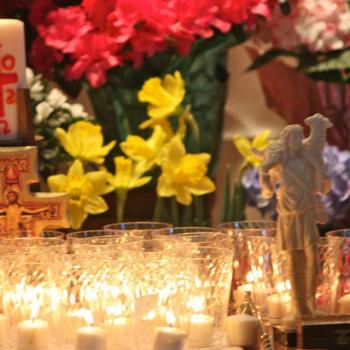
Holy Saturday Catechesis: Liturgy of Light
TRENDING AT PATHEOS Catholic

Rejecting Doom: Christian Hope And Human Action
Christianity is a religion of hope. We are to have hope and...

It’s What Comes From Within Which Matters
One of the most difficult things for us to understand is why...

Why I Choose the Eucharist Over the Sermon
Choose the Eucharist, Not the Sermon What are we supposed to get...

5 Design Elements Found in Spiritually Rooted Homes
Putting Spirituality Into Home Decor Our homes are more than our living...

Credo: A Story of God Told with the...
About 10 years ago, I began to imagine a personal "Credo" that...

The Anatomy of Divine Revelation in Catholic Thought
The claim that God has made Himself known to human beings is...
view all Catholic blogs
Ad-Free & Subscriber Log-In Subscription Support
- About Us
- 2026 Calendar
- Videos
- Podcasts
- Library of World Religions
- Faith In Media Tracker
- Advertise With Us
- Write for Us
- Privacy Policy
- Terms of Service
- Do Not Sell My Data
- Contact Us
- Radiant Digital
- Manage Newsletter Subscriptions
- Unsubscribe From Notifications
- Sitemap
Copyright 2008-2026, Patheos. All rights reserved.
Subscription Support Ad-Free & Subscriber Log-In
Follow Patheos