
BuddhistCatholicContemplativeEvangelicalGeneral ChristianHinduJewishLatter-day SaintMuslimNew VisionsProgressive Christian
Beliefs
- Buddhist
- Catholic
- Contemplative
- Evangelical
- General Christian
- Hindu
- Jewish
- Latter-day Saint
- More Voices
- Muslim
- New Visions
- Pagan
- Progressive Christian
Topics
- Religion News
- Food and Religion
- Sports and Religion
- Religious Art
- Religious Music and Entertainment
- Religious Events
- History and Religion
- Style and Religion
- Politics and Religion
- Women in Religion
- Recreation Outdoors and Religion
- Business Finance and Religion
- Careers Workplace and Religion
- Education and Religion
- Family Parenting and Religion
- Health Fitness and Religion
- Home and Religion
- Relationships and Religion
- Technology and Religion
- Travel and Religion
Columnists
- Buddhist Columnists
- Business Finance and Religion Columnists
- Careers Workplace and Religion Columnists
- Catholic Columnists
- Contemplative Columnists
- Education and Religion Columnists
- Evangelists Columnists
- Family Parenting and Religion Columnists
- General Christian Columnists
- Health Fitness and Religion Columnists
- Hindu Columnists
- History and Religion Columnists
- Home and Religion Columnists
- Jewish Columnists
- More Voices Columnists
- Latter Day Columnists
- Muslim Columnists
- New Visions Columnists
- Nonreligious Columnists
- Pagan Columnists
- Politics and Religion Columnists
- Progressive Columnists
- Recreation Outdoors and Religion Columnists
- Relationships and Religion Columnists
- Religion News Columnists
- Religious Art Columnists
- Religious Events Columnists
- Religious Music and Entertainment Columnists
- Sports and Religion Columnists
- Style and Religion Columnists
- Technology and Religion Columnists
- Travel and Religion Columnists
- Women in Religion Columnists
Resource Library
- 2026 Calendar
- Library of World Religions
- The 100 Most Holy Places on Earth
- Patheos Answers
- Podcasts
- Videos
- Faith Leaders Database
- Anglican Episcopalian
- Bahai
- Baptist
- Buddhism
- Christianity
- Confucianism
- Eastern Orthodoxy
- Hinduism
- Holiness and Pentecostal
- ISKCON
- Islam
- Judaism
- Lutheran
- Methodist
- The Church of Jesus Christ of Latter-day Saints
- New Age
- Paganism
- Presbytarian and Reformed
- Protestantism
- Religion Behind the Scenes
- Roman Catholic
- Scientology
- Shia Islam
- Sikhism
- Sufism
- Sunni Islam
- Taoism
- Zen
- See all religions
Research Tools
 Ad-Free & Subscriber Log-In Subscription Support
Ad-Free & Subscriber Log-In Subscription Support
Follow Patheos 

- Trending:
- Forgiveness
- |
- Marriage
- |
- Consciousness
- |
- Death Penalty
- |
- Election
- |
- Halloween
 Convivium Salon
- Home
- Catholic
- Seeing Inside a Mystery
Seeing Inside a Mystery
Last updated on: February 9, 2019 at 12:00 am by Guest Contributor
Seeing Inside a Mystery 2019-02-09T00:00:01-05:00 Guest Contributor
Patheos Explore the world's faith through different perspectives on religion and spirituality! Patheos has the views of the prevalent religions and spiritualities of the world.
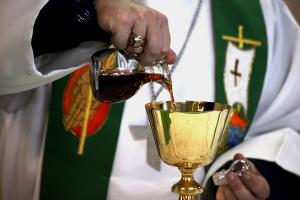
There is a moment during the liturgy that can help children literally to “see” the mystery of communion. The preparation of the chalice, a gesture that is often completed in a matter of seconds, is a profound prayer of unity that children find particularly solemn and meaningful.
Prepare a simple wooden or metal tray with the following items: a clear glass wine goblet, two small clear cruets, a dark dish rag or washcloth, and a hand-lettered prayer card with the following prayer: “By the mystery of this water and wine may we come to share in the divinity of Christ, who humbled himself to share in our humanity.” Fill one of the cruets with water and the other with wine.
When you meet with the children, place the prepared tray to one side. Set the glass goblet on a low table in front of you, where all the children can easily see it. Explain that there are many ways to pray and ask the children if they know any of them. Discuss with them as many of these ways that they can think of: spoken prayer, silent prayer, listening, singing, and prayer gestures. If they don’t spontaneously recall any prayer gestures, demonstrate the Sign of the Cross, explaining that it is a way to pray with the whole body. Then explain that together you are going to think about another prayer, one that the priest or deacon makes with his body during Mass.
Indicating the goblet, tell the children that the special cup that holds the wine during Mass is called a chalice. Remind them that there is a special moment during the Mass when the priest or deacon prepares the chalice. Then indicate the cruets filled with water and wine. Explain that the wine will be changed into the blood of Christ. And so, the wine will represent Jesus in our midst. The water represents our humanity. Then, silently and with very slow movements, open the cruet containing the wine and carefully pour it into the chalice. Acknowledge that there is a lot of wine in the chalice. Then open the other cruet and pour one small drop of water into the chalice full of wine. Ask the children how much water you added. Invite them to wonder why there is a lot of wine and only a little water in the chalice. Invite them to look into the chalice and ask whether they can see the water anymore. What happened to it? What happens to us when we receive Communion?
Once the meditation on the meaning of the gesture has run its course, introduce the prayer card. Explain to the children that there is prayer that the priest or deacon says, either silently or aloud, as he prepares the chalice. Read the prayer aloud and then ask the children what they think it could mean. Ask them what a “mystery” is. Recall for them the “Mystery of Faith.” How is it possible to share in the “divinity” of Christ? Explain the meaning of the word “divinity” to them. Who makes it possible for us to share in Christ’s divinity? Why would he share it with us? What does it mean that Christ “humbled” himself? How did Christ share our humanity? You could explore with the children the great mystery of the Incarnation. Invite the children to ponder why Christ would agree to share our humanity. Try to draw the children into an understanding of his great love for us in our littleness. Draw the children’s attention to the chalice with the mixture of water and wine in it one more time. Ask them how the mingling of the water and the wine expresses what we ask for in this prayer.
If you bring extra wine and a container to hold the used wine mixture, you can pour out the contents of the chalice, fill the wine cruet with more wine (using a funnel), and give each child a turn to practice this prayer gesture. You can also provide the children with pens and cardstock to copy the prayer for themselves. Invite them to “illuminate” their prayer cards with colored pens or pencils. You may wish to laminate their cards and create bookmarks for them by punching a hole in one corner and tying a strip of narrow ribbon or yarn through the hole. This would be a wonderful First Communion keepsake for them. Finally, remind them to look for this prayer gesture during the next time they go to Mass.
You can end by inviting the children to sing a eucharistic song, such as “One Bread, One Body” or “Alleluia, We Sing Your Praises”.
This article originally appeared in Pastoral Liturgy
Catechesis of the Good Shepherd
Catechesis of the Good Shepherd
Previous Post
January 14, 2019
Open door(s)
Next Post

January 18, 2019 In Defense of Reading Pagans
Browse Our Archives
Select a Category Academic Freedom Catechesis of the Good Shepherd Enormous Room Eucharist Music School of Community songs Uncategorized Vitamin Drops Way of the Cross
Select a Month July 2019 April 2019 March 2019 February 2019 January 2019 December 2018
Follow Us!
TAKE THE
Religious Wisdom Quiz
What city is known as the Holy City, sacred to Jews, Christians, and Muslims?
Select your answer to see how you score.
Jerusalem Rome Cairo Athens
Related posts from Convivium Salon
Is there anything more urgent?

On Using Cliches to Shed Light on Cliches
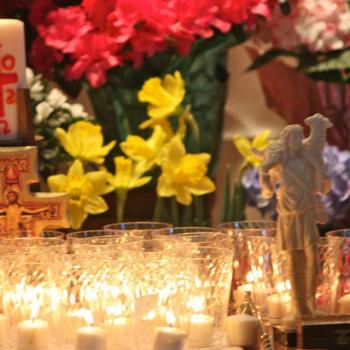
Holy Saturday Catechesis: Liturgy of Light
TRENDING AT PATHEOS Catholic

Rejecting Doom: Christian Hope And Human Action
Christianity is a religion of hope. We are to have hope and...

It’s What Comes From Within Which Matters
One of the most difficult things for us to understand is why...

Why I Choose the Eucharist Over the Sermon
Choose the Eucharist, Not the Sermon What are we supposed to get...

5 Design Elements Found in Spiritually Rooted Homes
Putting Spirituality Into Home Decor Our homes are more than our living...

Credo: A Story of God Told with the...
About 10 years ago, I began to imagine a personal "Credo" that...

The Anatomy of Divine Revelation in Catholic Thought
The claim that God has made Himself known to human beings is...
view all Catholic blogs
Ad-Free & Subscriber Log-In Subscription Support
- About Us
- 2026 Calendar
- Videos
- Podcasts
- Library of World Religions
- Faith In Media Tracker
- Advertise With Us
- Write for Us
- Privacy Policy
- Terms of Service
- Do Not Sell My Data
- Contact Us
- Radiant Digital
- Manage Newsletter Subscriptions
- Unsubscribe From Notifications
- Sitemap
Copyright 2008-2026, Patheos. All rights reserved.
Subscription Support Ad-Free & Subscriber Log-In
Follow Patheos