
BuddhistCatholicContemplativeEvangelicalGeneral ChristianHinduJewishLatter-day SaintMuslimNew VisionsProgressive Christian
Beliefs
- Buddhist
- Catholic
- Contemplative
- Evangelical
- General Christian
- Hindu
- Jewish
- Latter-day Saint
- More Voices
- Muslim
- New Visions
- Pagan
- Progressive Christian
Topics
- Religion News
- Food and Religion
- Sports and Religion
- Religious Art
- Religious Music and Entertainment
- Religious Events
- History and Religion
- Style and Religion
- Politics and Religion
- Women in Religion
- Recreation Outdoors and Religion
- Business Finance and Religion
- Careers Workplace and Religion
- Education and Religion
- Family Parenting and Religion
- Health Fitness and Religion
- Home and Religion
- Relationships and Religion
- Technology and Religion
- Travel and Religion
Columnists
- Buddhist Columnists
- Business Finance and Religion Columnists
- Careers Workplace and Religion Columnists
- Catholic Columnists
- Contemplative Columnists
- Education and Religion Columnists
- Evangelists Columnists
- Family Parenting and Religion Columnists
- General Christian Columnists
- Health Fitness and Religion Columnists
- Hindu Columnists
- History and Religion Columnists
- Home and Religion Columnists
- Jewish Columnists
- More Voices Columnists
- Latter Day Columnists
- Muslim Columnists
- New Visions Columnists
- Nonreligious Columnists
- Pagan Columnists
- Politics and Religion Columnists
- Progressive Columnists
- Recreation Outdoors and Religion Columnists
- Relationships and Religion Columnists
- Religion News Columnists
- Religious Art Columnists
- Religious Events Columnists
- Religious Music and Entertainment Columnists
- Sports and Religion Columnists
- Style and Religion Columnists
- Technology and Religion Columnists
- Travel and Religion Columnists
- Women in Religion Columnists
Resource Library
- 2026 Calendar
- Library of World Religions
- The 100 Most Holy Places on Earth
- Patheos Answers
- Podcasts
- Videos
- Faith Leaders Database
- Anglican Episcopalian
- Bahai
- Baptist
- Buddhism
- Christianity
- Confucianism
- Eastern Orthodoxy
- Hinduism
- Holiness and Pentecostal
- ISKCON
- Islam
- Judaism
- Lutheran
- Methodist
- The Church of Jesus Christ of Latter-day Saints
- New Age
- Paganism
- Presbytarian and Reformed
- Protestantism
- Religion Behind the Scenes
- Roman Catholic
- Scientology
- Shia Islam
- Sikhism
- Sufism
- Sunni Islam
- Taoism
- Zen
- See all religions
Research Tools
 Ad-Free & Subscriber Log-In Subscription Support
Ad-Free & Subscriber Log-In Subscription Support
Follow Patheos 

- Trending:
- Forgiveness
- |
- Marriage
- |
- Consciousness
- |
- Death Penalty
- |
- Election
- |
- Halloween
 Contemplatio Culture
- Home
- Catholic
- History and Religion
- Titus Brandsma- July 27 (Everyday Saints Series)
Titus Brandsma- July 27 (Everyday Saints Series)
Last updated on: July 27, 2020 at 7:00 am by Theresa Zoe Williams
Titus Brandsma- July 27 (Everyday Saints Series) 2020-07-22T09:08:59-07:00 Theresa Zoe Williams
Patheos Explore the world's faith through different perspectives on religion and spirituality! Patheos has the views of the prevalent religions and spiritualities of the world.
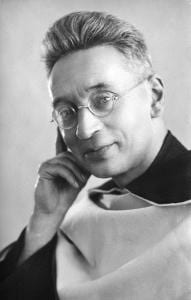
Titus Brandsma was born as Anno Sjoerd Brandsma to Titus Brandsma and Tjitsje Postman on February 23, 1881 in Bolsward, the Netherlands. His parents ran a small dairy farm and were very devout Catholics, even though they were the minority in the predominantly Calvinist region. Titus and all of his siblings (except one sister) ended up joining religious life.
Titus began his secondary studies at age 11 at the Franciscan-run minor seminary for boys in Megen. It was at this point that he began contemplating a priestly or religious vocation. Instead of joining the Franciscans, though, he joined the Carmelite friars in September 1898, taking the religious name Titus in honor of his father.
He was ordained a priest in 1905 and was awarded a doctorate of philosophy at Rome in 1909. From then until 1923, he worked as a writer and teacher. During this time, he led a project of translating the worked of St. Teresa of Ávila into Dutch. Titus also helped to found the Catholic University of Nijmegen (now called Radboud University) and was a professor of philosophy and the history of mysticism there for a time. Rather than being known for his scholarly work as a professor, Titus was known for his constant availability to anyone who needed him.
In 1935, Titus traveled on a lecture tour of the United States and Canada, speaking at institutions of his Order. Upon seeing Niagara Falls, he wrote, “I not only see the riches of the nature of the water, its immeasurable potentiality; I see God working in the work of his and the manifestation of his love.” He reveled at the magnificence of God through His creation, something we should strive to do. God is everywhere and in everything, after all.
The Nazis invaded the Netherlands in May 1940. Titus had been very vocal against the Nazis and so these two factors combined to bring him to the Nazis’ attention. In part of his work against the Nazis, Titus hand delivered a letter from the Conference of Dutch Bishops to the editors of Catholic newspapers, telling them not to print official Nazi documents. Titus was able to visit fourteen editors before the Nazis caught up with him. He was arrested on January 19, 1942.
Titus was first held prisoner at Schevenignen, then Amersfoort, and then Cleves, before being finally transferred to the Dachau concentration camp on June 19. There his health quickly declined and he was transferred to the camp hospital. In the infirmary, he died by a lethal injection on July 26. This injection was part of the program of medical experimentation on prisoners.
In a biography on Titus, it is said that his character consisted of some vanity, a short temper, extreme energy, political innocence, true charity, unpretentious piety, decisiveness, and great courage. He was truly a man of virtue and always sought to be more virtuous.
Titus was known well for his knowledge of Carmelite spirituality and mysticism. His studies on mysticism were the basis for the establishment of the Titus Brandsma Institute in Nijmegen in 1968. He was also known for speaking out against anti-Semitism, even though, at the time, the popular theological opinion of his peers towards Judaism was negative. He was honored by the city of Dachau with the naming of a street adjoining the former camp after him (even though it’s one of the narrowest streets in the towns).
Pope St. John Paul II beatified Titus Brandsma on November 3, 1985.
Image courtesy of https://commons.wikimedia.org/wiki/File:TitusBrandsma.jpg
Previous Post
July 26, 2020
Bartolomea Capitanio– July 26 (Everyday Saints Series)
Next Post
July 28, 2020 Alphonsa of the Immaculate Conception- July 28 (Everyday Saints Series)
Browse Our Archives
Select a Category Daily Saints Fairytales Uncategorized
Select a Month August 2020 July 2020 June 2020 May 2020 April 2020 December 2019 July 2019 May 2019 April 2019 March 2019 February 2019 January 2019 December 2018
Follow Us!
TAKE THE
Religious Wisdom Quiz
Where was Paul when he had a vision of a man from Macedonia pleading for help?
Select your answer to see how you score.
Corinth Athens Philippi Troas
Support this
Column


Related posts from Contemplatio Culture
Andrew the Scot - August 22 (Everyday Saints...
Pius X- August 21 (Everyday Saints Series)
Bernard of Clairvaux- August 20 (Everyday Saints Series)
Emily Bicchieri- August 19 (Everyday Saints Series)
TRENDING AT PATHEOS Catholic

Creation, Preservation, and Teleology in Catholic Theology
As I write this, it is very early Monday morning. Like millions...

The Parable Of The Sower And The Word...
One of Christ’s most famous parables is that of the sower who...

Rejecting Doom: Christian Hope And Human Action
Christianity is a religion of hope. We are to have hope and...

Why I Choose the Eucharist Over the Sermon
Choose the Eucharist, Not the Sermon What are we supposed to get...

5 Design Elements Found in Spiritually Rooted Homes
Putting Spirituality Into Home Decor Our homes are more than our living...

Credo: A Story of God Told with the...
About 10 years ago, I began to imagine a personal "Credo" that...
view all Catholic blogs
Ad-Free & Subscriber Log-In Subscription Support
- About Us
- 2026 Calendar
- Videos
- Podcasts
- Library of World Religions
- Faith In Media Tracker
- Advertise With Us
- Write for Us
- Privacy Policy
- Terms of Service
- Do Not Sell My Data
- Contact Us
- Radiant Digital
- Manage Newsletter Subscriptions
- Unsubscribe From Notifications
- Sitemap
Copyright 2008-2026, Patheos. All rights reserved.
Subscription Support Ad-Free & Subscriber Log-In
Follow Patheos