
BuddhistCatholicContemplativeEvangelicalGeneral ChristianHinduJewishLatter-day SaintMuslimNew VisionsProgressive Christian
Beliefs
- Buddhist
- Catholic
- Contemplative
- Evangelical
- General Christian
- Hindu
- Jewish
- Latter-day Saint
- More Voices
- Muslim
- New Visions
- Pagan
- Progressive Christian
Topics
- Religion News
- Food and Religion
- Sports and Religion
- Religious Art
- Religious Music and Entertainment
- Religious Events
- History and Religion
- Style and Religion
- Politics and Religion
- Women in Religion
- Recreation Outdoors and Religion
- Business Finance and Religion
- Careers Workplace and Religion
- Education and Religion
- Family Parenting and Religion
- Health Fitness and Religion
- Home and Religion
- Relationships and Religion
- Technology and Religion
- Travel and Religion
Columnists
- Buddhist Columnists
- Business Finance and Religion Columnists
- Careers Workplace and Religion Columnists
- Catholic Columnists
- Contemplative Columnists
- Education and Religion Columnists
- Evangelists Columnists
- Family Parenting and Religion Columnists
- General Christian Columnists
- Health Fitness and Religion Columnists
- Hindu Columnists
- History and Religion Columnists
- Home and Religion Columnists
- Jewish Columnists
- More Voices Columnists
- Latter Day Columnists
- Muslim Columnists
- New Visions Columnists
- Nonreligious Columnists
- Pagan Columnists
- Politics and Religion Columnists
- Progressive Columnists
- Recreation Outdoors and Religion Columnists
- Relationships and Religion Columnists
- Religion News Columnists
- Religious Art Columnists
- Religious Events Columnists
- Religious Music and Entertainment Columnists
- Sports and Religion Columnists
- Style and Religion Columnists
- Technology and Religion Columnists
- Travel and Religion Columnists
- Women in Religion Columnists
Resource Library
- 2026 Calendar
- Library of World Religions
- The 100 Most Holy Places on Earth
- Patheos Answers
- Podcasts
- Videos
- Faith Leaders Database
- Anglican Episcopalian
- Bahai
- Baptist
- Buddhism
- Christianity
- Confucianism
- Eastern Orthodoxy
- Hinduism
- Holiness and Pentecostal
- ISKCON
- Islam
- Judaism
- Lutheran
- Methodist
- The Church of Jesus Christ of Latter-day Saints
- New Age
- Paganism
- Presbytarian and Reformed
- Protestantism
- Religion Behind the Scenes
- Roman Catholic
- Scientology
- Shia Islam
- Sikhism
- Sufism
- Sunni Islam
- Taoism
- Zen
- See all religions
Research Tools
 Ad-Free & Subscriber Log-In Subscription Support
Ad-Free & Subscriber Log-In Subscription Support
Follow Patheos 

- Trending:
- Forgiveness
- |
- Marriage
- |
- Consciousness
- |
- Death Penalty
- |
- Election
- |
- Halloween
 Contemplatio Culture
- Home
- Catholic
- History and Religion
- Traditions and the Rhythm of Life
Traditions and the Rhythm of Life
Last updated on: December 21, 2018 at 8:00 am by Theresa Zoe Williams
Traditions and the Rhythm of Life 2018-12-20T22:18:00-07:00 Theresa Zoe Williams
Patheos Explore the world's faith through different perspectives on religion and spirituality! Patheos has the views of the prevalent religions and spiritualities of the world.
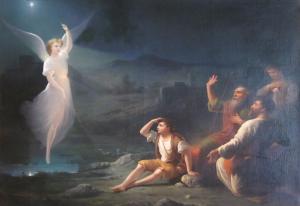
Traditions ground us and connect us to our past, while giving us a link to the future.
Growing up, my family always listened to Bing Crosby’s Christmas album while trimming the tree. It just wasn’t a tree decorating day without it! I learned my first bit of Latin from him (“Adeste Fideles”) and also a bit of Hawaiian (“Mele Kalikimaka”). I sang along with him and the Andrews Sisters while hanging my favorite ornaments on the artificial tree’s green branches and ringing little bells so angels could earn their wings. After we finished the tree (and the little Christmas village and Creche), we’d enjoy hot cocoa and watch White Christmas (my mom’s favorite Christmas movie, which also happened to star good, old Bing). My sister and I, every year, would put on our own rendition of the “Sisters” number from the movie once it had ended.
These things happened every year and now, though slightly modified to integrate my husband’s family’s traditions, we enjoy these things with our children, as well. It’s fun to connect with our children in this way and also with our larger family. We know that when we our any of my in-laws are trimming our trees, we’re watching White Christmas. Every time I hear Bing Crosby croon “White Christmas”, I think of my mom. Maybe someday I’ll get a video message (or whatever communication technology is in vogue at the time) from my children and their families letting me know that they’re watching the same movie while trimming their trees. These traditions link us all together across time.
Creating traditions for our family has been a uniting factor in our marriage.
Of my heritage, I am part Italian and some Christmas traditions that I’ve always enjoyed from this background have been the Feast of the Seven Fishes on Christmas Eve and reading Tomie dePaola’s book Strega Nona. My husband, though, is not Italian but is part Greek. He grew up eating dolmas and aveglomeno soup and other Greek foods at every holiday. Both traditions were important to us so we figured out a way to honor both heritages. On Christmas, we do the Italian traditions and on Easter we do the Greek traditions.
Through strong familial and cultural traditions, we have created new traditions for our specific family. Our children know of their heritage and we learn more about each other and our backgrounds each holiday. It is such a special thing to share my Great-Grandma Capretti’s pizzelle recipe with my husband and children. Likewise, it is so special to use my husband’s family’s recipes for dolmas and aveglomeno soup and all the rest. In fact, these things have been such a uniting factor for us that while we say we are Greek and Italian, we’ve more often begun to call ourselves simply Mediterranean.
Additionally, we’ve started some new traditions with our family. For St. Nicholas’s feast day, we each get a new set of PJs (sometimes they match, sometimes they’re themed) to wear on Christmas Eve and also sometimes get new slippers and treats to eat on Christmas Eve. Every Saturday and Sunday, we have bacon with our breakfast no matter what else we’re eating. At bedtime, as the children lay down, I bless them with my own formulation: “God bless and keep you. Sleep well and have sweet dreams. May your guardian angel be close at hand and Mama Mary wrap you in her mantle. I love you.” My daughter has started blessing me in this way, too. We define who we are as a family and who we strive to be through the traditions we hold.
Traditions give rhythm to life within a specific family.
Much like the Liturgical calendar, holidays and traditions allow a rhythm to life. We know what to expect and when and prepare accordingly. This can be such a great comfort in a world and life that is often so unpredictable. I know every Christmas we are going to have an enormous fish meal even though the specific dishes may change each year (we like to try new things). I also know that I’ll have to buy a bunch of eggs and orange juice and anise oil and set aside an entire evening to slave over my pizzelle iron and make these delicious cookies. Likewise, each Holy Week, I know I need to buy lamb and ground beef and orzo and all the other ingredients necessary for our Easter meal.
This steady, rhythmic living is a reminder that God is constant and unchanging and unfailing. We may face challenges, difficulties, and roadblocks in life, but these holy days and traditions are constant, He is constant. Within my family, we know that no matter what house we’re in or what town or state or what challenges we’re going through, we will eat pizzelles and fish on Christmas and listen to Bing Crosby, and that we will be together. Traditions stabilize us in the midst of whatever whirlwind we find ourselves.
The greatest traditions point us toward Christ and the eternal.
Why do we eat seven kinds of fish on Christmas Day? Fish is a symbol for Christ and seven is the number of perfection– it signifies that Christ is the fullness; He invites us to take part in His life. A fitting way to celebrate the beginning of that ability, His birth! On Easter, we eat lamb because lamb is another symbol for Christ and He is called the Lamb Who Was Slain. As a family, we commemorate His sacrifice and victory by eating lamb.
lIn both of these scenarios, we do as our ancestors did and pass this on so that future generations of our family may do the same. This chain signifies eternity, the never-ending worship of the Lord Jesus Christ, together with the angels and saints, in heaven. In our family traditions, past, present, and future stand still in time together, converging in one moment. The greatest tradition we have as Catholics is the mass and the celebration of the Eucharist. In this tradition, not only does all time converge into one moment, but God actually comes down to us and eternity touches time. Eternity is so much less a timeframe than it is a state of being. Everything we do should point us toward this reality.
Image courtesy of https://commons.wikimedia.org/wiki/File:%27The_Angel_Appearing_before_the_Shepherds%27_by_Thomas_Buchanan_Read,_Dayton_Art_Institute.JPG
Previous Post
December 19, 2018
The Ghost Lady in My Dreams
Next Post

December 24, 2018 9 More Essential Podcasts for Catholic Feminists
Browse Our Archives
Select a Category Daily Saints Fairytales Uncategorized
Select a Month August 2020 July 2020 June 2020 May 2020 April 2020 December 2019 July 2019 May 2019 April 2019 March 2019 February 2019 January 2019 December 2018
Follow Us!
TAKE THE
Religious Wisdom Quiz
"For all have sinned, and all have fallen short of the ______ of God."
Select your answer to see how you score.
Standards Sight Glory Expectations
Support this
Column


Related posts from Contemplatio Culture

Seeing God in the Performance of Michael Jordan

Be a Tiny Dancer! Be a Proverbs 31...
Kateri Tekakwitha- July 14 (Everyday Saints Series)
TRENDING AT PATHEOS Catholic

The Parable Of The Sower And The Word...
One of Christ’s most famous parables is that of the sower who...

Rejecting Doom: Christian Hope And Human Action
Christianity is a religion of hope. We are to have hope and...

Why I Choose the Eucharist Over the Sermon
Choose the Eucharist, Not the Sermon What are we supposed to get...

5 Design Elements Found in Spiritually Rooted Homes
Putting Spirituality Into Home Decor Our homes are more than our living...

Credo: A Story of God Told with the...
About 10 years ago, I began to imagine a personal "Credo" that...

The Anatomy of Divine Revelation in Catholic Thought
The claim that God has made Himself known to human beings is...
view all Catholic blogs
Ad-Free & Subscriber Log-In Subscription Support
- About Us
- 2026 Calendar
- Videos
- Podcasts
- Library of World Religions
- Faith In Media Tracker
- Advertise With Us
- Write for Us
- Privacy Policy
- Terms of Service
- Do Not Sell My Data
- Contact Us
- Radiant Digital
- Manage Newsletter Subscriptions
- Unsubscribe From Notifications
- Sitemap
Copyright 2008-2026, Patheos. All rights reserved.
Subscription Support Ad-Free & Subscriber Log-In
Follow Patheos