
BuddhistCatholicContemplativeEvangelicalGeneral ChristianHinduJewishLatter-day SaintMuslimNew VisionsProgressive Christian
Beliefs
- Buddhist
- Catholic
- Contemplative
- Evangelical
- General Christian
- Hindu
- Jewish
- Latter-day Saint
- More Voices
- Muslim
- New Visions
- Pagan
- Progressive Christian
Topics
- Religion News
- Food and Religion
- Sports and Religion
- Religious Art
- Religious Music and Entertainment
- Religious Events
- History and Religion
- Style and Religion
- Politics and Religion
- Women in Religion
- Recreation Outdoors and Religion
- Business Finance and Religion
- Careers Workplace and Religion
- Education and Religion
- Family Parenting and Religion
- Health Fitness and Religion
- Home and Religion
- Relationships and Religion
- Technology and Religion
- Travel and Religion
Columnists
- Buddhist Columnists
- Business Finance and Religion Columnists
- Careers Workplace and Religion Columnists
- Catholic Columnists
- Contemplative Columnists
- Education and Religion Columnists
- Evangelists Columnists
- Family Parenting and Religion Columnists
- General Christian Columnists
- Health Fitness and Religion Columnists
- Hindu Columnists
- History and Religion Columnists
- Home and Religion Columnists
- Jewish Columnists
- More Voices Columnists
- Latter Day Columnists
- Muslim Columnists
- New Visions Columnists
- Nonreligious Columnists
- Pagan Columnists
- Politics and Religion Columnists
- Progressive Columnists
- Recreation Outdoors and Religion Columnists
- Relationships and Religion Columnists
- Religion News Columnists
- Religious Art Columnists
- Religious Events Columnists
- Religious Music and Entertainment Columnists
- Sports and Religion Columnists
- Style and Religion Columnists
- Technology and Religion Columnists
- Travel and Religion Columnists
- Women in Religion Columnists
Resource Library
- 2026 Calendar
- Library of World Religions
- The 100 Most Holy Places on Earth
- Patheos Answers
- Podcasts
- Videos
- Faith Leaders Database
- Anglican Episcopalian
- Bahai
- Baptist
- Buddhism
- Christianity
- Confucianism
- Eastern Orthodoxy
- Hinduism
- Holiness and Pentecostal
- ISKCON
- Islam
- Judaism
- Lutheran
- Methodist
- The Church of Jesus Christ of Latter-day Saints
- New Age
- Paganism
- Presbytarian and Reformed
- Protestantism
- Religion Behind the Scenes
- Roman Catholic
- Scientology
- Shia Islam
- Sikhism
- Sufism
- Sunni Islam
- Taoism
- Zen
- See all religions
Research Tools
 Ad-Free & Subscriber Log-In Subscription Support
Ad-Free & Subscriber Log-In Subscription Support
Follow Patheos 

- Trending:
- Forgiveness
- |
- Marriage
- |
- Consciousness
- |
- Death Penalty
- |
- Election
- |
- Halloween

-
About the Authors
- Home
- Latter-day Saint
- Prophetic Teachings on Gethsemane
Prophetic Teachings on Gethsemane
Last updated on: June 14, 2023 at 4:13 pm by John Hilton
Prophetic Teachings on Gethsemane 2023-06-14T16:13:54-04:00 John Hilton
Patheos Explore the world's faith through different perspectives on religion and spirituality! Patheos has the views of the prevalent religions and spiritualities of the world.
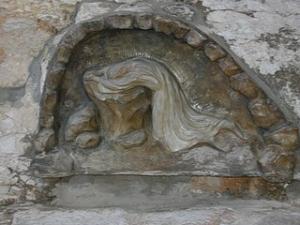
His Redeeming Prayer
Dothan/Wikimedia Commons
Jesus Christ’s suffering in Gethsemane is sacred to Christians all over the world. In 2018 I worked with a talented student, Joshua Barringer, to learn how church leaders have talked about Gethsemane. We found that these prophetic teachings have developed from 1859 to 2018 from minor mention to complex consideration of theological understanding.
Study Details
We searched the “LDS General Conference Corpus” to identify every time a church leader used the word Gethsemane. This corpus contains more than 10,000 talks from 1851 to the 2018.
We found that a total of 139 speakers have collectively used the word Gethsemane 396 times in general conference between these dates. The median point for the usage of Gethsemane in the years examined is 1987.
Just over one-third of all uses (134) came from the nine speakers who used the word in their prophetic teachings 10 times or more. These include President Thomas S. Monson (24), Elder Neal A. Maxwell (20), Elder Robert D. Hales (19), President Marion G. Romney (15), President James E. Faust (13), President Spencer W. Kimball (12), Elder Bruce R. McConkie (11), President J. Reuben Clark Jr. (10), and Elder David B. Haight (10).
Prophetic teachings in general conference on Gethsemane have increased dramatically in the past few decades.
Early Prophetic Teachings of Gethsemane
From current perspective, a key theme (emphasized primarily in prophetic teachings between 1982 and 2018) is that in Gethsemane Jesus Christ vicariously paid the penalty for our sins. We were surprised to learn that although two significant scriptural passages link the Savior’s suffering in Gethsemane with his assuming the weight of our sins, in the early years of the Church few church leaders invoked Gethsemane to discuss the atoning aspect of Christ’s infinite sacrifice.
As far as we were able to identify, Elder John Taylor, then a member of the Quorum of the Twelve, was the only Church leader within our corpus prior to 1892 to explicitly connect the word Gethsemane with Christ’s suffering for our sins.
He did so in 1859 when he taught that Jesus “came to atone for the transgressions of men. . . . Then again, in Gethsemane, he was left alone, and so great was the struggle that, we are told, he sweat, as it were, great drops of blood.”
In 1883 he similarly stated,
When [Christ] found the accumulated weight of the sins of the world rolling upon His head, his feelings were so intense that He sweat great drops of blood. Could I tell it, or could you? No. Suffice it to say that He bore the sins of the world, and, when laboring under the pressure of those intense agonies, He exclaimed, “Father, if it be possible, let this cup pass.”
During the time period we studied, connections between Gethsemane and our sins occurred in prophetic teachings only 27 total times, or on average once every three and a half years. Many of these instances linked Christ’s actions in Gethsemane to humanity’s sins but did so without explicitly defining the anguish borne in the garden as Jesus’s literal vicarious bearing of sins. For example, in 1910 Elder Melvin J. Ballard taught that in Gethsemane Jesus was “weeping over the sins of the world.”
Acceleration in the 1980s into 2000s
In the 1980s there were 31 instances of prophetic teachings that connected Gethsemane with suffering for our sins, more than a 300 percent increase from any previous decade. This spike in mentioning the connection was not merely the result of the increase in overall use of Gethsemane; rather, references tying the events in Gethsemane to suffering for sin made up nearly half of the decade’s total mentions of the garden.
Prior to the 1980s, this teaching had constituted only about 18 percent of uses of the word Gethsemane. Since the 1980s the principle of Christ’s suffering for our sins in Gethsemane has been more frequent in the prophetic teachings in general conference.
In addition to the Savior suffering for our sins, a key theme that has been increasingly discussed in general conference during this time period concerns the Savior’s submitting His will to His Father’s. For example, in 1914 President Anthon S. Lund taught,
When Jesus was suffering in the Garden of Gethsemane, he asked the Lord, if it were possible, to take that bitter cup away from Him. Can you wonder at it when you remember that He was in such agony that the sweat fell like drops of blood upon the ground? But He added, ‘Not my will, but thy will be done,’ giving us a pattern to follow in our prayers, that although we ardently desire certain things; and believe that they would be for our best good still we should be submissive to the Father’s will.
In 1995 Elder Richard G. Scott expressed personal gratitude.
The Master is our perfect example . . . How grateful I am personally that our Savior taught we should conclude our most urgent, deeply felt prayers when we ask for that which is of utmost importance to us, with Thy will be done.” 1
More recently, in 2018 Elder David A. Bednar gave a powerful expression of a lesson to remember from Christ’s acceptance of His Father’s will.
Jesus provides the ultimate example of righteous responsiveness and willing submission as He suffered intense agony in Gethsemane . . . The Savior’s meekness in this eternally essential and excruciating experience demonstrates for each of us the importance of putting the wisdom of God above our own wisdom. 2
This study has enabled Joshua Barringer and me to expand our understanding of our Savior’s atonement and our appreciation for church leaders whose words have affected our testimonies.
To learn more about church leaders’ prophetic teachings about Gethsemane, you can read the BYU Studies article that Joshua and I co-authored.
https://scholarsarchive.byu.edu/cgi/viewcontent.cgi?article=4965&context=byusq
Previous Post

June 7, 2023
Fruit or Faith and Foresight: Lessons From Biblical Figs
Next Post

June 21, 2023 Step Out Like Peter: Leaving the Boat
Browse Our Archives
Select a Category Comfort and Healing Death and Resurrection Family gratitude Service Spiritual Growth Strength and Courage Uncategorized
Select a Month April 2025 March 2025 February 2025 January 2025 December 2024 November 2024 October 2024 September 2024 August 2024 July 2024 June 2024 May 2024 April 2024 March 2024 February 2024 January 2024 December 2023 November 2023 October 2023 September 2023 August 2023 July 2023 June 2023 May 2023 April 2023 March 2023 February 2023 January 2023 December 2022 November 2022 October 2022 September 2022 August 2022 July 2022 June 2022 May 2022 April 2022 March 2022 February 2022 January 2022 December 2021 November 2021 October 2021 September 2021 August 2021 July 2021 June 2021
Follow Us!
TAKE THE
Religious Wisdom Quiz
Which Christian holiday starts the new liturgical year in Western churches?
Select your answer to see how you score.
Advent Epiphany Easter Lent
Related posts from Connecting with Christ


Mission Miracles: Education for Perfection

Contrasts and Blessings: A Parable for All
Heart Treasure: Values and Choices
TRENDING AT PATHEOS Latter-day Saint

Did Prayer Cure His Cancer? Or Was It...
At 4 AM one morning, Joshua W. Brown’s wife awoke to a...

8 Ways a Near-Death Experience Rewires the Soul
Does Consciousness Survive Physical Death? After 50 Years of Research, Dr. Raymond...

Holy Longing: What Our Restlessness Is Telling Us
“One can find so many pains when the rain is falling.” -John...

What this is NOT about. This blog is definitely not about...

Who said the Israelites were God’s chosen? That’s right, they did. Who...

The Spirit World Is the Real World: God...
A Monk’s Wisdom on Body and Spirit I sit with Brother Martin...
view all Latter-day Saint blogs
Ad-Free & Subscriber Log-In Subscription Support
- About Us
- 2026 Calendar
- Videos
- Podcasts
- Library of World Religions
- Faith In Media Tracker
- Advertise With Us
- Write for Us
- Privacy Policy
- Terms of Service
- Do Not Sell My Data
- Contact Us
- Radiant Digital
- Manage Newsletter Subscriptions
- Unsubscribe From Notifications
- Sitemap
Copyright 2008-2026, Patheos. All rights reserved.
Subscription Support Ad-Free & Subscriber Log-In
Follow Patheos