
BuddhistCatholicContemplativeEvangelicalGeneral ChristianHinduJewishLatter-day SaintMuslimNew VisionsProgressive Christian
Beliefs
- Buddhist
- Catholic
- Contemplative
- Evangelical
- General Christian
- Hindu
- Jewish
- Latter-day Saint
- More Voices
- Muslim
- New Visions
- Pagan
- Progressive Christian
Topics
- Religion News
- Food and Religion
- Sports and Religion
- Religious Art
- Religious Music and Entertainment
- Religious Events
- History and Religion
- Style and Religion
- Politics and Religion
- Women in Religion
- Recreation Outdoors and Religion
- Business Finance and Religion
- Careers Workplace and Religion
- Education and Religion
- Family Parenting and Religion
- Health Fitness and Religion
- Home and Religion
- Relationships and Religion
- Technology and Religion
- Travel and Religion
Columnists
- Buddhist Columnists
- Business Finance and Religion Columnists
- Careers Workplace and Religion Columnists
- Catholic Columnists
- Contemplative Columnists
- Education and Religion Columnists
- Evangelists Columnists
- Family Parenting and Religion Columnists
- General Christian Columnists
- Health Fitness and Religion Columnists
- Hindu Columnists
- History and Religion Columnists
- Home and Religion Columnists
- Jewish Columnists
- More Voices Columnists
- Latter Day Columnists
- Muslim Columnists
- New Visions Columnists
- Nonreligious Columnists
- Pagan Columnists
- Politics and Religion Columnists
- Progressive Columnists
- Recreation Outdoors and Religion Columnists
- Relationships and Religion Columnists
- Religion News Columnists
- Religious Art Columnists
- Religious Events Columnists
- Religious Music and Entertainment Columnists
- Sports and Religion Columnists
- Style and Religion Columnists
- Technology and Religion Columnists
- Travel and Religion Columnists
- Women in Religion Columnists
Resource Library
- 2026 Calendar
- Library of World Religions
- The 100 Most Holy Places on Earth
- Patheos Answers
- Podcasts
- Videos
- Faith Leaders Database
- Anglican Episcopalian
- Bahai
- Baptist
- Buddhism
- Christianity
- Confucianism
- Eastern Orthodoxy
- Hinduism
- Holiness and Pentecostal
- ISKCON
- Islam
- Judaism
- Lutheran
- Methodist
- The Church of Jesus Christ of Latter-day Saints
- New Age
- Paganism
- Presbytarian and Reformed
- Protestantism
- Religion Behind the Scenes
- Roman Catholic
- Scientology
- Shia Islam
- Sikhism
- Sufism
- Sunni Islam
- Taoism
- Zen
- See all religions
Research Tools
 Ad-Free & Subscriber Log-In Subscription Support
Ad-Free & Subscriber Log-In Subscription Support
Follow Patheos 

- Trending:
- Forgiveness
- |
- Marriage
- |
- Consciousness
- |
- Death Penalty
- |
- Election
- |
- Halloween

-
About the Authors
- Home
- Latter-day Saint
- Fruit or Faith and Foresight: Lessons From Biblical Figs
Fruit or Faith and Foresight: Lessons From Biblical Figs
Last updated on: June 7, 2023 at 5:05 pm by Sharon Black
Fruit or Faith and Foresight: Lessons From Biblical Figs 2023-06-07T17:05:50-04:00 Sharon Black
Patheos Explore the world's faith through different perspectives on religion and spirituality! Patheos has the views of the prevalent religions and spiritualities of the world.
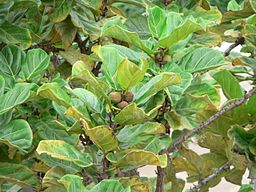
(Rosendahl/Wikimedia Commons)
Fig trees were a common and popular food source in Christ’s Israel. The fruitbuds develop before the leaves appear, so approaching a fig tree with leaves, one would expect fruit.1 But Jesus came upon a fig tree with abundant, showy leaves and no fruit. Like so many of the Savior’s significant symbols, the fruitless fig tree became a profound lesson with many layers of meaning to be applied to different people in different ways. He “cursed” the fig tree that it would never again have fruit—and when he passed again it had withered away. This destruction taught of fruit or faith, infinite love, and Israel’s ultimate destruction.
Hunger Beyond Figs
The “cursed” tree could relate to daily food scarcity or to famine to come, due to lack of righteousness or faith. The experience is related in Mark (11:13-15; 20-23) and in Matthew (21:18-28) as a narrative taking place on the way to or from Jerusalem in the final week of Christ’s life. Luke (13:4-9) presented it as a parable told by the Savior much earlier in His ministry.
The narrative accounts say that Jesus was hungry and wanted food for strength. Luke presents the fig tree parable as Christ’s response to news of 18 people killed in an accident, who had sinned no more than others throughout Jerusalem: “except ye repent, ye shall all likewise perish.”
This parable tells of a man who had a vineyard with a fruitless fig tree and a vineyard “dresser” who begged him not to “cut it down” but to leave it for another year to allow him to try to save it. The parable does not tell whether the tree was healed and saved or not.
Carol Monaco, a Catholic writer, chose a positive meaning to conclude it.
I prefer the parable that holds out hope for future figs. Here we see God’s patience. Like the fig tree, each of us has a purpose and our Lord provides what we need to fulfill our purpose. “For every tree is known by its own fruit. A good person out of the store of goodness in his heart produces good, but an evil person out of a store of evil produces evil.”
Therefore, how do we respond? God gives us free will to act. We can grow and mature in truth and goodness when we are rooted in God’s love.2
Faith Within God’s Love
The fate of a fig tree and of most of us—fruitless, fruitful and/or faithful?
Power of Faith Over Nature
Christ knew that his apostles and other followers would suffer extreme physical and mental challenges. To prepare them, he applied the cursed fig tree to teach them to use righteousness and /or faith in miraculous ways.
As these followers marveled at His power over a fig tree, according to Mark (11:13-15, 20-23) Jesus assured them,
Have faith in God . . . . whosoever shall say unto this mountain, Be thou removed, and be thou cast into the sea; and shall not doubt in his heart, but shall believe that those things . . . shall come to pass, he shall have whatsoever he saith.
Matthew reported the same happening and assurance, adding, “And all things, whatsoever ye shall ask in prayer, believing, ye shall receive.” They would carry this promise to endure persecution and to enable miracles challenging their courage or faith.
Luke followed his fig tree parable with the mustard seed application: A smaller seed and much larger tree. Human effort—divine strength.
God’s Concern for Our Needs
Many years ago I taught kindergarten, as the token non-Episcopalian teacher in an Episcopalian private school in Texas. Before eating, our young children sang this song:
The Lord is good to me/And so I thank the Lord For giving me the things I need/ The sun and the rain and the apple seed. The Lord is good to me.
I wish my children had sung this song in primary with lessons of gratitude or faith. For apple trees or fig trees, the Lord provides what we need to produce fruit. He may not give us fully-developed fruit, but he gives us what we need to grow the fruit—physical, mental, spiritual.
Prophecy to Warn Israel
During Israel’s captivity in Babylon, Old Testament prophet Jeremiah received a vision of two baskets of figs in front of the temple. Ripe, desirable figs filled one basket; figs so “evil” they could not be eaten were in the other.
The Lord explained that he had sent some of the captive Israelites “into the land of the Chaldeans for their good.”
I will build them, and not pull them down; and I will plant them, and not pluck them up. And I will give them an heart to know me, that I am the Lord: and they shall be my people, and I will be their God: for they shall return unto me with their whole heart. (Jeremiah 24:6-7)
These were the “good” figs.
The evil figs, “I will deliver . . . to be removed into all the kingdoms of the earth for their hurt, to be a reproach and a proverb, a taunt and a curse in all places whither I shall drive them.”
This contrast in figs continued in Christ’s ministry. Good figs from good trees prospered spiritually. But a lot of fruitless trees were disguising themselves behind impressive leaves, with no fruits of righteousness or faith.
Hypocrisy in “high places” robbed many of the spiritual nutrients they needed, while proclaiming religious laws and leadership without true doctrine, comfort, or faith. Prophets warned of Israel’s fall, the Savior foretold Israel’s fall, and Israel fell.
How much truth can be found in fig trees? More than most of us can realize.
Previous Post

May 31, 2023
A Malcus Moment: Saved by the Lord's Compassion
Next Post
June 14, 2023 Prophetic Teachings on Gethsemane
Browse Our Archives
Select a Category Comfort and Healing Death and Resurrection Family gratitude Service Spiritual Growth Strength and Courage Uncategorized
Select a Month April 2025 March 2025 February 2025 January 2025 December 2024 November 2024 October 2024 September 2024 August 2024 July 2024 June 2024 May 2024 April 2024 March 2024 February 2024 January 2024 December 2023 November 2023 October 2023 September 2023 August 2023 July 2023 June 2023 May 2023 April 2023 March 2023 February 2023 January 2023 December 2022 November 2022 October 2022 September 2022 August 2022 July 2022 June 2022 May 2022 April 2022 March 2022 February 2022 January 2022 December 2021 November 2021 October 2021 September 2021 August 2021 July 2021 June 2021
Follow Us!
TAKE THE
Religious Wisdom Quiz
What is the seventh commandment?
Select your answer to see how you score.
Thou shall not covet. Thou shalt not murder. Thou shall not commit adultery. Thou shall have no other gods before me.
Related posts from Connecting with Christ

Mission Miracles: Education for Perfection
Contrasts and Blessings: A Parable for All
Heart Treasure: Values and Choices
TRENDING AT PATHEOS Latter-day Saint

Did Prayer Cure His Cancer? Or Was It...
At 4 AM one morning, Joshua W. Brown’s wife awoke to a...

8 Ways a Near-Death Experience Rewires the Soul
Does Consciousness Survive Physical Death? After 50 Years of Research, Dr. Raymond...

Holy Longing: What Our Restlessness Is Telling Us
“One can find so many pains when the rain is falling.” -John...

What this is NOT about. This blog is definitely not about...

Who said the Israelites were God’s chosen? That’s right, they did. Who...

The Spirit World Is the Real World: God...
A Monk’s Wisdom on Body and Spirit I sit with Brother Martin...
view all Latter-day Saint blogs
Ad-Free & Subscriber Log-In Subscription Support
- About Us
- 2026 Calendar
- Videos
- Podcasts
- Library of World Religions
- Faith In Media Tracker
- Advertise With Us
- Write for Us
- Privacy Policy
- Terms of Service
- Do Not Sell My Data
- Contact Us
- Radiant Digital
- Manage Newsletter Subscriptions
- Unsubscribe From Notifications
- Sitemap
Copyright 2008-2026, Patheos. All rights reserved.
Subscription Support Ad-Free & Subscriber Log-In
Follow Patheos