
BuddhistCatholicContemplativeEvangelicalGeneral ChristianHinduJewishLatter-day SaintMuslimNew VisionsProgressive Christian
Beliefs
- Buddhist
- Catholic
- Contemplative
- Evangelical
- General Christian
- Hindu
- Jewish
- Latter-day Saint
- More Voices
- Muslim
- New Visions
- Pagan
- Progressive Christian
Topics
- Religion News
- Food and Religion
- Sports and Religion
- Religious Art
- Religious Music and Entertainment
- Religious Events
- History and Religion
- Style and Religion
- Politics and Religion
- Women in Religion
- Recreation Outdoors and Religion
- Business Finance and Religion
- Careers Workplace and Religion
- Education and Religion
- Family Parenting and Religion
- Health Fitness and Religion
- Home and Religion
- Relationships and Religion
- Technology and Religion
- Travel and Religion
Columnists
- Buddhist Columnists
- Business Finance and Religion Columnists
- Careers Workplace and Religion Columnists
- Catholic Columnists
- Contemplative Columnists
- Education and Religion Columnists
- Evangelists Columnists
- Family Parenting and Religion Columnists
- General Christian Columnists
- Health Fitness and Religion Columnists
- Hindu Columnists
- History and Religion Columnists
- Home and Religion Columnists
- Jewish Columnists
- More Voices Columnists
- Latter Day Columnists
- Muslim Columnists
- New Visions Columnists
- Nonreligious Columnists
- Pagan Columnists
- Politics and Religion Columnists
- Progressive Columnists
- Recreation Outdoors and Religion Columnists
- Relationships and Religion Columnists
- Religion News Columnists
- Religious Art Columnists
- Religious Events Columnists
- Religious Music and Entertainment Columnists
- Sports and Religion Columnists
- Style and Religion Columnists
- Technology and Religion Columnists
- Travel and Religion Columnists
- Women in Religion Columnists
Resource Library
- 2026 Calendar
- Library of World Religions
- The 100 Most Holy Places on Earth
- Patheos Answers
- Podcasts
- Videos
- Faith Leaders Database
- Anglican Episcopalian
- Bahai
- Baptist
- Buddhism
- Christianity
- Confucianism
- Eastern Orthodoxy
- Hinduism
- Holiness and Pentecostal
- ISKCON
- Islam
- Judaism
- Lutheran
- Methodist
- The Church of Jesus Christ of Latter-day Saints
- New Age
- Paganism
- Presbytarian and Reformed
- Protestantism
- Religion Behind the Scenes
- Roman Catholic
- Scientology
- Shia Islam
- Sikhism
- Sufism
- Sunni Islam
- Taoism
- Zen
- See all religions
Research Tools
 Ad-Free & Subscriber Log-In Subscription Support
Ad-Free & Subscriber Log-In Subscription Support
Follow Patheos 

- Trending:
- Forgiveness
- |
- Marriage
- |
- Consciousness
- |
- Death Penalty
- |
- Election
- |
- Halloween

- Home
- Progressive Christian
- Recreation, Outdoors and Religion
- What If God Is Not Only in the Peace but Also in the Pain?
What If God Is Not Only in the Peace but Also in the Pain?
Last updated on: September 24, 2024 at 9:01 am by Cara Meredith
What If God Is Not Only in the Peace but Also in the Pain? 2024-09-03T12:16:24-07:00 Cara Meredith
Patheos Explore the world's faith through different perspectives on religion and spirituality! Patheos has the views of the prevalent religions and spiritualities of the world.
I am reminded of a scene from 15, 20 years ago, about a singular story with a mostly singular point of view.
As some of you know, I used to be in full-time ministry with an organization that primarily worked with middle school and high school kids. During the summer, we went to camp. A lot. We took kids (which is to say, the students we worked with) to camp and we attended camp ourselves, as speakers and activities directors, as camp managers and head leaders. For years on end, I lived out of a suitcase; even when I found myself home for a week or two at a time, the suitcase stayed open in the corner of my bedroom, waiting for its next trip.
At some of these camps, I was the camp speaker. It was my job to deliver the message, night after night, week after week, and introduce these young people to Jesus. And I’ll tell you what: I loved telling the story of that time when Jesus and some of his men got stuck in a storm, the same Gospel passage we just heard read aloud a few minutes ago.
I loved it because the power of Jesus calming the storm was so obvious, so tangible, so real.
I loved it because I could make the miracle real to them by reenacting a storm in the campfire pit or the clubroom: unbeknownst to the campers, different staff members had been planted throughout the audience. And when we got to that part in the passage when “a great windstorm arose, and the waves beat into the boat, so that the boat was already being swamped,” these staffers went to town.
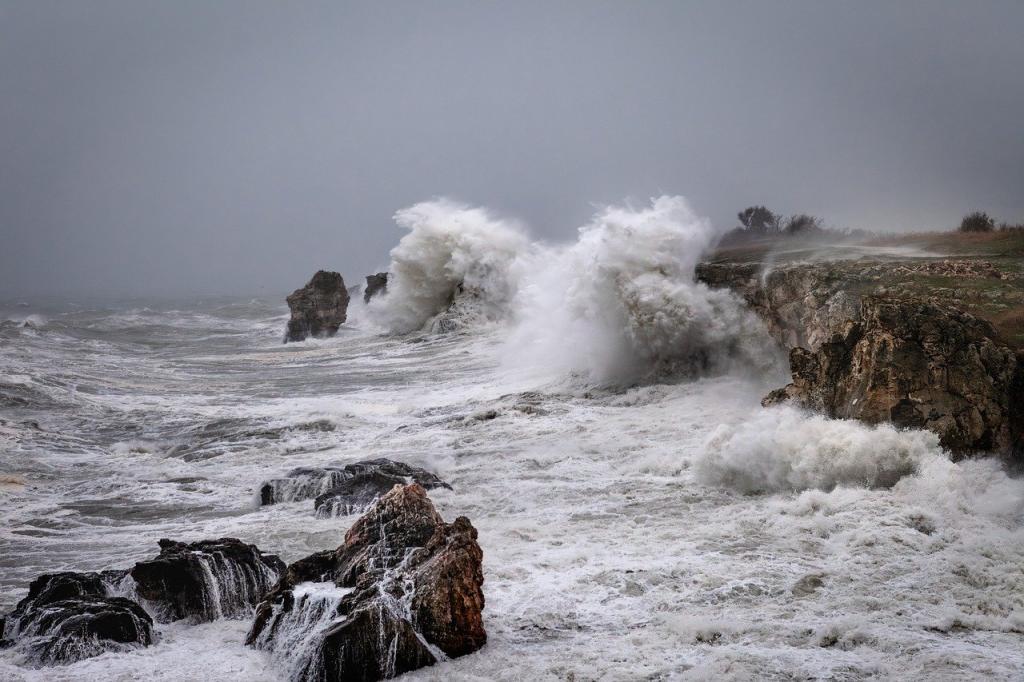
Image by AlKalenski from Pixabay
Several held individual misting waters, which they began to spray over the heads of the campers. Another couple held hand fans, which they began to flap, calmly at first, then rapidly and louder. If we could find an electrical outlet, then giant fans were plugged in, which started to blow rapidly around the room. Some staff members clapped their hands, others made whistling sounds.
They did whatever they could to add to momentum to the story, my words growing louder over the top of all the noise. BUT JESUS WAS IN THE STERN, ASLEEP ON THE CUSHION, AND THE DISCIPLES WOKE HIM AND SAID TO HIM, “TEACHER, DO YOU NOT CARE THAT WE ARE PERISHING?” AND WAKE UP, HE REBUKED THE WIND AND SAID TO THE SEA, “BE SILENT! BE STILL!”
At that moment, perhaps, probably because of an orchestral hand gesture on my part, the room fell still. The fans stopped blowing and the water stopped misting and the hands stopped clapping, because just as the text says, at the sound of his voice, “the wind ceased, and there was a dead calm.”
As often was the case, from here there arose an invitation to let this God, this Jesus calm the storms in their lives too – because, certainly, if he could calm the wretched storm on the Sea of Galilee that day, he could calm the everyday storms in our lives too.
I still believe in the words I spoke that day, or those many days, as is actually the case.
But when I read the text differently now, tripped up by the paradox of a God who is just as much present in the raging storm as he is in the soothing calm.
Jesus is in the boat the whole time. How easy it was for me, and maybe for all of us, to focus on the miracle, the end result – to just get to the thing God can do, instead of the God he is. There, when water sloshes over the side and threatens to drown us; there, when the wind whips so violently we cannot so much as escape it. There, “Jesus’s power is paradoxical,” one writer says. “It comes to us in what looks like vulnerability, like weakness, like sleep.” There, God is all but hidden, or so it seems. Overlooked, forgotten, hard to see.
I wonder if that’s why Jesus asked the men in the boat with him the questions he did: “Why are you afraid? Have you still no faith?” He had been there the whole time, sleeping, no doubt, but there, right beside them as the storm raged on.
Of course, their response is interesting: even if Jesus’s questions are not meant to be accusatory (unlike their previous question to them: Do you not care that we’re perishing?!), his response brings about a twofold response: 1) they fear, and 2) they ask another question.
“Who then is this?” The men ask. “That even the wind and the sea obey him?” It’s still early on in Jesus’ ministry, which means that it’s still early on in their relationship with one another. The disciples are still figuring out who this man is: sure, they dropped everything to follow him, but do they really know who they’re following? But I guess if we’re to ask that question, then we’re also to ask if we really know who we’re following too.
Who is this man? They ask, and it’s a question that makes total sense. “Who is this man, this Christ, this God,” Debie Thomas writes, “who sleeps through storms, accepts our accusations, and offers us his quiet mysterious presence in the wild and wind-swept places? Who is this God who loves us in the chaos?”
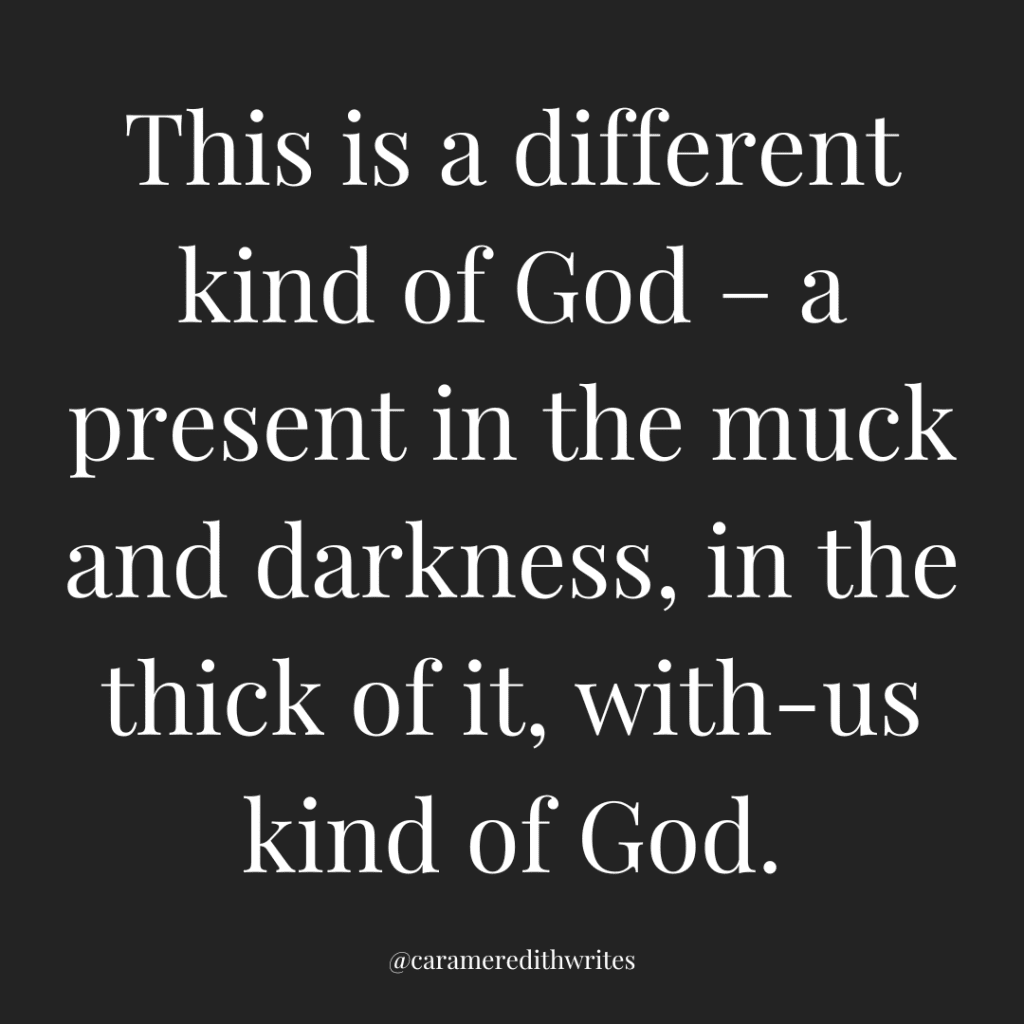
This is a different kind of God – a present in the muck and darkness, in the thick of it, with-us kind of God. What might it look like to hold the tension of this God, instead of the version of God that only exists to do something for us, that only shows up in the peace and calm?
Last Saturday, I attended the Juneteenth celebration hosted by the Diocese of California, our diocese, of course. Juneteenth, of course, is now a federal holiday: on June 19, 1865, Major General Gordon Granger read the General Order Number 3, informing the people of Texas that “…all slaves are free…” Although the Civil War had ended two and a half years earlier, the end of the war only freed those humans who had been enslaved in Confederate States – and Texas was not one of those states.
The day is now referred to as the Second Independence Day, an annual celebration that celebrates the end of slavery and of freedom. But as the official website encourages, the day also serves as a time for reflection, learning, self-assessment, and healing.
As the service made clear, Juneteenth serves as an invitation to hold the tension of the both/and: of celebration and grief, of hope and loss, of life and death. Because just as we celebrated and honored the day, we also recognized that not everything was right – is still not right – in our country for our Black and brown brothers and sisters.
This is the tension, if we so choose to recognize it, of a day found marked by the already but not yet – a great work has already happened, certainly, but the story is not over.
Perhaps it’s not so much of a stretch to realize the same exists for the one we call out to, when we kneel before the pews and when we breathe in mountain air. When we sit beside a loved one in a hospital bed and when we find that we are the loved one in the hospital bed: this God, our God, sits beside us in tensions of celebration and grief, of hope and loss, of life and death.
This God, our God is present in both the calm and the storm, for this God is also found marked by the already but not yet – of what has happened and of what is yet to come.
Might we remember this truth in the storm.
—
This sermon was given to the good people of St. Paul’s Episcopal Church in San Rafael, California on June 23, 2024. If you enjoyed these words, I have a feeling you might like this story of one memorable road trip!
Recreation, Outdoors and Religion
About Cara Meredith
Cara Meredith is a writer, speaker, and part-time development director. The author of The Color of Life (Zondervan) and the forthcoming Church Camp (Broadleaf), she gets a kick out of playing with words. A lot. You can read more about the author here.
Previous Post

September 17, 2024
The Power of Dignity: A Reflection on Jesus's Teachings
Next Post

October 1, 2024 Do you crave wholeness and truth? You're human!
Recent Comments
Browse Our Archives
Select a Category Book reviews Uncategorized
Select a Month July 2026 June 2026 December 2025 August 2025 July 2025 June 2025 May 2025 April 2025 March 2025 February 2025 January 2025 December 2024 November 2024 October 2024 September 2024 August 2024 July 2024 June 2024 March 2024 February 2024 January 2024 December 2023 September 2023 June 2023 November 2022 October 2022 September 2022 August 2022 July 2022 June 2022 May 2022 April 2022 November 2021 May 2021 April 2021 March 2021 January 2021 December 2020 November 2020 October 2020 July 2020 June 2020 May 2020 April 2020 March 2020 February 2020 January 2020 December 2019 October 2019 September 2019 August 2019 July 2019 June 2019 May 2019 April 2019 March 2019 February 2019 January 2019 December 2018 November 2018 October 2018 September 2018 August 2018 July 2018
Follow Us!
TAKE THE
Religious Wisdom Quiz
Which book of the Bible ends with the word 'Amen'?
Select your answer to see how you score.
Philippians Romans Revelation Jude
Books by This Author Books by Coloring Outside the Lines
Related posts from Coloring Outside the Lines

Noticing the Hidden Things: Actions for Compassionate Living
Flung Wide Open: The Beauty of Welcoming Everyone
What if Jesus is in the business of...

Do you crave wholeness and truth? You're human!
TRENDING AT PATHEOS Progressive Christian

What Being a Modern-Day Apostle Means to Me
In my last column, I discussed the ins and outs of modern-day...

Did Ancient China Once Worship the God of...
Across human history, a common thread weaves through the origins of the...

Love Your Neighbor – Including Earth-Kin: Lev. 19,...
God’s command to love your neighbor means acting in an ethical and...

Lead a Church Study of “Jesus and Lao...
Guest writer Jack Thomas (The Irreverent Reverend) reflects on leading his church...

Pastoral Wisdom for Responding to Sermon Pushback
Getting sermon pushback on your social justice sermon? Learn practical, Proverbs-based strategies...

Principles for Understanding the Apostolic Ministry Today
Whenever people discover that my formal ministry title is "apostle," as in...
view all Progressive Christian blogs
What Are Your Thoughts?leave a comment
Ad-Free & Subscriber Log-In Subscription Support
- About Us
- 2026 Calendar
- Videos
- Podcasts
- Library of World Religions
- Faith In Media Tracker
- Advertise With Us
- Write for Us
- Privacy Policy
- Terms of Service
- Do Not Sell My Data
- Contact Us
- Radiant Digital
- Manage Newsletter Subscriptions
- Unsubscribe From Notifications
- Sitemap
Copyright 2008-2026, Patheos. All rights reserved.
Subscription Support Ad-Free & Subscriber Log-In
Follow Patheos