
BuddhistCatholicContemplativeEvangelicalGeneral ChristianHinduJewishLatter-day SaintMuslimNew VisionsProgressive Christian
Beliefs
- Buddhist
- Catholic
- Contemplative
- Evangelical
- General Christian
- Hindu
- Jewish
- Latter-day Saint
- More Voices
- Muslim
- New Visions
- Pagan
- Progressive Christian
Topics
- Religion News
- Food and Religion
- Sports and Religion
- Religious Art
- Religious Music and Entertainment
- Religious Events
- History and Religion
- Style and Religion
- Politics and Religion
- Women in Religion
- Recreation Outdoors and Religion
- Business Finance and Religion
- Careers Workplace and Religion
- Education and Religion
- Family Parenting and Religion
- Health Fitness and Religion
- Home and Religion
- Relationships and Religion
- Technology and Religion
- Travel and Religion
Columnists
- Buddhist Columnists
- Business Finance and Religion Columnists
- Careers Workplace and Religion Columnists
- Catholic Columnists
- Contemplative Columnists
- Education and Religion Columnists
- Evangelists Columnists
- Family Parenting and Religion Columnists
- General Christian Columnists
- Health Fitness and Religion Columnists
- Hindu Columnists
- History and Religion Columnists
- Home and Religion Columnists
- Jewish Columnists
- More Voices Columnists
- Latter Day Columnists
- Muslim Columnists
- New Visions Columnists
- Nonreligious Columnists
- Pagan Columnists
- Politics and Religion Columnists
- Progressive Columnists
- Recreation Outdoors and Religion Columnists
- Relationships and Religion Columnists
- Religion News Columnists
- Religious Art Columnists
- Religious Events Columnists
- Religious Music and Entertainment Columnists
- Sports and Religion Columnists
- Style and Religion Columnists
- Technology and Religion Columnists
- Travel and Religion Columnists
- Women in Religion Columnists
Resource Library
- 2026 Calendar
- Library of World Religions
- The 100 Most Holy Places on Earth
- Patheos Answers
- Podcasts
- Videos
- Faith Leaders Database
- Anglican Episcopalian
- Bahai
- Baptist
- Buddhism
- Christianity
- Confucianism
- Eastern Orthodoxy
- Hinduism
- Holiness and Pentecostal
- ISKCON
- Islam
- Judaism
- Lutheran
- Methodist
- The Church of Jesus Christ of Latter-day Saints
- New Age
- Paganism
- Presbytarian and Reformed
- Protestantism
- Religion Behind the Scenes
- Roman Catholic
- Scientology
- Shia Islam
- Sikhism
- Sufism
- Sunni Islam
- Taoism
- Zen
- See all religions
Research Tools
 Ad-Free & Subscriber Log-In Subscription Support
Follow Patheos 

- Trending:
- Advent
- |
- Forgiveness
- |
- Thanksgiving
- |
- Election
- |
- Seasonal Holidays
- |
- Marriage
 Collins' Column
- Home
- General Christian
- Religious Events
- Making Your Bible Study Group More Accessible: 5 Tips
Making Your Bible Study Group More Accessible: 5 Tips
Last updated on: August 18, 2022 at 9:51 am by Oscar Collins
Making Your Bible Study Group More Accessible: 5 Tips 2022-08-18T09:51:00-04:00 Oscar Collins
Patheos Explore the world's faith through different perspectives on religion and spirituality! Patheos has the views of the prevalent religions and spiritualities of the world.
In Mark 16:15, Jesus commands his disciples to go throughout the world and preach the gospel to all people. However, sometimes it seems the church has forgotten about one very large group of people — those with disabilities.
Sixty-one million U.S. adults — or one in four Americans — live with a disability, and many children struggle with various physical and mental issues. Of course, most pastors and churchgoers would consider themselves welcoming to these individuals. However, kids with certain chronic conditions, including autism, depression, developmental delays and learning disabilities, are up to two times more likely to never attend religious services.
If kids aren’t going to church, neither are their parents, nor are they getting involved in Bible studies. However, if the church made these meetings more accessible, people with disabilities would probably be more apt to attend.
Here are a few tips to help make your Bible study more inviting, accommodating and accessible.
1. Gather Additional Resources
Many people with disabilities struggle with cognitive, audial and visual impairments. These functional issues can keep them from understanding the Bible and related materials. Bible study groups can make their lessons more accessible by gathering additional resources that cater to their members’ specific needs.
For instance, if someone is hard of hearing, you might provide transcripts while watching videos or listening to a podcast. Those with visual impairments may appreciate audio recordings of each meeting or audiobooks they can listen to and think about before each study session. Accommodate those with intellectual disabilities, too, by providing developmentally appropriate materials they can understand.
2. Provide Accessible Transportation
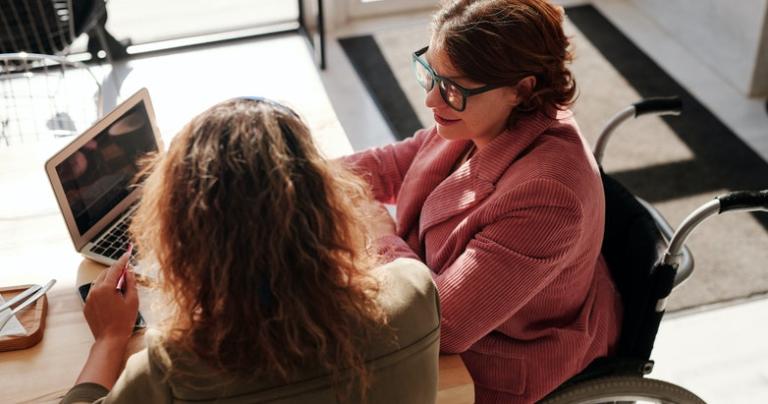
You might also provide accessible transportation to and from your Bible study. This way, those with mobility difficulties can still attend and contribute to the discussion. Purchase or rent a wheelchair-accessible van with rear or side entry options. Some also come with convertible seating and ramps to maximize comfort and accessibility.
Alternatively, you can find an accommodating public transportation service to help them attend meetings and other group events. Many now use multichannel and multisensory signage to ensure a smooth ride. Mobile tickets and transportation alerts are also widely available so travelers experience fewer disruptions and unexpected surprises during the commute.
3. Take the Study to Them
Sometimes, transporting people with disabilities isn’t an option, as is often the case with highly immobile and homebound individuals. The only way to make Bible study more accessible may be to take the meeting to them. Prepare for some objections and remind them that the place doesn’t have to be spotless to host people. Bring food and refreshments to take the pressure off them and create a welcoming, inclusive environment for everyone.
If an individual doesn’t feel comfortable having others over, take your Bible study online. Set everyone up with a Zoom account and meet virtually. This way, everyone can engage in fellowship and build relationships without distance getting in the way.
4. Restructure Your Study
Another great way to make your study sessions more accessible is to restructure them to suit members’ needs. For example, if someone has a chronic disease that requires them to take frequent bathroom breaks, you could build them into your meeting time. Shortening your study or choosing a different time to meet may also provide more opportunities for individuals with disabilities to attend and contribute to the discussion.
If a member has intellectual disabilities, consider assigning homework they can complete throughout the week. Restructure your Bible study so everyone works on the reading and research portion on their own time. You can then use your meeting time to review the topic. Doing so will give everyone more time to prepare so they can present their own talking points when it’s time for group discussion.
5. Ask Questions
Creating a more accessible and inclusive space often involves uncomfortable conversations with individuals who require the most accommodations. In this case, it’s important not to make assumptions about what they might need. Ask them directly what works best for them and how the group can help.
Sometimes, the solution is simple, like replacing one seat with an exercise ball to relieve chronic back pain. Other times, the resolution will involve bigger workarounds and more effort, like providing notes in braille or learning sign language. Either way, working together to troubleshoot and accommodate is well worth the extra effort because it’ll show others you care enough to make a change.
Changing Your Perspective
People with disabilities experience the world differently than others. Subsequently, they can offer fresh perspectives and new outlooks on even the most mundane topics. In this way, their disability is a superpower, allowing them to see and share things that nondisabled persons are completely unaware of.
Therefore, it’s important to change your perspective and recognize disability as a different ability, one that can add depth and meaning to your Bible study. Keep an open mind as you learn about their needs and viewpoints. In turn, you’ll create a naturally inclusive atmosphere and reach even more people for Christ.
Religious Events
Previous Post

October 7, 2021
Organizing a Church Bake Sale: 5 Points to Remember
Next Post

October 12, 2021 6 Christian Road Trip Spots You'll Want to Visit
Browse Our Archives
Select a Category Uncategorized
Select a Month March 2024 February 2024 January 2024 December 2023 November 2023 October 2023 August 2023 July 2023 June 2023 May 2023 April 2023 March 2023 February 2023 January 2023 December 2022 November 2022 October 2022 September 2022 August 2022 July 2022 June 2022 May 2022 April 2022 March 2022 February 2022 January 2022 December 2021 November 2021 October 2021 September 2021 August 2021 July 2021
Follow Us!
TAKE THE
Religious Wisdom Quiz
Who was Paul's hometown companion?
Select your answer to see how you score.
Barnabas Timothy Luke Silas
Related posts from Collins' Column

Why Invest in a Financial Wellness Program?
Create a Captivating Church Video With These 9...

Exploring the Intricacies of Church Accounting: What to...
6 Impactful Lessons From Cultures Across the World
TRENDING AT PATHEOS General Christian

How Thoughts Shape Our Lives - Even Lies
She wakes up with a familiar heaviness. Nothing troubling is happening yet,...
The Thanksgiving Hymn Born in a Plague-Ravaged Town
The Impossible Story of “Now Thank We All Our God" It’s an...
Does Islam Teach the Subjugation of Christians and...
“There is no compulsion in religion.” When discussions about Islam's relationship...
The Church calendar begins Advent this year on Sunday November 29....
Apples of Gold: Words Around the Thanksgiving Table
There is a verse in Proverbs that I think every mother should...

Why Jesus Shone on the Mountain and Moses...
The Divine Glory In all three of the synoptic gospels, Matthew, Mark,...
view all General Christian blogs
Ad-Free & Subscriber Log-In Subscription Support
- About Us
- 2026 Calendar
- Videos
- Podcasts
- Library of World Religions
- Faith In Media Tracker
- Advertise With Us
- Write for Us
- Privacy Policy
- Terms of Service
- Do Not Sell My Data
- Contact Us
- Radiant Digital
- Manage Newsletter Subscriptions
- Unsubscribe From Notifications
- Sitemap
Copyright 2008-2026, Patheos, part of the Radiant Digital network of media brands. All rights reserved.
Subscription Support Ad-Free & Subscriber Log-In
Follow Patheos