
BuddhistCatholicContemplativeEvangelicalGeneral ChristianHinduJewishLatter-day SaintMuslimNew VisionsProgressive Christian
Beliefs
- Buddhist
- Catholic
- Contemplative
- Evangelical
- General Christian
- Hindu
- Jewish
- Latter-day Saint
- More Voices
- Muslim
- New Visions
- Pagan
- Progressive Christian
Topics
- Religion News
- Food and Religion
- Sports and Religion
- Religious Art
- Religious Music and Entertainment
- Religious Events
- History and Religion
- Style and Religion
- Politics and Religion
- Women in Religion
- Recreation Outdoors and Religion
- Business Finance and Religion
- Careers Workplace and Religion
- Education and Religion
- Family Parenting and Religion
- Health Fitness and Religion
- Home and Religion
- Relationships and Religion
- Technology and Religion
- Travel and Religion
Columnists
- Buddhist Columnists
- Business Finance and Religion Columnists
- Careers Workplace and Religion Columnists
- Catholic Columnists
- Contemplative Columnists
- Education and Religion Columnists
- Evangelists Columnists
- Family Parenting and Religion Columnists
- General Christian Columnists
- Health Fitness and Religion Columnists
- Hindu Columnists
- History and Religion Columnists
- Home and Religion Columnists
- Jewish Columnists
- More Voices Columnists
- Latter Day Columnists
- Muslim Columnists
- New Visions Columnists
- Nonreligious Columnists
- Pagan Columnists
- Politics and Religion Columnists
- Progressive Columnists
- Recreation Outdoors and Religion Columnists
- Relationships and Religion Columnists
- Religion News Columnists
- Religious Art Columnists
- Religious Events Columnists
- Religious Music and Entertainment Columnists
- Sports and Religion Columnists
- Style and Religion Columnists
- Technology and Religion Columnists
- Travel and Religion Columnists
- Women in Religion Columnists
Resource Library
- 2026 Calendar
- Library of World Religions
- The 100 Most Holy Places on Earth
- Patheos Answers
- Podcasts
- Videos
- Faith Leaders Database
- Anglican Episcopalian
- Bahai
- Baptist
- Buddhism
- Christianity
- Confucianism
- Eastern Orthodoxy
- Hinduism
- Holiness and Pentecostal
- ISKCON
- Islam
- Judaism
- Lutheran
- Methodist
- The Church of Jesus Christ of Latter-day Saints
- New Age
- Paganism
- Presbytarian and Reformed
- Protestantism
- Religion Behind the Scenes
- Roman Catholic
- Scientology
- Shia Islam
- Sikhism
- Sufism
- Sunni Islam
- Taoism
- Zen
- See all religions
Research Tools
 Ad-Free & Subscriber Log-In Subscription Support
Ad-Free & Subscriber Log-In Subscription Support
Follow Patheos 

- Trending:
- Forgiveness
- |
- Marriage
- |
- Consciousness
- |
- Death Penalty
- |
- Election
- |
- Halloween
 Coffee and Crucifix
- Home
- Catholic
- An Easter Reflection: Jesus Was A Victim
An Easter Reflection: Jesus Was A Victim
Last updated on: April 18, 2022 at 4:14 pm by Coffee & Crucifix
An Easter Reflection: Jesus Was A Victim 2022-04-18T16:14:30-06:00 Coffee & Crucifix
Patheos Explore the world's faith through different perspectives on religion and spirituality! Patheos has the views of the prevalent religions and spiritualities of the world.
In today’s political climate, victimization seems to consistently find its way to the forefront of trending conversations. When the #MeToo movement became viral in 2017, it empowered countless women to open up about their experiences with sexual abuse. And when the discovery of several unmarked graves of children at former residential schools sites made headlines, old wounds were reopened as indigenous communities relived the trauma of the past.
When someone opens up publicly about their horrific experiences, many tend to react with skepticism. It is possible it could be because abuse (especially of sexual nature) is an extremely serious matter. When an alleged abuser is someone well-known or respected among family, friends or community, the very thought of them committing such atrocities challenges any narrative of how they view them.
When a topic is trending online, many will often hop the bandwagon and express their solidarity to an idea that resonates with them. I can understand why some would push back against such movements. A phrase popularized by conservative speaker Ben Shapiro says, “Feelings rule facts, and victims are heroes.” I don’t particularly appreciate his inflammatory style, but I do think there is some truth in his critique. I have no doubt there have been cases when relationships go sour and people may attempt to smear their former partner’s reputation. This could be one of the many reasons why our justice system usually take an ‘innocent until proven guilty’ approach. Unfortunately, slogans like Shapiro’s are often used to silence conversations rather than approach them with nuance. This does not mean hundreds of people (or millions for that matter) sharing similar experiences suddenly makes them all untrue.
What I find discouraging is how many Christians I’ve encountered show little empathy for those who share experiences or views that conflict with their own. It seems the ones who are quick to claim Christlike virtue are the ones who express behaviors that reflect more closely to the ones who would have been among the crowd shouting, “Crucify Him!” But upon further reflection, I think have we all been that person at least once in our lives — myself included. And it seems to only give further reason why movements such as #MeToo and #EveryChildMatters exist to give victimized people an opportunity to use their voices and share what weighs heavy upon them.
Regardless of what anyone may have been a victim to, rising above personal trauma is never an easy feat. Many people who have been fortunate enough to recognize how their past trauma influences their overall behavior and ability to make sound decisions spend years learning how to cope with day-to-day life. When these issues ferment under the surface, they eventually bleed out in the form of addiction, high-risk behavior or projecting their pain upon others. It is also possible those who frequently identify as victims may one day become abusers themselves — thus, the cycle of generational trauma continues.
This is where I’ve noticed several online personalities (especially in the Catholic blogosphere) seemingly capitalize on their trauma, whether to acquire click-money or attention. Though I cannot speak for those who blog about their experiences with sexual abuse, I am especially guilty of this behavior, especially in my own writing. One of the biggest challenges for me has been to work past my resentment towards those who verbally and physically harassed me, as well as those who manipulated me into leaving the Catholic faith at a vulnerable age. It is a process of healing I have been continually working towards. That being said, my experiences pale in comparison to those who’ve experienced sexual abuse or cultural discrimination of any kind.
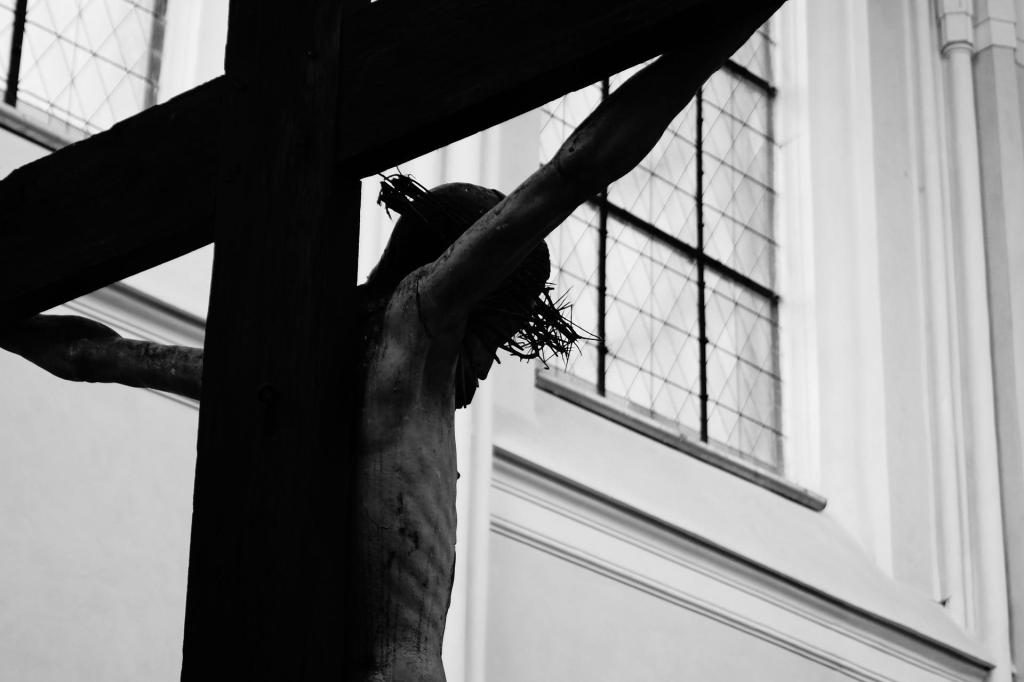
Image credit: pixabay.com
As I reflect upon the meaning of Good Friday, I’ve often asked myself, how can a day someone experienced one of the most horrific forms of torture be ‘good?’ He was brutally mocked, scourged, violated and impaled before an entire community. And yet, He had done nothing to deserve such extreme punishment. One of the criminals who hung beside him shouted, “Are you not the Christ? Save yourself and us! (Luke 23:39)” I often find it difficult to wrap my mind around an all-knowing, all-powerful God who wouldn’t simply alleviate His own suffering to simply prove who He is on the spot. But this is the paradox of the victimhood of Christ. Although He suffered and died unjustly at the hands of wicked people, not only did he rise above victimhood, He removed the power from His abusers and conquered death itself.
I have often heard people say if a god (or several gods) exist, they, along with the rest of the universe, do not care about the insignificance of human activity on Earth. The idea that all human suffering is meaningless in the broad scheme of the universe is a hopeless nihilism. It’s kind of reminiscent to how those who have not experienced abuse themselves would often be ignorant of the pain of an abuse victim’s own experiences. For many, the only way they empathize with somebody else’s pain or trauma is to experience it personally. And this is what separates Christ from all other gods. His humanity makes Him a divine being who understands our suffering on a personal level.
It is my hope that my reflections do not minimize the painful and traumatic experiences of others. But I think it’s worth considering how victimhood implies a state that isn’t meant to last forever. It is a state that Christ Himself understands well. As Christians, we strive to imitate Christ as our primary example of virtuous character. Even in death, Jesus forgave His oppressors as He cried, “Father, forgive them; for they know not what they do!” Forgiving those who have wronged us is easier said than done for many who have been victimized. But difficult as it may be, forgiveness removes the power our abusers exert over us.
Personal circumstances do not define the identity of an individual, though they can shape and transforms a person’s character for better or for worse. As Christ rose from the dead, His scars remained on his hands and feet as a reminder of what had happened to Him days before — but the power of evil and death had no grip upon Him.
And like Christ, we are not bound to be victims forever.
Previous Post

July 30, 2021
Local Activist Blames Church Fires On Climate Change
Next Post

May 9, 2022 Don't Lose Your Soul In The Culture War
Browse Our Archives
Select a Category Catholicism Christian Life Christian Life Church History Community Eastern Orthodoxy Entertainment Fiction History Mental Health Movies Music Politics Protestantism Reflection Religion Satire Science Fiction Self esteem Self Love Spirituality Star Wars Suicide Theology Uncategorized
Select a Month June 2023 April 2023 May 2022 April 2022 July 2021 April 2021 March 2021 February 2021 January 2021 December 2020 November 2020 October 2020 September 2020 August 2020 July 2020 June 2020 May 2020 April 2020 March 2020 February 2020 January 2020 December 2019 November 2019 October 2019 September 2019 August 2019 July 2019 June 2019 May 2019 April 2019 March 2019 February 2019 January 2019 December 2018 October 2018 September 2018 August 2018 June 2018 April 2018 January 2018 November 2017 October 2017 July 2017 June 2017 May 2017 April 2017 March 2017 February 2017 December 2016 October 2016 September 2016 August 2016 June 2016 May 2016 March 2016 February 2016
Follow Us!
TAKE THE
Religious Wisdom Quiz
Who saw a plumb line in a vision, symbolizing judgment?
Select your answer to see how you score.
Obadiah Joel Amos Micah
Related posts from Coffee and Crucifix

Martin Scorsese Meets With Pope To Discuss Film...

Vatican Formally Repudiates 'Doctrine of Discovery'

FAIL! Catholic says, 'And also with you!" instead...

Don't Lose Your Soul In The Culture War
TRENDING AT PATHEOS Catholic

Rejecting Doom: Christian Hope And Human Action
Christianity is a religion of hope. We are to have hope and...

It’s What Comes From Within Which Matters
One of the most difficult things for us to understand is why...

Why I Choose the Eucharist Over the Sermon
Choose the Eucharist, Not the Sermon What are we supposed to get...

5 Design Elements Found in Spiritually Rooted Homes
Putting Spirituality Into Home Decor Our homes are more than our living...

Credo: A Story of God Told with the...
About 10 years ago, I began to imagine a personal "Credo" that...

The Anatomy of Divine Revelation in Catholic Thought
The claim that God has made Himself known to human beings is...
view all Catholic blogs
Ad-Free & Subscriber Log-In Subscription Support
- About Us
- 2026 Calendar
- Videos
- Podcasts
- Library of World Religions
- Faith In Media Tracker
- Advertise With Us
- Write for Us
- Privacy Policy
- Terms of Service
- Do Not Sell My Data
- Contact Us
- Radiant Digital
- Manage Newsletter Subscriptions
- Unsubscribe From Notifications
- Sitemap
Copyright 2008-2026, Patheos. All rights reserved.
Subscription Support Ad-Free & Subscriber Log-In
Follow Patheos