
BuddhistCatholicContemplativeEvangelicalGeneral ChristianHinduJewishLatter-day SaintMuslimNew VisionsProgressive Christian
Beliefs
- Buddhist
- Catholic
- Contemplative
- Evangelical
- General Christian
- Hindu
- Jewish
- Latter-day Saint
- More Voices
- Muslim
- New Visions
- Pagan
- Progressive Christian
Topics
- Religion News
- Food and Religion
- Sports and Religion
- Religious Art
- Religious Music and Entertainment
- Religious Events
- History and Religion
- Style and Religion
- Politics and Religion
- Women in Religion
- Recreation Outdoors and Religion
- Business Finance and Religion
- Careers Workplace and Religion
- Education and Religion
- Family Parenting and Religion
- Health Fitness and Religion
- Home and Religion
- Relationships and Religion
- Technology and Religion
- Travel and Religion
Columnists
- Buddhist Columnists
- Business Finance and Religion Columnists
- Careers Workplace and Religion Columnists
- Catholic Columnists
- Contemplative Columnists
- Education and Religion Columnists
- Evangelists Columnists
- Family Parenting and Religion Columnists
- General Christian Columnists
- Health Fitness and Religion Columnists
- Hindu Columnists
- History and Religion Columnists
- Home and Religion Columnists
- Jewish Columnists
- More Voices Columnists
- Latter Day Columnists
- Muslim Columnists
- New Visions Columnists
- Nonreligious Columnists
- Pagan Columnists
- Politics and Religion Columnists
- Progressive Columnists
- Recreation Outdoors and Religion Columnists
- Relationships and Religion Columnists
- Religion News Columnists
- Religious Art Columnists
- Religious Events Columnists
- Religious Music and Entertainment Columnists
- Sports and Religion Columnists
- Style and Religion Columnists
- Technology and Religion Columnists
- Travel and Religion Columnists
- Women in Religion Columnists
Resource Library
- 2026 Calendar
- Library of World Religions
- The 100 Most Holy Places on Earth
- Patheos Answers
- Podcasts
- Videos
- Faith Leaders Database
- Anglican Episcopalian
- Bahai
- Baptist
- Buddhism
- Christianity
- Confucianism
- Eastern Orthodoxy
- Hinduism
- Holiness and Pentecostal
- ISKCON
- Islam
- Judaism
- Lutheran
- Methodist
- The Church of Jesus Christ of Latter-day Saints
- New Age
- Paganism
- Presbytarian and Reformed
- Protestantism
- Religion Behind the Scenes
- Roman Catholic
- Scientology
- Shia Islam
- Sikhism
- Sufism
- Sunni Islam
- Taoism
- Zen
- See all religions
Research Tools
 Ad-Free & Subscriber Log-In Subscription Support
Ad-Free & Subscriber Log-In Subscription Support
Follow Patheos 

- Trending:
- Forgiveness
- |
- Marriage
- |
- Consciousness
- |
- Death Penalty
- |
- Election
- |
- Halloween
 Coffee and Crucifix
- Home
- Catholic
- Can Coarse Language and Profanity Be Appropriate?
Can Coarse Language and Profanity Be Appropriate?
Last updated on: December 10, 2020 at 11:28 am by Coffee & Crucifix
Can Coarse Language and Profanity Be Appropriate? 2020-12-10T11:28:39-06:00 Coffee & Crucifix
Patheos Explore the world's faith through different perspectives on religion and spirituality! Patheos has the views of the prevalent religions and spiritualities of the world.
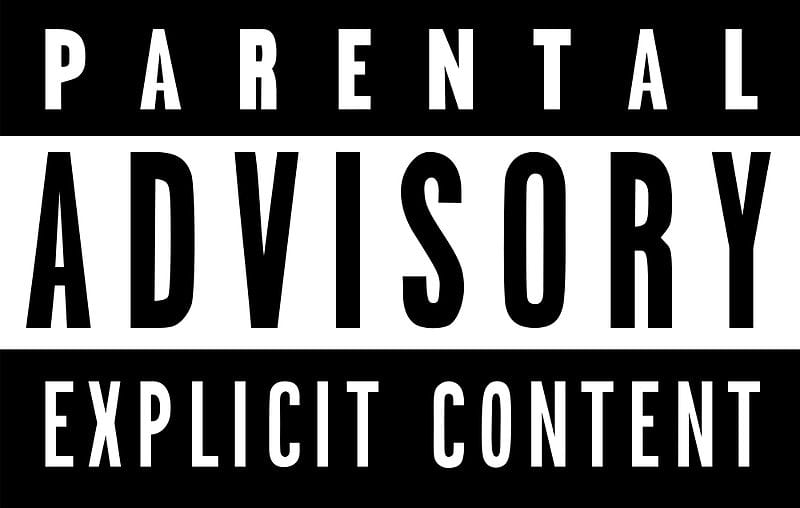
Image credit: Wikimedia Commons
I’m sure most of us remember sometime in our adolescence being told by our adult role models that it’s not polite to swear. This would appear to be a seemingly easy task until our little worlds shattered upon hearing them accidentally stub their toe on a piece of furniture or strike their thumb with a hammer — and all the powers of the abyss manifested themselves through the guttural utterance of an unspeakable four-letter word, followed by awkward silence as the conjurer would pretend nothing happened while wincing in throbbing scrupulosity.
The use of coarse language in public or professional settings can be off-putting, demeaning and possibly detrimental to a person’s reputation. Christians would say that the person of Jesus Christ is an example to follow as someone who, “…knew no sin and neither was guile found in his mouth (1 Peter 2:22).” This biblical passage is often erroneously interpreted as though Jesus (nor the Apostles or any of His allegedly true followers) have ever said any harsh words. This is also sometimes implied with the citation of passages such as these:
“But I say to you that every one who is angry with his brother shall be liable to judgment; whoever insults his brother shall be liable to the council, and whoever says, ‘You fool!’ shall be liable to the hell of fire.”
— Matthew 5:22 RSV
“Let no evil talk come out of your mouths, but only such as is good for edifying, as fits the occasion, that it may impart grace to those who hear.” — Ephesians 4:29 RSV
“But immorality and all impurity or covetousness must not even be named among you, as is fitting among saints. Let there be no filthiness, nor silly talk, nor levity, which are not fitting; but instead let there be thanksgiving.” — Ephesians 5:3-4 RSV
“Let your speech always be gracious, seasoned with salt, so that you may know how you ought to answer every one.” — Colossians 4:6 RSV
What the word ‘guile’ means is not dirt nor filth, but deceit — meaning that Jesus (as the Way, the Truth and the Life) told no lies. In fact, Jesus was especially known for his strong language in cases where He saw it was necessary. He called the Pharisees a brood of vipers (Matthew 12:34). He called Peter the first pope ‘Satan’ (Matthew 16:23). He occasionally called his disciples ‘fools’ or ‘foolish men’ (see Luke 24: 25), which would seemingly contradict Matthew 5:22. He referred to a Canaanite woman as a ‘dog’ (Matthew 15: 26), which some would interpret as a way of calling someone a horrible b-word (though contextually he was actually using hyperbole to affirm a testimony of her deep faith).
But just because Jesus was known for using salty language where He saw fit, it doesn’t mean we have an excuse to use flippant, excessive coarse language on a frequent basis. Some people who are notorious for cussing like a sailor (like myself on my worst days — mea culpa!) would say there are certain individuals whom they respect simply because they don’t swear. When someone who is known to have a clean and refined vocabulary is unexpectedly heard dropping an F-bomb, the effect of the word suddenly feels more like an atomic explosion in comparison to pistol-fire habitual swearing. This shows that when people who hardly use profanity suddenly use language they rarely use, you know something serious is happening. Similarly, I imagine that Jesus was the type of person whose truth-bombs would always catch people off guard.
And no, I’m not implying that Jesus said the F-word.
Often what motivates people to use strong language (aside from accidental injury) is strong condemnation. For example, Protestant reformer Martin Luther was known for his belligerence and foul mouth, as shown in one of the following exchanges with Pope Leo X:
Luther (mockingly imitating the Pope): “Silence, you heretic! What comes out of your mouth must be kept!” (Luther answers) “I hear it–which mouth you mean? The one from which the farts come?…Or the one into which good Corsican wine flows? Let a dog sh*t into that.”
Leo X: “Oh, you abominable Luther; should you talk to the pope like this?”
Luther: “Shame on you too, you…crude asses…you are a crude ass,…ass-pope, and an ass you will remain.”
Source: Luther’s Works, VOLUME 41, pg. 281
Saint Thomas More, one of the most revered Catholic figures who countered Martin Luther, is also known to have responded harshly to him:
“For I am ashamed even of this necessity, that while I clean out the fellow’s (Martin Luther’s) sh*t-filled mouth I see my own fingers covered with sh*t.”
Source: A Response to Luther by Thomas More
Without knowing any context of who spoke these quotes, many Christians would cringe at such language and write these people off as juvenile non-believers partaking in verbal mud-slinging. The truth is, no Christian is immune to being caught up in a heated argument — especially one that would push them to the point of sheer frustration and uttering profanities. But whether a Christian would align with the views of Martin Luther or Thomas More, some would defend their strong language as necessary in getting their point across.
Another example in U2’s live performance of Sunday Bloody Sunday in their 1988 rockumentary Rattle & Humm, Bono voices an impassioned monologue to the audience about the Remembrance Day bombings in his Irish homeland,
“And let me tell you something. I’ve had enough of Irish Americans who haven’t been back to their country in twenty or thirty years come up to me and talk about the resistance, the revolution back home…..and the glory of the revolution…..and the glory of dying for the revolution. F**k the revolution! They don’t talk about the glory of killing for the revolution. What’s the glory in taking a man from his bed and gunning him down in front of his wife and his children? Where’s the glory in that? Where’s the glory in bombing a Remembrance Day parade of old age pensioners, their medals taken out and polished up for the day. Where’s the glory in that? To leave them dying or crippled for life or dead under the rubble of a revolution that the majority of the people in my country don’t want.”
Whenever I watch films that involve a realistic depiction of an injustice, sometimes the use of profanity further reinforces the harshness of the setting the story takes place in. Films that depict deep prejudice where racial slurs are explicitly uttered allows the viewer to sympathize with whom the words are directed towards. Unfortunately, purity culture in North American society has played a role (namely in Christian films) in suppressing language that would aid in a realistic depiction of a character, a cultural dialect or even a moment of distress.
On the flip side, nowadays it’s difficult for any Christian who cares about wholesome entertainment to find any media that doesn’t contain words or phrases that would cause someone to clutch pearls or raise eyebrows. As someone who grew up absorbing music and pop culture from the 90’s and early 2000’s, I remember when the PARENTAL ADVISORY label was introduced on certain album covers — namely in the rock and metal genres. Bands such as KoRn, Limp Bizkit and Marilyn Manson were among a handful of artists who pushed the boundaries of censorship imposed by media companies who were generally appeasing their conservative consumers. As more artists hopped the bandwagon of provocative lyricism, what many protective parents did not realize was the infamous black and white label made albums far more covetous among rebellious youth. It eventually came to the point where the vast majority of popular artists in rock, metal, rap and hip hop rarely released albums without the infamous black and white cautionary sticker.
Coarse language and profanity have been ingrained in the fabric of our culture long before the PARENTAL ADVISORY label was introduced. Even some of the most widely known writers in the history of literature such as William Shakespeare were responsible for the creation of obscure insults and new phrases. Language is an ever-evolving entity where words develop a different meaning many years, decades or centuries after their creation as human trends ebb and flow like the ocean tide. And often, words that once meant something completely different are eventually considered inflammatory.
But the subjectiveness of evolving language does not mean Christians ought to start using foul language for the sake of blending into the world. As mentioned in Romans 12:2, we don’t conform to the patterns of the world, but we allow our minds and hearts to be transformed. But we are also told to be all things to all people (as per St. Paul’s teaching in 1 Corinthians 9:19-23), sometimes relating to other people through evangelism it requires an adjustment in language — even if that language does not appear as clean-cut and proper as what we’re used to.
One should always exercise graciousness and kindness in every social interaction, though one shouldn’t assume every interaction will be the same. While the use of profanity and coarse language isn’t always ideal, sometimes we are pushed into situations where forceful language is necessary. In cases of abuse or attempted assault, being ‘polite’ does not always suffice in keeping an assailant from crossing boundaries. Sometimes loud cussing is enough to spook a perpetrator from fully succeeding in their advances. If something calls for strong condemnation or firm warning, sometimes the most charitable thing one can do is express it through harsh language.

About Rene Albert
I'm Rene Albert. I am a husband to a beautiful wife and a father of three children. I'm also a licensed carpenter and construction manager as part of my full-time work. When I'm not busy meeting construction deadlines, changing diapers and chasing little hooligans around the house, I write essays about Catholicism, mere Christian theology and western politics and culture, as well as how they all affect each other. Due to working a full time job in construction, I usually only post two articles per week on average. My goal is to eventually become a full-time writer and possibly start up a podcast or Youtube channel. My writing is a labor of love, so if you enjoy my work and feel called to support me on Patreon, I would be very much appreciative! Pax vobiscum! You can read more about the author here.
Previous Post

August 18, 2020
Dreams and the Spiritual Realm
Next Post

September 5, 2020 Is Jesus the Ultimate Capitalist?
Browse Our Archives
Select a Category Catholicism Christian Life Christian Life Church History Community Eastern Orthodoxy Entertainment Fiction History Mental Health Movies Music Politics Protestantism Reflection Religion Satire Science Fiction Self esteem Self Love Spirituality Star Wars Suicide Theology Uncategorized
Select a Month June 2023 April 2023 May 2022 April 2022 July 2021 April 2021 March 2021 February 2021 January 2021 December 2020 November 2020 October 2020 September 2020 August 2020 July 2020 June 2020 May 2020 April 2020 March 2020 February 2020 January 2020 December 2019 November 2019 October 2019 September 2019 August 2019 July 2019 June 2019 May 2019 April 2019 March 2019 February 2019 January 2019 December 2018 October 2018 September 2018 August 2018 June 2018 April 2018 January 2018 November 2017 October 2017 July 2017 June 2017 May 2017 April 2017 March 2017 February 2017 December 2016 October 2016 September 2016 August 2016 June 2016 May 2016 March 2016 February 2016
Follow Us!
TAKE THE
Religious Wisdom Quiz
What was Ezra's profession?
Select your answer to see how you score.
Priest Scribe Farmer Soldier
Related posts from Coffee and Crucifix

Don't Lose Your Soul In The Culture War

GraceLife Church, Civil Disobedience & the Christian Persecution...

Study Reveals Using A Saint In Your Profile...

The Power Of Words And The Cult Of...
TRENDING AT PATHEOS Catholic

Rejecting Doom: Christian Hope And Human Action
Christianity is a religion of hope. We are to have hope and...

It’s What Comes From Within Which Matters
One of the most difficult things for us to understand is why...

Why I Choose the Eucharist Over the Sermon
Choose the Eucharist, Not the Sermon What are we supposed to get...

5 Design Elements Found in Spiritually Rooted Homes
Putting Spirituality Into Home Decor Our homes are more than our living...

Credo: A Story of God Told with the...
About 10 years ago, I began to imagine a personal "Credo" that...

The Anatomy of Divine Revelation in Catholic Thought
The claim that God has made Himself known to human beings is...
view all Catholic blogs
Ad-Free & Subscriber Log-In Subscription Support
- About Us
- 2026 Calendar
- Videos
- Podcasts
- Library of World Religions
- Faith In Media Tracker
- Advertise With Us
- Write for Us
- Privacy Policy
- Terms of Service
- Do Not Sell My Data
- Contact Us
- Radiant Digital
- Manage Newsletter Subscriptions
- Unsubscribe From Notifications
- Sitemap
Copyright 2008-2026, Patheos. All rights reserved.
Subscription Support Ad-Free & Subscriber Log-In
Follow Patheos