
BuddhistCatholicContemplativeEvangelicalGeneral ChristianHinduJewishLatter-day SaintMuslimNew VisionsProgressive Christian
Beliefs
- Buddhist
- Catholic
- Contemplative
- Evangelical
- General Christian
- Hindu
- Jewish
- Latter-day Saint
- More Voices
- Muslim
- New Visions
- Pagan
- Progressive Christian
Topics
- Religion News
- Food and Religion
- Sports and Religion
- Religious Art
- Religious Music and Entertainment
- Religious Events
- History and Religion
- Style and Religion
- Politics and Religion
- Women in Religion
- Recreation Outdoors and Religion
- Business Finance and Religion
- Careers Workplace and Religion
- Education and Religion
- Family Parenting and Religion
- Health Fitness and Religion
- Home and Religion
- Relationships and Religion
- Technology and Religion
- Travel and Religion
Columnists
- Buddhist Columnists
- Business Finance and Religion Columnists
- Careers Workplace and Religion Columnists
- Catholic Columnists
- Contemplative Columnists
- Education and Religion Columnists
- Evangelists Columnists
- Family Parenting and Religion Columnists
- General Christian Columnists
- Health Fitness and Religion Columnists
- Hindu Columnists
- History and Religion Columnists
- Home and Religion Columnists
- Jewish Columnists
- More Voices Columnists
- Latter Day Columnists
- Muslim Columnists
- New Visions Columnists
- Nonreligious Columnists
- Pagan Columnists
- Politics and Religion Columnists
- Progressive Columnists
- Recreation Outdoors and Religion Columnists
- Relationships and Religion Columnists
- Religion News Columnists
- Religious Art Columnists
- Religious Events Columnists
- Religious Music and Entertainment Columnists
- Sports and Religion Columnists
- Style and Religion Columnists
- Technology and Religion Columnists
- Travel and Religion Columnists
- Women in Religion Columnists
Resource Library
- 2026 Calendar
- Library of World Religions
- The 100 Most Holy Places on Earth
- Patheos Answers
- Podcasts
- Videos
- Faith Leaders Database
- Anglican Episcopalian
- Bahai
- Baptist
- Buddhism
- Christianity
- Confucianism
- Eastern Orthodoxy
- Hinduism
- Holiness and Pentecostal
- ISKCON
- Islam
- Judaism
- Lutheran
- Methodist
- The Church of Jesus Christ of Latter-day Saints
- New Age
- Paganism
- Presbytarian and Reformed
- Protestantism
- Religion Behind the Scenes
- Roman Catholic
- Scientology
- Shia Islam
- Sikhism
- Sufism
- Sunni Islam
- Taoism
- Zen
- See all religions
Research Tools
 Ad-Free & Subscriber Log-In Subscription Support
Ad-Free & Subscriber Log-In Subscription Support
Follow Patheos 

- Trending:
- Forgiveness
- |
- Marriage
- |
- Consciousness
- |
- Death Penalty
- |
- Election
- |
- Halloween
 Coffee and Crucifix
- Home
- Catholic
- A Collection: Explaining Catholic Beliefs About Mary
A Collection: Explaining Catholic Beliefs About Mary
Last updated on: December 10, 2020 at 11:28 am by Coffee & Crucifix
A Collection: Explaining Catholic Beliefs About Mary 2020-12-10T11:28:41-06:00 Coffee & Crucifix
Patheos Explore the world's faith through different perspectives on religion and spirituality! Patheos has the views of the prevalent religions and spiritualities of the world.

Image credit: wallpaperflare.com
Since I started blogging after my reversion to Catholicism in 2016, one of the topics that fascinates me the most is the significance of Mary in the Bible, her relationship with Jesus and how her role has influenced the development of the Church. My experiences in both Evangelical Protestant and Catholic communities have honed my appreciation for her as someone with a firsthand encounter with God Incarnate as she bore Him, nurtured Him, doted upon Him, raised Him and experienced the heartbreak of watching His fate upon the cross of salvation. No other person in the Bible, let alone in the history of the world, has experienced a relationship with God in the unique way Mary has — and my passion in blogging is to offer clarity in how Catholic teachings and beliefs about Mary are often misunderstood.
As I continue to write more articles about Mary, I will add them to this go-to collection where they can be viewed and referenced to.
My Love For Mary Deepens My Love For Jesus

Photo credit: Flickr
My oldest son was born via C-section due to a breech birth. I remember watching the surgeons pull him out of my wife’s open abdomen in the OR. Seeing life come out of life was one of the most disturbingly beautiful things I have ever witnessed. A sight like that will never escape me. Even as my wife suffered a difficult recovery, her nurturing care and attachment to our firstborn was strong as ever. There was something deeply resonating about her love for our children that struck the chords of my heart.
It wasn’t until I became a father that I began to appreciate the role of Mary the Mother of Jesus. Since I first abandoned the Catholic faith when I was 18, I had been hesitant to even approach the subject. But I found the more I learned about Mary, the deeper my love for Christ had become. (READ MORE)
Mary’s Immaculate Conception
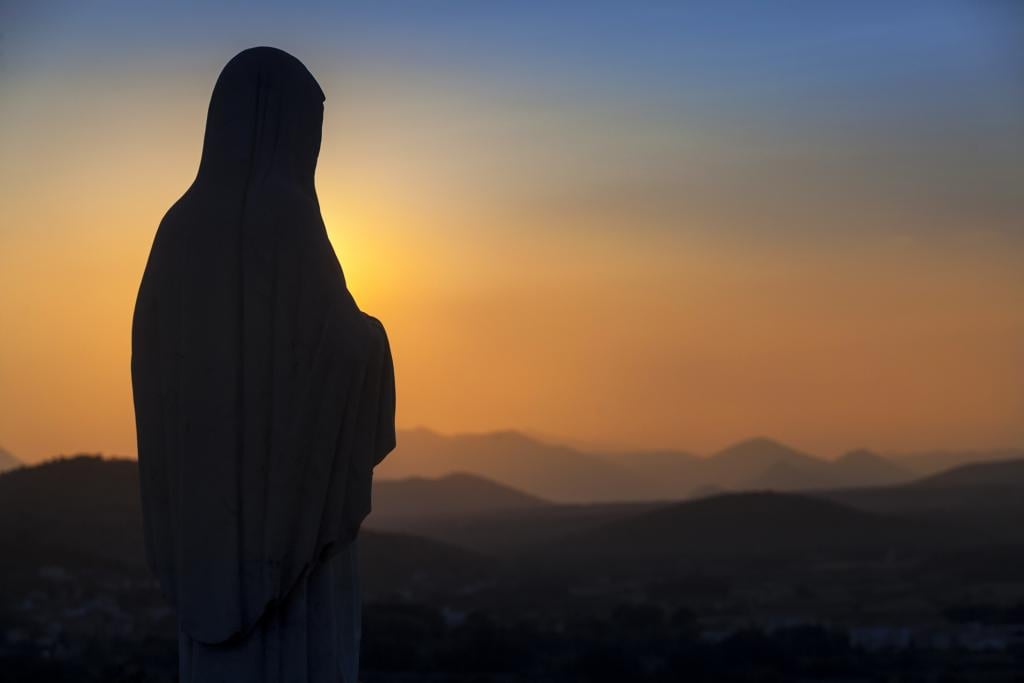
Image credit: dreamstime.com
When most people hear the term ‘Immaculate Conception,’ the first thing that often comes to mind is how Jesus was born without Original Sin. At first this seems to make sense, since most Christians who adhere to the Apostle’s and Nicene Creed believe He lived a sinless life. However, the moment Jesus was conceived in the womb is rather known as the Incarnation. The term Immaculate Conception was actually coined by the Catholic Church to refer to the Virgin Mary to emphasize how she was born without the stain of Original Sin — but for a different reason than Jesus was.
Understandably, some would argue that making Mary out to be a sinless woman would somehow imply that she is equal to God or worshiped as a form of goddess. Often when a non-Catholic Christian objects to the teaching, it’s usually stemmed from several misunderstandings. (READ MORE)
Mary’s Perpetual Virginity
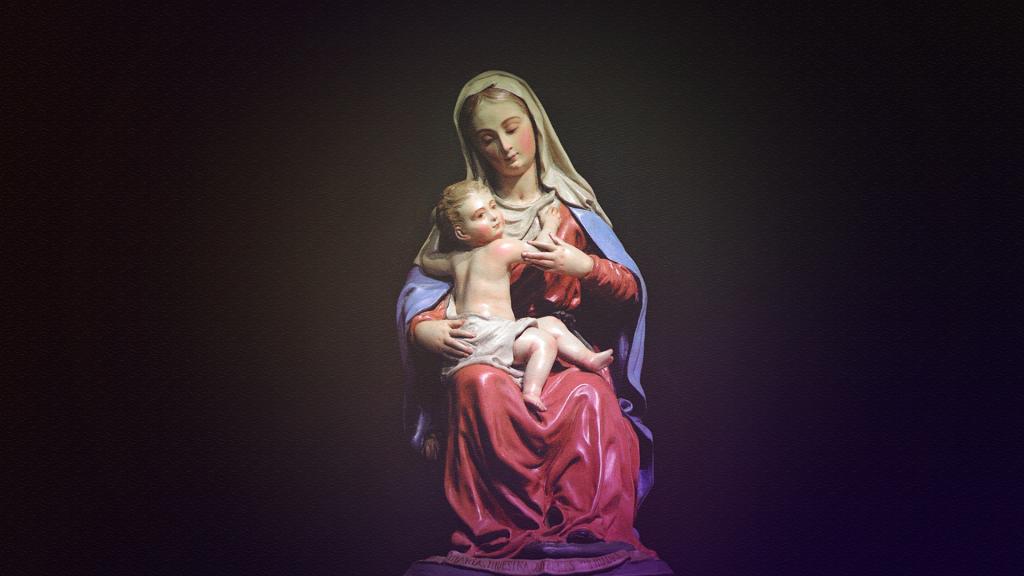
Image credit: pexels.com
For Christians, Jesus’ celibacy isn’t hard to accept because the relationship between Him and His ‘bride’ (the Church) is not sexual in nature. In the case of the virgin birth of Christ, the manner in which Christ enters the world is nothing short of a miracle. There is absolutely no way a human being could be born asexually without something extraordinary happening. It defies all rationality. This is one of the things that makes the person of Jesus Christ so significant — because if the virgin birth was true, then Christ is truly of divine origin.
In the case of Mary and Joseph, having sex would have diminished any credibility towards Jesus being born by supernatural means. Hence why many atheists would joke that the virgin birth is the largest cover-up of an unplanned pregnancy in the history of the world. The whole point of the virgin birth is that Jesus was not the outcome of natural relations between a husband and wife, but rather akin to how God formed life out of the dust of the ground in the beginning of Creation (Genesis 2:7). (READ MORE)
Mary: Co-Redemptrix?
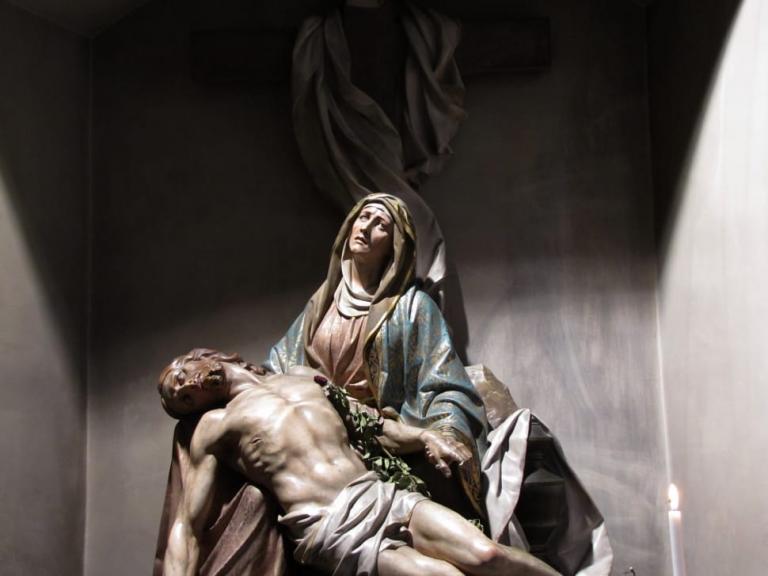
Image credit: peakpx.com
The word ‘Co-Redemptrix’ is not found in the Bible, but neither is the word ‘Trinity.’ This title, among others, is used by some Catholics as a descriptor of the Virgin Mary — similar to how the Trinity is used by most Christians to describe how God exists in three persons (the Father, Son and Holy Spirit). This does not mean the Trinity is a form of polytheism, as some would claim. The Greek word ‘Theotokos‘ was coined by the Council of Ephesus in 431 A.D., which translates to ‘God-bearer’ in English and is also where the title ‘Mother of God’ comes from. Saint Irenaeus, an early Church Father from the second century, referred to Mary as ‘causa salutis’ (Latin for ’cause of our salvation’) in his theological work Against Heresies. But due to the caliber of controversy surrounding it (especially in the wake of the Protestant Reformation), Mary as Co-Redemptrix has never been declared an infallible dogma of the Church. Not yet, anyway.
I think much of the apprehension towards Mary co-operating with God’s plan for humanity’s salvation stems from the idea that the total depravity of mankind renders free will to be nonexistent — hence why most Protestant Christians believe Mary was a sinner like everyone else. (READ MORE)
Mary’s Assumption

Image credit: maxpixel.net
The Assumption of Mary is a Catholic dogma that claims the Virgin Mary was carried up into Heaven at the end of her life on earth. The first thing that often comes to mind regarding Mary’s assumption is that it sounds like she ascended into Heaven in the same manner Jesus did. This is often a cause of great criticism from Protestants, and where the importance of context comes in. The difference between the Ascension and the Assumption is Jesus went up to Heaven by His own power (since He is God). In Mary’s case, she did nothing out of her own power, but rather it was God who carried her up into Heaven. (READ MORE)
Mary: Mediatrix & Queen Of Heaven?
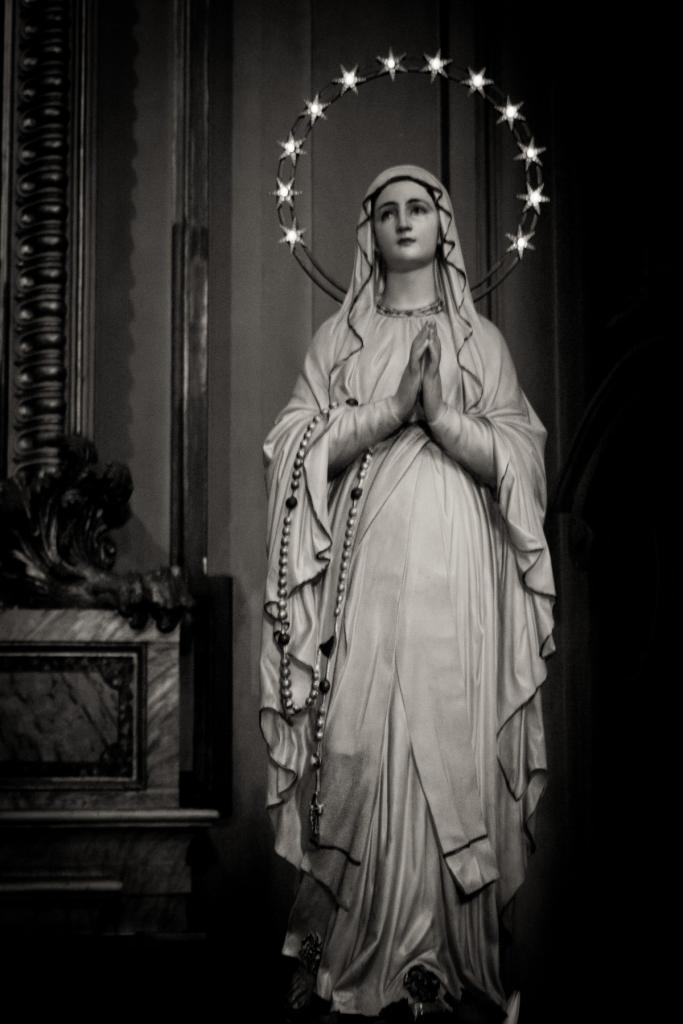
Image credit: pxhere.com
I remember receiving a set of anti-Catholic tracts from someone I met at an Evangelical Bible camp when I was 17 years old. They were intended to paint Catholic doctrine in a light that seemingly contrasted the Bible. Among the many doctrines it attempted to refute were regarding how the Catholic Church portrays Mary, such as her role as Mediatrix and Queen of Heaven.
The tracts referred to an ancient Babylonian king named Nimrod and his mother the queen named Semiramis. It is believed Nimrod had an incestuous relationship with Semiramis and their legacy had influenced other religions that reflected an imagery of a goddess mother with a divine son. This is one of the reasons why some people claim that ancient deities are often recycled through the ages. Many fundamentalist anti-Catholics believe Semiramis and her son Nimrod were resurrected in pagan religions in the form of the Egyptian goddess Isis and her son Horus as well as the Indian goddess Devaki and her son Krishna, to name a couple. One of the most cited Bible verses in opposition to Mary as Queen of Heaven comes from the Book of Jeremiah,
Do you not see what they are doing in the cities of Judah and in the streets of Jerusalem? The children gather wood, the fathers kindle fire, and the women knead dough, to make cakes for the queen of heaven; and they pour out drink offerings to other gods, to provoke me to anger. (READ MORE)
What Are The Seven Sorrows Of Mary?
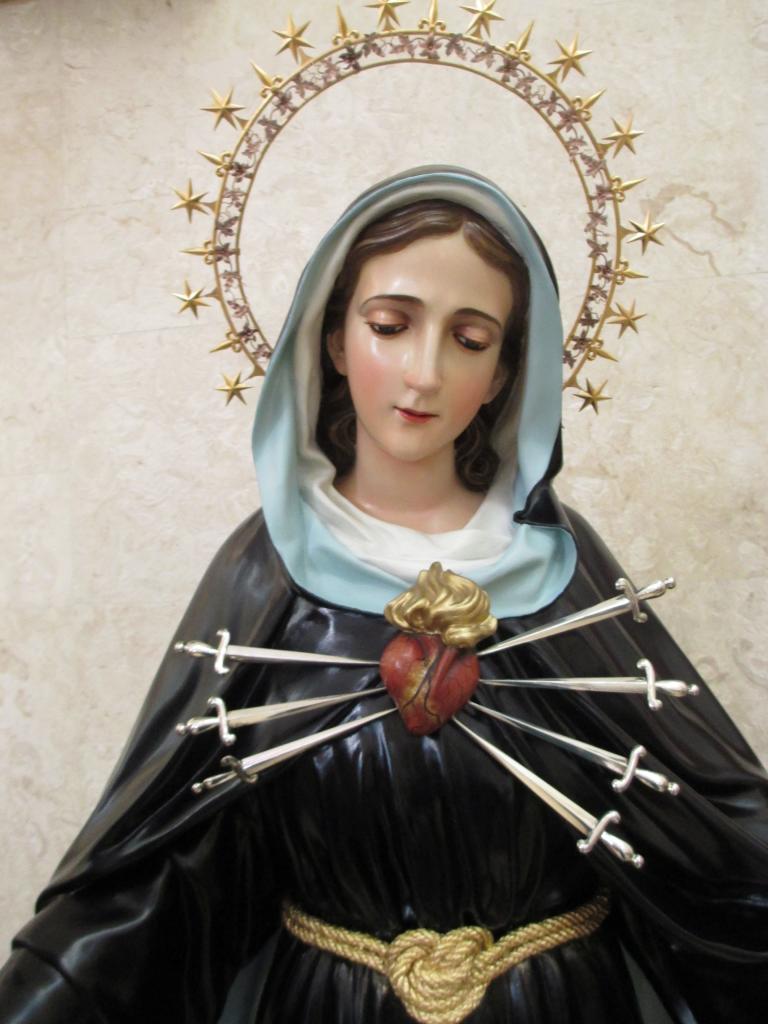
Image credit: pxfuel.com
Many Christians rely on devotionals as a regular part of nurturing a spiritual relationship with Jesus. Usually it entails a specific theme that meditates on certain passages in the Bible, or even a commentary on Scripture. The Seven Sorrows of Mary are a Roman Catholic devotion that acknowledges seven sorrowful events that have shaped Mary’s walk with our Lord. In Catholic iconography, the Virgin Mary is depicted in a grieving state, with one or seven long blades piercing her heart — each sword representing an event in Scripture that has wounded her. (READ MORE)
Are The Apparitions Of Mary Real?
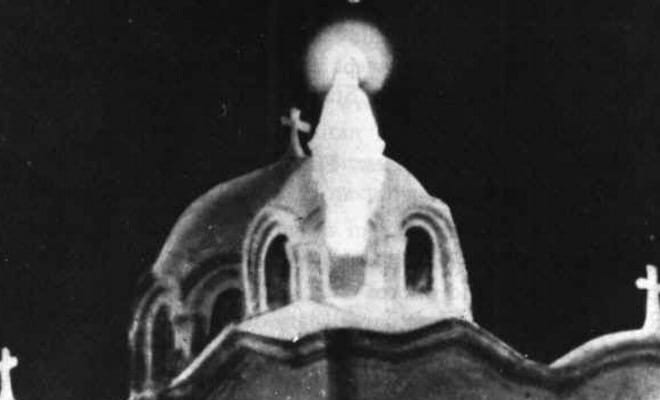
Photo credit: plusarquitectura.info
In an age so far removed from ancient times, it’s difficult to wrap our minds around events considered supernatural or miraculous. For those of us who identify as Christians, it’s easy to accept everything in the Bible at face value. But it’s another thing to willingly believe we live in the very same world as described in the Scriptures.
Some of the most dramatic supernatural events described in the Bible would be the appearances of spirits from the afterlife. A few examples would be the appearance of Samuel to King Saul 1, the angel Gabriel appearing to the Virgin Mary during the Annunciation 2, Moses and Elijah appearing with Jesus to the Apostles in the Transfiguration 3 or Jesus appearing to Paul on the road to Damascus. 4 For most Christians, it’s easy to say we believe them simply because they are written in the Bible – but how willing are we to accept that these types of miracles could still actually happen nowadays? (READ MORE)
Articles In Progress:
Mary: Mother of God?
Cultural Depictions of Mary Throughout The World
History of the Rosary
Why Did Jesus Have To Be Born Of A Virgin?
Apparitions of the Virgin Mary

About Rene Albert
I'm Rene Albert. I am a husband to a beautiful wife and a father of three children. I'm also a licensed carpenter and construction manager as part of my full-time work. When I'm not busy meeting construction deadlines, changing diapers and chasing little hooligans around the house, I write essays about Catholicism, mere Christian theology and western politics and culture, as well as how they all affect each other. Due to working a full time job in construction, I usually only post two articles per week on average. My goal is to eventually become a full-time writer and possibly start up a podcast or Youtube channel. My writing is a labor of love, so if you enjoy my work and feel called to support me on Patreon, I would be very much appreciative! Pax vobiscum! You can read more about the author here.
Previous Post
July 26, 2020
In Defense of Mary’s Immaculate Conception
Next Post

August 13, 2020 The Dangers of Being Moderate
Browse Our Archives
Select a Category Catholicism Christian Life Christian Life Church History Community Eastern Orthodoxy Entertainment Fiction History Mental Health Movies Music Politics Protestantism Reflection Religion Satire Science Fiction Self esteem Self Love Spirituality Star Wars Suicide Theology Uncategorized
Select a Month June 2023 April 2023 May 2022 April 2022 July 2021 April 2021 March 2021 February 2021 January 2021 December 2020 November 2020 October 2020 September 2020 August 2020 July 2020 June 2020 May 2020 April 2020 March 2020 February 2020 January 2020 December 2019 November 2019 October 2019 September 2019 August 2019 July 2019 June 2019 May 2019 April 2019 March 2019 February 2019 January 2019 December 2018 October 2018 September 2018 August 2018 June 2018 April 2018 January 2018 November 2017 October 2017 July 2017 June 2017 May 2017 April 2017 March 2017 February 2017 December 2016 October 2016 September 2016 August 2016 June 2016 May 2016 March 2016 February 2016
Follow Us!
TAKE THE
Religious Wisdom Quiz
What island was John on when he wrote Revelation?
Select your answer to see how you score.
Cyprus Patmos Crete Malta
Related posts from Coffee and Crucifix

10 Essential Books Every Catholic Should Own

GraceLife Church, Civil Disobedience & the Christian Persecution...

Top 10 Most Read Articles of 2020 by...

TRENDING AT PATHEOS Catholic

Rejecting Doom: Christian Hope And Human Action
Christianity is a religion of hope. We are to have hope and...

It’s What Comes From Within Which Matters
One of the most difficult things for us to understand is why...

Why I Choose the Eucharist Over the Sermon
Choose the Eucharist, Not the Sermon What are we supposed to get...

5 Design Elements Found in Spiritually Rooted Homes
Putting Spirituality Into Home Decor Our homes are more than our living...

Credo: A Story of God Told with the...
About 10 years ago, I began to imagine a personal "Credo" that...

The Anatomy of Divine Revelation in Catholic Thought
The claim that God has made Himself known to human beings is...
view all Catholic blogs
Ad-Free & Subscriber Log-In Subscription Support
- About Us
- 2026 Calendar
- Videos
- Podcasts
- Library of World Religions
- Faith In Media Tracker
- Advertise With Us
- Write for Us
- Privacy Policy
- Terms of Service
- Do Not Sell My Data
- Contact Us
- Radiant Digital
- Manage Newsletter Subscriptions
- Unsubscribe From Notifications
- Sitemap
Copyright 2008-2026, Patheos. All rights reserved.
Subscription Support Ad-Free & Subscriber Log-In
Follow Patheos