
BuddhistCatholicContemplativeEvangelicalGeneral ChristianHinduJewishLatter-day SaintMuslimNew VisionsProgressive Christian
Beliefs
- Buddhist
- Catholic
- Contemplative
- Evangelical
- General Christian
- Hindu
- Jewish
- Latter-day Saint
- More Voices
- Muslim
- New Visions
- Pagan
- Progressive Christian
Topics
- Religion News
- Food and Religion
- Sports and Religion
- Religious Art
- Religious Music and Entertainment
- Religious Events
- History and Religion
- Style and Religion
- Politics and Religion
- Women in Religion
- Recreation Outdoors and Religion
- Business Finance and Religion
- Careers Workplace and Religion
- Education and Religion
- Family Parenting and Religion
- Health Fitness and Religion
- Home and Religion
- Relationships and Religion
- Technology and Religion
- Travel and Religion
Columnists
- Buddhist Columnists
- Business Finance and Religion Columnists
- Careers Workplace and Religion Columnists
- Catholic Columnists
- Contemplative Columnists
- Education and Religion Columnists
- Evangelists Columnists
- Family Parenting and Religion Columnists
- General Christian Columnists
- Health Fitness and Religion Columnists
- Hindu Columnists
- History and Religion Columnists
- Home and Religion Columnists
- Jewish Columnists
- More Voices Columnists
- Latter Day Columnists
- Muslim Columnists
- New Visions Columnists
- Nonreligious Columnists
- Pagan Columnists
- Politics and Religion Columnists
- Progressive Columnists
- Recreation Outdoors and Religion Columnists
- Relationships and Religion Columnists
- Religion News Columnists
- Religious Art Columnists
- Religious Events Columnists
- Religious Music and Entertainment Columnists
- Sports and Religion Columnists
- Style and Religion Columnists
- Technology and Religion Columnists
- Travel and Religion Columnists
- Women in Religion Columnists
Resource Library
- 2026 Calendar
- Library of World Religions
- The 100 Most Holy Places on Earth
- Patheos Answers
- Podcasts
- Videos
- Faith Leaders Database
- Anglican Episcopalian
- Bahai
- Baptist
- Buddhism
- Christianity
- Confucianism
- Eastern Orthodoxy
- Hinduism
- Holiness and Pentecostal
- ISKCON
- Islam
- Judaism
- Lutheran
- Methodist
- The Church of Jesus Christ of Latter-day Saints
- New Age
- Paganism
- Presbytarian and Reformed
- Protestantism
- Religion Behind the Scenes
- Roman Catholic
- Scientology
- Shia Islam
- Sikhism
- Sufism
- Sunni Islam
- Taoism
- Zen
- See all religions
Research Tools
 Ad-Free & Subscriber Log-In Subscription Support
Ad-Free & Subscriber Log-In Subscription Support
Follow Patheos 

- Trending:
- Forgiveness
- |
- Marriage
- |
- Consciousness
- |
- Death Penalty
- |
- Election
- |
- Halloween
 Coffee and Crucifix
- Home
- Catholic
- Activism and Virtue-Signalling on Social Media
Activism and Virtue-Signalling on Social Media
Last updated on: June 10, 2020 at 11:53 pm by Coffee & Crucifix
Activism and Virtue-Signalling on Social Media 2020-06-10T23:53:39-06:00 Coffee & Crucifix
Patheos Explore the world's faith through different perspectives on religion and spirituality! Patheos has the views of the prevalent religions and spiritualities of the world.

Image credit: Flickr.com
There is a popular meme that periodically circulates on social media showing a scene in The Lord of the Rings where Aragorn bursts into the throne room of King Théoden shouting, “Gondor calls for aid!” Théoden responds by saying, “My thoughts and prayers are with Gondor. Sending positive vibes!” In the last frame, Théoden’s face is shown with the flag of Gondor as an overlaying filter on his Facebook profile picture. This is meant to poke fun at how many activists on social media tend to express solidarity, concern or outrage in a passive-aggressive manner (such as liking posts or changing their profile picture make themselves appear virtuous). And I’ll be the first to admit that I, myself, am guilty of it.
Activism on social media has been coined by many with the term ‘slacktivism.’ It is commonly viewed as a passive-aggressive form of virtue-signalling in order to guilt or coerce others into subscribing to an opinion or worldview while simultaneously making oneself feel an inflated sense of self-importance. Aside from liking, sharing and commenting on posts which point to a certain cause, it can involve no real or tangible risk to the person doing it.
Whenever a major injustice is announced in the media, it is a perfectly natural and human response to grieve, be outraged and to somehow tangibly contribute to a positive solution. As someone who regularly blogs about cultural, religious and political commentary, it’s easy for me to get caught up in the hype of the latest cause or injustice. If it’s a topic I’m passionate about, it only makes sense for me to express what my beliefs and principles are in my writing and in my social media posts. In many ways, my blog can be a form of activism within itself, especially if one wants to share valuable information that may help people think and consider how they view the world around them. But with that comes with constant self-reflection and a willingness to hear and consider opposing viewpoints even when they make me uncomfortable. Humility is something I think every human struggles with — and I am no exception.
Most people cannot stand virtue-signalling when it comes from others, even the ones who do it frequently. It becomes even more aggravating when those who have remained silent in the past over injustices have suddenly started doing it because it’s suddenly popular and earns them the ‘like’ on Facebook or pat on the back. Standing up to raise your voice because everyone else is doing it isn’t exactly brave unless it involves some kind of risk. On the flip side, just because standing up for a certain cause may suddenly become popular, that does not mean there isn’t social pressure from an activist’s family members or friends that contributes to an injustice. If the end-goal of activism is to initiate positive change for the betterment of the common good, then risking losing relationships would be a sacrifice in itself.
Phrases like, “Silence is violence,” and, “If you are neutral in situations of injustice, you have chosen the side of the oppressor,” are so loosely tossed nowadays that people tend to forget what they truly mean. I also notice this can often be directed towards Christians who frequently default to the ‘thoughts and prayers’ rhetoric without even attempting to put their faith into action (As per James 2:14-25). I think what motivates most people to double down on posting about issues of injustice on social media is the need to bring awareness to those who haven’t been reached out to. It can be like evangelism without the Gospel. I would also daresay some perhaps subconsciously regret not taking a stand in past experiences. This is where I think such activism turns into abusive behavior and becomes a form of projection, and why many people tend to not take activists on social media very seriously — especially if they happen to notice hypocritical behavior such as affirming one injustice as more ‘valid’ than another. But even in light of this, nothing you say or do will ever be good enough for everyone. We are all human and make mistakes, and there will always be someone there to tell you where you fall short.
There is a polar difference between remaining silent when an injustice is happening directly in front of you versus when there is no injustice being committed in the present moment. This is where the issue of microaggressions come in. There certainly are toxic behaviors that collectively add up to exasperate an injustice even further. But it doesn’t mean people who aren’t obsessively talking about it all the time are committing atrocities worthy of public humiliation or being ostracized. This is where I think people need to give grace to each other for those who are at least trying. Justice is necessary. But without grace, there is no forgiveness. And without forgiveness, there is no peace.
It’s easy to contribute to a good cause when we know we’re going to get some kind of reward from it, whether it be money, material benefits, a boost in reputation or simply congratulatory attention. It’s also challenging to not let your left hand know what your right hand does, especially since we live in the online age of GoFundMe and Kickstarter. Most online fundraisers publicly show the list of donors for the sake of transparency, but it can easily become an opportunity for anyone to make themselves look morally superior just because they initiated, shared or supported a funding campaign. Similarly, if you’re posting pictures of yourself doing volunteer work, partaking in political theatrics, appropriating cultural clothing or symbols or (in the case of the #BlackLivesMatter movement) posing with your one friend who happens to be a person of color for the sake of public validation, it doesn’t actually improve your public image. It just makes you look disingenuous.
“Why do you see the speck that is in your brother’s eye, but do not notice the log that is in your own eye? Or how can you say to your brother, ‘Let me take the speck out of your eye,’ when there is the log in your own eye? You hypocrite, first take the log out of your own eye, and then you will see clearly to take the speck out of your brother’s eye.” — Matthew 7:3-5 RSV

About Rene Albert
I'm Rene Albert. I am a husband to a beautiful wife and a father of three children. I'm also a licensed carpenter and construction manager as part of my full-time work. When I'm not busy meeting construction deadlines, changing diapers and chasing little hooligans around the house, I write essays about Catholicism, mere Christian theology and western politics and culture, as well as how they all affect each other. Due to working a full time job in construction, I usually only post two articles per week on average. My goal is to eventually become a full-time writer and possibly start up a podcast or Youtube channel. My writing is a labor of love, so if you enjoy my work and feel called to support me on Patreon, I would be very much appreciative! Pax vobiscum! You can read more about the author here.
Previous Post

June 3, 2020
Systemic Racism, White Privilege and the Nature of Sin
Next Post

June 16, 2020 7 Prominent Catholic Voices Who Influenced My Return To The Church
Browse Our Archives
Select a Category Catholicism Christian Life Christian Life Church History Community Eastern Orthodoxy Entertainment Fiction History Mental Health Movies Music Politics Protestantism Reflection Religion Satire Science Fiction Self esteem Self Love Spirituality Star Wars Suicide Theology Uncategorized
Select a Month June 2023 April 2023 May 2022 April 2022 July 2021 April 2021 March 2021 February 2021 January 2021 December 2020 November 2020 October 2020 September 2020 August 2020 July 2020 June 2020 May 2020 April 2020 March 2020 February 2020 January 2020 December 2019 November 2019 October 2019 September 2019 August 2019 July 2019 June 2019 May 2019 April 2019 March 2019 February 2019 January 2019 December 2018 October 2018 September 2018 August 2018 June 2018 April 2018 January 2018 November 2017 October 2017 July 2017 June 2017 May 2017 April 2017 March 2017 February 2017 December 2016 October 2016 September 2016 August 2016 June 2016 May 2016 March 2016 February 2016
Follow Us!
TAKE THE
Religious Wisdom Quiz
In 2 Thessalonians, what does Paul say the man of lawlessness will proclaim himself to be?
Select your answer to see how you score.
A prophet God The Messiah King of the world
Related posts from Coffee and Crucifix

Vatican Formally Repudiates 'Doctrine of Discovery'

Don't Lose Your Soul In The Culture War

10 Essential Books Every Catholic Should Own
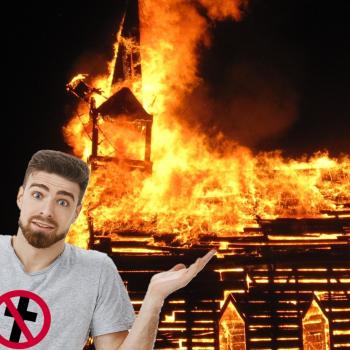
Local Activist Blames Church Fires On Climate Change
TRENDING AT PATHEOS Catholic

The Parable Of The Sower And The Word...
One of Christ’s most famous parables is that of the sower who...

Rejecting Doom: Christian Hope And Human Action
Christianity is a religion of hope. We are to have hope and...

Why I Choose the Eucharist Over the Sermon
Choose the Eucharist, Not the Sermon What are we supposed to get...

5 Design Elements Found in Spiritually Rooted Homes
Putting Spirituality Into Home Decor Our homes are more than our living...

Credo: A Story of God Told with the...
About 10 years ago, I began to imagine a personal "Credo" that...

The Anatomy of Divine Revelation in Catholic Thought
The claim that God has made Himself known to human beings is...
view all Catholic blogs
Ad-Free & Subscriber Log-In Subscription Support
- About Us
- 2026 Calendar
- Videos
- Podcasts
- Library of World Religions
- Faith In Media Tracker
- Advertise With Us
- Write for Us
- Privacy Policy
- Terms of Service
- Do Not Sell My Data
- Contact Us
- Radiant Digital
- Manage Newsletter Subscriptions
- Unsubscribe From Notifications
- Sitemap
Copyright 2008-2026, Patheos. All rights reserved.
Subscription Support Ad-Free & Subscriber Log-In
Follow Patheos