
BuddhistCatholicContemplativeEvangelicalGeneral ChristianHinduJewishLatter-day SaintMuslimNew VisionsProgressive Christian
Beliefs
- Buddhist
- Catholic
- Contemplative
- Evangelical
- General Christian
- Hindu
- Jewish
- Latter-day Saint
- More Voices
- Muslim
- New Visions
- Pagan
- Progressive Christian
Topics
- Religion News
- Food and Religion
- Sports and Religion
- Religious Art
- Religious Music and Entertainment
- Religious Events
- History and Religion
- Style and Religion
- Politics and Religion
- Women in Religion
- Recreation Outdoors and Religion
- Business Finance and Religion
- Careers Workplace and Religion
- Education and Religion
- Family Parenting and Religion
- Health Fitness and Religion
- Home and Religion
- Relationships and Religion
- Technology and Religion
- Travel and Religion
Columnists
- Buddhist Columnists
- Business Finance and Religion Columnists
- Careers Workplace and Religion Columnists
- Catholic Columnists
- Contemplative Columnists
- Education and Religion Columnists
- Evangelists Columnists
- Family Parenting and Religion Columnists
- General Christian Columnists
- Health Fitness and Religion Columnists
- Hindu Columnists
- History and Religion Columnists
- Home and Religion Columnists
- Jewish Columnists
- More Voices Columnists
- Latter Day Columnists
- Muslim Columnists
- New Visions Columnists
- Nonreligious Columnists
- Pagan Columnists
- Politics and Religion Columnists
- Progressive Columnists
- Recreation Outdoors and Religion Columnists
- Relationships and Religion Columnists
- Religion News Columnists
- Religious Art Columnists
- Religious Events Columnists
- Religious Music and Entertainment Columnists
- Sports and Religion Columnists
- Style and Religion Columnists
- Technology and Religion Columnists
- Travel and Religion Columnists
- Women in Religion Columnists
Resource Library
- 2026 Calendar
- Library of World Religions
- The 100 Most Holy Places on Earth
- Patheos Answers
- Podcasts
- Videos
- Faith Leaders Database
- Anglican Episcopalian
- Bahai
- Baptist
- Buddhism
- Christianity
- Confucianism
- Eastern Orthodoxy
- Hinduism
- Holiness and Pentecostal
- ISKCON
- Islam
- Judaism
- Lutheran
- Methodist
- The Church of Jesus Christ of Latter-day Saints
- New Age
- Paganism
- Presbytarian and Reformed
- Protestantism
- Religion Behind the Scenes
- Roman Catholic
- Scientology
- Shia Islam
- Sikhism
- Sufism
- Sunni Islam
- Taoism
- Zen
- See all religions
Research Tools
 Ad-Free & Subscriber Log-In Subscription Support
Ad-Free & Subscriber Log-In Subscription Support
Follow Patheos 

- Trending:
- Forgiveness
- |
- Marriage
- |
- Consciousness
- |
- Death Penalty
- |
- Election
- |
- Halloween
 Coffee and Crucifix
- Home
- Catholic
- A Contemplation of Soli Deo Gloria (Glory To God Alone)
A Contemplation of Soli Deo Gloria (Glory To God Alone)
Last updated on: June 15, 2020 at 8:50 am by Coffee & Crucifix
A Contemplation of Soli Deo Gloria (Glory To God Alone) 2020-06-15T08:50:26-06:00 Coffee & Crucifix
Patheos Explore the world's faith through different perspectives on religion and spirituality! Patheos has the views of the prevalent religions and spiritualities of the world.

Image credit: pixabay.com
Years ago after experiencing a period of attending many funerals of lost friends and family, I attended an Evangelical friend’s wedding. It was a positive relief to finally attend an event in which we could enjoy each other’s fellowship while celebrating life and newfound love. When it came time for the speeches, the father of the groom brought up his Bible and preached what felt like a 20-minute sermon, though it wasn’t exactly a congratulatory one. He finished off by pointing upwards and saying, “Remember, it’s not about you!” What left me (and probably many others in the room) taken aback was not once did he say, “I’m proud of you! I thank God you are happy and found the love of your life! I welcome your spouse into our family!”
As a Christian, in spite of the abrasive message, I can’t say that the groom’s father was wrong about saying, “It’s not about you.” When it comes to living a life that honors Christ, it forces you to think outside of yourself and consider others who are made in His image. Though it’s not uncommon to see Christians seize the opportunity to patronize fellow believers in order to redirect attention to themselves under the guise of bringing glory to God. This is one of the very attitudes that Scripture warns us about…
“Beware of practicing your piety before men in order to be seen by them; for then you will have no reward from your Father who is in heaven.” — Matthew 6:1 RSV
The doctrine of Soli Deo Gloria (Latin for ‘Glory to God Alone’) is one of the Five Solas (or tenets) that was developed by the Early Protestant Reformers of the 16th century in response to the corruption within the Catholic Church. The Reformers all believed people born of Original Sin, including canonized saints, popes and clergy in the Roman Catholic Church, are not worthy of any glory that was bestowed upon them. Much of this was provoked by how many faithful Christians at the time were seemingly giving excessive veneration and devotion to the Virgin Mary and the saints as though they replaced worship of Jesus. This, in conjunction with rampant abuses like the selling of indulgences and the lavish lifestyles certain clergy kept hidden, led some faithful Christians to speak up and revolt against the corruption at the time.
As a reverted Catholic, I will say that reform within the Church was desperately needed, and we are in constant need of reform even this very day. Though I think it’s worth mentioning that ‘reform’ does not mean reinventing the wheel. To me, constant reform is akin to working against mankind’s relentless tendency to sin. I think the more appropriate term would be to return to the path that was strayed from. In which case — anything that replaces God or receives glory that ought to be owed to Him is an idol.
I think the apprehension towards giving any sort of veneration to any human (living or dead) certainly has merit, but what makes the Protestant emphasis on Soli Deo Gloria unique is a historical animosity towards the Catholic perspective on the Communion of Saints. Given how the Catholic Church emphasizes veneration of the Virgin Mary and the saints (in conjunction with the widespread problem of subpar teaching and catechesis), it is certainly possible that some Catholics give more glory to created beings or things than to the Creator. The word ‘veneration‘ is a trigger word that is often mistaken for full-on adoration and glory due to God alone, yet the word itself implies a varying degree of respect and honor. For example, Exodus 20:12 and Ephesians 6:2 commands us to honor your father and mother — a commandment given directly by God that implies we ought to recognize and respect the authority of our parents. This certainly doesn’t mean we worship them in a sense of giving them full adoration, but it would be disingenuous to believe a God-ordained role such as parenthood wouldn’t deserve the respect and consideration as called for in Scripture. Honoring our parents, as commanded by God, gives Him glory as well just as the Scriptures say,
“If you love me, you will keep my commandments.” — John 14:15 RSV
Similarly, recognizing Mary as the chosen Mother of God only makes sense when we consider how we honor our earthly parents. From a Protestant perspective, Marian doctrines and dogmas in the Catholic Church can appear intimidating until it is properly understood that when we honor Jesus’ mother, we give glory to God. In his written work City of God, Saint Augustine describes the glory and honor owed to God alone as Latria, and honor due to certain humans such as saints and martyrs as Dulia. Since Mary is the mother of Jesus (who is the Son of God), she is given the kind of veneration what the Catholic Church calls Hyperdulia — a level of honor greater than Dulia akin to the Old Testament practice of honoring a parent’s legacy, but not the same degree as Latria.
Ironically, what was intended by the Early Protestant Reformers to direct all glory to God evolved into the very thing they originally opposed. While the lives of canonized saints and martyrs were downplayed in the wake of the Reformation, many Christians who celebrate the Reformation have unknowingly turned Martin Luther, John Calvin, William Tyndale and even many prominent celebrity pastors and theologians into their own versions of canonized saints. They may not pray to them in an intercessory sense, but many believe that their favorite Reformers, pastors or theologians were/are driven by the Holy Spirit in a manner no different than how Catholics believe the saints radiated God’s glory during their earthly lives. From a Catholic standpoint, a Protestant who gives honor to an Early Reformer or even a certain patriarch from the Old Testament would fall under the category of Dulia — though it wouldn’t be unrealistic for them to give glory to them that ought to be reserved for God alone.
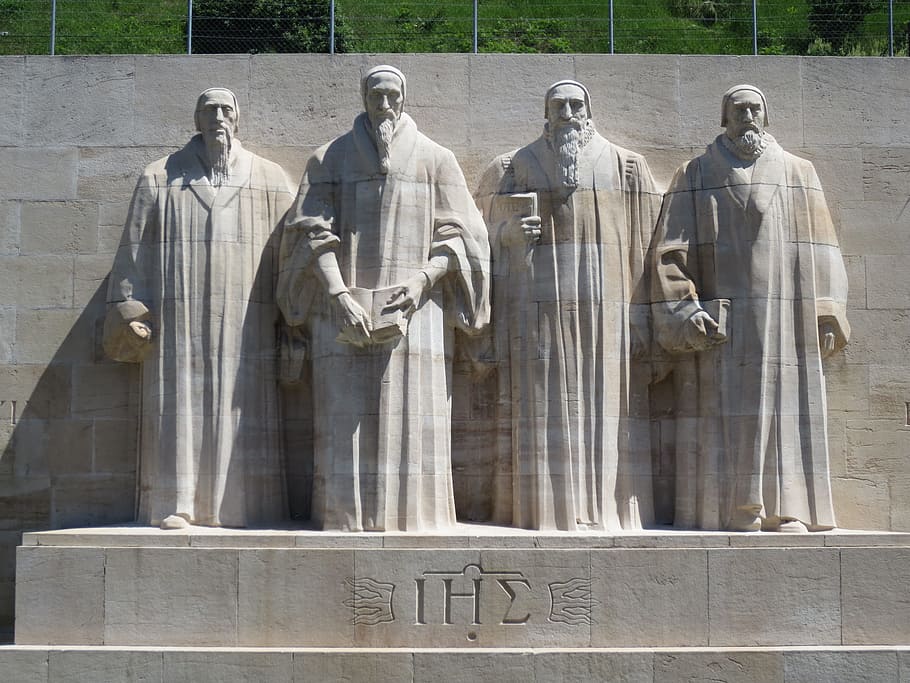
Above: Monument of the Early Protestant Reformers (Image credit: wallpaperflare.com)
Whenever I have conversations with my formerly-Christian and atheist friends about this topic, they usually mention how they view the Christian God as a narcissistic sociopath. I imagine when some read Exodus 20:3-5 about how God is ‘jealous’ that some would interpret this as someone who is insecure and in competition with humanity for their affection. In my observation, some fringe Evangelical congregations take this to heart by avoiding to give any credit towards any individuals when it comes to ministry or evangelism, while others would sometimes brag about how many souls they brought to the Lord without realizing that boasting in their own works goes against what Ephesians 2:8-9 says about, “…by grace you have been saved through faith; and this is not your own doing, it is the gift of God— not because of works, lest any man should boast.” I remember reading accounts of spiritual revival meetings in which the writers refused to name themselves and the witnesses to avoid diverting any glory away from God. I think they are well-meaning, but I would argue that if this were how the Books of the Bible were written, they never would have made it into the Canon of Scripture (since authorship is an important criteria to meet in order to understand the source of the text). Throughout the Gospels and the Book of Acts, there is no shortage of names of people who had witnessed miracles by Jesus and through the Apostles of the Early Church.
The opposite extreme and attitude would be, ‘It’s ALL about me!’ In my article Love Yourself First?, I address the issue of how being dangerously self-focused can cause people to become neglectful of the people around them. In non-religious and Progressive Christian circles, I’ve noticed there tends to be more of an emphasis on personal affirmation than in most conservative religious communities. I will say that affirmation in and of itself is not inherently wrong. And more often than not, people are in dire need for encouragement in order to overcome trials and obstacles they may face in our world. But without the reliance of a higher power, I find this wanders dangerously close to Pelagianism — the idea that mankind can become godly or acquire salvation without the assistance of God’s grace. In Mark 10:17-19, Jesus responded to the rich man, “Why do you call me good? No one is good but God!” If God were not perfect in humility as revealed through His Son, then He wouldn’t deserve the title of Almighty if perfection were unattainable for Him.
While I think there is certainly truth to giving glory to God as the Creator of all things, I think it’s equally important as to not dismiss people (whether it be due to unfortunate circumstances they’re in or in celebratory cases such as my friend’s wedding). I think the words, “It’s not about you!” can give a damaging effect when used at the wrong time and place — such as a funeral, for example. I don’t think there’s any shortage of modern-day Christian Pharisees who would flippantly divert attention away from someone else’s accomplishments, special occasions, good fortune or (dare I say) grief and loss under the guise of giving all glory to God. Because of this, some might interpret such behavior as though they were saying, “Only God matters. You don’t matter.”
In Scripture, it is revealed that God truly values every one of His children, and that every person matters and is created in the image of God. Matthew 10:30-31 says, “But even the hairs of your head are all numbered. Fear not, therefore; you are of more value than many sparrows.” The Parable of the Lost Sheep in Luke 15:6-8 reads, “And when he comes home, he calls together his friends and his neighbors, saying to them, ‘Rejoice with me, for I have found my sheep which was lost.’ Just so, I tell you, there will be more joy in heaven over one sinner who repents than over ninety-nine righteous persons who need no repentance.” If these passages aren’t an example of what a God of love ought to be like, then I don’t know what is. Isn’t every soul who makes it to Heaven without an account on their own merit a testament to the glory of God?
During a Catholic Mass as the Eucharist is consecrated, the priest recites and prays, “Through Him and with Him and in Him, oh God almighty Father in the unity of the Holy Spirit, all glory and honor is Yours forever and ever. Amen.” I maintain that Catholics and Protestants should have no problem agreeing that all glory belongs to God. It can be summarized that creation itself is a manifestation of God’s glory — most evidently through the lives of the saints, martyrs and those alive on earth today who sincerely believe and live out their faith. Given the proper understanding of how God ought to be glorified, I think a deity that is perfectly humble would want His creations to share in His glory. And in the end when Christ returns for His bride the Church, I imagine the wedding feast will be a most bittersweet and welcoming one without having to suffer through awkward speeches.
And I heard every creature in heaven and on earth and under the earth and in the sea, and all therein, saying, “To him who sits upon the throne and to the Lamb be blessing and honor and glory and might for ever and ever!” — Revelation 5:13 RSV
Previous Post

May 4, 2020
May the Fourth: My Collection of Disney-Era Star Wars Film Reviews
Next Post

May 19, 2020 Your Conversion Experience Does Not Determine Your Spiritual Worth
Browse Our Archives
Select a Category Catholicism Christian Life Christian Life Church History Community Eastern Orthodoxy Entertainment Fiction History Mental Health Movies Music Politics Protestantism Reflection Religion Satire Science Fiction Self esteem Self Love Spirituality Star Wars Suicide Theology Uncategorized
Select a Month June 2023 April 2023 May 2022 April 2022 July 2021 April 2021 March 2021 February 2021 January 2021 December 2020 November 2020 October 2020 September 2020 August 2020 July 2020 June 2020 May 2020 April 2020 March 2020 February 2020 January 2020 December 2019 November 2019 October 2019 September 2019 August 2019 July 2019 June 2019 May 2019 April 2019 March 2019 February 2019 January 2019 December 2018 October 2018 September 2018 August 2018 June 2018 April 2018 January 2018 November 2017 October 2017 July 2017 June 2017 May 2017 April 2017 March 2017 February 2017 December 2016 October 2016 September 2016 August 2016 June 2016 May 2016 March 2016 February 2016
Follow Us!
TAKE THE
Religious Wisdom Quiz
Who was Jochebed?
Select your answer to see how you score.
Moses' mother Jesus' mother Samuel's mother David's mother
Related posts from Coffee and Crucifix

Martin Scorsese Meets With Pope To Discuss Film...

FAIL! Catholic says, 'And also with you!" instead...

Don't Lose Your Soul In The Culture War

10 Essential Books Every Catholic Should Own
TRENDING AT PATHEOS Catholic

Creation, Preservation, and Teleology in Catholic Theology
As I write this, it is very early Monday morning. Like millions...

The Parable Of The Sower And The Word...
One of Christ’s most famous parables is that of the sower who...

Rejecting Doom: Christian Hope And Human Action
Christianity is a religion of hope. We are to have hope and...

Why I Choose the Eucharist Over the Sermon
Choose the Eucharist, Not the Sermon What are we supposed to get...

5 Design Elements Found in Spiritually Rooted Homes
Putting Spirituality Into Home Decor Our homes are more than our living...

Credo: A Story of God Told with the...
About 10 years ago, I began to imagine a personal "Credo" that...
view all Catholic blogs
Ad-Free & Subscriber Log-In Subscription Support
- About Us
- 2026 Calendar
- Videos
- Podcasts
- Library of World Religions
- Faith In Media Tracker
- Advertise With Us
- Write for Us
- Privacy Policy
- Terms of Service
- Do Not Sell My Data
- Contact Us
- Radiant Digital
- Manage Newsletter Subscriptions
- Unsubscribe From Notifications
- Sitemap
Copyright 2008-2026, Patheos. All rights reserved.
Subscription Support Ad-Free & Subscriber Log-In
Follow Patheos