
BuddhistCatholicContemplativeEvangelicalGeneral ChristianHinduJewishLatter-day SaintMuslimNew VisionsProgressive Christian
Beliefs
- Buddhist
- Catholic
- Contemplative
- Evangelical
- General Christian
- Hindu
- Jewish
- Latter-day Saint
- More Voices
- Muslim
- New Visions
- Pagan
- Progressive Christian
Topics
- Religion News
- Food and Religion
- Sports and Religion
- Religious Art
- Religious Music and Entertainment
- Religious Events
- History and Religion
- Style and Religion
- Politics and Religion
- Women in Religion
- Recreation Outdoors and Religion
- Business Finance and Religion
- Careers Workplace and Religion
- Education and Religion
- Family Parenting and Religion
- Health Fitness and Religion
- Home and Religion
- Relationships and Religion
- Technology and Religion
- Travel and Religion
Columnists
- Buddhist Columnists
- Business Finance and Religion Columnists
- Careers Workplace and Religion Columnists
- Catholic Columnists
- Contemplative Columnists
- Education and Religion Columnists
- Evangelists Columnists
- Family Parenting and Religion Columnists
- General Christian Columnists
- Health Fitness and Religion Columnists
- Hindu Columnists
- History and Religion Columnists
- Home and Religion Columnists
- Jewish Columnists
- More Voices Columnists
- Latter Day Columnists
- Muslim Columnists
- New Visions Columnists
- Nonreligious Columnists
- Pagan Columnists
- Politics and Religion Columnists
- Progressive Columnists
- Recreation Outdoors and Religion Columnists
- Relationships and Religion Columnists
- Religion News Columnists
- Religious Art Columnists
- Religious Events Columnists
- Religious Music and Entertainment Columnists
- Sports and Religion Columnists
- Style and Religion Columnists
- Technology and Religion Columnists
- Travel and Religion Columnists
- Women in Religion Columnists
Resource Library
- 2026 Calendar
- Library of World Religions
- The 100 Most Holy Places on Earth
- Patheos Answers
- Podcasts
- Videos
- Faith Leaders Database
- Anglican Episcopalian
- Bahai
- Baptist
- Buddhism
- Christianity
- Confucianism
- Eastern Orthodoxy
- Hinduism
- Holiness and Pentecostal
- ISKCON
- Islam
- Judaism
- Lutheran
- Methodist
- The Church of Jesus Christ of Latter-day Saints
- New Age
- Paganism
- Presbytarian and Reformed
- Protestantism
- Religion Behind the Scenes
- Roman Catholic
- Scientology
- Shia Islam
- Sikhism
- Sufism
- Sunni Islam
- Taoism
- Zen
- See all religions
Research Tools
 Ad-Free & Subscriber Log-In Subscription Support
Ad-Free & Subscriber Log-In Subscription Support
Follow Patheos 

- Trending:
- Forgiveness
- |
- Marriage
- |
- Consciousness
- |
- Death Penalty
- |
- Election
- |
- Halloween
 Coffee and Crucifix
- Home
- Catholic
- Communion In The Hand?
Communion In The Hand?
Last updated on: March 21, 2020 at 11:49 am by Coffee & Crucifix
Communion In The Hand? 2020-03-21T11:49:35-06:00 Coffee & Crucifix
Patheos Explore the world's faith through different perspectives on religion and spirituality! Patheos has the views of the prevalent religions and spiritualities of the world.

Image credit: dreamstime.com
For non-Catholics, this article might come across as a bit of an oddity. Most Protestant Christians (with the exception of certain Lutheran and Anglican denominations) believe the Eucharist is merely a symbol and an act of remembrance, though Catholics, Orthodox and certain mainline Protestants believe it is much more than that. While the vast majority of Christian denominations teach that individuals ought to receive Communion in a reverent manner, the method of reverence varies among them. Because Catholics believe the Eucharist is the literal Body and Blood of Christ under the appearances of bread and wine (also known as transubstantiation), there is ongoing debate on whether someone ought to receive Communion in the hand or directly in the mouth.
Granted this, I have a confession to make.
When I was a teenager, I abandoned the Catholic faith to become an Evangelical Protestant. During that time, I was still going to Mass with my family in the midst of struggling with whether Catholic Communion was a form of idolatry. I was so afraid of offending my family by rejecting the Eucharist so, in order to pretend that nothing was going on, I still lined up to receive Communion with my family. I would extend my hands to receive the host from the priest, tuck it behind my fingers and pretended that I placed it in my mouth, only to slip it into my pocket on my way back to the pew. When I arrived back home I would go into my room, pull the wafer out of my pocket and stare at it in wonder. I sometimes gazed upon the host while the words of Boromir from Lord of the Rings echoed in my head,
“It is a strange fate that we should suffer so much fear and doubt over something so small!”
In that era of my life, I was convinced that the Eucharist was just a symbol, as I had been taught through attending youth group at my friends Evangelical church. Just a piece of bread and nothing more. Though as I grew older and became more involved in the Evangelical church, I found myself continually struggling with the point of partaking in Communion. Now as a reverted Catholic, I’ve come to believe Jesus meant what He said in the sixth chapter of John’s Gospel. I now realize the gravity of my actions despite being a teenager who struggled with what to believe in. Instead of keeping the wafer in a safe place, I ended up placing it in the bottom of the garbage bin so no one knew that I had been smuggling hosts from Mass. Even though I never understood it at the time, I had desecrated the Body and Blood of Christ.
This is not something I share lightly. Some of my non-Catholic readers might think that I’m being overly scrupulous to the point of self-deprecation. But even if Communion really were just a symbol or merely a piece of bread from a Protestant service, what I did was still wrong. Most Americans and Canadians who value their country wouldn’t desecrate their flag by letting it touch the ground or handle it with hands covered in grease or dirt. Even ripping pages out of a Bible or leaving it in a place where it could get damaged or mistreated would be considered an act of sacrilege by many devout Christians. Reflecting on this brings me awareness of the many other ways I had desecrated Our Lord through my actions, thoughts and words — especially towards people as individuals made in God’s image. Even after confessing my sins to the priest and receiving absolution, I still feel like the same hands that have done wrong do not deserve to hold the Savior of the world in them.
This would be one of the reasons why I’m inclined to advocate for a return to the traditional form of receiving Communion directly on the tongue — especially considering that desecration of the Eucharist is not uncommon. I’ve heard fellow Catholics mention they had found consecrated hosts in the pages of hymnals, on benches or scattered on the ground in some places, especially in inner-city parishes where it’s common for random people off the streets to enter without understanding what’s happening. Since the introduction of the Novus Ordo Mass in the wake of the Second Vatican Council, the practice of receiving Communion in the hand had become much more prominent. I’m not entirely sure why such a move was made, though most traditionalists would argue that the increasingly frequent mistreatment of the Eucharist is one of the fruits of this change in practice.
But on the other hand, I can sympathize with reasons why some would argue that Communion in the hand is much more sanitary. In light of the COVID-19 virus outbreak, parishes all over North America insisted on distributing the hosts in the hands as opposed to on the tongue to avoid viral transfusion. In addition, the Precious Blood was also withheld since it is usually shared from the same chalice. Although this was before public Masses were suspended in order to counteract the outbreak via social distancing, some traditionalist Catholics have gone as far as saying that if they cannot receive Communion on the tongue, they’d rather not receive it at all. As much as I can sympathize with a need to maintain reverence, there is a smug sense of pride that resonates from such a statement which seemingly implies the worth of the Eucharist is determined by the method of whom it is received by — which I would argue is blasphemy.
Some defenders of Communion in the hand would argue that it is a revival of an ancient practice that dates back to the Apostles. St. Cyril of Jerusalem is often quoted in one of his works,
In approaching therefore, come not with your wrists extended, or your fingers spread; but make your left hand a throne for the right, as for that which is to receive a King. And having hollowed your palm, receive the Body of Christ, saying over it, Amen. So then after having carefully hallowed your eyes by the touch of the Holy Body, partake of it; giving heed lest you lose any portion thereof ; for whatever you lose, is evidently a loss to you as it were from one of your own members. For tell me, if any one gave you grains of gold, would you not hold them with all carefulness, being on your guard against losing any of them, and suffering loss? Will you not then much more carefully keep watch, that not a crumb fall from you of what is more precious than gold and precious stones?
— Mystagogicae catecheses 5,21
True, the Apostles would have received it with their hands at the Last Supper. This would seemingly be evidence enough that anyone ought to be free to receive it by the hand. However, the Apostles were chosen by Christ himself as priests of the Early Church, and priests are typically consecrated to handle the Sacraments. Even if hand-reception was an early practice, the Church had eventually developed the practice of reception by the mouth for the sake of fostering a high standard of reverence among laypeople — a reverence which is especially evident in St. Cyril’s description of proper hand-reception.
In other recent news, the Satanic Temple (an atheistic organization not to be mistaken for actual Luciferianism) has gained enough popularity to be considered an official religion in the United States. In Canada, they held their first “Black Mass” which supposedly involves desecrating a consecrated host. The announcement on social media left Catholics wildly and fervently praying to counteract the impending ritual. But as it turned out, some attendees claimed the hosts they acquired came from a supply of unconsecrated wafers that can be purchased online (as shown in the screenshot below). In spite of it being a gathering of trolls LARP-ing as Satanists, the publicity stunt shook the Catholic community enough to once again provoke the discussion of proper reception of the Eucharist.

Screenshot from Facebook.com
Some Catholics have also advocated to bring back the use of communion rails so the laity would have no choice but to receive the Eucharist directly in the mouth. This is actually one of the reasons why I appreciate how the Byzantine Catholics and Eastern Orthodox use a tiny spoon to toss bread cubes dipped in the chalice into the receiver’s mouth. Not only is it more sanitary, it reduces the chances of desecration significantly. Considering how easy it was for me to pretend I was receiving the Eucharist only to slip in in my pocket at a Novus Ordo Mass, one can only wonder if the wannabe-Satanists were actually being honest about where they got their wafers from.
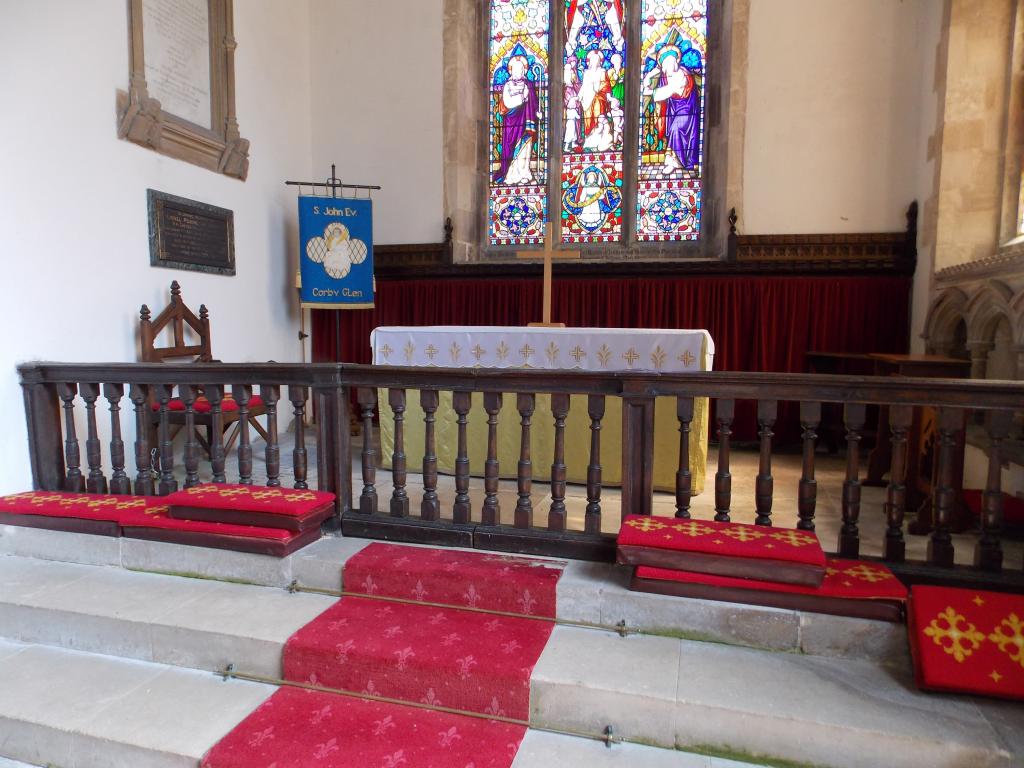
Above: Traditional Communion rails where laypeople would kneel down to receive the Eucharist. (Image credit: Wikimedia Commons)
But despite all these circumstances, who’s to say that God couldn’t revoke His Presence from a consecrated host if it was about to be desecrated (whether intentionally or unintentionally)? Who’s to say that the Body and Blood of Christ (while under the appearance of bread and wine) couldn’t revert back to the actual substance of bread and wine if God so decided to do so? This could be a possibility given the knowledge that even particles of the host could fall from the priest or layperson’s hand onto the ground without them realizing it. In my personal opinion, as long as the person’s heart is in the right place, one shouldn’t have to worry about being held responsible for something they might have no control over.
While I am all for returning to traditional roots, I would argue that it’s not enough. What really needs to take priority is an emphasis on clear teaching. If the laity simply do not have a basic understanding of the meaning behind the Eucharist, the outward expression of reverence will not be there to begin with. This is one of the reasons why, as much as I desire to attend the Tridentine Latin Mass more often, more Catholics need to be in fellowship with those at their parishes who can help them grasp why Communion is not all-inclusive.
Because I have grown to love Christ so much, I am personally convicted to receive the Eucharist in the most reverent way possible. I have made it a practice to kneel and receive the Eucharist on the tongue, regardless if the rest of the congregation receives it in the hand or if I get a few dirty looks. It’s not about showing off to everyone about how pious I supposedly am, but recognizing whose presence I’m in. Rather than policing others in my congregation as for whether they should receive the host in their hands or on the tongue, I would only hope that the reverence for Christ displayed through my own actions would be as contagious as the Coronavirus.
“Whoever, therefore, eats the bread or drinks the cup of the Lord in an unworthy manner will be guilty of profaning the body and blood of the Lord. Let a man examine himself, and so eat of the bread and drink of the cup. For any one who eats and drinks without discerning the body eats and drinks judgment upon himself.” — 1 Corinthians 11:27-29 RSV
***
Thank you so much for reading! If you enjoy my content and feel called to support my endeavor as a freelance writer, please consider becoming a patron on my Patreon.
Previous Post

March 17, 2020
Coronavirus, Avarice and Human Depravity
Next Post

March 25, 2020 Addressing Fearmongering And Conspiracy Over COVID-19 Outbreak
Browse Our Archives
Select a Category Catholicism Christian Life Christian Life Church History Community Eastern Orthodoxy Entertainment Fiction History Mental Health Movies Music Politics Protestantism Reflection Religion Satire Science Fiction Self esteem Self Love Spirituality Star Wars Suicide Theology Uncategorized
Select a Month June 2023 April 2023 May 2022 April 2022 July 2021 April 2021 March 2021 February 2021 January 2021 December 2020 November 2020 October 2020 September 2020 August 2020 July 2020 June 2020 May 2020 April 2020 March 2020 February 2020 January 2020 December 2019 November 2019 October 2019 September 2019 August 2019 July 2019 June 2019 May 2019 April 2019 March 2019 February 2019 January 2019 December 2018 October 2018 September 2018 August 2018 June 2018 April 2018 January 2018 November 2017 October 2017 July 2017 June 2017 May 2017 April 2017 March 2017 February 2017 December 2016 October 2016 September 2016 August 2016 June 2016 May 2016 March 2016 February 2016
Follow Us!
TAKE THE
Religious Wisdom Quiz
What structure did people build to try to reach heaven?
Select your answer to see how you score.
Altar of Baal Ark Tower of Babel Temple of Solomon
Related posts from Coffee and Crucifix

Martin Scorsese Meets With Pope To Discuss Film...

FAIL! Catholic says, 'And also with you!" instead...

Don't Lose Your Soul In The Culture War

10 Essential Books Every Catholic Should Own
TRENDING AT PATHEOS Catholic

Rejecting Doom: Christian Hope And Human Action
Christianity is a religion of hope. We are to have hope and...

It’s What Comes From Within Which Matters
One of the most difficult things for us to understand is why...

Why I Choose the Eucharist Over the Sermon
Choose the Eucharist, Not the Sermon What are we supposed to get...

5 Design Elements Found in Spiritually Rooted Homes
Putting Spirituality Into Home Decor Our homes are more than our living...

Credo: A Story of God Told with the...
About 10 years ago, I began to imagine a personal "Credo" that...

The Anatomy of Divine Revelation in Catholic Thought
The claim that God has made Himself known to human beings is...
view all Catholic blogs
Ad-Free & Subscriber Log-In Subscription Support
- About Us
- 2026 Calendar
- Videos
- Podcasts
- Library of World Religions
- Faith In Media Tracker
- Advertise With Us
- Write for Us
- Privacy Policy
- Terms of Service
- Do Not Sell My Data
- Contact Us
- Radiant Digital
- Manage Newsletter Subscriptions
- Unsubscribe From Notifications
- Sitemap
Copyright 2008-2026, Patheos. All rights reserved.
Subscription Support Ad-Free & Subscriber Log-In
Follow Patheos