
BuddhistCatholicContemplativeEvangelicalGeneral ChristianHinduJewishLatter-day SaintMuslimNew VisionsProgressive Christian
Beliefs
- Buddhist
- Catholic
- Contemplative
- Evangelical
- General Christian
- Hindu
- Jewish
- Latter-day Saint
- More Voices
- Muslim
- New Visions
- Pagan
- Progressive Christian
Topics
- Religion News
- Food and Religion
- Sports and Religion
- Religious Art
- Religious Music and Entertainment
- Religious Events
- History and Religion
- Style and Religion
- Politics and Religion
- Women in Religion
- Recreation Outdoors and Religion
- Business Finance and Religion
- Careers Workplace and Religion
- Education and Religion
- Family Parenting and Religion
- Health Fitness and Religion
- Home and Religion
- Relationships and Religion
- Technology and Religion
- Travel and Religion
Columnists
- Buddhist Columnists
- Business Finance and Religion Columnists
- Careers Workplace and Religion Columnists
- Catholic Columnists
- Contemplative Columnists
- Education and Religion Columnists
- Evangelists Columnists
- Family Parenting and Religion Columnists
- General Christian Columnists
- Health Fitness and Religion Columnists
- Hindu Columnists
- History and Religion Columnists
- Home and Religion Columnists
- Jewish Columnists
- More Voices Columnists
- Latter Day Columnists
- Muslim Columnists
- New Visions Columnists
- Nonreligious Columnists
- Pagan Columnists
- Politics and Religion Columnists
- Progressive Columnists
- Recreation Outdoors and Religion Columnists
- Relationships and Religion Columnists
- Religion News Columnists
- Religious Art Columnists
- Religious Events Columnists
- Religious Music and Entertainment Columnists
- Sports and Religion Columnists
- Style and Religion Columnists
- Technology and Religion Columnists
- Travel and Religion Columnists
- Women in Religion Columnists
Resource Library
- 2026 Calendar
- Library of World Religions
- The 100 Most Holy Places on Earth
- Patheos Answers
- Podcasts
- Videos
- Faith Leaders Database
- Anglican Episcopalian
- Bahai
- Baptist
- Buddhism
- Christianity
- Confucianism
- Eastern Orthodoxy
- Hinduism
- Holiness and Pentecostal
- ISKCON
- Islam
- Judaism
- Lutheran
- Methodist
- The Church of Jesus Christ of Latter-day Saints
- New Age
- Paganism
- Presbytarian and Reformed
- Protestantism
- Religion Behind the Scenes
- Roman Catholic
- Scientology
- Shia Islam
- Sikhism
- Sufism
- Sunni Islam
- Taoism
- Zen
- See all religions
Research Tools
 Ad-Free & Subscriber Log-In Subscription Support
Ad-Free & Subscriber Log-In Subscription Support
Follow Patheos 

- Trending:
- Forgiveness
- |
- Marriage
- |
- Consciousness
- |
- Death Penalty
- |
- Election
- |
- Halloween
 Coffee and Crucifix
- Home
- Catholic
- A Reflection on Ash Wednesday
A Reflection on Ash Wednesday
Last updated on: February 24, 2020 at 12:37 am by Coffee & Crucifix
A Reflection on Ash Wednesday 2020-02-24T00:37:37-06:00 Coffee & Crucifix
Patheos Explore the world's faith through different perspectives on religion and spirituality! Patheos has the views of the prevalent religions and spiritualities of the world.
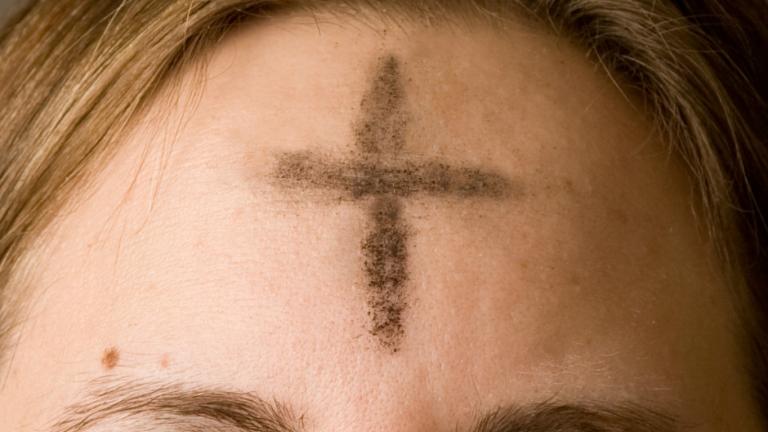
Photo credit: commons.wikimedia.org
“By the sweat of your face you shall eat bread until you return to the ground, for out of it you were taken; you are dust, and to dust you shall return.”
— Genesis 3:19 NRSV
In the winter of 2017, a dear friend of mine passed away after losing her battle with cancer, and her funeral happened to land on Ash Wednesday — the first day of the season of Lent. Prior to this I knew it was going to be a busy day. In order to free up my afternoon for the memorial service, I attended the 7 o’clock mass at my parish that morning while fulfilling my obligatory duties as a practicing Catholic.
In addition to grieving the loss of my friend, I began to feel nervous upon arriving at the funeral. Most of the attendees at the non-denominational Christian service were probably not used to seeing people showing up with black crosses on their foreheads, and I didn’t want my appearance to draw any attention away from the focus of honoring my friend’s memory. With that in mind, I wiped off the ashes from my forehead before stepping out of the vehicle to pay my respects.
Every year at the beginning of Lent, Christians all over the world gather together at their local churches to receive a mark of ashes on their forehead in the shape of a cross. Although it is predominantly known to be a Catholic tradition, Anglicans, Lutherans, Eastern Orthodox, Methodists as well as a select few Protestant denominations also observe Lent in their own way. However, many other Christians view Lent as just another ‘man-made tradition‘ meant to draw our focus away from God.
One of the passages from Scripture than comes to my mind regarding public displays of piety is,
“Beware of practicing your piety before men in order to be seen by them; for then you will have no reward from your Father who is in heaven.
Thus, when you give alms, sound no trumpet before you, as the hypocrites do in the synagogues and in the streets, that they may be praised by men. Truly, I say to you, they have their reward. But when you give alms, do not let your left hand know what your right hand is doing, so that your alms may be in secret; and your Father who sees in secret will reward you.
“And when you pray, you must not be like the hypocrites; for they love to stand and pray in the synagogues and at the street corners, that they may be seen by men. Truly, I say to you, they have their reward. But when you pray, go into your room and shut the door and pray to your Father who is in secret; and your Father who sees in secret will reward you.“
“And when you fast, do not look dismal, like the hypocrites, for they disfigure their faces that their fasting may be seen by men. Truly, I say to you, they have their reward. But when you fast, anoint your head and wash your face, that your fasting may not be seen by men but by your Father who is in secret; and your Father who sees in secret will reward you.” – Matthew 6:1-6, 16-18 RSV
When it comes to following rules or traditions of what we as Christians believe in, sometimes we have to consider where we are at in the present moment. Sometimes any outward signs of piety can be perceived by others as arrogant showiness. But to be fair, the same could be said about baptism – which is also considered to be a public declaration of faith by the overwhelming majority of Christians. I think it is important to reflect on the intentions of our actions; and in cases such as attending a funeral, some actions that may seem appropriate in one setting may not be appropriate in another – even if they are well-meaning.
The nice thing about the Catholic view of Lent is there is no specific expectation as for what people can do with the ashes on their forehead once they receive them. Some choose to wipe them off before they head out the church doors, and some choose to leave them on as they carry on their day in public. In the latter case, I can understand how some people, whether religious or not, can feel rather embittered towards those who choose to freely express their faith in public in the form of symbols.
On the flip side, there is something about Lent that pushes Christians out of their comfort zone, especially when they go out into the world after receiving the mark on Ash Wednesday. Although it can be intimidating for onlookers and bystanders, it can especially be frightening for those bearing the mark who may suffer anxiety or feel extremely self-conscious.
After practicing it willingly for the first time after returning to Catholicism, I realized it can actually be a great tool for evangelism. I haven’t practiced the Catholic faith long enough to attest to it from experience, but some friends of mine have told me that sometimes people would ask them about what the mark on their forehead meant while waiting at a transit station. The outward sign can definitely spark curious conversation and make for opportunities to share our faith with one another.
I’ve known some fundamentalists who believed traditions like Lent and Ash Wednesday were unbiblical practices rooted in paganism. Some of them would even go so far as to quote the book of Revelation about how receiving the sign of the cross is reminiscent of the mark of the beast — which I find to be quite an absurd allegation. Regardless of whether a Christian practice is similar to a pagan one, if Christ is the center of the ritual there should be no issue.
In modern North America, I think we are very fortunate to live in a society where we are free to practice any religion we desire without fear of persecution. I remember reading about how the Early Christians relied on the use of symbols to communicate with one another while living in Roman persecution under the rule of the Emperor Nero. In a society that is rapidly embracing political correctness, I can easily picture the use of such symbols being banned from the public in the foreseeable future.
Attending my friend’s funeral on the first day of Lent last year made Ash Wednesday eerily more real for me. I personally know she was a woman of good faith and I know she is more alive in the arms of Jesus than she ever was. Losing her here on earth especially brought new meaning to the words the priest said as he crossed the ashes my forehead,
“Remember thou art dust, and to dust ye shall return.”
It was an experience that allowed me to reflect upon my own mortality, and how much longer before I, myself, return to the dust I was once formed from.
“Henceforth let no man trouble me; for I bear on my body the marks of Jesus.”
— Galatians 6:17 RSV
Previous Post

February 18, 2020
OPINION: Uproar Over Role Of Women In Wake Of Querida Amazonia
Next Post

February 25, 2020 10 Things To Give Up For Lent In 2020
Browse Our Archives
Select a Category Catholicism Christian Life Christian Life Church History Community Eastern Orthodoxy Entertainment Fiction History Mental Health Movies Music Politics Protestantism Reflection Religion Satire Science Fiction Self esteem Self Love Spirituality Star Wars Suicide Theology Uncategorized
Select a Month June 2023 April 2023 May 2022 April 2022 July 2021 April 2021 March 2021 February 2021 January 2021 December 2020 November 2020 October 2020 September 2020 August 2020 July 2020 June 2020 May 2020 April 2020 March 2020 February 2020 January 2020 December 2019 November 2019 October 2019 September 2019 August 2019 July 2019 June 2019 May 2019 April 2019 March 2019 February 2019 January 2019 December 2018 October 2018 September 2018 August 2018 June 2018 April 2018 January 2018 November 2017 October 2017 July 2017 June 2017 May 2017 April 2017 March 2017 February 2017 December 2016 October 2016 September 2016 August 2016 June 2016 May 2016 March 2016 February 2016
Follow Us!
TAKE THE
Religious Wisdom Quiz
What does "Capernaum" mean in Hebrew?
Select your answer to see how you score.
City of Light Village of Comfort House of God Holy Place
Related posts from Coffee and Crucifix

Martin Scorsese Meets With Pope To Discuss Film...

FAIL! Catholic says, 'And also with you!" instead...

Don't Lose Your Soul In The Culture War

10 Essential Books Every Catholic Should Own
TRENDING AT PATHEOS Catholic

Rejecting Doom: Christian Hope And Human Action
Christianity is a religion of hope. We are to have hope and...

It’s What Comes From Within Which Matters
One of the most difficult things for us to understand is why...

Why I Choose the Eucharist Over the Sermon
Choose the Eucharist, Not the Sermon What are we supposed to get...

5 Design Elements Found in Spiritually Rooted Homes
Putting Spirituality Into Home Decor Our homes are more than our living...

Credo: A Story of God Told with the...
About 10 years ago, I began to imagine a personal "Credo" that...

The Anatomy of Divine Revelation in Catholic Thought
The claim that God has made Himself known to human beings is...
view all Catholic blogs
Ad-Free & Subscriber Log-In Subscription Support
- About Us
- 2026 Calendar
- Videos
- Podcasts
- Library of World Religions
- Faith In Media Tracker
- Advertise With Us
- Write for Us
- Privacy Policy
- Terms of Service
- Do Not Sell My Data
- Contact Us
- Radiant Digital
- Manage Newsletter Subscriptions
- Unsubscribe From Notifications
- Sitemap
Copyright 2008-2026, Patheos. All rights reserved.
Subscription Support Ad-Free & Subscriber Log-In
Follow Patheos