
BuddhistCatholicContemplativeEvangelicalGeneral ChristianHinduJewishLatter-day SaintMuslimNew VisionsProgressive Christian
Beliefs
- Buddhist
- Catholic
- Contemplative
- Evangelical
- General Christian
- Hindu
- Jewish
- Latter-day Saint
- More Voices
- Muslim
- New Visions
- Pagan
- Progressive Christian
Topics
- Religion News
- Food and Religion
- Sports and Religion
- Religious Art
- Religious Music and Entertainment
- Religious Events
- History and Religion
- Style and Religion
- Politics and Religion
- Women in Religion
- Recreation Outdoors and Religion
- Business Finance and Religion
- Careers Workplace and Religion
- Education and Religion
- Family Parenting and Religion
- Health Fitness and Religion
- Home and Religion
- Relationships and Religion
- Technology and Religion
- Travel and Religion
Columnists
- Buddhist Columnists
- Business Finance and Religion Columnists
- Careers Workplace and Religion Columnists
- Catholic Columnists
- Contemplative Columnists
- Education and Religion Columnists
- Evangelists Columnists
- Family Parenting and Religion Columnists
- General Christian Columnists
- Health Fitness and Religion Columnists
- Hindu Columnists
- History and Religion Columnists
- Home and Religion Columnists
- Jewish Columnists
- More Voices Columnists
- Latter Day Columnists
- Muslim Columnists
- New Visions Columnists
- Nonreligious Columnists
- Pagan Columnists
- Politics and Religion Columnists
- Progressive Columnists
- Recreation Outdoors and Religion Columnists
- Relationships and Religion Columnists
- Religion News Columnists
- Religious Art Columnists
- Religious Events Columnists
- Religious Music and Entertainment Columnists
- Sports and Religion Columnists
- Style and Religion Columnists
- Technology and Religion Columnists
- Travel and Religion Columnists
- Women in Religion Columnists
Resource Library
- 2026 Calendar
- Library of World Religions
- The 100 Most Holy Places on Earth
- Patheos Answers
- Podcasts
- Videos
- Faith Leaders Database
- Anglican Episcopalian
- Bahai
- Baptist
- Buddhism
- Christianity
- Confucianism
- Eastern Orthodoxy
- Hinduism
- Holiness and Pentecostal
- ISKCON
- Islam
- Judaism
- Lutheran
- Methodist
- The Church of Jesus Christ of Latter-day Saints
- New Age
- Paganism
- Presbytarian and Reformed
- Protestantism
- Religion Behind the Scenes
- Roman Catholic
- Scientology
- Shia Islam
- Sikhism
- Sufism
- Sunni Islam
- Taoism
- Zen
- See all religions
Research Tools
 Ad-Free & Subscriber Log-In Subscription Support
Ad-Free & Subscriber Log-In Subscription Support
Follow Patheos 

- Trending:
- Forgiveness
- |
- Marriage
- |
- Consciousness
- |
- Death Penalty
- |
- Election
- |
- Halloween
 Coffee and Crucifix
- Home
- Catholic
- The Priesthood & “Call No Man Father”
The Priesthood & “Call No Man Father”
Last updated on: December 17, 2019 at 3:06 pm by Coffee & Crucifix
The Priesthood & “Call No Man Father” 2019-12-17T15:06:10-06:00 Coffee & Crucifix
Patheos Explore the world's faith through different perspectives on religion and spirituality! Patheos has the views of the prevalent religions and spiritualities of the world.
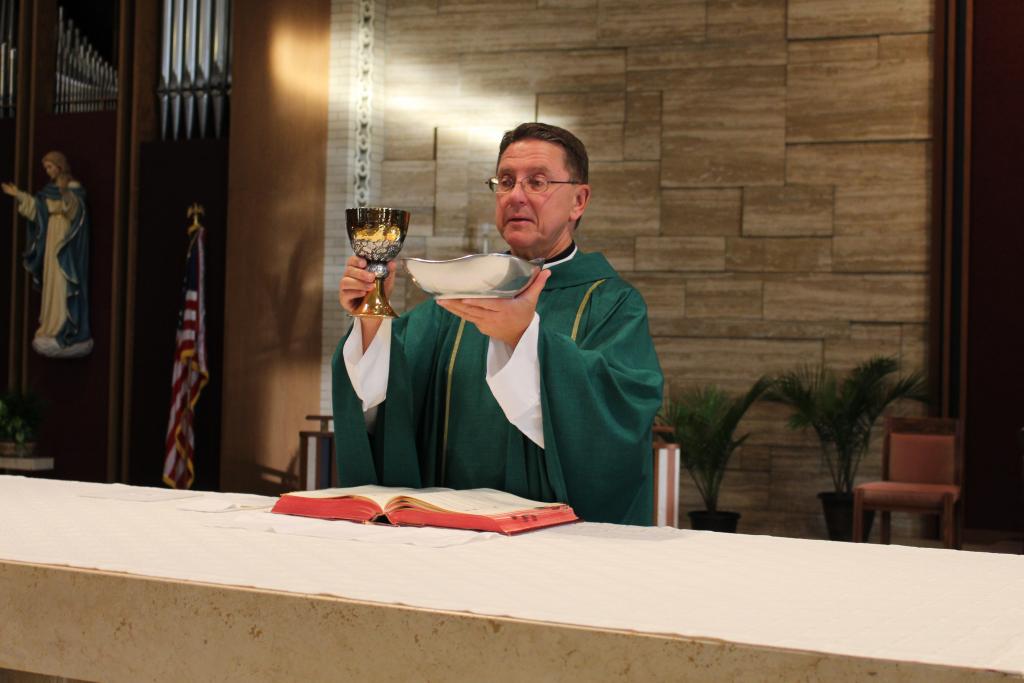
Image credit: pxhere.com
As an adolescent, I was terrified of one of the priests at my home parish. He was a tall Polish man in his 50’s with a deep voice that was easily perceived as eternally condemning, especially during his homilies. Because of how intimidating he was, I refused every opportunity to serve as an altar boy since I was so afraid to screw up in his presence during Mass.
By the time I was in high school, I befriended many Evangelical Christians who were well-versed in Scripture. Spending time with them through invitations to their church’s youth group, camp events and Bible studies encouraged me to eventually start becoming a more proactive follower of Christ. As I became more involved in these activities with my Evangelical friends, I soon realized that Catholics and Protestants have contrasting views of the role of priesthood — especially after reading passages such as,
“And call no man your father on earth, for you have one Father, who is in heaven.”
— Matthew 23:9 RSV
“You also, like living stones, are being built into a spiritual house to be a holy priesthood, offering spiritual sacrifices acceptable to God through Jesus Christ.” — 1 Peter 2:5 NIV
Admittedly, because of how intimidated I was by the priest in my home-church as well as the constant media coverage of clerical sexual abuse, the Protestant viewpoint of the priesthood appealed to my own experiences and reasoning. After leaving Catholicism, I started to attend my friends’ Evangelical church regularly. Though I recall one time during service, the congregation brought the Sunday school children to sing a hymn as follows,
Father Abraham has many sons
Many sons had Father Abraham
I am one of them, and so are you
So let’s just praise the Lord!
I was caught off guard at first. The very congregation who helped me immerse myself into Scripture had suddenly been singing the very words Jesus told us not to say. Call no man father. Although I didn’t allow it to bother me at the time, it irked me as the years went by while noticing Protestants using alternatives of the word ‘father.’ In my church-shopping experiences, I’ve even noticed some Protestants sometimes refer to their clergy as Pastor, Reverend or sometimes ‘Brother‘ (to make it seem more egalitarian while some of them were still considered elders and deacons). This is largely because, unlike Catholics, Eastern Orthodox and certain Anglican traditions, the Evangelical exegesis of Scripture is often a very literal approach (depending on passage).
Protestants adhere to a doctrine called Sola Deo Gloria (Latin for Glory to God Alone). Though Catholics also believe all glory belongs to God alone, they differ from Protestants in their perception of how God’s glory is expressed or manifested through creation and how He ought to be glorified. As I have spent nearly twelve years in the Evangelical community, I can wholeheartedly sympathize with those who hesitate to address a Catholic priest by the title of father. For them, calling someone ‘father’ seemingly raises the priest on a pedestal that belongs to God alone. It wasn’t until nearly a decade later when I worked past my irrational fears and met some amazing priests through some Catholic friends I made during my year attending Bible school. Because of the reactionary hostility towards Catholicism that some Evangelical peers have displayed in the past, I would like to address these false allegations and eliminate the stigma that surrounds Catholic clergy.
To give further context to the Bible verse,
Then said Jesus to the crowds and to his disciples, “The scribes and the Pharisees sit on Moses’ seat; so practice and observe whatever they tell you, but not what they do; for they preach, but do not practice. They bind heavy burdens, hard to bear, and lay them on men’s shoulders; but they themselves will not move them with their finger. They do all their deeds to be seen by men; for they make their phylacteries broad and their fringes long, and they love the place of honor at feasts and the best seats in the synagogues, and salutations in the market places, and being called rabbi by men. But you are not to be called rabbi, for you have one teacher, and you are all brethren. And call no man your father (patera πατέρα) on earth, for you have one Father (Patēr Πατὴρ), who is in heaven. Neither be called masters, for you have one master, the Christ. He who is greatest among you shall be your servant; whoever exalts himself will be humbled, and whoever humbles himself will be exalted.” — Matthew 23:1-12 RSV
When looking at this passage in its entirety, the titles of rabbi, teacher and master also appear to be reserved to God alone just like the name father. In light of 1 Peter 2:5 referring to living stones, the use of the word brethren in the above passage implies all believers are equal in God’s eyes. Equal in value, yes. But when we consider other uses of these titles, they are evident throughout the pages of Scripture,
“A disciple is not above his teacher, but every one when he is fully taught will be like his teacher.” — Luke 6:40 RSV
“And God has appointed in the church first apostles, second prophets, third teachers, then workers of miracles, then healers, helpers, administrators, speakers in various kinds of tongues.” — 1 Corinthians 12:28 RSV
“And his gifts were that some should be apostles, some prophets, some evangelists, some pastors and teachers, for the equipment of the saints, for the work of ministry, for building up the body of Christ, until we all attain to the unity of the faith and of the knowledge of the Son of God, to mature manhood, to the measure of the stature of the fulness of Christ;” — Ephesians 4:11-13 RSV
“Slaves, be obedient to those who are your earthly masters, with fear and trembling, in singleness of heart, as to Christ; not in the way of eye-service, as men-pleasers, but as servants of Christ, doing the will of God from the heart, rendering service with a good will as to the Lord and not to men, knowing that whatever good any one does, he will receive the same again from the Lord, whether he is a slave or free. Masters, do the same to them, and forbear threatening, knowing that he who is both their Master and yours is in heaven, and that there is no partiality with him.” — Ephesians 6:5-9 RSV
“Let him who is taught the word share all good things with him who teaches.” — Galatians 6:6 RSV
When we consider how Jesus condemns the use of the name rabbi or teacher, the logical outcome of interpreting Matthew 23:1-12 literally would be to include the titles of Pastor or Reverend among those to be refrained from use. Which leads me to wonder, which passages of Scripture are meant to be taken literally, and which ones metaphorically? If we were to apply the same logic on other passages, it would conflict with the literal interpretation of Matthew 23:9,
“Honor your father and your mother, that your days may be long in the land which the Lord your God gives you.” — Exodus 20:12 RSV
“And Micah said to him (the Levite), “Stay with me, and be to me a father and a priest, and I will give you ten pieces of silver a year, and a suit of apparel, and your living.”” — Judges 17:10 RSV
“And Stephen said: “Brethren and fathers, hear me. The God of glory appeared to our father Abraham, when he was in Mesopota′mia, before he lived in Haran, and said to him, ‘Depart from your land and from your kindred and go into the land which I will show you.’” — Acts 7:2-3 RSV
“I do not write this to make you ashamed, but to admonish you as my beloved children. For though you have countless guides in Christ, you do not have many fathers (pateras πατέρας). For I became your father (patera πατέρα) in Christ Jesus through the gospel. I urge you, then, be imitators of me. Therefore I sent to you Timothy, my beloved and faithful child in the Lord, to remind you of my ways in Christ, as I teach them everywhere in every church.” — 1 Corinthians 4:14-17 RSV
“That is why it depends on faith, in order that the promise may rest on grace and be guaranteed to all his descendants—not only to the adherents of the law but also to those who share the faith of Abraham, for he is the father of us all, as it is written, “I have made you the father of many nations”—in the presence of the God in whom he believed, who gives life to the dead and calls into existence the things that do not exist. ” — Romans 4:16-17 RSV
Was Paul exalting himself by calling himself ‘father,’ or is he referring to himself as a ‘lowercase-f‘ as opposed to a ‘capital-F‘ father? In relation to families, children often imitate their parents or guardians who raise them. In many cases, I’ve been told that my mannerisms, humor and values remind people of my own father who raised me. From what I see, ‘calling no man Father’ has more to do with defining who God the Father is and priests allowing themselves to become imitators of God.
It’s not uncommon to hear asinine comments by anti-Catholics claiming priests are nothing but pedophiles who pretend to be teachers, like wolves in sheep’s clothing. I will say that the sex abuse scandals in the Church are reprehensible, and unjustifiable no matter how we look at them. But what about schoolteachers or healthcare professionals who have committed abuses (especially those who are married)? In a separate article, I talk about the concerns surrounding priestly celibacy and the role it plays in a priest’s vocation. But like celibate priests, public servants (let alone every other person prone to sin) is not exempt from being capable of committing sexual abuse.
Along the topic of healthcare, the title of ‘doctor‘ is also one that would seemingly fit alongside ‘father‘ and ‘teacher‘ as names to refrain from calling mere men, as per Matthew 23. In another part of Scripture, Jesus refers to Himself as a physician (Matthew 9:12-13, Mark 2:17, Luke 5:31). Jesus had turned sinners to repentance, cured lepers, healed the sick and raised the dead; thus, appropriately making Him the Great Physician (or Doctor). The Early Apostles have also partook in similar miracles through the power of the Holy Spirit and forgave people of their sins through the authority given to them by Christ Himself (John 20:21-23, Matthew 9:5-8).
Priests are people like you and me who have families, friends and feelings and should also be treated with the same dignity and respect given to everyone else. And like every living human being, priests are sinners who also have past experiences, though that led them to consider giving their entire selves to serve Christ and His Church.
The literal interpretation of ‘calling no man father’ is an extreme stretch in logic while simultaneously dismissive of Christ’s use of literary hyperbole. While the priest may not be Christ Himself, their vocation is to be Jesus to everyone else — just like Saint Paul and the Apostles were to the Early Church. And while they all have an obligation to abide by the teachings of the Church, their jobs as shepherds are also to meet us where we are at — to be a spiritual physician, a teacher and a father. Just like Jesus.
Previous Post

November 18, 2019
Corey Taylor's Message To Kanye West Still Relevant
Next Post

December 18, 2019 Dialogue With Protestant In Response To My Article "Call No Man Father"
Browse Our Archives
Select a Category Catholicism Christian Life Christian Life Church History Community Eastern Orthodoxy Entertainment Fiction History Mental Health Movies Music Politics Protestantism Reflection Religion Satire Science Fiction Self esteem Self Love Spirituality Star Wars Suicide Theology Uncategorized
Select a Month June 2023 April 2023 May 2022 April 2022 July 2021 April 2021 March 2021 February 2021 January 2021 December 2020 November 2020 October 2020 September 2020 August 2020 July 2020 June 2020 May 2020 April 2020 March 2020 February 2020 January 2020 December 2019 November 2019 October 2019 September 2019 August 2019 July 2019 June 2019 May 2019 April 2019 March 2019 February 2019 January 2019 December 2018 October 2018 September 2018 August 2018 June 2018 April 2018 January 2018 November 2017 October 2017 July 2017 June 2017 May 2017 April 2017 March 2017 February 2017 December 2016 October 2016 September 2016 August 2016 June 2016 May 2016 March 2016 February 2016
Follow Us!
TAKE THE
Religious Wisdom Quiz
Which disciple is known as 'the Twin'?
Select your answer to see how you score.
Philip James Thomas Andrew
Related posts from Coffee and Crucifix

Martin Scorsese Meets With Pope To Discuss Film...

FAIL! Catholic says, 'And also with you!" instead...

Don't Lose Your Soul In The Culture War

10 Essential Books Every Catholic Should Own
TRENDING AT PATHEOS Catholic

Creation, Preservation, and Teleology in Catholic Theology
As I write this, it is very early Monday morning. Like millions...

The Parable Of The Sower And The Word...
One of Christ’s most famous parables is that of the sower who...

Rejecting Doom: Christian Hope And Human Action
Christianity is a religion of hope. We are to have hope and...

Why I Choose the Eucharist Over the Sermon
Choose the Eucharist, Not the Sermon What are we supposed to get...

5 Design Elements Found in Spiritually Rooted Homes
Putting Spirituality Into Home Decor Our homes are more than our living...

Credo: A Story of God Told with the...
About 10 years ago, I began to imagine a personal "Credo" that...
view all Catholic blogs
Ad-Free & Subscriber Log-In Subscription Support
- About Us
- 2026 Calendar
- Videos
- Podcasts
- Library of World Religions
- Faith In Media Tracker
- Advertise With Us
- Write for Us
- Privacy Policy
- Terms of Service
- Do Not Sell My Data
- Contact Us
- Radiant Digital
- Manage Newsletter Subscriptions
- Unsubscribe From Notifications
- Sitemap
Copyright 2008-2026, Patheos. All rights reserved.
Subscription Support Ad-Free & Subscriber Log-In
Follow Patheos