
BuddhistCatholicContemplativeEvangelicalGeneral ChristianHinduJewishLatter-day SaintMuslimNew VisionsProgressive Christian
Beliefs
- Buddhist
- Catholic
- Contemplative
- Evangelical
- General Christian
- Hindu
- Jewish
- Latter-day Saint
- More Voices
- Muslim
- New Visions
- Pagan
- Progressive Christian
Topics
- Religion News
- Food and Religion
- Sports and Religion
- Religious Art
- Religious Music and Entertainment
- Religious Events
- History and Religion
- Style and Religion
- Politics and Religion
- Women in Religion
- Recreation Outdoors and Religion
- Business Finance and Religion
- Careers Workplace and Religion
- Education and Religion
- Family Parenting and Religion
- Health Fitness and Religion
- Home and Religion
- Relationships and Religion
- Technology and Religion
- Travel and Religion
Columnists
- Buddhist Columnists
- Business Finance and Religion Columnists
- Careers Workplace and Religion Columnists
- Catholic Columnists
- Contemplative Columnists
- Education and Religion Columnists
- Evangelists Columnists
- Family Parenting and Religion Columnists
- General Christian Columnists
- Health Fitness and Religion Columnists
- Hindu Columnists
- History and Religion Columnists
- Home and Religion Columnists
- Jewish Columnists
- More Voices Columnists
- Latter Day Columnists
- Muslim Columnists
- New Visions Columnists
- Nonreligious Columnists
- Pagan Columnists
- Politics and Religion Columnists
- Progressive Columnists
- Recreation Outdoors and Religion Columnists
- Relationships and Religion Columnists
- Religion News Columnists
- Religious Art Columnists
- Religious Events Columnists
- Religious Music and Entertainment Columnists
- Sports and Religion Columnists
- Style and Religion Columnists
- Technology and Religion Columnists
- Travel and Religion Columnists
- Women in Religion Columnists
Resource Library
- 2026 Calendar
- Library of World Religions
- The 100 Most Holy Places on Earth
- Patheos Answers
- Podcasts
- Videos
- Faith Leaders Database
- Anglican Episcopalian
- Bahai
- Baptist
- Buddhism
- Christianity
- Confucianism
- Eastern Orthodoxy
- Hinduism
- Holiness and Pentecostal
- ISKCON
- Islam
- Judaism
- Lutheran
- Methodist
- The Church of Jesus Christ of Latter-day Saints
- New Age
- Paganism
- Presbytarian and Reformed
- Protestantism
- Religion Behind the Scenes
- Roman Catholic
- Scientology
- Shia Islam
- Sikhism
- Sufism
- Sunni Islam
- Taoism
- Zen
- See all religions
Research Tools
 Ad-Free & Subscriber Log-In Subscription Support
Ad-Free & Subscriber Log-In Subscription Support
Follow Patheos 

- Trending:
- Forgiveness
- |
- Marriage
- |
- Consciousness
- |
- Death Penalty
- |
- Election
- |
- Halloween
 Coffee and Crucifix
- Home
- Catholic
- Is War Justifiable?
Is War Justifiable?
Last updated on: November 15, 2019 at 10:39 am by Coffee & Crucifix
Is War Justifiable? 2019-11-15T10:39:23-06:00 Coffee & Crucifix
Patheos Explore the world's faith through different perspectives on religion and spirituality! Patheos has the views of the prevalent religions and spiritualities of the world.
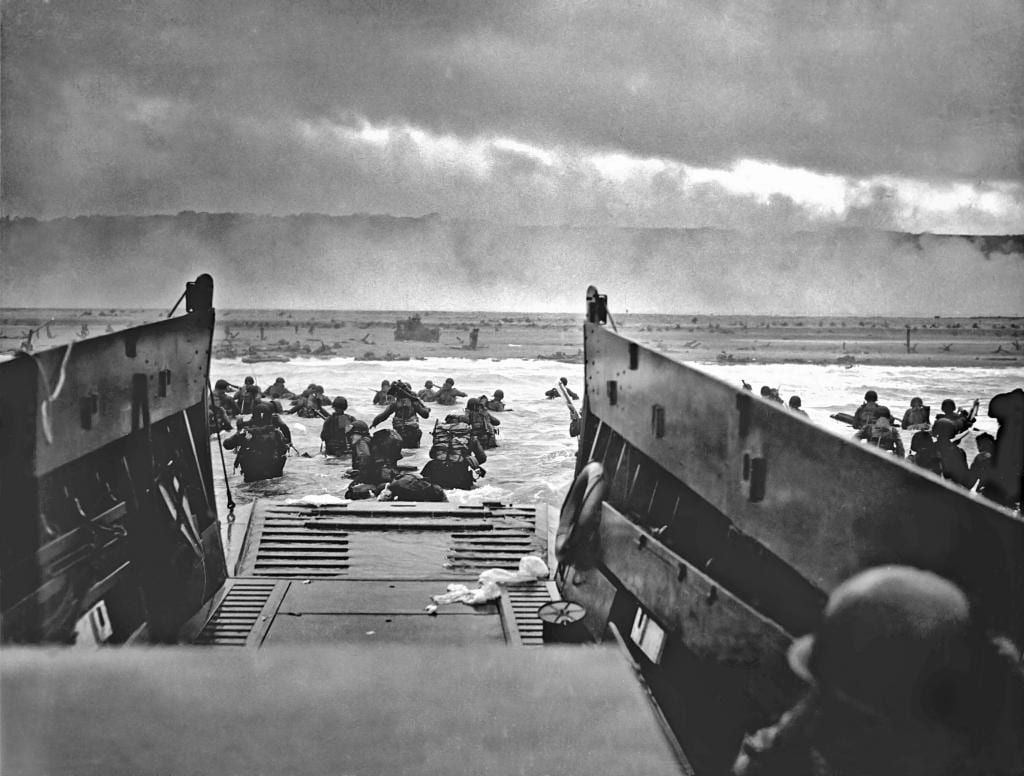
Image credit: pixabay.com
In the wake of All Hallows’ Eve, November is a somber month. Especially considering All Souls Day is two days afterwards — a day when Catholic Christians around the world commemorate and pray for those who have died and anticipate their entry into Paradise. In the wake of All Souls day, Canadians commemorate the lives lost during the First and Second World War on Remembrance Day, which also coincides with Veterans Day in the United States.
It’s always interesting to hear or read stories about those who have been conscripted into war. In my own family’s history, my great grandfather was conscripted by the Canadian government to fight in World War I. Fortunately, by the time he was shipped across the Atlantic to arrive in Britain, the war had ended. While many were willingly ready to serve their country, many others were not so willing. In both cases, families and loved ones were torn apart. Mothers and fathers lost their sons and children lost their fathers, both either killed in action or captured by the enemy.
And as for those who came back home alive, they were never the same again.
Given the destruction, loss and despair that comes out of it, it’s difficult to imagine why anyone would ever consider supporting any cause associated with war. In that regard, I can sympathize with anyone who chooses to be a pacifist. There are many accounts of people who have fled their home country with only the clothes on their backs to escape from forced conscription or foreign invasion. Considering that I have a wife and kids, I sometimes wonder to myself whether I would have done the same thing. Many Christians give several biblical arguments to support the idea of pacifism — such as when Jesus tells Peter, “Put your sword back into its place; for all who take the sword will perish by the sword (Matthew 26:52),” or the more obvious one, “Thou shalt not kill (Exodus 20:13).”
On the other hand, pacifism can arguably be an act of siding with the enemy depending on the circumstances. As Albert Einstein quoted profoundly,
“The world will not be destroyed by those who do evil, but by those who who watch them without doing anything.”
War is a recurring theme in all aspects of life. The Bible has no shortage of accounts of war and is often cited when it comes to debating the morality of war. A recurring theme throughout the Old Testament is the battles between the tribes of Israel and oppressors such as the Philistines. In the New Testament, there appears to be more emphasis on spiritual warfare with such verses as,
“Put on the whole armor of God, that you may be able to stand against the wiles of the devil. For we are not contending against flesh and blood, but against the principalities, against the powers, against the world rulers of this present darkness, against the spiritual hosts of wickedness in the heavenly places.”
— Ephesians 6:11-12 RSV
“For though we live in the world we are not carrying on a worldly war, for the weapons of our warfare are not worldly but have divine power to destroy strongholds.” — 2 Corinthians 10:3-4 RSV
Considering the metaphysical aspects provided in these passages, war doesn’t always come in the form of clashing armies between opposing nations. We face conflicts in our relationships with our friends, siblings, parents, spouses, neighbors, coworkers, employers and so fourth. Even Jesus Himself stated,
“Do not think that I have come to bring peace on earth; I have not come to bring peace, but a sword. For I have come to set a man against his father, and a daughter against her mother, and a daughter-in-law against her mother-in-law; and a man’s foes will be those of his own household.”
— Matthew 10:34-36 RSV
This was one of the passages I’ve struggled with as a young Christian. I don’t believe Jesus is implying for us to dishonor our parents, since that would violate one of the Ten Commandments (Exodus 20:12, John 14:15, Ephesians 6:2-3). But as much as we try to avoid friction or confrontation, our collectively diverse personalities, opinions and worldviews make conflict inevitable.
People usually face bullying at least once in their lives. Adolescence is a time of experimentation with managing friendships and dealing with bullies, especially while in school. When it comes to conflict, dialogue is usually the initial means in which people attempt a peaceful resolution. If the person refuses to listen or back down, or if the confrontation becomes a breach of personal boundaries, defensive action is required. Often that comes in the form of physical intervention.
The schoolyard mentality of learning how to establish boundaries translates almost seamlessly into adulthood. People learn how to manage their own boundaries as they enter into dating or marital relationships. Marriage is often compared to a war zone. Two parties who promise to maintain their love for one another for the rest of their lives will eventually have that promise tested through emotional turmoil. Unfortunately, spousal or domestic abuse is often the result of relationships who struggle with managing emotions and a healthy family environment. In cases of domestic violence, many would consider this as an automatic end to a relationship while others would seek a third party (such as a mediator or a counsellor) to de-escalate and figure out ways to medicate the root of the conflict. Some relationships are healed and become stronger than ever. Others are seemingly beyond repair and severed permanently.
Likewise, nations all over the world vary in their relationships with one another. When conflicts arise or if a nation exerts its power over another, neighbouring countries usually intervene through dialogue or summits. But when a nation continues to oppress another while all other means such as economic sanctions or armistice are exhausted, sometimes the use of force is a necessary move — to an extent. The point of engaging in warfare is to put and end to the aggressor’s attack full-stop without going beyond the violence or force that is necessary. Though this is easier said than done.
What prompted Western Allies to join World War II was an aggressive political dictator who played on the fears and biases of his nation’s citizens to justify spreading its reign throughout Europe as well as the genocide of an estimated 6 million Jewish people. Considering the possibility of the war showing up on their doorstep, Canada was compelled to aid Britain in fighting Nazi invasion while Japan’s attack on Pearl Harbor forced the hand of the United States to fight the axis as well.
While the attack on Pearl Harbor was morally unjustifiable, I would argue that the bombing of Hiroshima and Nagasaki was a use of over-excessive violence. Many would argue that the bombing led to the end of the war, thus making it a necessary tactic. From my point of view, if the war happened to drag on with fewer casualties (and ended in the allies’ favor), this would render the use of the atomic bomb completely unnecessary and immoral. However, I’m no historian and this is sheer speculation on my part. Though I don’t think ending a war abruptly with a greater force justifies the deaths of innocent civilians.
The end does not justify the means.
In modern times, the threat of terrorism by radical groups such as ISIS puts the security of nations around the world at risk. In my article My Thoughts on Immigration Control, I discussed how every nation has the right to protect it’s own borders. In order to fight a war on terrorism, a nation is within its right to tighten their immigration policies and screening processes for those who enter their territory. But in light of migrants who are seeking out refuge from violence and persecution, it can be argued that the nations who deny sanctuary from those fleeing from violence are equally culpable of the violence that is inflicted by their oppressors.
Along the topic of terrorism, people often use the medieval Crusades as an example of warmongering for the sake of conquering land and acquiring wealth under the banner of religion. While religion certainly has played a major role in the tensions that provoked the Crusades, the events leading up to it have parallels to what led to World War II. In order to counter increasingly hostile Islamic violence against Europe and Jerusalem, a military response was necessary. However, that does not warrant depicting all European crusaders as completely innocent. In the First Crusade, Christian forces indiscriminately killed almost every occupant in Jerusalem (Muslim and Jew alike). Likewise, certain individuals who sided with the allies in World War II raped German women in the wake of their victory against the Nazis. Ideally, the violence should have stopped the moment victory was won, but humanity has a tendency to desire vengeance for what has been wronged to them tenfold. This leads me to cite this next passage,
“Beloved, never avenge yourselves, but leave it to the wrath of God; for it is written, ‘Vengeance is mine, I will repay, says the Lord.'” — Romans 12:19 RSV
War is a complicated matter. It’s bloody, messy and destructive. In short, war is hell on earth. It is the result of human nature collectively at its worst. And as much as people tend to believe their side is the right side, there are often fewer protagonists than we believe there are. Many philosophers throughout history have wrestled with the morality of navigating through wartime. Saint Thomas Aquinas, arguably one of the most influential Christian philosophers wrote an extensive document called Summa Theologica. Often citing the works of Saint Augustine, Aquinas introduces the notion of the Just War Theory:
In order for a war to be just, three things are necessary.
First, the authority of the sovereign by whose command the war is to be waged. For it is not the business of a private individual to declare war, because he can seek for redress of his rights from the tribunal of his superior. Moreover it is not the business of a private individual to summon together the people, which has to be done in wartime. And as the care of the common weal is committed to those who are in authority, it is their business to watch over the common weal of the city, kingdom or province subject to them. And just as it is lawful for them to have recourse to the sword in defending that common weal against internal disturbances, when they punish evil-doers, according to the words of the Apostle (Rom. 13:4): “He beareth
not the sword in vain: for he is God’s minister, an avenger to execute wrath upon him that doth evil”; so too, it is their business to have recourse to the sword of war in defending the common weal against external enemies. Hence it is said to those who are in authority (Ps. 81:4): “Rescue the poor: and deliver the needy out of the hand of the sinner”; and for this reason Augustine says (Contra Faust. xxii, 75): “The natural order conducive to peace among mortals demands that the power to declare and counsel war should be in the hands of those who hold the supreme authority.”
Secondly, a just cause is required, namely that those who are attacked, should be attacked because they deserve it on account of some fault. Wherefore Augustine says (QQ. in Hept., qu. x, super Jos.): “A just war is wont to be described as one that avenges wrongs, when a nation or state has to be punished, for refusing to make amends for the wrongs inflicted by its subjects, or to restore what it has seized unjustly.”
Thirdly, it is necessary that the belligerents should have a rightful intention, so that they intend the advancement of good, or the avoidance of evil. Hence Augustine says (De Verb. Dom. [*The words quoted are to be found not in St. Augustine’s works, but Can. Apud. Caus. xxiii, qu. 1]): “True religion looks upon as peaceful those wars that are waged not for motives of aggrandizement, or cruelty, but with the object of securing peace, of punishing evil-doers, and of uplifting the good.” For it may happen that the war is declared by the legitimate authority, and for a just cause, and yet be rendered unlawful through a wicked intention. Hence Augustine says (Contra Faust. xxii, 74): “The passion for inflicting harm, the cruel thirst for vengeance, an unpacific and relentless spirit, the fever of revolt, the lust of power, and such like things, all these are rightly condemned in war.”
— Summa Theologica: Question 40 – ‘Of War’, Article 1
Many of us (myself included) try to view humanity in the best possible light — that if mankind is made in the image of God, it must be inherently good. And there ought to be more good people in the world than there are evil people if one were to look hard enough. But when no one takes the problem of evil seriously, how can anyone take God seriously? If peace is the ultimate goal, then addressing human sin ought to be at the forefront of avoiding war or ending it altogether. This is where I appreciate such passages from Scripture as these,
“What causes wars, and what causes fightings among you? Is it not your passions that are at war in your members? You desire and do not have; so you kill. And you covet and cannot obtain; so you fight and wage war. You do not have, because you do not ask.” — James 4:1-2 RSV
“Blessed are the peacemakers, for they shall be called sons of God.” — Matthew 5:9 RSV
War should never be something desired, glorified or wilfully pursued. But in cases where conflicting societies become so complacent as to paint themselves into a corner, they are left with the impossible task of having to discern what is the lesser evil in order to bring itself back on the right path by the grace of God.
Sometimes to preserve peace and well-being of others, we have to risk all-out war.
“It is better for us to die in battle than to witness the evils befalling our nation and our sanctuary.”
— 1 Maccabees 3:59 NAB
Previous Post

November 7, 2019
Four Types Of Catholics You Will Find In North America
Next Post

November 18, 2019 Corey Taylor's Message To Kanye West Still Relevant
Browse Our Archives
Select a Category Catholicism Christian Life Christian Life Church History Community Eastern Orthodoxy Entertainment Fiction History Mental Health Movies Music Politics Protestantism Reflection Religion Satire Science Fiction Self esteem Self Love Spirituality Star Wars Suicide Theology Uncategorized
Select a Month June 2023 April 2023 May 2022 April 2022 July 2021 April 2021 March 2021 February 2021 January 2021 December 2020 November 2020 October 2020 September 2020 August 2020 July 2020 June 2020 May 2020 April 2020 March 2020 February 2020 January 2020 December 2019 November 2019 October 2019 September 2019 August 2019 July 2019 June 2019 May 2019 April 2019 March 2019 February 2019 January 2019 December 2018 October 2018 September 2018 August 2018 June 2018 April 2018 January 2018 November 2017 October 2017 July 2017 June 2017 May 2017 April 2017 March 2017 February 2017 December 2016 October 2016 September 2016 August 2016 June 2016 May 2016 March 2016 February 2016
Follow Us!
TAKE THE
Religious Wisdom Quiz
What does Paul tell Timothy to fan into flame?
Select your answer to see how you score.
His zeal The Holy Spirit His faith The gift of God
Related posts from Coffee and Crucifix

Vatican Formally Repudiates 'Doctrine of Discovery'

Don't Lose Your Soul In The Culture War

10 Essential Books Every Catholic Should Own

GraceLife Church, Civil Disobedience & the Christian Persecution...
TRENDING AT PATHEOS Catholic

Rejecting Doom: Christian Hope And Human Action
Christianity is a religion of hope. We are to have hope and...

It’s What Comes From Within Which Matters
One of the most difficult things for us to understand is why...

Why I Choose the Eucharist Over the Sermon
Choose the Eucharist, Not the Sermon What are we supposed to get...

5 Design Elements Found in Spiritually Rooted Homes
Putting Spirituality Into Home Decor Our homes are more than our living...

Credo: A Story of God Told with the...
About 10 years ago, I began to imagine a personal "Credo" that...

The Anatomy of Divine Revelation in Catholic Thought
The claim that God has made Himself known to human beings is...
view all Catholic blogs
Ad-Free & Subscriber Log-In Subscription Support
- About Us
- 2026 Calendar
- Videos
- Podcasts
- Library of World Religions
- Faith In Media Tracker
- Advertise With Us
- Write for Us
- Privacy Policy
- Terms of Service
- Do Not Sell My Data
- Contact Us
- Radiant Digital
- Manage Newsletter Subscriptions
- Unsubscribe From Notifications
- Sitemap
Copyright 2008-2026, Patheos. All rights reserved.
Subscription Support Ad-Free & Subscriber Log-In
Follow Patheos