
BuddhistCatholicContemplativeEvangelicalGeneral ChristianHinduJewishLatter-day SaintMuslimNew VisionsProgressive Christian
Beliefs
- Buddhist
- Catholic
- Contemplative
- Evangelical
- General Christian
- Hindu
- Jewish
- Latter-day Saint
- More Voices
- Muslim
- New Visions
- Pagan
- Progressive Christian
Topics
- Religion News
- Food and Religion
- Sports and Religion
- Religious Art
- Religious Music and Entertainment
- Religious Events
- History and Religion
- Style and Religion
- Politics and Religion
- Women in Religion
- Recreation Outdoors and Religion
- Business Finance and Religion
- Careers Workplace and Religion
- Education and Religion
- Family Parenting and Religion
- Health Fitness and Religion
- Home and Religion
- Relationships and Religion
- Technology and Religion
- Travel and Religion
Columnists
- Buddhist Columnists
- Business Finance and Religion Columnists
- Careers Workplace and Religion Columnists
- Catholic Columnists
- Contemplative Columnists
- Education and Religion Columnists
- Evangelists Columnists
- Family Parenting and Religion Columnists
- General Christian Columnists
- Health Fitness and Religion Columnists
- Hindu Columnists
- History and Religion Columnists
- Home and Religion Columnists
- Jewish Columnists
- More Voices Columnists
- Latter Day Columnists
- Muslim Columnists
- New Visions Columnists
- Nonreligious Columnists
- Pagan Columnists
- Politics and Religion Columnists
- Progressive Columnists
- Recreation Outdoors and Religion Columnists
- Relationships and Religion Columnists
- Religion News Columnists
- Religious Art Columnists
- Religious Events Columnists
- Religious Music and Entertainment Columnists
- Sports and Religion Columnists
- Style and Religion Columnists
- Technology and Religion Columnists
- Travel and Religion Columnists
- Women in Religion Columnists
Resource Library
- 2026 Calendar
- Library of World Religions
- The 100 Most Holy Places on Earth
- Patheos Answers
- Podcasts
- Videos
- Faith Leaders Database
- Anglican Episcopalian
- Bahai
- Baptist
- Buddhism
- Christianity
- Confucianism
- Eastern Orthodoxy
- Hinduism
- Holiness and Pentecostal
- ISKCON
- Islam
- Judaism
- Lutheran
- Methodist
- The Church of Jesus Christ of Latter-day Saints
- New Age
- Paganism
- Presbytarian and Reformed
- Protestantism
- Religion Behind the Scenes
- Roman Catholic
- Scientology
- Shia Islam
- Sikhism
- Sufism
- Sunni Islam
- Taoism
- Zen
- See all religions
Research Tools
 Ad-Free & Subscriber Log-In Subscription Support
Ad-Free & Subscriber Log-In Subscription Support
Follow Patheos 

- Trending:
- Forgiveness
- |
- Marriage
- |
- Consciousness
- |
- Death Penalty
- |
- Election
- |
- Halloween
 Coffee and Crucifix
- Home
- Catholic
- Does The ‘Bible Alone’ Put God In A Box?
Does The ‘Bible Alone’ Put God In A Box?
Last updated on: February 25, 2016 at 7:10 pm by Coffee & Crucifix
Does The ‘Bible Alone’ Put God In A Box? 2016-02-25T19:10:13-06:00 Coffee & Crucifix
Patheos Explore the world's faith through different perspectives on religion and spirituality! Patheos has the views of the prevalent religions and spiritualities of the world.
Photo credit: freeimages.com
“All scripture is inspired by God and profitable for teaching, for reproof, for correction, and for training in righteousness, that the man of God may be complete, equipped for every good work.”
– 2 Timothy 3:16-17 RSV
When I was in my last year of high school, I abandoned the Catholic faith to convert to Protestant Evangelicalism. Despite knowing how heartbroken my parents were, one of the Bible verses I used to justify rebelling against my parents was,
“Think not that I am come to send peace on earth: I came not to send peace, but a sword. For I am come to set a man at variance against his father, and the daughter against her mother, and the daughter in law against her mother in law. And a man’s foes shall be they of his own household.” – Matthew 10:34-36 KJV
Little did I know, I was taking that passage completely out of context. The Bible also commands us to honor our mother and father, yet I completely glossed over it since the former appealed more to my hormonal teen angst.
Those who know me well can attest to my hyper-passionate persona and, admittedly, I have a tendency to take things a little too far. At the time of my conversion, I was so sure what I was doing was right because the Bible told me so. It took me a few years to realize not everything in the Bible is meant to be taken so literally. For example,
“And if thine eye offend thee, pluck it out: it is better for thee to enter into the kingdom of God with one eye, than having two eyes to be cast into hell fire.” – Mark 9:47 KJV
If this verse was meant to be taken literally, there would be a lot of people missing eyes from their sockets. Verses such as these are not self-interpreting for the average John Doe like myself, and many people are not aware of Jesus’ frequent use of hyperbole in order to emphasize His points.
Based on my awareness of my own failures and biases, I do not believe the Bible is clear enough in it’s entirety for just anyone to pick up and interpret – for the same reason why I wouldn’t trust any random person to pick up a hammer and build me a house, grab a wrench and fix my truck, or even obtain a scalpel and perform an organ transplant for that matter. These trades require skill, education and experience and the same should apply to anyone who attempts to interpret Scripture to lead a body of believers.
Anytime we pick up a piece of literature, we are at the mercy of our own finite and biased understanding. Unless someone has a master’s degree in translation, biblical interpretation is like a game of telephone. Anything written in the original Greek and Hebrew manuscripts is going to have a very different meaning translated into modern English.
The Protestant doctrine of Sola Scriptura (Latin for ‘Bible Alone’) upholds Scripture to be self-authenticating, clearly understandable to the rational reader, interpret itself and sufficient of itself to be the final authority of Christian doctrine. However, if any document requires authentication, whether the author is known or not, usually one would look to external sources for verification – such as other related documents or even eyewitnesses. In the case of the Bible, an extra-biblical source such as historical Jewish tradition (whether it be oral or written) or the writings of the Early Church Fathers would be the next most reliable means since eyewitnesses are very likely to have been dead for centuries.
The New Testament was not canonized by the Early Church until the 4th century and its contents have been consistently up for debate by church councils ever since. In fact, Martin Luther (one of the forefathers of the Protestant Reformation) had asserted to remove the book of James from the Canon because it actually contradicted with his interpretation of ‘Faith Alone’ (Sola Fide). The 7 deuterocanonical books in the Old Testament, which are considered to be apocryphal for most Protestants, were also removed from the Bible canon by the Early Reformers (which are fantastic books by the way!). The fact they tried to remove books from the Bible Canon reveals a complete double-standard of the phrase, ‘Let no one add to or take away from the Word of God,’ which is supposedly the very essence of Sola Scriptura.
I have often heard the phrase from fellow believers, “If it’s not in the Bible, it’s not true!” If this were the case, everything else in documented human history would be completely invalidated. Although the ideology of ‘Bible Alone’ was originally well-meaning to keep Protestant Christians accountable, it has also been historically proven to be a recipe for anarchy. After how many times churches have separated over the issue of Scriptural interpretation, at what point does a rogue denomination finally get it right?
Does this mean we have been putting God in a box by limiting Him to what we can understand between a set of book covers? Don’t get me wrong, I am not trying to invalidate the Bible by any means. I am truly convinced it is the inspired Word of God and the Holy Spirit speaks though it. However, the Bible and historical tradition should accommodate one another in the same manner faith and good deeds should. This can only mean Scripture and historical tradition combined are only a small glimpse of who God really is and what our finite imaginations can fathom. This is why I fully embrace what the Catholic Church refers to as Prima Scriptura, which means Scripture First.
As someone who strongly advocates for Christian unity, my conscience will not allow me to support a man-made doctrine that is responsible for the complete disunity of the Body of Christ – lest I put God in a box and create Him in my own image.
“First of all you must understand this, that no prophecy of scripture is a matter of one’s own interpretation, because no prophecy ever came by the impulse of man, but men moved by the Holy Spirit spoke from God.”
– 2 Peter 1:20-21 RSV
Previous Post
February 22, 2016
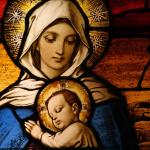
My Love For Mary Deepens My Love For Jesus
Next Post

March 8, 2016 Why I Despise Contemporary Christian Worship
Browse Our Archives
Select a Category Catholicism Christian Life Christian Life Church History Community Eastern Orthodoxy Entertainment Fiction History Mental Health Movies Music Politics Protestantism Reflection Religion Satire Science Fiction Self esteem Self Love Spirituality Star Wars Suicide Theology Uncategorized
Select a Month June 2023 April 2023 May 2022 April 2022 July 2021 April 2021 March 2021 February 2021 January 2021 December 2020 November 2020 October 2020 September 2020 August 2020 July 2020 June 2020 May 2020 April 2020 March 2020 February 2020 January 2020 December 2019 November 2019 October 2019 September 2019 August 2019 July 2019 June 2019 May 2019 April 2019 March 2019 February 2019 January 2019 December 2018 October 2018 September 2018 August 2018 June 2018 April 2018 January 2018 November 2017 October 2017 July 2017 June 2017 May 2017 April 2017 March 2017 February 2017 December 2016 October 2016 September 2016 August 2016 June 2016 May 2016 March 2016 February 2016
Follow Us!
TAKE THE
Religious Wisdom Quiz
What city is home to the headquarters of the Roman Catholic Church?
Select your answer to see how you score.
London Vatican City Jerusalem Paris
Related posts from Coffee and Crucifix

FAIL! Catholic says, 'And also with you!" instead...

Don't Lose Your Soul In The Culture War

10 Essential Books Every Catholic Should Own

Local Activist Blames Church Fires On Climate Change
TRENDING AT PATHEOS Catholic

Rejecting Doom: Christian Hope And Human Action
Christianity is a religion of hope. We are to have hope and...

It’s What Comes From Within Which Matters
One of the most difficult things for us to understand is why...

Why I Choose the Eucharist Over the Sermon
Choose the Eucharist, Not the Sermon What are we supposed to get...

5 Design Elements Found in Spiritually Rooted Homes
Putting Spirituality Into Home Decor Our homes are more than our living...

Credo: A Story of God Told with the...
About 10 years ago, I began to imagine a personal "Credo" that...

The Anatomy of Divine Revelation in Catholic Thought
The claim that God has made Himself known to human beings is...
view all Catholic blogs
Ad-Free & Subscriber Log-In Subscription Support
- About Us
- 2026 Calendar
- Videos
- Podcasts
- Library of World Religions
- Faith In Media Tracker
- Advertise With Us
- Write for Us
- Privacy Policy
- Terms of Service
- Do Not Sell My Data
- Contact Us
- Radiant Digital
- Manage Newsletter Subscriptions
- Unsubscribe From Notifications
- Sitemap
Copyright 2008-2026, Patheos. All rights reserved.
Subscription Support Ad-Free & Subscriber Log-In
Follow Patheos