
BuddhistCatholicContemplativeEvangelicalGeneral ChristianHinduJewishLatter-day SaintMuslimNew VisionsProgressive Christian
Beliefs
- Buddhist
- Catholic
- Contemplative
- Evangelical
- General Christian
- Hindu
- Jewish
- Latter-day Saint
- More Voices
- Muslim
- New Visions
- Pagan
- Progressive Christian
Topics
- Religion News
- Food and Religion
- Sports and Religion
- Religious Art
- Religious Music and Entertainment
- Religious Events
- History and Religion
- Style and Religion
- Politics and Religion
- Women in Religion
- Recreation Outdoors and Religion
- Business Finance and Religion
- Careers Workplace and Religion
- Education and Religion
- Family Parenting and Religion
- Health Fitness and Religion
- Home and Religion
- Relationships and Religion
- Technology and Religion
- Travel and Religion
Columnists
- Buddhist Columnists
- Business Finance and Religion Columnists
- Careers Workplace and Religion Columnists
- Catholic Columnists
- Contemplative Columnists
- Education and Religion Columnists
- Evangelists Columnists
- Family Parenting and Religion Columnists
- General Christian Columnists
- Health Fitness and Religion Columnists
- Hindu Columnists
- History and Religion Columnists
- Home and Religion Columnists
- Jewish Columnists
- More Voices Columnists
- Latter Day Columnists
- Muslim Columnists
- New Visions Columnists
- Nonreligious Columnists
- Pagan Columnists
- Politics and Religion Columnists
- Progressive Columnists
- Recreation Outdoors and Religion Columnists
- Relationships and Religion Columnists
- Religion News Columnists
- Religious Art Columnists
- Religious Events Columnists
- Religious Music and Entertainment Columnists
- Sports and Religion Columnists
- Style and Religion Columnists
- Technology and Religion Columnists
- Travel and Religion Columnists
- Women in Religion Columnists
Resource Library
- 2026 Calendar
- Library of World Religions
- The 100 Most Holy Places on Earth
- Patheos Answers
- Podcasts
- Videos
- Faith Leaders Database
- Anglican Episcopalian
- Bahai
- Baptist
- Buddhism
- Christianity
- Confucianism
- Eastern Orthodoxy
- Hinduism
- Holiness and Pentecostal
- ISKCON
- Islam
- Judaism
- Lutheran
- Methodist
- The Church of Jesus Christ of Latter-day Saints
- New Age
- Paganism
- Presbytarian and Reformed
- Protestantism
- Religion Behind the Scenes
- Roman Catholic
- Scientology
- Shia Islam
- Sikhism
- Sufism
- Sunni Islam
- Taoism
- Zen
- See all religions
Research Tools
 Ad-Free & Subscriber Log-In Subscription Support
Ad-Free & Subscriber Log-In Subscription Support
Follow Patheos 

- Trending:
- Forgiveness
- |
- Marriage
- |
- Consciousness
- |
- Death Penalty
- |
- Election
- |
- Halloween

- Home
- Muslim
- Religion News
- Why the Media Only Sees Faith in a Crisis
Why the Media Only Sees Faith in a Crisis
Last updated on: July 24, 2026 at 8:00 pm by Debbie Almontaser
Why the Media Only Sees Faith in a Crisis 2026-07-24T20:00:22-05:00 Debbie Almontaser
Patheos Explore the world's faith through different perspectives on religion and spirituality! Patheos has the views of the prevalent religions and spiritualities of the world.
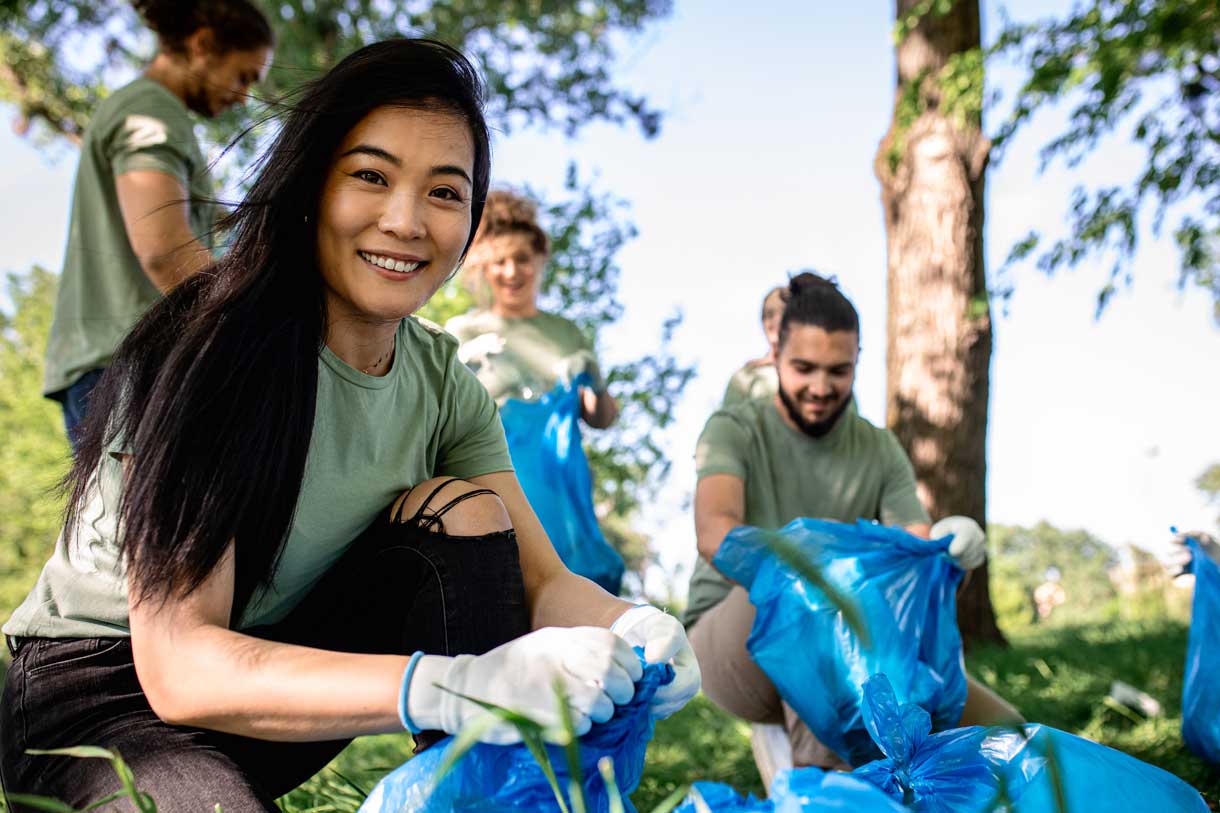
Faith rarely makes headlines when it is quietly feeding families, comforting the grieving, mentoring young people, or keeping communities together through exhaustion and uncertainty. | Image courtesy of Adobe Stock By Zoran Zeremski.
Faith Beyond the Headlines
Faith rarely makes headlines when it is quietly feeding families, comforting the grieving, mentoring young people, or keeping communities together through exhaustion and uncertainty. It becomes visible instead when something breaks.
A tragedy happens. A protest erupts. A politician weaponizes religion. A school controversy explodes. A war overseas ignites tensions at home. Suddenly, cameras appear. Reporters rush in. Faith becomes a “story.”
But for many of us who have spent decades serving communities rooted in faith, this cycle feels painfully incomplete.
The public often sees faith communities only in moments of disruption, while missing the years of unity, healing, organizing, counseling, educating, and bridge-building that came before the crisis—and long after media attention disappears.
I have lived this reality firsthand.
As a Muslim educator, community leader, and advocate in New York City, I have experienced what it feels like to become the center of national media attention during moments of public pressure and political controversy when founding the Khalil Gibran International Academy. I have seen how quickly complex human beings can be reduced to headlines, assumptions, and narratives shaped more by urgency than understanding.
In moments like these, faith is often portrayed as either a threat, a spectacle, or a symbol. Rarely is it portrayed as what it actually is for millions of people: a source of grounding, moral responsibility, service, resilience, and hope.
The Communities Cameras Don’t Stay For

Faith communities do not suddenly appear during emergencies. They are already there. Long before hurricanes make national news, houses of worship are organizing food drives and checking on vulnerable neighbors. | Image courtesy Adobe Stock – By N Felix/peopleimages.com
One of the greatest failures in crisis coverage is that journalists often arrive after the damage is visible but before they understand the people involved.
Faith communities do not suddenly appear during emergencies. They are already there.
Long before hurricanes make national news, houses of worship are organizing food drives and checking on vulnerable neighbors. Long before politicians issue statements about violence, faith leaders are mediating tensions in schools, counseling traumatized youth, and helping families navigate fear. Long after television crews leave disaster sites, congregations remain on the ground raising funds, rebuilding homes, providing childcare, and mourning with the affected.
Yet these sustained acts of service rarely receive the same attention as conflict.
That imbalance shapes public perception in dangerous ways.
The deadly attack at the Islamic Center of San Diego a couple of months ago is another painful reminder of how dangerous those distortions can become. As Muslims gathered for prayer during one of the holiest periods of the Islamic calendar, a hate-driven attack took the lives of three community members, including a security guard who died protecting children inside the mosque. In the aftermath, media attention understandably focused on the violence itself. But too often, stories about Muslim communities begin only once tragedy strikes—rather than recognizing the humanity, service, and everyday presence of those communities long before crisis enters the frame.
When coverage repeatedly associates faith primarily with controversy, extremism, division, or institutional scandal, audiences begin to see religious communities through a distorted lens. Entire groups become flattened into stereotypes. Nuance disappears. Humanity disappears. Muslim communities know this dynamic intimately.
Too often, media coverage involving Muslims begins from suspicion rather than curiosity. Religious phrases are stripped of context. Cultural practices are misunderstood. Headlines amplify fear before facts are fully understood. And once misinformation spreads, corrections rarely travel with the same speed or intensity.
Days before the Islamic Center of San Diego shooting, a controversy broke out with a mosque, Almadina Masjid, and a neighboring Jewish girls’ high school in Brooklyn, NY, demonstrating how quickly faith can be reduced to spectacle. A short video of Muslim congregants praying on the sidewalk near the Jewish girls’ school circulated online and immediately fueled outrage and suspicion. Missing from much of the discourse, however, was the reality that these communities had coexisted long before the cameras, commentary, and viral reactions arrived.
I remember moments when public conversations about Muslims in America felt less like dialogue and more like public prosecution. The burden frequently fell on Muslim leaders in the aftermath of 9/11 to explain ourselves, condemn violence we had nothing to do with, and prove our belonging repeatedly.
The Ordinary Truth That Gets Ignored

What journalists and editors often miss is that faith is not merely ideology. It is a lived experience. It shapes how people grieve, forgive, organize, survive, and care for one another. | Image courtesy of Adobe Stock – By Shafira.
What was missing from many of those stories was the ordinary truth of our lives.
The teachers showing up for students every day. The women leading nonprofits and organizing community care. The fathers working multiple jobs to support their families. The young people trying to reconcile faith, identity, and belonging in a country they deeply love. The interfaith coalitions quietly solving problems together without press conferences or viral moments.
Faith communities are not perfect. No institution is. Religious organizations, like political systems, corporations, schools, and governments, should absolutely be held accountable when harm occurs. Ethical journalism matters. Investigative reporting matters.
But accountability without humanity becomes exploitation.
There is a difference between reporting on a crisis and reducing people to one.
What journalists and editors often miss is that faith is not merely ideology. It is a lived experience. It shapes how people grieve, forgive, organize, survive, and care for one another. In moments of urgency, faith often informs critical decisions behind the scenes, even when it never becomes part of the official narrative.
I have seen leaders draw upon spiritual values when deciding whether to escalate conflict or seek reconciliation. I have watched communities respond to hatred not with retaliation, but with deeper commitments to service and solidarity. I have witnessed people endure unimaginable public pressure because their faith taught them dignity, patience, and perseverance.
Yet those dimensions rarely fit neatly into breaking-news formats designed for speed and spectacle.
The Limits of Breaking News
Modern media systems reward immediacy. Outrage travels faster than reflection. Simplified narratives generate clicks more easily than layered truths. As a result, religion is often presented in binaries: moderate or extremist, progressive or conservative, peaceful or dangerous.
But real communities do not exist in binaries.
Good journalism requires time, context, and relationships. It requires reporters who engage faith communities before a crisis occurs—not only after one erupts. It requires newsrooms that invest in religious literacy instead of assigning faith-related stories to journalists with little understanding of the traditions they are covering.
Most importantly, it requires listening.
Too often, coverage about faith communities happens without meaningful engagement with the people most affected. Communities are interviewed in moments of vulnerability, but rarely included in shaping the broader narrative about who they are and what they contribute.
The result is reactive reporting instead of sustained understanding.
From Spectacle to Substance
Imagine how different public discourse could be if media outlets covered faith communities with the same depth they bring to politics, business, or technology. Imagine if reporters regularly highlighted the role mosques, churches, synagogues, temples, and faith-based nonprofits play in education, mental health support, refugee assistance, anti-poverty work, and conflict resolution.
Imagine if stories focused not only on division, but on repair.
This is especially important at a time when many societies are experiencing profound loneliness, polarization, distrust, and social fragmentation. Faith communities are often among the few remaining institutions where people still gather across generations, support one another materially and emotionally, and maintain a sense of collective responsibility.
That does not mean faith institutions should be romanticized or shielded from scrutiny. It means they should be understood fully.
Human beings deserve coverage that reflects their complexity.
The role of journalism should not be to manufacture fear or reduce communities into symbols for public consumption. Its responsibility is to help society see itself more honestly and more clearly.
That kind of reporting is harder. It takes patience. It takes humility. It takes journalists willing to move beyond parachute coverage and invest in long-term relationships with communities they may not fully understand at first glance.
But the reward is deeper public trust and a more informed society.
Faith will always become visible during moments of urgency and consequence. Crises expose what societies value, fear, and misunderstand. The question is whether media coverage will continue to chase spectacle—or whether it will evolve toward something more truthful, humane, and useful.
Because behind every headline is a community still living the story after the cameras are gone.
Muslim
Education and Religion
Faith in the Digital Age: Ensuring Accuracy in Emerging Media
Previous Post

March 2, 2026
How Faith and Religion Shaped America's First 250 Years
Recent Comments
"Conservatives act like secularism is the enemy. A neutral secular government was designed to protect ..."
How Faith and Religion Shaped America’s ..."
"As a Pagan who is beyond tired of the same basic articles every October leading ..."
Rinse, Repeat, Ramadan: The Explainer Trap
"We need to ask ourselves what happens when a large majority of a population can ..."
What Research Really Shows About Religion ..."
"Good advice. I find more meaning and purpose when I reason with historical context. I ..."
Why the Truth Behind Your Holidays ..."
Browse Our Archives
Select a Category Beyond Christmas: Multi-faith Coverage During The Holidays Diversity Faith Amid the Fray: Reporting During Political Turbulence Faith and Inclusion After DEI: Media’s Role in Religious Representation Faith in the Digital Age: Ensuring Accuracy in Emerging Media Reporting Religious Persecution: How Media Can Inform Reports Uncategorized
Select a Month July 2026 March 2026 February 2026 December 2025 November 2025 October 2025 September 2025 August 2025 July 2025 June 2025 May 2025 April 2025 March 2025 February 2025 January 2025 December 2024 November 2024
Follow Us!
TAKE THE
Religious Wisdom Quiz
Why did Joseph's brothers sell him?
Select your answer to see how you score.
Love Jealousy Mercy Poverty
Related posts from Coalition For Faith And Media
Rinse, Repeat, Ramadan: The Explainer Trap

Finding Faith in The Kite Runner’s Story of...

Can Tech And Media Get Faith Right In...
Pluralism Shines Bright in the Heart of Times...
TRENDING AT PATHEOS Religion News

Should Churches Endorse Political Candidates?
Amid a highly charged election season, federal court filings last month will...

Surrogacy's $15 Billion Boom Raises Hard Moral Questions
The current surrogacy situation is confusing and fast-evolving. Most of Europe...

Why the Media Only Sees Faith in a...
Faith Beyond the Headlines Faith rarely makes headlines when it is quietly...

Patheos July 2026 Featured Writer: Dr. Joey Cochran
Dr. Joey Cochran is a historian of religion, a General Editor of...

Patheos June 2026 Featured Writer: Dr. James F....
Dr. James F. McGrath holds the Clarence L. Goodwin Chair in New...
How Faith and Religion Shaped America's First 250...
Faith and the Founding: What Media Gets Wrong Religion has shaped America...
view all Religion News blogs
What Are Your Thoughts?leave a comment
Ad-Free & Subscriber Log-In Subscription Support
- About Us
- 2026 Calendar
- Videos
- Podcasts
- Library of World Religions
- Faith In Media Tracker
- Advertise With Us
- Write for Us
- Privacy Policy
- Terms of Service
- Do Not Sell My Data
- Contact Us
- Radiant Digital
- Manage Newsletter Subscriptions
- Unsubscribe From Notifications
- Sitemap
Copyright 2008-2026, Patheos. All rights reserved.
Subscription Support Ad-Free & Subscriber Log-In
Follow Patheos