
BuddhistCatholicContemplativeEvangelicalGeneral ChristianHinduJewishLatter-day SaintMuslimNew VisionsProgressive Christian
Beliefs
- Buddhist
- Catholic
- Contemplative
- Evangelical
- General Christian
- Hindu
- Jewish
- Latter-day Saint
- More Voices
- Muslim
- New Visions
- Pagan
- Progressive Christian
Topics
- Religion News
- Food and Religion
- Sports and Religion
- Religious Art
- Religious Music and Entertainment
- Religious Events
- History and Religion
- Style and Religion
- Politics and Religion
- Women in Religion
- Recreation Outdoors and Religion
- Business Finance and Religion
- Careers Workplace and Religion
- Education and Religion
- Family Parenting and Religion
- Health Fitness and Religion
- Home and Religion
- Relationships and Religion
- Technology and Religion
- Travel and Religion
Columnists
- Buddhist Columnists
- Business Finance and Religion Columnists
- Careers Workplace and Religion Columnists
- Catholic Columnists
- Contemplative Columnists
- Education and Religion Columnists
- Evangelists Columnists
- Family Parenting and Religion Columnists
- General Christian Columnists
- Health Fitness and Religion Columnists
- Hindu Columnists
- History and Religion Columnists
- Home and Religion Columnists
- Jewish Columnists
- More Voices Columnists
- Latter Day Columnists
- Muslim Columnists
- New Visions Columnists
- Nonreligious Columnists
- Pagan Columnists
- Politics and Religion Columnists
- Progressive Columnists
- Recreation Outdoors and Religion Columnists
- Relationships and Religion Columnists
- Religion News Columnists
- Religious Art Columnists
- Religious Events Columnists
- Religious Music and Entertainment Columnists
- Sports and Religion Columnists
- Style and Religion Columnists
- Technology and Religion Columnists
- Travel and Religion Columnists
- Women in Religion Columnists
Resource Library
- 2026 Calendar
- Library of World Religions
- The 100 Most Holy Places on Earth
- Patheos Answers
- Podcasts
- Videos
- Faith Leaders Database
- Anglican Episcopalian
- Bahai
- Baptist
- Buddhism
- Christianity
- Confucianism
- Eastern Orthodoxy
- Hinduism
- Holiness and Pentecostal
- ISKCON
- Islam
- Judaism
- Lutheran
- Methodist
- The Church of Jesus Christ of Latter-day Saints
- New Age
- Paganism
- Presbytarian and Reformed
- Protestantism
- Religion Behind the Scenes
- Roman Catholic
- Scientology
- Shia Islam
- Sikhism
- Sufism
- Sunni Islam
- Taoism
- Zen
- See all religions
Research Tools
 Ad-Free & Subscriber Log-In Subscription Support
Ad-Free & Subscriber Log-In Subscription Support
Follow Patheos 

- Trending:
- Forgiveness
- |
- Marriage
- |
- Consciousness
- |
- Death Penalty
- |
- Election
- |
- Halloween

- Home
- Progressive Christian
- Religion News
- Why Faith Coverage Must Show Solutions, Not Just Problems
Why Faith Coverage Must Show Solutions, Not Just Problems
Last updated on: February 4, 2026 at 2:10 pm by Lisa Gable
Why Faith Coverage Must Show Solutions, Not Just Problems 2026-02-04T14:10:01-05:00 Lisa Gable
Patheos Explore the world's faith through different perspectives on religion and spirituality! Patheos has the views of the prevalent religions and spiritualities of the world.
Helping People Cope: A 2026 Agenda for Faith and Media

Encourage engagement in a church, synagogue, temple, or mosque, not as a weekly obligation, but to build a network of people who help one another when times are tough. | Image courtesy of Adobe Stock
As we move further into 2026, it feels less important to debate whether faith belongs in media or public conversation. It clearly does.
Stress is Shaping Daily Life—for Adults and Children Alike
What matters more is how faith is covered, how it is spoken about, and whether it helps people cope with daily life at a moment when stress, anxiety, and fear are wearing us down.
Stress is a very real and tangible influencer on how people manage their lives, affecting every aspect from parenting and work to sleep and daily coping mechanisms. Today, children are feeling the weight of the world at younger ages, while adults juggle grief, financial stress, global instability, and personal losses, often with the societal push to simply ‘move on.’
To help viewers and readers, the media can provide “solutions” narratives. This involves producing stories that acknowledge hardships while also highlighting supportive avenues. For instance, reports on economic downturns might be complemented by pieces focusing on financial advice programs and organizations offering relief. Showing the problem and solution gives the viewers a path forward.
From Problem-Only Coverage to “Paths Forward”
One simple resolution for media and faith leaders alike: stop telling people what’s broken without also pointing to what’s available. When

Many faith-based organizations, such as Samaritan’s Purse and World Help, offer donors the option to self-fund trips to see disaster relief and rebuilding work firsthand. | Image courtesy of Adobe Stock
stories cover natural disasters, violence, or economic issues, include practical resources—mental health supports, local organizations, faith-based networks, and community groups that show up.
Encourage engagement in a church, synagogue, temple, or mosque, not as a weekly obligation, but to build a network of people who help one another when times are tough. Faith communities aren’t only about religious services and ritual performances; they are about delivering meals, quietly covering bills, watching children, and sharing grief. That distinction matters.
Why Personal Commitment Changes Everything
Talk honestly about “skin in the game”. Communities are strongest when people invest in them—not just emotionally, but financially. When you give your own money, the relationship changes. Expectations rise. Accountability sharpens. It is no longer “just business”; it becomes personal. Tithing—whether through a church or donations to a community organization—has always been about more than funding a mission. It represents sacrifice, commitment, and common responsibility. Throughout history, communities have endured because people have given what they could to sustain something larger than themselves. Personal commitment doesn’t just support the work—it reinforces the community’s foundations.
For example, many faith-based organizations, such as Samaritan’s Purse and World Help, offer donors the option to self-fund trips to see disaster relief and rebuilding work firsthand. Such programs reinforce ownership and long-term commitment to the cause and people impacted.
Stories That Transcend Labels
Bring multicultural and interfaith cooperation to life in more meaningful ways. Some of the most powerful stories emerging today center on forgiveness, redemption, and mutual aid across religious and cultural divides. These stories transcend labels. They challenge stereotypes by showing how communities step up for one another—not because they agree on everything, but because they recognize shared humanity. Faith, in this sense, becomes less about identity and more about action.
Take, for instance, the Youth Renewal Fund, a nonprofit that works with the Darca Schools network to expand educational opportunities in Israel’s lowest-income communities. Darca serves a diverse mix of students—religious and secular Jews, Druze, and Muslim Arabs—including schools and programs where Jewish and Muslim students learn side by side.
Honoring Pain Without Justifying Evil

Faith traditions show us that character still matters, that how we treat one another is not optional, and that grace must be practiced, not just preached. | Image courtesy of Adobe Stock
Encourage children and young adults to focus on fundamentals: show up, follow through, act with integrity, and make decisions grounded in data and care rather than outrage.
Acknowledge grief and fear tied to world events. Americans may hold deeply divergent political views on how to address conflicts abroad. Those disagreements are real and often passionate. But before policy arguments, there must be recognition of the grief and fear experienced by people caught in violence—especially women, the elderly, and children. These are not abstract conflicts. Many American families have friends and loved ones directly affected. Faith-informed coverage should make space for mourning without forcing people into ideological camps.
One way to do this is to integrate testimonies from survivors directly affected, or from grief counselors who can speak to the fear of extended family members seeking information about a loved one and their family, who are impacted by conflicts.
We can disagree strongly about solutions while still acknowledging shared pain. Let us refuse to justify depraved actions or terror. Let’s begin by recognizing our common humanity.
Modeling Steadiness for the Next Generation
In a world filled with uncertainty, model how to live well despite it. Encourage children and young adults to focus on fundamentals: show up, follow through, act with integrity, and make decisions grounded in data and care rather than outrage. Teach them to lead through respect. Live by the principle of “judge not,” even when it’s difficult.
Kindness is a Discipline, Not a Sentiment
Show that kindness is not weakness—it is a discipline. Cultural observers have noted that Americans have grown meaner, sadder, and less patient with one another. Too often, selfishness feels licensed. Faith traditions push against that impulse. They show us that character still matters, that how we treat one another is not optional, and that grace must be practiced, not just preached.
This next generation can reshape our country by infusing daily life with sympathy and steadiness. The base established using shared moral stories and community commitment equips them with the strength that outlasts uncertainty. Faith in media is not about bringing back old themes—it is about rethinking how we connect in a splintered world.
Why These Stories Matter Now
These stories matter because they show that faith, in all its forms, is still a core part of the human experience. In an increasingly automated world, they show us what cannot be replaced: the human bond.
Progressive Christian
General Christian
Education and Religion
Faith Amid the Fray: Reporting During Political Turbulence
About Lisa Gable
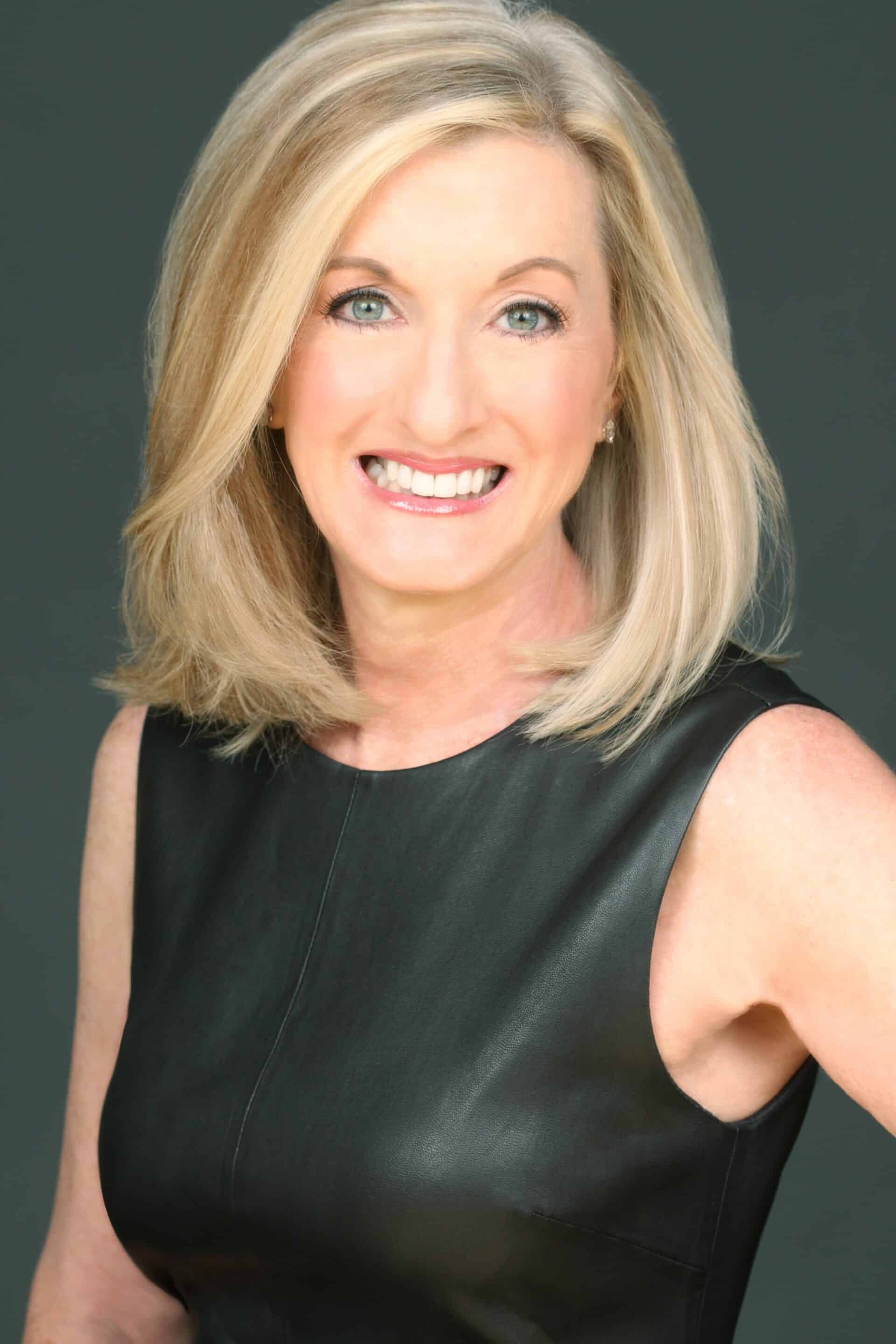
Lisa Gable is a CEO, former US Ambassador, UN Delegate, and author of Wall Street Journal and USA Today Bestseller “Turnaround – How to Change Course When Things Are Going South.” Lisa is recognized worldwide as a turnaround mastermind and innovative businesswoman and started her career in the Reagan administration. You can read more about the author here.
Previous Post

December 19, 2025
What Research Really Shows About Religion and Mental Health
Next Post

February 19, 2026 5 Ways Newsrooms Can Improve Faith Coverage in 2026
Recent Comments
"Conservatives act like secularism is the enemy. A neutral secular government was designed to protect ..."
How Faith and Religion Shaped America’s ..."
"As a Pagan who is beyond tired of the same basic articles every October leading ..."
Rinse, Repeat, Ramadan: The Explainer Trap
"We need to ask ourselves what happens when a large majority of a population can ..."
What Research Really Shows About Religion ..."
"Good advice. I find more meaning and purpose when I reason with historical context. I ..."
Why the Truth Behind Your Holidays ..."
Browse Our Archives
Select a Category Beyond Christmas: Multi-faith Coverage During The Holidays Diversity Faith Amid the Fray: Reporting During Political Turbulence Faith and Inclusion After DEI: Media’s Role in Religious Representation Faith in the Digital Age: Ensuring Accuracy in Emerging Media Reporting Religious Persecution: How Media Can Inform Reports Uncategorized
Select a Month July 2026 March 2026 February 2026 December 2025 November 2025 October 2025 September 2025 August 2025 July 2025 June 2025 May 2025 April 2025 March 2025 February 2025 January 2025 December 2024 November 2024
Follow Us!
TAKE THE
Religious Wisdom Quiz
Which woman was the judge and prophetess who led Israel?
Select your answer to see how you score.
Jael Deborah Miriam Esther
Related posts from Coalition For Faith And Media

5 Ways Newsrooms Can Improve Faith Coverage in...

Why the Truth Behind Your Holidays Still Matters

Headlines of Faith: When Media Gets It Wrong...

TRENDING AT PATHEOS Religion News

Should Churches Endorse Political Candidates?
Amid a highly charged election season, federal court filings last month will...

Surrogacy's $15 Billion Boom Raises Hard Moral Questions
The current surrogacy situation is confusing and fast-evolving. Most of Europe...

Why the Media Only Sees Faith in a...
Faith Beyond the Headlines Faith rarely makes headlines when it is quietly...

Patheos July 2026 Featured Writer: Dr. Joey Cochran
Dr. Joey Cochran is a historian of religion, a General Editor of...

Patheos June 2026 Featured Writer: Dr. James F....
Dr. James F. McGrath holds the Clarence L. Goodwin Chair in New...

How Faith and Religion Shaped America's First 250...
Faith and the Founding: What Media Gets Wrong Religion has shaped America...
view all Religion News blogs
What Are Your Thoughts?leave a comment
Ad-Free & Subscriber Log-In Subscription Support
- About Us
- 2026 Calendar
- Videos
- Podcasts
- Library of World Religions
- Faith In Media Tracker
- Advertise With Us
- Write for Us
- Privacy Policy
- Terms of Service
- Do Not Sell My Data
- Contact Us
- Radiant Digital
- Manage Newsletter Subscriptions
- Unsubscribe From Notifications
- Sitemap
Copyright 2008-2026, Patheos. All rights reserved.
Subscription Support Ad-Free & Subscriber Log-In
Follow Patheos