
BuddhistCatholicContemplativeEvangelicalGeneral ChristianHinduJewishLatter-day SaintMuslimNew VisionsProgressive Christian
Beliefs
- Buddhist
- Catholic
- Contemplative
- Evangelical
- General Christian
- Hindu
- Jewish
- Latter-day Saint
- More Voices
- Muslim
- New Visions
- Pagan
- Progressive Christian
Topics
- Religion News
- Food and Religion
- Sports and Religion
- Religious Art
- Religious Music and Entertainment
- Religious Events
- History and Religion
- Style and Religion
- Politics and Religion
- Women in Religion
- Recreation Outdoors and Religion
- Business Finance and Religion
- Careers Workplace and Religion
- Education and Religion
- Family Parenting and Religion
- Health Fitness and Religion
- Home and Religion
- Relationships and Religion
- Technology and Religion
- Travel and Religion
Columnists
- Buddhist Columnists
- Business Finance and Religion Columnists
- Careers Workplace and Religion Columnists
- Catholic Columnists
- Contemplative Columnists
- Education and Religion Columnists
- Evangelists Columnists
- Family Parenting and Religion Columnists
- General Christian Columnists
- Health Fitness and Religion Columnists
- Hindu Columnists
- History and Religion Columnists
- Home and Religion Columnists
- Jewish Columnists
- More Voices Columnists
- Latter Day Columnists
- Muslim Columnists
- New Visions Columnists
- Nonreligious Columnists
- Pagan Columnists
- Politics and Religion Columnists
- Progressive Columnists
- Recreation Outdoors and Religion Columnists
- Relationships and Religion Columnists
- Religion News Columnists
- Religious Art Columnists
- Religious Events Columnists
- Religious Music and Entertainment Columnists
- Sports and Religion Columnists
- Style and Religion Columnists
- Technology and Religion Columnists
- Travel and Religion Columnists
- Women in Religion Columnists
Resource Library
- 2026 Calendar
- Library of World Religions
- The 100 Most Holy Places on Earth
- Patheos Answers
- Podcasts
- Videos
- Faith Leaders Database
- Anglican Episcopalian
- Bahai
- Baptist
- Buddhism
- Christianity
- Confucianism
- Eastern Orthodoxy
- Hinduism
- Holiness and Pentecostal
- ISKCON
- Islam
- Judaism
- Lutheran
- Methodist
- The Church of Jesus Christ of Latter-day Saints
- New Age
- Paganism
- Presbytarian and Reformed
- Protestantism
- Religion Behind the Scenes
- Roman Catholic
- Scientology
- Shia Islam
- Sikhism
- Sufism
- Sunni Islam
- Taoism
- Zen
- See all religions
Research Tools
 Ad-Free & Subscriber Log-In Subscription Support
Ad-Free & Subscriber Log-In Subscription Support
Follow Patheos 

- Trending:
- Forgiveness
- |
- Marriage
- |
- Consciousness
- |
- Death Penalty
- |
- Election
- |
- Halloween

- Home
- Muslim
- Religion News
- 5 Ways Newsrooms Can Improve Faith Coverage in 2026
5 Ways Newsrooms Can Improve Faith Coverage in 2026
Last updated on: February 19, 2026 at 5:55 pm by Debbie Almontaser
5 Ways Newsrooms Can Improve Faith Coverage in 2026 2026-02-19T17:55:04-05:00 Debbie Almontaser
Patheos Explore the world's faith through different perspectives on religion and spirituality! Patheos has the views of the prevalent religions and spiritualities of the world.
What My Community Taught Me About Faith & Media—and What 2026 Demands of Us

In 2025, the intersection of faith and media could not be separated from the realities facing immigrant communities. | Image created in NanoBanana for Patheos.
As we enter 2026, I find myself thinking less about predictions and more about practice.
What did we actually learn in 2025—on the ground, in classrooms and newsrooms, in faith spaces and community conversations—about how faith and media intersect? And what do we need to do differently now, not in theory, but in the everyday choices that shape public understanding?
For many of us working at the crossroads of faith, education, and storytelling, 2025 was not an abstract year. It was lived. It was messy. It was revealing. And it made one thing unmistakably clear: faith remains deeply present in people’s lives, even when media coverage struggles to engage it honestly or fluently.
This is not a critique for critique’s sake. It’s an invitation—to take stock of what worked, name what didn’t, and commit to practical changes that can move us forward together.
What 2025 Looked Like on the Ground
In 2025, the intersection of faith and media could not be separated from the realities facing immigrant communities.
Across the country, renewed ICE raids disrupted families, workplaces, and neighborhoods. Parents were detained on their way to work. Children came

Across the country, renewed ICE raids disrupted families, workplaces, and neighborhoods. ICE arrests criminal aliens as part of a 3-day targeted enforcement operation in North Texas and Oklahoma. | Image courtesy of U.S. Immigration and Customs Enforcement, Public domain, via Wikimedia Commons.

home to empty houses. Faith institutions—mosques, churches, synagogues, and temples—became emergency hubs overnight, offering legal referrals, food, childcare, and spiritual grounding.
At the same time, expanded travel bans affecting citizens from dozens of countries—many of them Muslim-majority—sent a chilling message far beyond airport terminals. Families were separated. Students were left in limbo. Communities were reminded how quickly policy decisions can translate into fear, isolation, and erasure.
On the ground, faith communities responded with what they have always done: presence. Clergy opened doors. Volunteers organized rapid-response networks. Interfaith coalitions showed up at court hearings and city council meetings. Prayer vigils doubled as teach-ins. Sanctuaries became both literal and symbolic.
Media coverage, however, often struggled to keep pace with human reality. Raids were sometimes reported as statistics rather than trauma. Travel bans were framed as political maneuvers without sufficient attention to their everyday consequences. Faith voices were quoted reactively—after damage was done—rather than consulted proactively as trusted witnesses to what was unfolding.
Visibility Can Still Come at a Cost
One moment in 2025 made this disconnect especially visible to a global audience: the New York City mayoral race involving Zohran Mamdani. What

Zohran K. Mamdani and his wife Rama Duwaji | Image courtesy of NYC Mayor’s Office, CC BY 4.0, via Wikimedia Commons

should have been a substantive debate about policy, governance, and the future of the nation’s largest city, but instead became a flashpoint for unfiltered Islamophobia. Mamdani’s faith was repeatedly weaponized—through dog whistles, mischaracterizations, and outright hostility—often amplified rather than interrogated by media platforms. The vitriol was not confined to fringe spaces; it circulated widely, shaping narratives far beyond New York. For many Muslim Americans watching, the message was chillingly familiar: civic participation can still invite suspicion, and visibility can still come at a cost. On the ground, faith communities rallied in response—not just in defense of one candidate, but in defense of the principle that religious identity should never be treated as disqualifying. Yet much of the coverage struggled to name the harm clearly, missing an opportunity to contextualize how Islamophobia operates in political discourse and why it matters for democratic participation itself.
The disconnect was stark. On the ground, faith was central to survival and solidarity. In coverage, it was too often peripheral.
And yet, when journalists took the time to listen—to document how immigrant families relied on faith communities not just for comfort but for coordination—the reporting shifted. It became more human. More accurate. More accountable.
The lesson of 2025 was unmistakable: you cannot tell the story of immigration in America without telling the story of faith.
Bright Spots
There were moments in 2025 when coverage got it right:
- Journalists who centered lived faith experiences instead of reducing religion to conflict.
- Editors who sought faith-literate sources, especially during moments of grief or crisis.
- Platforms that made room for interfaith solidarity stories, not just spectacle.
When faith was treated as a normal part of the human landscape—rather than a problem to explain or a curiosity to exoticize—the reporting felt fuller, truer, and more humane.
Blind Spots
At the same time, familiar gaps persisted:
- Faith was often mentioned only when controversy erupted, reinforcing the idea that religion exists mainly as a problem—a dynamic made painfully clear during the New York City mayoral race, where Muslim identity was framed as a liability rather than a lived reality, and Islamophobic narratives were too often reported without sufficient challenge or context.
- Coverage leaned heavily on the same spokespersons, flattening internal diversity.
- Religious communities were sometimes framed as monolithic—particularly Muslim, Jewish, and other minoritized faith communities.
Perhaps most tellingly, faith was frequently left out of stories about wellness, education, community care, and recovery—despite the reality that religious institutions are often doing that work every day.
The lesson of 2025 was not that faith disappeared.
It was that the media often didn’t know how to see it.
What We Carry into 2026

Are media systems willing to adapt to report with greater literacy, care, and collaboration?| Image courtesy of Adobe Stock.
As we look ahead, the question is not whether faith belongs in public discourse. The public has already answered that through participation, affiliation, and practice. The real question is whether media systems are willing to adapt—to report with greater literacy, care, and collaboration.
Here are five concrete resolutions for 2026—practical enough for any newsroom, platform, or faith leader to adopt immediately.
Resolution 1: Treat Faith as a Dimension, Not a Beat
Faith should not live only in a siloed “religion section,” if one exists at all. It is a dimension of human life that intersects with education, health, housing, culture, and politics.
In 2026, reporters can ask a simple question during story development:
Is faith shaping this story—even if it’s not the headline?
This shift doesn’t add bias; it adds accuracy.
Resolution 2: Expand the Source List—and Keep It Updated
Too often, faith coverage relies on a short list of “usual voices.” This limits perspective and reinforces narrow narratives.
Newsrooms can:
-
- Build living source databases that reflect gender, race, generation, and theological diversity.
- Include lay leaders, educators, chaplains, and organizers, not only institutional heads.
- Revisit sourcing practices annually to avoid stagnation.
Representation is not a favor—it’s good reporting.
Resolution 3: Invest in Religious Literacy as a Core Skill
Religious literacy is not about belief. It’s about competence.
In 2026, media organizations should treat religious literacy the way they treat data literacy or legal literacy:
-
- Offer short trainings or briefings tied to coverage needs.
- Provide basic guides on terminology, holidays, and internal diversity.
- Encourage reporters to ask informed questions without fear of “getting it wrong.”
When journalists feel equipped, coverage becomes more nuanced—and less reactive.
Resolution 4: Retire Sensationalism as a Default Setting
Conflict will always be part of the news. But sensationalism should not be the lens through which faith is primarily seen.
This means:
-
- Avoiding language that frames religious communities as inherently extreme or suspect.
- Resisting images that visually code faith as “other.”
- Providing historical and social context, not just breaking moments.
Balanced coverage does not sanitize reality—it situates it.
Resolution 5: Build Relationships Before the Crisis
The most responsible faith coverage often happens before something goes wrong.
In 2026, journalists and faith leaders alike can:
-
- Establish relationships outside moments of emergency.
- Participate in off-the-record listening sessions or briefings.
- Clarify expectations around accuracy, attribution, and trust.
Relationships don’t compromise independence; they strengthen understanding.
A Shared Responsibility
Improving faith and media engagement is not solely the job of journalists. Faith leaders also carry responsibility:
- To speak with clarity, not jargon.
- To welcome scrutiny without defensiveness.
- To recognize the power—and limits—of media platforms.
When both sides approach the work with humility and intention, the public benefits.
Looking Ahead
Looking ahead to 2026, the work before us is clear—and urgent.
If faith and media are serious about serving the public, then protecting our immigrant neighbors must be part of the shared ethical framework guiding coverage and collaboration. This does not mean advocacy disguised as reporting. It means refusing narratives that dehumanize. It means naming harm when policy inflicts it. It means remembering that immigration stories are not abstractions—they are about families, faith, fear, and futures.
Newsrooms can commit to:
- Reporting on enforcement actions with context and care, not just speed.
- Including faith leaders and community advocates as primary sources, not afterthoughts.
- Avoiding language that criminalizes entire communities through implication.
- Tracking the long-term impacts of raids and bans—not just the breaking moment.
Faith leaders, in turn, can continue to:
- Offer transparent, grounded perspectives rooted in lived experience.
- Educate congregations about rights, resources, and resilience.
- Partner with journalists before crises escalate, not only after.
Ultimately, protecting immigrant neighbors and combating hate are not only a policy issue. It is a moral test—of our institutions, our storytelling, and our shared commitment to human dignity.
As we move into 2026, may we choose reporting that illuminates rather than obscures, collaboration over silence, and courage over convenience. The stories we tell—and how we tell them—will shape not just public understanding, but who feels safe enough to be seen.
And that responsibility belongs to all of us.
Muslim
Education and Religion
Faith Amid the Fray: Reporting During Political Turbulence
Previous Post

February 4, 2026
Why Faith Coverage Must Show Solutions, Not Just Problems
Next Post

February 26, 2026 Rinse, Repeat, Ramadan: The Explainer Trap
Recent Comments
"Conservatives act like secularism is the enemy. A neutral secular government was designed to protect ..."
How Faith and Religion Shaped America’s ..."
"As a Pagan who is beyond tired of the same basic articles every October leading ..."
Rinse, Repeat, Ramadan: The Explainer Trap
"We need to ask ourselves what happens when a large majority of a population can ..."
What Research Really Shows About Religion ..."
"Good advice. I find more meaning and purpose when I reason with historical context. I ..."
Why the Truth Behind Your Holidays ..."
Browse Our Archives
Select a Category Beyond Christmas: Multi-faith Coverage During The Holidays Diversity Faith Amid the Fray: Reporting During Political Turbulence Faith and Inclusion After DEI: Media’s Role in Religious Representation Faith in the Digital Age: Ensuring Accuracy in Emerging Media Reporting Religious Persecution: How Media Can Inform Reports Uncategorized
Select a Month July 2026 March 2026 February 2026 December 2025 November 2025 October 2025 September 2025 August 2025 July 2025 June 2025 May 2025 April 2025 March 2025 February 2025 January 2025 December 2024 November 2024
Follow Us!
TAKE THE
Religious Wisdom Quiz
What does Hebrews say God will never do?
Select your answer to see how you score.
Fail to keep his promise Leave you or forsake you Forget your work Deny his own
Related posts from Coalition For Faith And Media

Why Faith Coverage Must Show Solutions, Not Just...

Headlines of Faith: When Media Gets It Wrong...
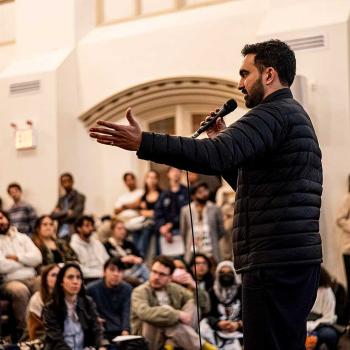
Faith Isn’t Silent: Why Media Must Stop Ignoring...
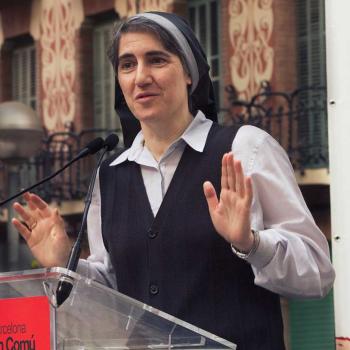
What If Religion Was The Hero In Today’s...
TRENDING AT PATHEOS Religion News

Should Churches Endorse Political Candidates?
Amid a highly charged election season, federal court filings last month will...

Surrogacy's $15 Billion Boom Raises Hard Moral Questions
The current surrogacy situation is confusing and fast-evolving. Most of Europe...

Why the Media Only Sees Faith in a...
Faith Beyond the Headlines Faith rarely makes headlines when it is quietly...

Patheos July 2026 Featured Writer: Dr. Joey Cochran
Dr. Joey Cochran is a historian of religion, a General Editor of...

Patheos June 2026 Featured Writer: Dr. James F....
Dr. James F. McGrath holds the Clarence L. Goodwin Chair in New...

How Faith and Religion Shaped America's First 250...
Faith and the Founding: What Media Gets Wrong Religion has shaped America...
view all Religion News blogs
What Are Your Thoughts?leave a comment
Ad-Free & Subscriber Log-In Subscription Support
- About Us
- 2026 Calendar
- Videos
- Podcasts
- Library of World Religions
- Faith In Media Tracker
- Advertise With Us
- Write for Us
- Privacy Policy
- Terms of Service
- Do Not Sell My Data
- Contact Us
- Radiant Digital
- Manage Newsletter Subscriptions
- Unsubscribe From Notifications
- Sitemap
Copyright 2008-2026, Patheos. All rights reserved.
Subscription Support Ad-Free & Subscriber Log-In
Follow Patheos