
BuddhistCatholicContemplativeEvangelicalGeneral ChristianHinduJewishLatter-day SaintMuslimNew VisionsProgressive Christian
Beliefs
- Buddhist
- Catholic
- Contemplative
- Evangelical
- General Christian
- Hindu
- Jewish
- Latter-day Saint
- More Voices
- Muslim
- New Visions
- Pagan
- Progressive Christian
Topics
- Religion News
- Food and Religion
- Sports and Religion
- Religious Art
- Religious Music and Entertainment
- Religious Events
- History and Religion
- Style and Religion
- Politics and Religion
- Women in Religion
- Recreation Outdoors and Religion
- Business Finance and Religion
- Careers Workplace and Religion
- Education and Religion
- Family Parenting and Religion
- Health Fitness and Religion
- Home and Religion
- Relationships and Religion
- Technology and Religion
- Travel and Religion
Columnists
- Buddhist Columnists
- Business Finance and Religion Columnists
- Careers Workplace and Religion Columnists
- Catholic Columnists
- Contemplative Columnists
- Education and Religion Columnists
- Evangelists Columnists
- Family Parenting and Religion Columnists
- General Christian Columnists
- Health Fitness and Religion Columnists
- Hindu Columnists
- History and Religion Columnists
- Home and Religion Columnists
- Jewish Columnists
- More Voices Columnists
- Latter Day Columnists
- Muslim Columnists
- New Visions Columnists
- Nonreligious Columnists
- Pagan Columnists
- Politics and Religion Columnists
- Progressive Columnists
- Recreation Outdoors and Religion Columnists
- Relationships and Religion Columnists
- Religion News Columnists
- Religious Art Columnists
- Religious Events Columnists
- Religious Music and Entertainment Columnists
- Sports and Religion Columnists
- Style and Religion Columnists
- Technology and Religion Columnists
- Travel and Religion Columnists
- Women in Religion Columnists
Resource Library
- 2026 Calendar
- Library of World Religions
- The 100 Most Holy Places on Earth
- Patheos Answers
- Podcasts
- Videos
- Faith Leaders Database
- Anglican Episcopalian
- Bahai
- Baptist
- Buddhism
- Christianity
- Confucianism
- Eastern Orthodoxy
- Hinduism
- Holiness and Pentecostal
- ISKCON
- Islam
- Judaism
- Lutheran
- Methodist
- The Church of Jesus Christ of Latter-day Saints
- New Age
- Paganism
- Presbytarian and Reformed
- Protestantism
- Religion Behind the Scenes
- Roman Catholic
- Scientology
- Shia Islam
- Sikhism
- Sufism
- Sunni Islam
- Taoism
- Zen
- See all religions
Research Tools
 Ad-Free & Subscriber Log-In Subscription Support
Ad-Free & Subscriber Log-In Subscription Support
Follow Patheos 

- Trending:
- Forgiveness
- |
- Marriage
- |
- Consciousness
- |
- Death Penalty
- |
- Election
- |
- Halloween

- Home
- General Christian
- Religion News
- Faith in the Valley: When Grief, Science, and Hope Meet
Faith in the Valley: When Grief, Science, and Hope Meet
Last updated on: December 19, 2025 at 2:58 pm by Lisa Gable
Faith in the Valley: When Grief, Science, and Hope Meet 2025-12-19T14:58:04-05:00 Lisa Gable
Patheos Explore the world's faith through different perspectives on religion and spirituality! Patheos has the views of the prevalent religions and spiritualities of the world.
Though You Walk Through the Valley of the Shadow of Death, You Will Emerge

For years, our daughter would remind doctors, “My dad is a zebra. You keep treating him like a horse.” | Image courtesy of Ancipistudioz, CC BY-SA 4.0, via Wikimedia Commons.

A Valley No One Is Prepared For
In the past year, I walked through one of the deepest valleys of my life. My husband, Jim, lived with a rare combination of illnesses that left the world’s top specialists searching for answers. For years, our daughter would remind doctors, “My dad is a zebra. You keep treating him like a horse.” It became our shorthand for his life: Jim did not fit any standard medical pattern.
Only recently did we learn just how true that was. A Johns Hopkins physician told us Jim’s case ranked among the 20 to 30 most complex in the entire country. Suddenly, the years of uncertainty made sense—the unpredictable symptoms and the unanswered questions.
After I shared lessons I learned from Jim’s illness and passing, people from around the world reached out. Many were caring for a sick spouse or child, saying goodbye to a parent, or carrying both burdens at once. I was grateful to share how much we leaned on both faith and science—and how each helped keep us going when things were hard.
Your life doesn’t come with a roadmap. Incomprehensible moments show up without warning, shake your routine, and test you emotionally and mentally. That’s why your faith—and the friends who stand with you and trust that God still has a plan—matter so much. They help you stay grounded and guide you through whatever challenge you face next.
Recently, the Faith & Media Initiative hosted a panel called Faith and Flourishing: The Untold Story to address the role of faith in health and wellness. The panel—Lipi Roy, MD, Lynn Swain, and Dr. Justin Dyer—argued that faith and wellness are not separate conversations. They are intertwined in ways research can now measure, communities can feel, and individuals live through daily.

Many faith communities report among the world’s highest levels of life satisfaction. | Image courtesy of Adobe Stock.
Faith Supports Well-Being

Courtesy of the PEW Research Center.
mental health. You experience less loneliness, more happiness, lower suicide and addiction, and stronger relationships.
Believing in something greater than yourself helps you make sense of suffering by providing context and meaning. Prayer, meditation, song, and rituals reduce stress and help you stabilize your emotions. Your church, temple, or synagogue can give you a sense of belonging.
Faith, or the act of letting go and giving your anxiety to someone else to “hold,” can strengthen immune function and improve stress responses. These benefits do not replace evidence-based medical interventions, but they do help you endure with greater emotional strength.
The reality is that when you and your family are experiencing illness or grief, these patterns are not abstract. It is your life.
The Media Is Missing the Full Story
Unfortunately, many times, social media and movies only sensationalize the most tragic moments and negative influences of a faith community–treating negative experiences as the norm rather than the exception. The good news is that, unlike what you see on TV, a study of 22 countries and 182K participants found that religious connections are associated with lower loneliness and improved mental health.
This imbalance matters. When the benefits of faith are left out of the narrative:
-
- Young people see religion as irrelevant or strange
- The public misses insights into how people cope
- A significant source of resilience goes unrecognized

Martin Sheen speaks openly about the role of faith in his recovery and mental health. | Image courtesy of Wikimedia Commons.
Yet the global picture tells a different story. Many faith communities report among the world’s highest levels of life satisfaction. Public figures like Martin Sheen and Demi Lovato are increasingly speaking openly about the role of faith in their recovery and mental health. Interfaith identities—people drawing wisdom from more than one tradition—are becoming more common. A close friend of mine is a devoted Christian who also draws strength from Buddhist philosophy; for her, the two reinforce one another.
Faith is not a relic of the past. It remains an active, force in the lives of billions. Let’s focus our media stories on that.
What Flourishing Really Looks Like
Human flourishing may be one of the most misinterpreted phrases. It is not about constant happiness. It is about having the foundation to face life’s complex moments with strength and meaning.
A connection—through prayer, community, or shared rituals—reduces fear and builds trust. Many spiritual practices stimulate a calm, grounded state that supports both emotional and physical healing.
Faith also helps you interpret pain. It does not eliminate your suffering or remove the emotion of grief, but it offers you perspective and hope. In moments when your life feels unfair, your faith can provide context.
Jim’s Story: When Research Becomes a Personal Journey
Our family’s journey reflects these truths.
Jim’s illness tested us in ways we could never have imagined. There were multiple times when his weight dropped below 100 pounds. We

Courage and resilience can be side effects of a strong faith. | Image courtesy of Adobe Stock.
could not ignore or hide our reality. Yet even during the most challenging stretches, Jim focused on purpose. He continued launching companies, mentoring others, and showing up for our family with humor and love.
His resilience was not a refusal to accept reality—it was courage. It was a choice to live fully, despite mental exhaustion and his physical disabilities.
Faith played a quiet but powerful role in that resilience. It gave our family terms for fear and hope. It brought friends and neighbors into our lives in steady, meaningful ways. It reminded us that hardship was part of a bigger medical research story.
After Jim’s passing, we have chosen to donate his medical records to researchers training AI systems to better diagnose and predict rare diseases. We have learned that Jim’s data may help future families gain answers more quickly. In that way, Jim continues the pattern of his life—contributing quietly and generously to a better future for others.
In the same way, the Biblical story of Job helped provide hope for millions throughout the centuries; Jim’s and others’ complex diseases may soon do the same for hundreds of others through the deployment of AI.
A Better Way to Tell the Story of Faith
If we want to understand human flourishing, the major mass media’s storytelling needs to change.
Good reporting can:
-
- Highlight research, not stereotypes
- Show the full spectrum of faith experiences
- Recognize the central role of faith-based community
- Include the voices of caregivers, practitioners, and families
- Reflect that three-quarters of the world identifies with a faith tradition
Leaving faith out of public discussion means leaving out a significant part of what helps people survive challenging times.
A Closing Reflection

Faith gave our family terms for fear and hope. It brought friends and neighbors into our lives in steady, meaningful ways. It reminded us that hardship was part of a bigger medical research story. | AI image from Adobe Stock.
Walking through the valley of death with Jim changed my daughter and me. Suffering and grief may have modified our reactions and perspectives, but we didn’t disappear. We are still here. Living and learning from the love we share. Faith does not promise us an easy path—only a meaningful one.
Psalm 23 holds a line that carried us through many dark nights: “Even though I walk through the valley of the shadow of death, I will fear no evil; for You are with me.”
Every day for the past two years, these words assured us that we would never walk alone. Although we may stumble, our faith gives us just enough light to take the next step.
Jim’s life—and the knowledge his medical history provides to the undiagnosed community—reminds me that faith and science are not rivals. They work together to reveal the truth and enable progress that benefits others.
And even in the shadow of his death, that truth carries us forward.
SEE MORE:
Faith and Flourishing: Why Media Must Tell the Wellness Story
General Christian
Health, Fitness and Religion
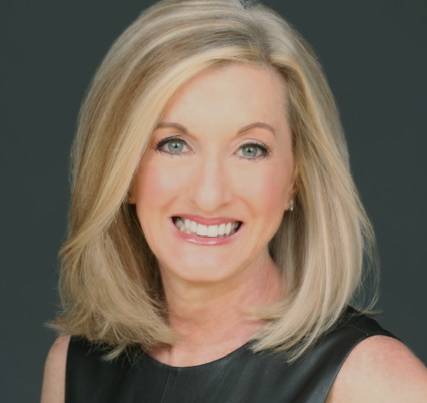
About Lisa Gable
Lisa Gable is the WSJ and USA Today bestselling and award-winning author of the book, Turnaround: How to Change Course When Things are Going South and is recognized worldwide as a turnaround mastermind. As CEO of several organizations, and as a former Presidential appointee, US Ambassador, UN Delegate, and advisor to Fortune 500 companies, Lisa has orchestrated and executed the successful turnarounds of well-known private and public organizations in all industries and sectors. She is highly regarded in business, political, and philanthropic circles for her ability to tackle difficult issues directly and with discipline and diplomacy. Lisa is the Chairperson of World in 2050, the futuristic think tank of the Diplomatic Courier Global Affairs Media Network and a Distinguished Fellow at the Hunt Institute for Engineering and Humanity, at SMU Lyle School of Engineering in Dallas, Texas. Most recently, Lisa served as the CEO of FARE, the world’s largest funder of food allergy research where she secured $100M in commitments over 3 years. Prior to leading FARE, she was a senior advisor at PepsiCo and President of the Healthy Weight Commitment Foundation, a CEO-driven national initiative aimed at helping to reduce obesity. In 2004, she was appointed by President George W. Bush as US Ambassador and Commissioner General to the 2005 Aichi World EXPO. Gable is the first woman in World’s Fair’s 170-year history to direct the U.S. Pavilion, a 100 percent non-federally funded $33.7 million operation. You can read more about the author here.
Previous Post
December 6, 2025
Why Media Must Get Smarter About Holiday Faith Coverage
Next Post
December 19, 2025 What Research Really Shows About Religion and Mental Health
Recent Comments
"Conservatives act like secularism is the enemy. A neutral secular government was designed to protect ..."
How Faith and Religion Shaped America’s ..."
"As a Pagan who is beyond tired of the same basic articles every October leading ..."
Rinse, Repeat, Ramadan: The Explainer Trap
"We need to ask ourselves what happens when a large majority of a population can ..."
What Research Really Shows About Religion ..."
"Good advice. I find more meaning and purpose when I reason with historical context. I ..."
Why the Truth Behind Your Holidays ..."
Browse Our Archives
Select a Category Beyond Christmas: Multi-faith Coverage During The Holidays Diversity Faith Amid the Fray: Reporting During Political Turbulence Faith and Inclusion After DEI: Media’s Role in Religious Representation Faith in the Digital Age: Ensuring Accuracy in Emerging Media Reporting Religious Persecution: How Media Can Inform Reports Uncategorized
Select a Month July 2026 March 2026 February 2026 December 2025 November 2025 October 2025 September 2025 August 2025 July 2025 June 2025 May 2025 April 2025 March 2025 February 2025 January 2025 December 2024 November 2024
Follow Us!
TAKE THE
Religious Wisdom Quiz
What is the small, portable cross worn as a sign of faith and blessing called?
Select your answer to see how you score.
Crucifix Chalice Tabernacle Mitre
Related posts from Coalition For Faith And Media

Why the Media Only Sees Faith in a...
How Faith and Religion Shaped America's First 250...
Rinse, Repeat, Ramadan: The Explainer Trap

5 Ways Newsrooms Can Improve Faith Coverage in...
TRENDING AT PATHEOS Religion News

Should Churches Endorse Political Candidates?
Amid a highly charged election season, federal court filings last month will...

Surrogacy's $15 Billion Boom Raises Hard Moral Questions
The current surrogacy situation is confusing and fast-evolving. Most of Europe...

Why the Media Only Sees Faith in a...
Faith Beyond the Headlines Faith rarely makes headlines when it is quietly...

Patheos July 2026 Featured Writer: Dr. Joey Cochran
Dr. Joey Cochran is a historian of religion, a General Editor of...

Patheos June 2026 Featured Writer: Dr. James F....
Dr. James F. McGrath holds the Clarence L. Goodwin Chair in New...

How Faith and Religion Shaped America's First 250...
Faith and the Founding: What Media Gets Wrong Religion has shaped America...
view all Religion News blogs
What Are Your Thoughts?leave a comment
Ad-Free & Subscriber Log-In Subscription Support
- About Us
- 2026 Calendar
- Videos
- Podcasts
- Library of World Religions
- Faith In Media Tracker
- Advertise With Us
- Write for Us
- Privacy Policy
- Terms of Service
- Do Not Sell My Data
- Contact Us
- Radiant Digital
- Manage Newsletter Subscriptions
- Unsubscribe From Notifications
- Sitemap
Copyright 2008-2026, Patheos. All rights reserved.
Subscription Support Ad-Free & Subscriber Log-In
Follow Patheos