
BuddhistCatholicContemplativeEvangelicalGeneral ChristianHinduJewishLatter-day SaintMuslimNew VisionsProgressive Christian
Beliefs
- Buddhist
- Catholic
- Contemplative
- Evangelical
- General Christian
- Hindu
- Jewish
- Latter-day Saint
- More Voices
- Muslim
- New Visions
- Pagan
- Progressive Christian
Topics
- Religion News
- Food and Religion
- Sports and Religion
- Religious Art
- Religious Music and Entertainment
- Religious Events
- History and Religion
- Style and Religion
- Politics and Religion
- Women in Religion
- Recreation Outdoors and Religion
- Business Finance and Religion
- Careers Workplace and Religion
- Education and Religion
- Family Parenting and Religion
- Health Fitness and Religion
- Home and Religion
- Relationships and Religion
- Technology and Religion
- Travel and Religion
Columnists
- Buddhist Columnists
- Business Finance and Religion Columnists
- Careers Workplace and Religion Columnists
- Catholic Columnists
- Contemplative Columnists
- Education and Religion Columnists
- Evangelists Columnists
- Family Parenting and Religion Columnists
- General Christian Columnists
- Health Fitness and Religion Columnists
- Hindu Columnists
- History and Religion Columnists
- Home and Religion Columnists
- Jewish Columnists
- More Voices Columnists
- Latter Day Columnists
- Muslim Columnists
- New Visions Columnists
- Nonreligious Columnists
- Pagan Columnists
- Politics and Religion Columnists
- Progressive Columnists
- Recreation Outdoors and Religion Columnists
- Relationships and Religion Columnists
- Religion News Columnists
- Religious Art Columnists
- Religious Events Columnists
- Religious Music and Entertainment Columnists
- Sports and Religion Columnists
- Style and Religion Columnists
- Technology and Religion Columnists
- Travel and Religion Columnists
- Women in Religion Columnists
Resource Library
- 2026 Calendar
- Library of World Religions
- The 100 Most Holy Places on Earth
- Patheos Answers
- Podcasts
- Videos
- Faith Leaders Database
- Anglican Episcopalian
- Bahai
- Baptist
- Buddhism
- Christianity
- Confucianism
- Eastern Orthodoxy
- Hinduism
- Holiness and Pentecostal
- ISKCON
- Islam
- Judaism
- Lutheran
- Methodist
- The Church of Jesus Christ of Latter-day Saints
- New Age
- Paganism
- Presbytarian and Reformed
- Protestantism
- Religion Behind the Scenes
- Roman Catholic
- Scientology
- Shia Islam
- Sikhism
- Sufism
- Sunni Islam
- Taoism
- Zen
- See all religions
Research Tools
 Ad-Free & Subscriber Log-In Subscription Support
Ad-Free & Subscriber Log-In Subscription Support
Follow Patheos 

- Trending:
- Forgiveness
- |
- Marriage
- |
- Consciousness
- |
- Death Penalty
- |
- Election
- |
- Halloween

- Home
- Muslim
- Religion News
- Can Tech And Media Get Faith Right In AI Revolution?
Can Tech And Media Get Faith Right In AI Revolution?
Last updated on: August 25, 2025 at 2:05 pm by Debbie Almontaser
Can Tech And Media Get Faith Right In AI Revolution? 2025-08-25T14:05:57-05:00 Debbie Almontaser
Patheos Explore the world's faith through different perspectives on religion and spirituality! Patheos has the views of the prevalent religions and spiritualities of the world.

From AI-generated sermons to virtual prayer rooms, faith-based gaming to augmented reality pilgrimages, spiritual themes are entering these new spaces at a breathtaking pace. | Photo by Michelangelo Buonarroti of Pexels.
Faith in the Digital Age: Ensuring Accuracy in Emerging Media
In today’s world, we are witnessing a digital revolution that is touching every corner of our lives—how we learn, how we connect, how we express ourselves. Artificial intelligence, immersive gaming, and digital storytelling platforms are not just reshaping entertainment or business; they are reshaping how we experience culture, spirituality, and community. Faith, once confined to physical spaces like mosques, churches, temples, and synagogues, is now finding its way into the fabric of the digital world.
From AI-generated sermons to virtual prayer rooms, faith-based gaming to augmented reality pilgrimages, spiritual themes are entering these new spaces at a breathtaking pace. And while this presents incredible opportunities, it also brings serious risks—particularly when it comes to accuracy, respect, and authentic representation.
If we want the next generation to encounter faith online in a way that nurtures understanding rather than distorting it, we must act now. Faith leaders, media professionals, educators, and tech innovators all have a role to play. It is not enough for faith to simply be present in digital spaces—it must be represented with care, depth, and truth.
Accuracy in AI: Stewarding Sacred Knowledge
Artificial intelligence is now writing articles, answering religious questions, and even generating sermons.
But AI doesn’t inherently know sacredness. It doesn’t intuit nuance. It doesn’t understand that a verse from scripture carries centuries of scholarship, cultural context, and lived human experience.
This is where faith leaders and media professionals must step in. We must advocate for partnerships between tech companies and authentic scholars across diverse traditions.
We must call for advisory boards—composed not just of engineers, but of theologians, ethicists, and community leaders—who can guide how AI handles sacred texts and spiritual topics.
We need AI models that are trained not only on vast data, but on reverence for what they carry.
Accuracy isn’t a luxury when it comes to faith—it is a responsibility.
Games That Get It Right: Shaping the Next Generation’s Imagination
In the world of immersive gaming and interactive storytelling, faith themes are often sprinkled in—but without the care they deserve.
Too often, we see stereotypes reinforced, traditions trivialized, or sacred symbols used carelessly as exotic “props.”
Problematic Games: Laced with Stereotypes and Misrepresentation

Games like Journey offer a subtle, almost spiritual experience without reducing any one tradition. | Image created in Dalle for Patheos.
Muslim Massacre (2008) is a stark example. This amateur game, subtitled The Game of Modern Religious Genocide, tasked players with killing as many Muslims as possible, including civilians and religious figures. The game’s creator claimed it was satirical, but it was widely condemned as Islamophobic and inciting violence against Muslims.
Mainstream titles have also perpetuated harmful stereotypes. The Call of Duty franchise has faced criticism for depicting Middle Eastern characters predominantly as terrorists, reinforcing the narrative that Arabs and Muslims are inherently violent.
Similarly, IS Defense (2016) places players in the role of a NATO gunner defending Europe from an invading Islamic State force. While aiming to portray a fictional scenario, the game has been criticized for its simplistic portrayal of Muslims as aggressors, lacking nuance and contributing to Islamophobic sentiments.
These portrayals not only misrepresent the diversity and richness of Muslim cultures but also contribute to real-world harmful prejudice and misunderstanding.
The Solution: Authentic and Respectful Representation
However, the gaming industry is beginning to recognize the importance of accurate and respectful representation. Assassin’s Creed Mirage (2023) by Ubisoft is a notable example. Set in 9th-century Baghdad, the game immerses players in the Islamic Golden Age, portraying Muslim characters with depth and authenticity. The developers consulted historians and cultural experts to ensure accurate depictions of the era’s architecture, language, and societal norms.
Indie games are also making strides. Titles like 1979 Revolution: Black Friday offer nuanced narratives that explore the complexities of political and religious identities in Muslim-majority countries, moving beyond one-dimensional portrayals.
Moving Forward: Collaboration and Cultural Sensitivity
To foster a more inclusive gaming landscape, collaboration between developers and Muslim communities is essential. This includes:
- Consulting Cultural Experts: Engaging scholars and community leaders to provide insights into Islamic traditions and cultures.
- Diverse Development Teams: Encouraging diversity within game development teams to bring varied perspectives and experiences.
- Community Feedback: Actively seeking feedback from Muslim gamers to understand their perspectives and experiences.
By embracing these practices, the gaming industry can move toward more accurate and respectful representations, enriching the gaming experience for all players.
Yet there are bright spots. Games like Journey offer a subtle, almost spiritual experience without reducing any one tradition. Faith-based games like That Dragon, Cancer explore grief, prayer, and hope with heartbreaking honesty. These examples show that it can be done—and done beautifully.
We need more creators who engage faith traditions not for sensationalism, but for storytelling that honors the human yearning for meaning.
Developers must consult with faith communities, embed research into their creative processes, and recognize that getting it right isn’t just about “accuracy”—it’s about building empathy and belonging.
Virtual Spaces, Real Belief: Nurturing Digital Worship
The pandemic accelerated the rise of virtual faith spaces—mosques live-streaming Jumu’ah prayers, churches hosting worship in Virtual Reality, Buddhist sanghas gathering on Zoom, and synagogues holding virtual Shabbat services.
While virtual spaces will never fully replace the power of being together in the same room, engaging in social interactions, they are real spaces of belief, hope, and healing for millions.
And they are here to stay.
If so, we must ask:
Are these digital faith communities being designed with the richness of real-world practices in mind?
Are they accessible, inclusive, and reflective of the deep diversity within religious traditions? Do they elevate the human factor?
It is not enough to merely “stream” worship services. We must think deeply about how the sacred is translated into digital architectures, about how rituals adapt when mediated through screens, and about how to maintain authenticity even in pixels.
Interfaith Potential vs. Digital Silos: Bridging, Not Dividing
One of the most beautiful potentials of digital media is the ability to foster interfaith engagement—bringing together voices across traditions that might never meet in the offline world.

We must be intentional about creating digital experiences that invite curiosity, not caricature. | Photo by Jopwell of Pexels.
But there’s a danger, too: digital silos.
Algorithms reward outrage and polarization. Online, people can easily end up consuming only what they already believe, encountering other faiths only through caricatures.
We must be intentional about creating digital experiences that invite curiosity, not caricature.
Storytelling that shows the richness and internal diversity of every tradition. Platforms that elevate dialogues across faiths, not just monologues within them.
Imagine a future where a young Muslim girl stumbles upon a beautifully crafted game exploring Sikh spirituality—and feels a sense of kinship.
Or where a Christian boy in a rural town logs into a VR experience of Ramadan in Cairo—and comes away in awe.
That is the future we must work toward.
Media’s Role: Responsibility Beyond “Content”
Finally, we must speak frankly:
Media platforms, developers, and content creators have a moral responsibility when they engage with matters of faith.
Faith is not just “content.” It is identity. It is history. It is resilience.
Getting it wrong doesn’t just misinform—it can wound.
Platforms must build better fact-checking mechanisms for religious content, just as they have (belatedly) begun to do for health and political information.
Creators must practice cultural humility, seeking context, mentorship, and collaboration before creating works that touch on sacred stories.
And as consumers, we must demand better. We must support the creators who get it right—and hold accountable those who harm.
Conclusion: Building a Future of Sacred Storytelling
We stand at a crossroads.
The digital age will either flatten faith into stereotypes—or elevate it into new forms of understanding and wonder.
It will either erase complexity—or honor it.
It all depends on what we do now.
It depends on how courageously faith leaders, media innovators, and everyday believers collaborate to shape the digital landscape.
It depends on whether we choose shortcuts—or choose care.
Faith deserves better than to be an afterthought in the future we are building.
It deserves accuracy. It deserves reverence.
And above all, it deserves to be a bridge—not a barrier—between human hearts.
Let us step forward, together, to build a digital age where faith is not just present—but present with dignity.
Muslim
Technology and Religion
Faith in the Digital Age: Ensuring Accuracy in Emerging Media
About Debbie Almontaser
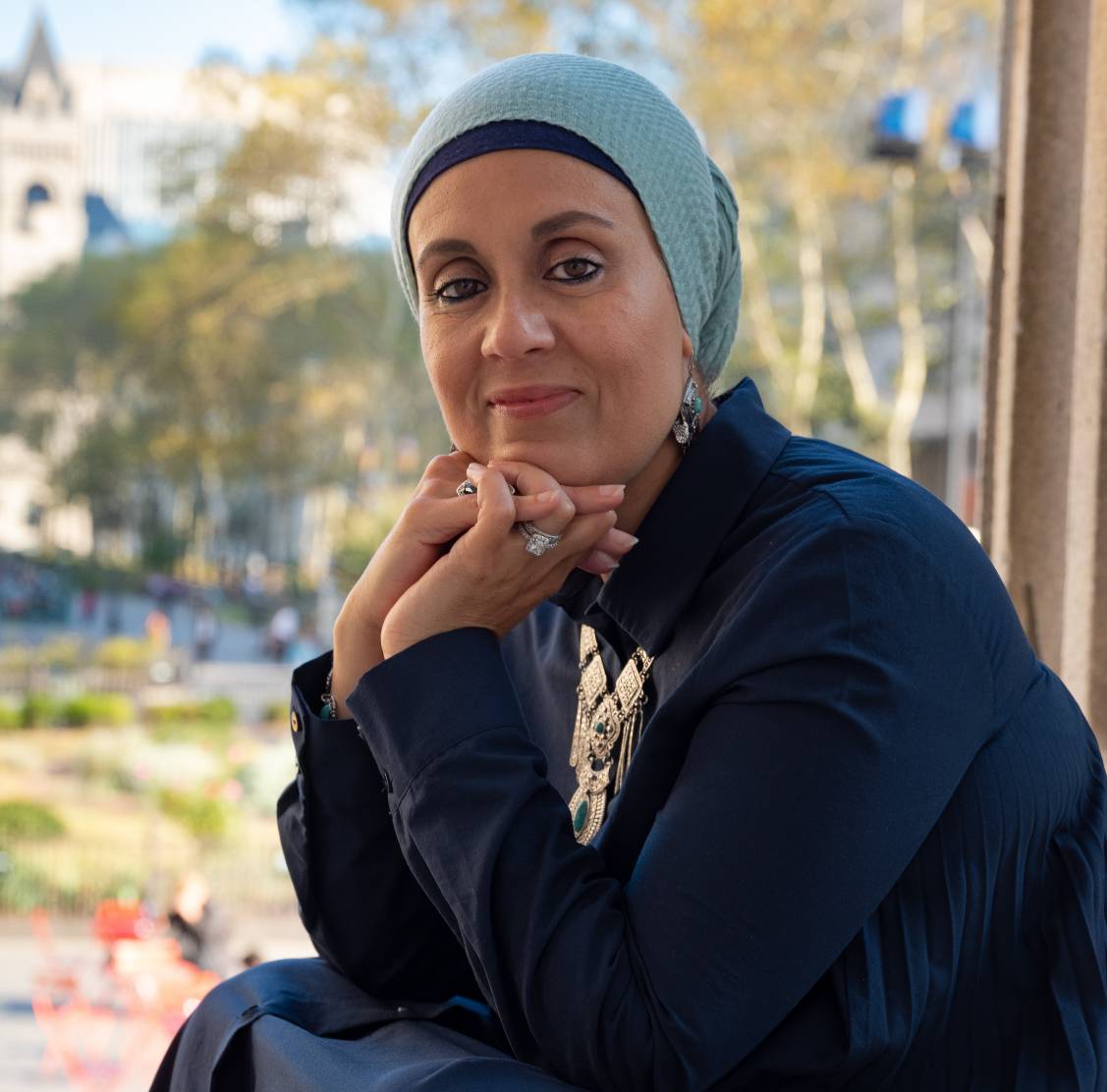
Dr. Debbie Almontaser is an internationally recognized educator, speaker, author, and advocate for cross-cultural understanding. As the Founder and CEO of Bridging Cultures Group, she is a respected community leader dedicated to promoting diversity and inclusivity. Over her extensive 25-year career in the NYC Public School System, Dr. Almontaser has held various roles, including special education teacher, literacy trainer, multicultural specialist, and diversity advisor. Notably, she established the Khalil Gibran International Academy in Brooklyn, NY, fostering an environment of cross-cultural understanding among students. You can read more about the author here.
Previous Post

April 28, 2025
Pluralism Shines Bright in the Heart of Times Square
Next Post

May 16, 2025 Islamic Ethics Call Leaders to Serve, Not Rule
Recent Comments
"Conservatives act like secularism is the enemy. A neutral secular government was designed to protect ..."
How Faith and Religion Shaped America’s ..."
"As a Pagan who is beyond tired of the same basic articles every October leading ..."
Rinse, Repeat, Ramadan: The Explainer Trap
"We need to ask ourselves what happens when a large majority of a population can ..."
What Research Really Shows About Religion ..."
"Good advice. I find more meaning and purpose when I reason with historical context. I ..."
Why the Truth Behind Your Holidays ..."
Browse Our Archives
Select a Category Beyond Christmas: Multi-faith Coverage During The Holidays Diversity Faith Amid the Fray: Reporting During Political Turbulence Faith and Inclusion After DEI: Media’s Role in Religious Representation Faith in the Digital Age: Ensuring Accuracy in Emerging Media Reporting Religious Persecution: How Media Can Inform Reports Uncategorized
Select a Month July 2026 March 2026 February 2026 December 2025 November 2025 October 2025 September 2025 August 2025 July 2025 June 2025 May 2025 April 2025 March 2025 February 2025 January 2025 December 2024 November 2024
Follow Us!
TAKE THE
Religious Wisdom Quiz
Who had Samson's hair cut?
Select your answer to see how you score.
Micah Medad Jezebel Delilah
Related posts from Coalition For Faith And Media

Why the Media Only Sees Faith in a...
Rinse, Repeat, Ramadan: The Explainer Trap

Why Faith Coverage Must Show Solutions, Not Just...

Why the Truth Behind Your Holidays Still Matters
TRENDING AT PATHEOS Religion News

Should Churches Endorse Political Candidates?
Amid a highly charged election season, federal court filings last month will...

Surrogacy's $15 Billion Boom Raises Hard Moral Questions
The current surrogacy situation is confusing and fast-evolving. Most of Europe...

Why the Media Only Sees Faith in a...
Faith Beyond the Headlines Faith rarely makes headlines when it is quietly...

Patheos July 2026 Featured Writer: Dr. Joey Cochran
Dr. Joey Cochran is a historian of religion, a General Editor of...

Patheos June 2026 Featured Writer: Dr. James F....
Dr. James F. McGrath holds the Clarence L. Goodwin Chair in New...

How Faith and Religion Shaped America's First 250...
Faith and the Founding: What Media Gets Wrong Religion has shaped America...
view all Religion News blogs
What Are Your Thoughts?leave a comment
Ad-Free & Subscriber Log-In Subscription Support
- About Us
- 2026 Calendar
- Videos
- Podcasts
- Library of World Religions
- Faith In Media Tracker
- Advertise With Us
- Write for Us
- Privacy Policy
- Terms of Service
- Do Not Sell My Data
- Contact Us
- Radiant Digital
- Manage Newsletter Subscriptions
- Unsubscribe From Notifications
- Sitemap
Copyright 2008-2026, Patheos. All rights reserved.
Subscription Support Ad-Free & Subscriber Log-In
Follow Patheos