
BuddhistCatholicContemplativeEvangelicalGeneral ChristianHinduJewishLatter-day SaintMuslimNew VisionsProgressive Christian
Beliefs
- Buddhist
- Catholic
- Contemplative
- Evangelical
- General Christian
- Hindu
- Jewish
- Latter-day Saint
- More Voices
- Muslim
- New Visions
- Pagan
- Progressive Christian
Topics
- Religion News
- Food and Religion
- Sports and Religion
- Religious Art
- Religious Music and Entertainment
- Religious Events
- History and Religion
- Style and Religion
- Politics and Religion
- Women in Religion
- Recreation Outdoors and Religion
- Business Finance and Religion
- Careers Workplace and Religion
- Education and Religion
- Family Parenting and Religion
- Health Fitness and Religion
- Home and Religion
- Relationships and Religion
- Technology and Religion
- Travel and Religion
Columnists
- Buddhist Columnists
- Business Finance and Religion Columnists
- Careers Workplace and Religion Columnists
- Catholic Columnists
- Contemplative Columnists
- Education and Religion Columnists
- Evangelists Columnists
- Family Parenting and Religion Columnists
- General Christian Columnists
- Health Fitness and Religion Columnists
- Hindu Columnists
- History and Religion Columnists
- Home and Religion Columnists
- Jewish Columnists
- More Voices Columnists
- Latter Day Columnists
- Muslim Columnists
- New Visions Columnists
- Nonreligious Columnists
- Pagan Columnists
- Politics and Religion Columnists
- Progressive Columnists
- Recreation Outdoors and Religion Columnists
- Relationships and Religion Columnists
- Religion News Columnists
- Religious Art Columnists
- Religious Events Columnists
- Religious Music and Entertainment Columnists
- Sports and Religion Columnists
- Style and Religion Columnists
- Technology and Religion Columnists
- Travel and Religion Columnists
- Women in Religion Columnists
Resource Library
- 2026 Calendar
- Library of World Religions
- The 100 Most Holy Places on Earth
- Patheos Answers
- Podcasts
- Videos
- Faith Leaders Database
- Anglican Episcopalian
- Bahai
- Baptist
- Buddhism
- Christianity
- Confucianism
- Eastern Orthodoxy
- Hinduism
- Holiness and Pentecostal
- ISKCON
- Islam
- Judaism
- Lutheran
- Methodist
- The Church of Jesus Christ of Latter-day Saints
- New Age
- Paganism
- Presbytarian and Reformed
- Protestantism
- Religion Behind the Scenes
- Roman Catholic
- Scientology
- Shia Islam
- Sikhism
- Sufism
- Sunni Islam
- Taoism
- Zen
- See all religions
Research Tools
 Ad-Free & Subscriber Log-In Subscription Support
Ad-Free & Subscriber Log-In Subscription Support
Follow Patheos 

- Trending:
- Forgiveness
- |
- Marriage
- |
- Consciousness
- |
- Death Penalty
- |
- Election
- |
- Halloween

- Home
- Muslim
- Religion News
- Sacred to Sold: The Commercialization Of Religious Holidays
Sacred to Sold: The Commercialization Of Religious Holidays
Last updated on: January 14, 2025 at 9:59 am by Debbie Almontaser
Sacred to Sold: The Commercialization Of Religious Holidays 2025-01-14T09:59:23-05:00 Debbie Almontaser
Patheos Explore the world's faith through different perspectives on religion and spirituality! Patheos has the views of the prevalent religions and spiritualities of the world.

The media has played a pivotal role in turning spiritual occasions into large-scale commercial events. | Image by Jill Wellington from Pixabay
What began with Christmas decorations, Black Friday sales, and massive retail promotions has now expanded to other religious holidays, such as Hanukkah and Ramadan, leading to the increasing commercialization of these sacred observances in recent years. The media has played a pivotal role in this phenomenon, turning spiritual occasions into large-scale commercial events.
From Religious Tradition to Retail Extravaganza: The Evolution of Christmas
For decades, Christmas was primarily a religious celebration for Christians, centered around family gatherings, church services, and acts of charity. However, with the rise of mass media in the

Photo by Jill Wellington.
In the 20th century, especially on television, Christmas began to take on a more commercialized nature.
The introduction of Black Friday sales, Christmas shopping commercials, and widespread advertising campaigns promoting Christmas decorations and gifts created an economic frenzy. Retailers, recognizing the holiday’s commercial potential, capitalized on the festive spirit, creating a booming retail market that spans several months and generates billions of dollars annually.
Media outlets, in turn, flooded homes with images of idyllic Christmas scenes, enhancing the emotional connection to gift-giving, decorations, and consumerism.The media’s influence on Christmas set a precedent that would be mirrored in other religious communities.
Hanukkah’s Transformation: A Response to Christmas
In recent years, Jewish communities, traditionally focused on religious observance during Hanukkah, have embraced the commercialization of the holiday.
The once-modest celebration has expanded into an extensive marketing campaign that includes special Hanukkah-themed products, lavish displays, and social media promotions.
In 2020, a report by the National Retail Federation estimated that Hanukkah-related spending in the U.S. alone reached over $1 billion, up from just $400 million a few years ago.

Photo by RDNE Stock project
The media plays a key role in this commercialization, with ads showcasing Hanukkah decorations, themed products, and even exclusive holiday sales. As Jewish communities around the world embrace the holiday’s expanded commercial aspects, media outlets continuously encourage consumers to partake in a more secular version of the celebration, complete with the same consumer-driven motivations seen in Christmas promotions.
Many Jewish families have embraced the commercialization of Hanukkah, often to ensure their children don’t feel left out during the Christmas season. This adaptation helps Jewish children feel included and maintain their cultural identity amidst the dominant Christmas celebrations.
Historically, Hanukkah was a minor Jewish holiday. However, in the U.S., its prominence has grown, partly as a response to Christmas. Jewish parents began emphasizing Hanukkah traditions, such as gift-giving, to provide their children with a festive experience parallel to that of their Christian peers. This approach aimed to prevent feelings of exclusion and to strengthen Jewish identity.
Additionally, the adoption of practices like the “Hanukkah bush,” akin to a Christmas tree, emerged as a way for Jewish families to partake in the seasonal festivities without directly celebrating Christmas. This blending of traditions reflects an effort to balance cultural integration with the preservation of religious identity.
In essence, the commercialization of Hanukkah in the U.S. serves as a means for Jewish families to ensure their children feel included during the holiday season, while also reinforcing their cultural and religious identity.
Ramadan and Eid: New Frontiers in Holiday Consumerism
Muslims are also not immune to the growing trend of holiday commercialization.
Traditionally, Ramadan, a sacred month of fasting and reflection, was largely devoid of any consumer-driven focus. However, in the last decade, the commercial aspect of Ramadan and the Eid celebrations has grown exponentially, heavily influenced by the media’s portrayal of the holiday. Retailers now run special Ramadan sales, focusing on products like clothing, food, and home
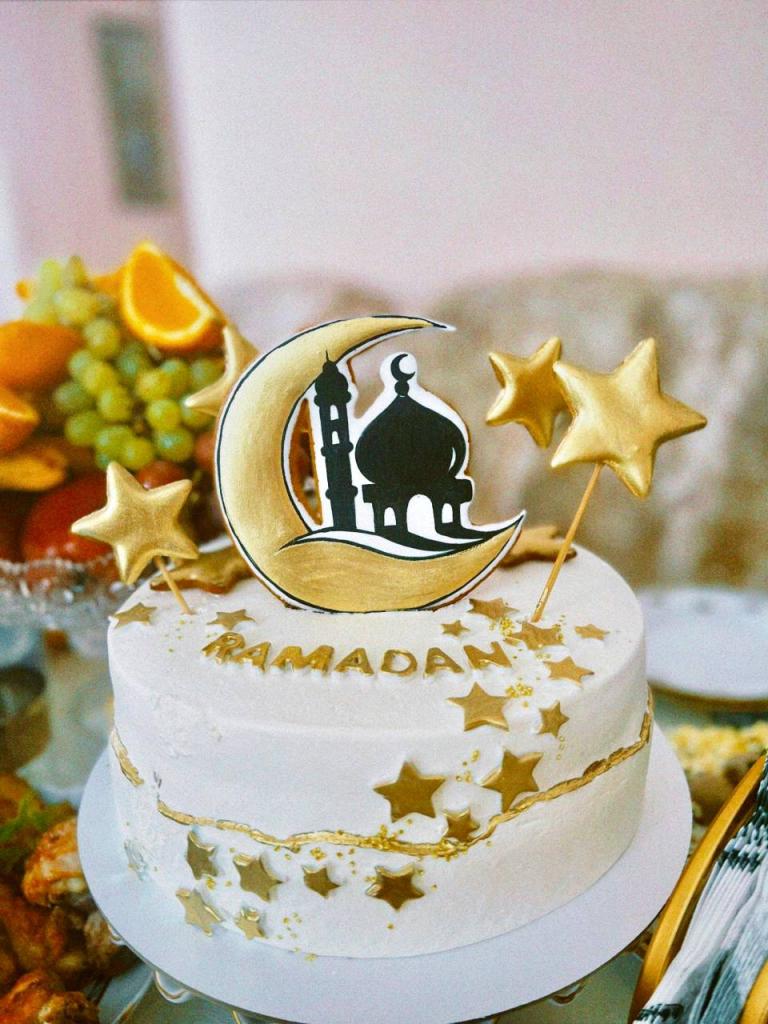
Photo by Maryam Kamavova.
decor, often tied to the values of generosity and giving associated with the season.
Ramadan, once focused on spiritual observance, has become a major retail event in Muslim-majority countries and even within Muslim communities in the West. Eid, which marks the end of Ramadan, has also experienced a surge in commercialization, with major retail stores featuring promotional ads for Eid-themed products, from clothing to gifts, often running alongside advertisements for discounts, special sales, and luxury items.
This commercialization phenomena has been taking place in my own family for the last six years to make my grandchildren feel that their holidays are just as festive and fun to maintain a healthy Muslim identity. My daughter goes through a dozen online stores for the latest indoor and outdoor decorations, the latest books on Ramadan and Eid, as well as Ramadan activities to make the 29-30 days of Ramdan fun for her children. We even now have a wide selection of Ramadan and Eid songs to play throughout the month.
A couple of years ago, my daughter tugged on my heartstrings to buy her kids an activity calendar with a daily draw that had an activity note for the day. This activity calendar was not cheap, but it was worth seeing my grandchildren’s faces light up when it came out on the first day of Ramadan.
The Role of Media in Shaping Muslim Holidays
The media’s role in promoting these commercialized aspects of Ramadan and Eid is undeniable. Social media platforms, television ads, and even influencers have all contributed to the growing culture of consumerism surrounding these religious observances. In 2020, reports estimated that Muslim consumers in the Middle East alone spent over $8.5 billion during Ramadan.
As the media amplifies these retail promotions, the holiday, traditionally rooted in spiritual reflection, now finds itself inextricably linked to consumption and commercial interests. The increased visibility of holiday promotions also reflects the growing buying power of Muslim communities and the expansion of their economic influence on global markets.
Detailed data on Ramadan-specific spending in the U.S. is limited. However, the global Muslim market is substantial. In 2021, Muslims worldwide spent approximately $2 trillion across various sectors, including food, pharmaceuticals, cosmetics, fashion, travel, and media. This figure is projected to grow to about $2.8 trillion by 2025.
Several U.S. retailers have recognized the significance of Ramadan and have tailored their offerings to cater to Muslim consumers:
- Target: In 2023, Target introduced its first dedicated Ramadan and Eid collection, featuring decorations and other festive items, acknowledging the cultural and religious practices of Muslim Americans.
- Party City: This retailer has expanded its product range to include Ramadan and Eid-themed decorations, making it easier for Muslim families to find festive items.
- The Eid Shop: Founded by Suzanne Jaber, this business offers dedicated Ramadan and Eid decorations and ships items across the U.S. and internationally.
These developments indicate a growing recognition of the economic influence of Muslim consumers in the U.S. While specific spending figures during Ramadan in the U.S. are scarce, the increasing engagement of major retailers with Ramadan-related products suggests a significant and growing market.
A Blueprint for Commercialization Across Faiths
The commercialization of Christmas has set a blueprint for other faith communities to follow, with each religious group finding its own way to merge spiritual observance with consumerism. Media outlets play a crucial role in making these holidays more commercially viable, using advertisements and marketing techniques to generate significant profits. The economic impact of these

The commercialization of Christmas by the media has inspired a similar trend in other faiths, such as Judaism and Islam, with each adapting their religious holidays to fit a more consumer-driven narrative. | Photo by Yiyang Liu.
commercialized holidays cannot be ignored, as they represent billions of dollars in consumer spending.
As other faith communities embrace this trend, it’s clear that the influence of the media in shaping how religious holidays are celebrated—and commercialized—will continue to grow, driving significant shifts in both the spiritual and economic landscapes of these observances.
In conclusion, the commercialization of Christmas by the media has inspired a similar trend in other faiths, such as Judaism and Islam, with each adapting their religious holidays to fit a more consumer-driven narrative.
As media outlets continue to push holiday-themed promotions and advertisements, religious observances become increasingly intertwined with consumerism, transforming them from spiritual experiences into lucrative commercial events.
The growing market for these holidays shows how religion and media have become partners in shaping the cultural and economic dimensions of celebrations worldwide.
Muslim
Jewish
Business, Finance and Religion
Beyond Christmas: Multi-faith Coverage During The Holidays
Previous Post

December 19, 2024
12 Interfaith Stories That Inspired Hope in 2024
Next Post

January 7, 2025 Can Americans Aspire to the Normalcy of Faith?
Recent Comments
"Conservatives act like secularism is the enemy. A neutral secular government was designed to protect ..."
How Faith and Religion Shaped America’s ..."
"As a Pagan who is beyond tired of the same basic articles every October leading ..."
Rinse, Repeat, Ramadan: The Explainer Trap
"We need to ask ourselves what happens when a large majority of a population can ..."
What Research Really Shows About Religion ..."
"Good advice. I find more meaning and purpose when I reason with historical context. I ..."
Why the Truth Behind Your Holidays ..."
Browse Our Archives
Select a Category Beyond Christmas: Multi-faith Coverage During The Holidays Diversity Faith Amid the Fray: Reporting During Political Turbulence Faith and Inclusion After DEI: Media’s Role in Religious Representation Faith in the Digital Age: Ensuring Accuracy in Emerging Media Reporting Religious Persecution: How Media Can Inform Reports Uncategorized
Select a Month July 2026 March 2026 February 2026 December 2025 November 2025 October 2025 September 2025 August 2025 July 2025 June 2025 May 2025 April 2025 March 2025 February 2025 January 2025 December 2024 November 2024
Follow Us!
TAKE THE
Religious Wisdom Quiz
What is the main Christian group in Ethiopia called?
Select your answer to see how you score.
Ethiopian Orthodox Tewahedo Church Assemblies of God Baptist Pentecostal
Related posts from Coalition For Faith And Media
Rinse, Repeat, Ramadan: The Explainer Trap

Why Media Must Get Smarter About Holiday Faith...

Why the Truth Behind Your Holidays Still Matters

When Faith Steps In: How NYDIS Builds Belonging...
TRENDING AT PATHEOS Religion News

Should Churches Endorse Political Candidates?
Amid a highly charged election season, federal court filings last month will...

Surrogacy's $15 Billion Boom Raises Hard Moral Questions
The current surrogacy situation is confusing and fast-evolving. Most of Europe...

Why the Media Only Sees Faith in a...
Faith Beyond the Headlines Faith rarely makes headlines when it is quietly...

Patheos July 2026 Featured Writer: Dr. Joey Cochran
Dr. Joey Cochran is a historian of religion, a General Editor of...

Patheos June 2026 Featured Writer: Dr. James F....
Dr. James F. McGrath holds the Clarence L. Goodwin Chair in New...

How Faith and Religion Shaped America's First 250...
Faith and the Founding: What Media Gets Wrong Religion has shaped America...
view all Religion News blogs
What Are Your Thoughts?leave a comment
Ad-Free & Subscriber Log-In Subscription Support
- About Us
- 2026 Calendar
- Videos
- Podcasts
- Library of World Religions
- Faith In Media Tracker
- Advertise With Us
- Write for Us
- Privacy Policy
- Terms of Service
- Do Not Sell My Data
- Contact Us
- Radiant Digital
- Manage Newsletter Subscriptions
- Unsubscribe From Notifications
- Sitemap
Copyright 2008-2026, Patheos. All rights reserved.
Subscription Support Ad-Free & Subscriber Log-In
Follow Patheos