
BuddhistCatholicContemplativeEvangelicalGeneral ChristianHinduJewishLatter-day SaintMuslimNew VisionsProgressive Christian
Beliefs
- Buddhist
- Catholic
- Contemplative
- Evangelical
- General Christian
- Hindu
- Jewish
- Latter-day Saint
- More Voices
- Muslim
- New Visions
- Pagan
- Progressive Christian
Topics
- Religion News
- Food and Religion
- Sports and Religion
- Religious Art
- Religious Music and Entertainment
- Religious Events
- History and Religion
- Style and Religion
- Politics and Religion
- Women in Religion
- Recreation Outdoors and Religion
- Business Finance and Religion
- Careers Workplace and Religion
- Education and Religion
- Family Parenting and Religion
- Health Fitness and Religion
- Home and Religion
- Relationships and Religion
- Technology and Religion
- Travel and Religion
Columnists
- Buddhist Columnists
- Business Finance and Religion Columnists
- Careers Workplace and Religion Columnists
- Catholic Columnists
- Contemplative Columnists
- Education and Religion Columnists
- Evangelists Columnists
- Family Parenting and Religion Columnists
- General Christian Columnists
- Health Fitness and Religion Columnists
- Hindu Columnists
- History and Religion Columnists
- Home and Religion Columnists
- Jewish Columnists
- More Voices Columnists
- Latter Day Columnists
- Muslim Columnists
- New Visions Columnists
- Nonreligious Columnists
- Pagan Columnists
- Politics and Religion Columnists
- Progressive Columnists
- Recreation Outdoors and Religion Columnists
- Relationships and Religion Columnists
- Religion News Columnists
- Religious Art Columnists
- Religious Events Columnists
- Religious Music and Entertainment Columnists
- Sports and Religion Columnists
- Style and Religion Columnists
- Technology and Religion Columnists
- Travel and Religion Columnists
- Women in Religion Columnists
Resource Library
- 2026 Calendar
- Library of World Religions
- The 100 Most Holy Places on Earth
- Patheos Answers
- Podcasts
- Videos
- Faith Leaders Database
- Anglican Episcopalian
- Bahai
- Baptist
- Buddhism
- Christianity
- Confucianism
- Eastern Orthodoxy
- Hinduism
- Holiness and Pentecostal
- ISKCON
- Islam
- Judaism
- Lutheran
- Methodist
- The Church of Jesus Christ of Latter-day Saints
- New Age
- Paganism
- Presbytarian and Reformed
- Protestantism
- Religion Behind the Scenes
- Roman Catholic
- Scientology
- Shia Islam
- Sikhism
- Sufism
- Sunni Islam
- Taoism
- Zen
- See all religions
Research Tools
 Ad-Free & Subscriber Log-In Subscription Support
Follow Patheos 

- Trending:
- Advent
- |
- Forgiveness
- |
- Thanksgiving
- |
- Election
- |
- Seasonal Holidays
- |
- Marriage

- Home
- Evangelical
- Religion News
- Noah’s Ark Archaeologists: Gopher Wood or Should We Go Fish?
Noah’s Ark Archaeologists: Gopher Wood or Should We Go Fish?
Last updated on: November 24, 2026 at 8:00 am by Shawn Paul Wood
Noah’s Ark Archaeologists: Gopher Wood or Should We Go Fish? 2026-11-23T18:37:43-06:00 Shawn Paul Wood
Patheos Explore the world's faith through different perspectives on religion and spirituality! Patheos has the views of the prevalent religions and spiritualities of the world.
Three blackened pieces of wood sit on a pale surface, looking considerably less impressive than the headlines they have inspired.
No animals line up behind them. Nobody has found a nameplate reading “N. Noah, Shipwright.” Yet those fragments have Christians entertaining a possibility big enough to make the Sunday school flannel board fall off the wall.
What if somebody has finally found wood from Noah’s Ark?
I understand the excitement. As a history and Bible enthusiast, I share it. A verified discovery would drag an account many people file beside dragons and enchanted wardrobes into a very different conversation. In short, if Noah’s Ark is confirmed by science to be real, witnessing takes on a whole new perspective.
People who have never opened Genesis might suddenly want to know what else they have dismissed without reading. And then, here comes faith.
The photograph, however, cannot answer the question. Neither can the age of the wood by itself. What makes this story worth following is the possibility that more evidence could connect those fragments to something extraordinary—and the responsibility Christians have while we wait.
BUT FIRST: If you enjoy following the places where faith, history and an inconvenient shovel meet, subscribe to Close to Home. We ask what the discoveries mean, what the evidence supports and why any of it should matter when you close the browser.
What the Noah’s Ark wood tests actually claim
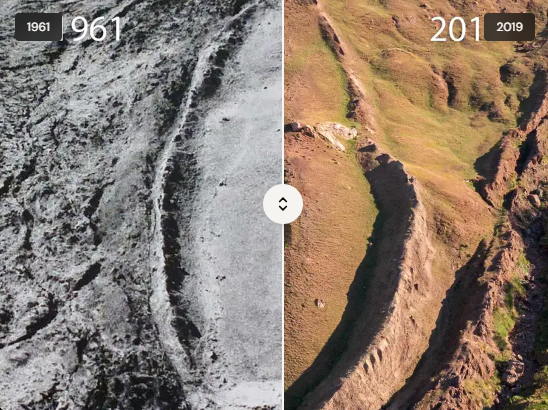
From the original discovery photo of Noah’s Ark to modern drone surveys, six decades apart. (Image Credit: NoahsArkScans.com)
Andrew Jones, founder of Noah’s Ark Scans, has announced radiocarbon results for two charred samples associated with Turkey’s Durupınar formation. Weekend coverage spanned 2456–2143 BCE. In the Christian Post reporting on the initial results, the individual ranges were 2456–2203 BCE and 2446–2143 BCE.
Those ranges overlap proposed Flood dates of 2348 and 2304 BCE. These are dates derived from particular biblical chronologies; Genesis does not print either B.C. year in the margin.
There is also a newer announcement. The team’s Nov. 23 release reports narrower ranges: 2410–2269 BCE and 2349–2193 BCE.
It says it is “releasing laboratory screenshots” and describes “the recovery point as approximately nine meters down an exposed western face and about one meter inward.”
That description deserves more precision than imagining an excavation through nine meters of undisturbed soil directly above each fragment. These remain the team’s reported results. Independent assessment must establish what the measurements and recovery context support. The changing presentation also makes complete laboratory documentation important.
Jones himself supplied a useful brake on the celebration: “What we don’t know is how the wood got there.”
That unanswered question carries an ark-sized amount of weight.
Gopher wood has a name we cannot confidently translate
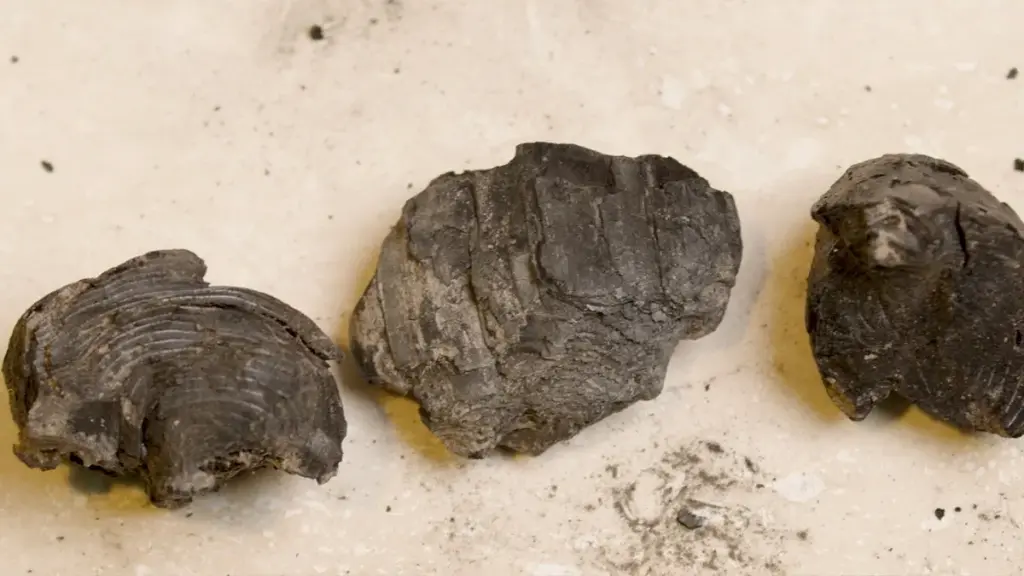
Researchers investigating a possible Noah’s Ark site in eastern Turkey have recovered what they describe as charred wood fragments from approximately 30 feet below the surface. (Lauren Witzke/NoahsArkScans.com; Stefano Bianchetti/Corbis via Getty Images)
Before Noah builds anything, God gives him instructions. “Make thee an ark of gopher wood,” begins Genesis 6:14, before describing rooms and a coating of pitch inside and out. The narrative presents a practical assignment involving materials, construction, and water protection.
The trouble starts when we try to order that lumber today.
Gofer, the Hebrew term behind “gopher,” appears only here in the Hebrew Bible. Scholars call that a hapax legomenon. And no, Noah did not subcontract the job to burrowing rodents. “Gopher” here represents a Hebrew word, not the animal.
Uh, a what the who? The theological term hapax legomenon—a fancy linguistic term for a word that appears only once in the text under examination.
Other examples include the Greek words translated as “God-breathed” in 2 Timothy 3:16 and “innkeeper” in the Good Samaritan story in Luke 10:35. Each appears only once in the New Testament, in Koine Greek or Aramaic. A single appearance doesn’t automatically make a word mysterious, but with gofer, we lack other biblical uses that might help identify Noah’s lumber.
Tim Chaffey’s discussion of the timber’s uncertain identity surveys suggestions, including cypress and cedar, alongside ancient renderings depicting worked timber. He concludes that “we simply have no way of knowing what gopher wood is today.”
That leaves botanical and woodworking possibilities open without establishing either. Identifying a sample as cypress would confirm that it is cypress. It would not automatically translate an uncertain Hebrew term or authenticate Noah’s Ark wood.
The tree species could be a valuable clue, making this archaeological investigation the greatest evangelism tool since the “tract.”
Ararat was a region before it became a postcard

In the Bible, Mount Ararat was first referenced in the 7th century as the place where Noah’s Ark came to rest after the Flood. (Image Credit: Georgia.to – Convention and Visitors Bureau)
Picture the familiar image: a massive wooden vessel stranded beneath a snow-covered peak. Like that one behind this quaint Armenian community.
Then return to the words themselves. Genesis 8:4 says the ark rested “upon the mountains of Ararat.” The plural matters. The text identifies a mountainous region rather than providing coordinates for a specific modern summit.
Durupınar is a boat-shaped formation in eastern Turkey near Mount Ararat. It is not a verified vessel sitting on the mountain’s summit. On its project website, the research group cites the formation’s roughly 157-meter length, subsurface scans, and other observations as reasons to investigate.
- Those observations deserve examination.
- Their interpretation remains the question.
- A recognizable outline can attract researchers without revealing what created it.
- A scan can reveal an underground contrast without identifying that contrast as a corridor.
For a believer, the landscape makes the investigation compelling. It gives the story a place to unfold. For an investigator, that same landscape requires geological controls, careful records, and alternative explanations.
Both responses can inhabit the same person. I can look at that outline and think, “Wouldn’t that be something?” while asking what would distinguish an ancient vessel from an unusually persuasive hill. This is not only history that has been made; it’s history in the making.
Ancient wood still needs an archaeological address
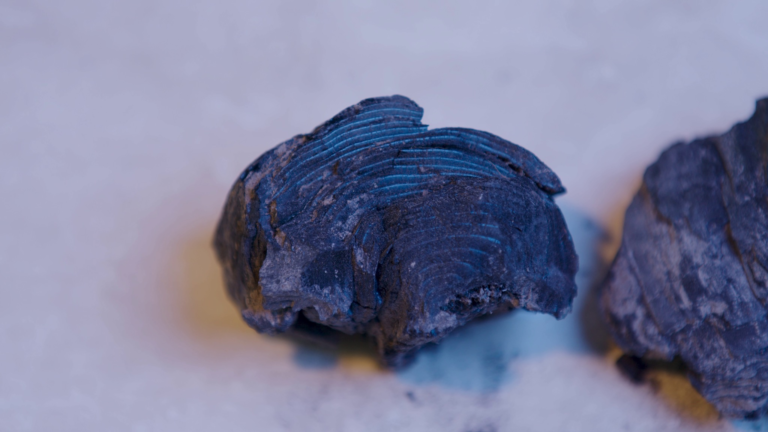
A close-up of a sample presented during the Durupınar investigation. Researchers are awaiting additional laboratory results from Switzerland and Türkiye to compare with the initial radiocarbon findings. (Image Credit: NoahsArkScans.com)
A radiocarbon result answers a question about the sampled material. It does not issue a boat registration.
Beta Analytic explains the distinction in its account of the “old wood” effect: dating wood concerns the growth of the sampled tree rings. Timber can remain standing, lie unused, or find another purpose later. Its age and the date of an event involving it need not match.
Suppose independent testing confirms the wood is ancient and specialists confirm the tool marks. That would establish something worth knowing about the material and human activity. Researchers would still need to show how it arrived there and whether it belongs to a constructed vessel.
An old campfire, reused timber, and transported debris are possibilities to test, not findings to announce. Likewise, the team’s published photographs and descriptions of possible workmanship warrant specialist examination rather than a verdict from somebody enlarging a JPEG over breakfast.
The investigation needs an evidentiary chain: documented recovery, reliable material identification, reproducible dating, demonstrated construction, and a defensible historical association. The age of Noah’s Ark wood would matter enormously once researchers established that it belonged to the Ark.
At present, that identity is the proposition they must test.
Believing Genesis does not require believing every expedition
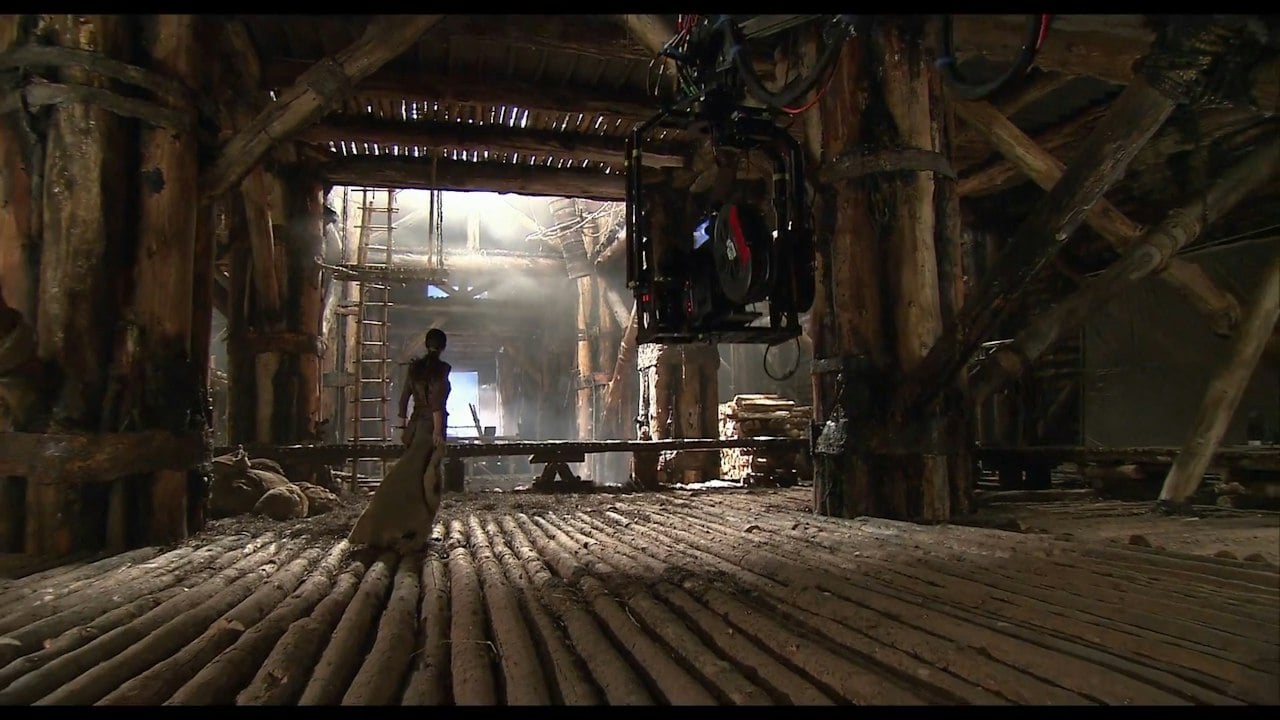
A behind-the-scenes promotional image from Noah (2014) (Image Credit: Niko Tavernise via Paramount Pictures/Regency)
Some objections to Durupınar come from geological work, not from a reflexive objection to Scripture.
Lorence Collins and David Fasold’s 1996 study identified a natural geological structure, interpreting what were supposed to be ship components as rock and mineral features. That work predates these samples, so it cannot speak to tests researchers have only recently announced. It does explain why new claims must address the existing geology.
A more recent critique comes from inside a community that affirms a historical Flood. Writing in Answers Research Journal in October, Nate Loper declared, “I believe Noah was a real man, the Flood was a real historical event, and the Ark was a real vessel.”
He nevertheless called for stronger controls, independent analysis, and complete datasets. His critique preceded the latest dating announcement; its methodological questions remain relevant.
Christians should recognize the distinction. Confidence in Genesis does not grant every person holding a sample bag immunity from scrutiny. Nor does questioning this site establish that the biblical account is false.
I want the researchers to succeed. Success includes discovering what the formation actually contains, even if the answer requires revising their preferred explanation. That is a better gift to the Church than a spectacular claim nobody can adequately defend.
Imagine the conversations a verified discovery could open

When we all gather under one roof, under one God, great things can happen. (Image Credit: Unsplash)
Now let us give the exciting possibility its proper room. Suppose researchers documented an ancient vessel, established its construction and context, and assembled compelling independent evidence connecting it to Noah’s Ark. The implications would be enormous.
- A colleague who normally changes the subject when faith comes up might send the first link.
- A teenager who knows Noah mainly through nursery decorations might ask why the account includes judgment.
- Someone who considers the Bible an anthology of religious imagination might reconsider whether its historical claims deserve a hearing.
That would create an extraordinary opening for Christian witness. It would also ask something of us beyond posting “TOLD YOU SO” in a one-paragraph Facebook post.
The story confronts human wickedness, divine judgment, obedience, and mercy. Genesis 6:5–8 moves from humanity’s corruption to Noah finding grace in the Lord’s eyes. A discovery could invite people into those questions. Christians would need to meet their curiosity with patience and an explanation of the hope we proclaim.
Even a verified vessel would not, by itself, settle every question about the Flood’s extent, its chronology, or the rest of Christian theology. Evidence can challenge a dismissal and open a conversation. It cannot make someone repent or substitute for the gospel. That limitation hardly diminishes the opportunity. An open door matters. We should know what to say when somebody walks through it.
I have followed the burnt beams associated with Jerusalem’s destruction and the archaeology surrounding the Pool of Siloam because material history can make a distant text feel startlingly near. Those subjects deserve their own evidentiary boundaries, too. Identifying a place does not, by itself, establish every event that Scripture locates there.
The radiocarbon dating of Noah’s Ark would carry a different scale of public fascination. I understand wanting this to be the moment the rubble practically clears its throat and starts preaching. Why? It has a message of the past, but also of our future.
For believers who receive Genesis as history, confidence in God’s testimony precedes this expedition. We can welcome corroborating evidence without making our faith depend on one team’s conclusion. If the fragments belong to a shelter, the researchers will have learned something about a shelter. Genesis will not need an emergency rewrite.
Peter’s instruction in 1 Peter 3:15 joins readiness to give an answer with “meekness and fear.” The way we handle evidence belongs to that witness. Our neighbors deserve to know when we are describing a result, interpreting it or expressing a hope.
Those blackened fragments may yet tell a remarkable story. I would love for it to be Noah’s. Until the evidence earns that identification, we can keep the Bible open, the questions honest, and the sample labels attached. There will be time to hand out a tract on Noah’s Ark later. For now, we wait for science to have a discussion of faith.
General Christian
Religious Events

About Shawn Paul Wood
Shawn Paul Wood, Th.D., is an award-winning copywriter, contributor, and content strategist, and ghostwriter of several faith-based articles, speeches, columns, and books who has worked for some of the most admirable brands in their respective industries for over 20 years. As Founder of Woodworks Communications, he leads teams of content strategists and marketing professionals to expand the brands of corporate leaders, serial entrepreneurs, and respected ministers of the Gospel. He aims to help others develop self-discovery through stories and the written word to proclaim the Word to the world. For more information about his portfolio or help telling your story, visit WoodworksCommunications.com. You can read more about the author here.
Previous Post

November 19, 2026
Apostle Mike Todd and Transformation Church Owe Us Answers
Recent Comments
Browse Our Archives
Select a Category Bible Business Church Editorial Education Entertainment History Lifestyle Music News Politics Uncategorized
Select a Month November 2026 October 2026 September 2026 August 2026 July 2026 June 2026 May 2026 April 2026 March 2026 January 2026 December 2025 November 2025 September 2025 August 2025 July 2025 June 2025 May 2025 April 2025 March 2025 February 2025 January 2025 December 2024 November 2024 October 2024 September 2024 August 2024 July 2024 June 2024 May 2024 April 2024 March 2024 February 2024 January 2024 December 2023 November 2023 October 2023 September 2023
Follow Us!
TAKE THE
Religious Wisdom Quiz
What city's name means "house of God" and was the place of Jacob's dream?
Select your answer to see how you score.
Nazareth Shiloh Bethlehem Bethel
Related posts from Close to Home

Apostle Mike Todd and Transformation Church Owe Us...

Pastor Fake News: How Was the Joyce Meyer...

Cessationism: Did God Really Stop Healing People?

Prop Bet: Josh Howerton and Internet Trolls Who...
TRENDING AT PATHEOS Evangelical

Smart people saying smart things (11.24.26)
Please take time to listen to Perry Bacon, Sarah Posner, Adam Serwer,...

The Contingency of Our Technology
Last week we were hit with a raft of massive technology outages....

In 1939, President Franklin D. Roosevelt moved Thanksgiving from November 30 to...

Reasons for Restraint: Ricardo Gonzalez, Florida and Dec...
The Morning of January 3 I begin with the dead. On the...

I published this column for Thanksgiving 2012 in the Deseret News....

For many years, Catholicism has been caught up in division over the...
view all Evangelical blogs
What Are Your Thoughts?leave a comment
Ad-Free & Subscriber Log-In Subscription Support
- About Us
- 2026 Calendar
- Videos
- Podcasts
- Library of World Religions
- Faith In Media Tracker
- Advertise With Us
- Write for Us
- Privacy Policy
- Terms of Service
- Do Not Sell My Data
- Contact Us
- Radiant Digital
- Manage Newsletter Subscriptions
- Unsubscribe From Notifications
- Sitemap
Copyright 2008-2026, Patheos, part of the Radiant Digital network of media brands. All rights reserved.
Subscription Support Ad-Free & Subscriber Log-In
Follow Patheos