
BuddhistCatholicContemplativeEvangelicalGeneral ChristianHinduJewishLatter-day SaintMuslimNew VisionsProgressive Christian
Beliefs
- Buddhist
- Catholic
- Contemplative
- Evangelical
- General Christian
- Hindu
- Jewish
- Latter-day Saint
- More Voices
- Muslim
- New Visions
- Pagan
- Progressive Christian
Topics
- Religion News
- Food and Religion
- Sports and Religion
- Religious Art
- Religious Music and Entertainment
- Religious Events
- History and Religion
- Style and Religion
- Politics and Religion
- Women in Religion
- Recreation Outdoors and Religion
- Business Finance and Religion
- Careers Workplace and Religion
- Education and Religion
- Family Parenting and Religion
- Health Fitness and Religion
- Home and Religion
- Relationships and Religion
- Technology and Religion
- Travel and Religion
Columnists
- Buddhist Columnists
- Business Finance and Religion Columnists
- Careers Workplace and Religion Columnists
- Catholic Columnists
- Contemplative Columnists
- Education and Religion Columnists
- Evangelists Columnists
- Family Parenting and Religion Columnists
- General Christian Columnists
- Health Fitness and Religion Columnists
- Hindu Columnists
- History and Religion Columnists
- Home and Religion Columnists
- Jewish Columnists
- More Voices Columnists
- Latter Day Columnists
- Muslim Columnists
- New Visions Columnists
- Nonreligious Columnists
- Pagan Columnists
- Politics and Religion Columnists
- Progressive Columnists
- Recreation Outdoors and Religion Columnists
- Relationships and Religion Columnists
- Religion News Columnists
- Religious Art Columnists
- Religious Events Columnists
- Religious Music and Entertainment Columnists
- Sports and Religion Columnists
- Style and Religion Columnists
- Technology and Religion Columnists
- Travel and Religion Columnists
- Women in Religion Columnists
Resource Library
- 2026 Calendar
- Library of World Religions
- The 100 Most Holy Places on Earth
- Patheos Answers
- Podcasts
- Videos
- Faith Leaders Database
- Anglican Episcopalian
- Bahai
- Baptist
- Buddhism
- Christianity
- Confucianism
- Eastern Orthodoxy
- Hinduism
- Holiness and Pentecostal
- ISKCON
- Islam
- Judaism
- Lutheran
- Methodist
- The Church of Jesus Christ of Latter-day Saints
- New Age
- Paganism
- Presbytarian and Reformed
- Protestantism
- Religion Behind the Scenes
- Roman Catholic
- Scientology
- Shia Islam
- Sikhism
- Sufism
- Sunni Islam
- Taoism
- Zen
- See all religions
Research Tools
 Ad-Free & Subscriber Log-In Subscription Support
Ad-Free & Subscriber Log-In Subscription Support
Follow Patheos 

- Trending:
- Forgiveness
- |
- Marriage
- |
- Consciousness
- |
- Death Penalty
- |
- Election
- |
- Halloween

- Home
- Evangelical
- Religion News
- Barna: Why Don’t Believers Have More of a Biblical Worldview
Barna: Why Don’t Believers Have More of a Biblical Worldview
Last updated on: August 24, 2026 at 8:57 am by Shawn Paul Wood
Barna: Why Don’t Believers Have More of a Biblical Worldview 2026-08-24T08:57:04-05:00 Shawn Paul Wood
Patheos Explore the world's faith through different perspectives on religion and spirituality! Patheos has the views of the prevalent religions and spiritualities of the world.
Somewhere between the sermon notes and the Sunday lunch reservation, a lot of us swapped our biblical worldview for a vibe.
Nobody voted on it. No elder board circled a date and announced, “Today we trade Scripture for a Pinterest quote.” It just happened, one small accommodation at a time.
And acclaimed researcher, George Barna, is the one we have to blame or congratulate for bringing this dreaded mindset to the forefront. He has spent four decades asking Christians hard questions and forcing us to consider ideas that we aren’t comfortable discussing in home groups.
Having a biblical worldview is important for a believer. Yet, somehow, we have exchanged that for what’s trendy, welcomed, safe…you know? Acceptable.
Welp, get ready. Barna just handed us the receipts for all his work. And what he poses to people of faith shouldn’t be acceptable at all.
Before your pastor mentions the news in the announcements, stay aware of other faith-based issues that hit “close to home.” Subscribe to our free newsletter to stay informed about what’s happening in the Church and how real Christians can help defend the love and work of Christ.
The Diagnosis Nobody Wanted
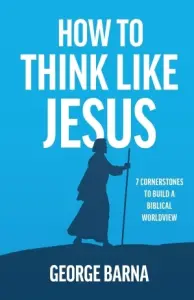
George Barna’s new book, How to Think Like Jesus: 7 Cornerstones to Build a Biblical Worldview,
George Barna built his new book, How to Think Like Jesus: 7 Cornerstones to Build a Biblical Worldview, on more than a hunch. He ran over 1,000 surveys and interviewed more than 1 million Americans.
The conclusion doesn’t flatter us: most people who call themselves Christian think and live almost like everyone else. Barna doesn’t blame insincerity. He blames a missing biblical worldview.
“Your worldview is only as strong as its foundation,” Barna writes. “You will experience as much success in life as your worldview allows.”
Translate that: Build on sand, and don’t act surprised when the first cultural storm slides your house into the ravine.
Barna splits us into two camps: “genuine disciples” and “cultural Christians.” The second group checked the Christian box, but the surrounding culture poured their actual convictions, not the God of Scripture. Barna names seven non-negotiable cornerstones: who God is, the authority of His Word, sin, truth, and God’s definitions of meaning, purpose, and success.
Most of us are missing several and calling the gap “nuance.”
Here’s the part that should sting: this isn’t a survey of atheists. It’s a survey of us. A weak biblical worldview rarely announces itself with a burned Bible. It announces itself with a shrug, the moment Scripture and the culture disagree, and we let the culture win by default.
Why? Again, it’s acceptable to everyone else if Christians are quiet.
Call that shrug what it is: cultural compromise wearing the costume of a slow, patient erosion nobody named until Barna did. You don’t inherit a biblical worldview like eye color. You build it on Scripture, or secular thinking builds one for you by default.
The Iceberg We Keep Bumping Into

No, church. You’re going in the wrong direction. (Image Credit: Anders Jildén via Unsplash)
The Gospel Coalition makes a helpful observation: “Culture behaves like an iceberg.”
We think we understand it because we can name the visible 10%—the trends, the slogans, the shows everyone’s watching. The other 90% quietly shapes how we define love, justice, and self, and we never catch it happening. That’s how secular thinking smuggles itself past customs. It’s not as contraband, but as furniture we’ve owned so long we forgot it wasn’t ours.
Paul warned us about exactly this: “Do not conform to the pattern of this world, but be transformed by the renewing of your mind” (Romans 12:2).
Conforming rarely looks like a dramatic defection. It looks like a thousand tiny surrenders of judgment to whoever shouts loudest this week. We call it “listening.” Scripture calls it drifting—and drifting is just cultural compromise wearing patient, reasonable clothes.
Skip the bunker. Build discernment instead.
Philippians 4:8 doesn’t tell us to ignore culture; it tells us to filter everything through what is true, honorable, just, pure, and lovely. That takes effort, not autopilot.
A biblical worldview won’t happen to you. You build it verse by verse, the way you’d build anything you actually plan to stand on. Too many of us furnish our minds from the discount rack of secular thinking, then wonder why the foundation creaks.
The Fulfilled Life He Never Faked

The most powerful words Christians need to learn. (Image credit: Morgan Bryan via Unsplash)
Here’s what almost nobody says out loud: Jesus never once compromised, and He also never once looked deprived. He turned water into wine at a wedding. He ate with tax collectors.
Then, He told His disciples plainly, “I have come that they may have life, and have it to the full” (John 10:10). Full. Not “full, minus the fun parts culture promises you.” Just full.
That should embarrass every excuse we make for cultural compromise. We act like a biblical worldview costs us the good stuff, so we quietly trade conviction for comfort and call it balance. But Hebrews says Jesus faced every temptation we face, without sin, and still calls us to “approach the throne of grace with confidence” (Hebrews 4:15-16)—not through gritted teeth. He endured the cross “for the joy set before him” (Hebrews 12:2). Joy. Not resignation.
Compromise never actually solves the ache it promises to fix. It just borrows secular thinking’s numbing agent long enough to disappoint you again next week. James names the real trade: “friendship with the world means enmity against God” (James 4:4).
John draws the same line: “Do not love the world or anything in the world… The world and its desires pass away, but whoever does the will of God lives forever” (1 John 2:15,17).
Jesus didn’t skip the party. He just refused to let the party write His theology. One writer notes that most Christian compromise isn’t forced on us by persecution at all—we just hand it over willingly, and call the surrender something nicer.
Caesar Is Still Lord Around Here

Inage Credit: Pixabay
One writer put it bluntly: ancient Rome never cared which god you worshipped privately, as long as you said “Caesar is Lord” publicly. Modern culture runs the same program on newer hardware. You may follow Jesus, sure—so long as you admit He’s merely one option among many equally valid ones. Say otherwise, and watch “tolerant” evaporate.
Acts 17 hands believers three callings worth memorizing: be convincing, be confident, be controversial. Not controversial for sport. Controversial because truth claims about the only way, truth, and life were never going to poll well.
A biblical worldview that offends nobody has usually stopped being biblical somewhere along the way.
It’s just secular thinking wearing a cross necklace. Cultural compromise always markets itself as kindness. It rarely survives contact with an honest definition of the word.
Say “Jesus is the way, the truth, and the life, and no one comes to the Father except through Him” in most rooms today, and watch how fast “welcoming” grows. That reaction doesn’t prove your biblical worldview is too harsh. It proves it’s still intact.
The Model We Keep Skipping
The C.S. Lewis Institute reminds us that discipleship always follows one pattern: we’re “being transformed into his image with ever-increasing glory” (2 Corinthians 3:18), not into whatever image trended this quarter. Paul makes the payoff plain: “you have been brought to fullness in Christ” (Colossians 2:10). Fullness. Already.
That leaves zero room for cultural compromise to sell you a discount version.
Lewis himself supplied the line that should end most of our hedging:
“Christianity, if false, is of no importance, and if true, of infinite importance. The only thing it cannot be is moderately important.”
You cannot build a biblical worldview on “moderately important,” nor can you borrow one from secular thinking. Barna’s data just proves Lewis’s warning showed up forty years later, carrying a spreadsheet.
Time to Come Out of the Closet

Come out. Come out, wherever you are. (Image Credit: Ketut Subiyanto via Pexels)
So here’s what actually hits close to home: we don’t have a culture problem. We have a courage problem wearing a culture problem’s clothes, and calling it a biblical worldview crisis doesn’t make it less personal.
A biblical worldview isn’t optional gear for the “serious” Christians. It’s the whole toolkit, and every excuse we’ve made—comfort, silence, relevance—opened a door we could have left shut. Jesus already proved the door didn’t need to be opened.
Remember what nobody’s shrug seems to recall: God “has given us everything we need for life and godliness” through “his very great and precious promises” (2 Peter 1:3-4). Everything. Not most things. Not the socially acceptable things. That sentence carries no compromise clause, cultural or otherwise.
He already handed you the whole inheritance; cultural compromise doesn’t protect you, it just returns the gift unopened because the neighbors might stare. A biblical worldview trusts the giver enough to open it.
So quit being so heavenly-minded in theory that you do no earthly good in practice. Jesus never asked you to choose between full and faithful—He said He’d give you both.
Carry your biblical worldview out of the closet and into Monday’s meeting, Friday’s group chat, and whatever cultural moment currently expects your silence. Stop shrugging. Start living like the God who promised you everything actually meant it.
General Christian
Relationships and Religion

About Shawn Paul Wood
Shawn Paul Wood, Th.D., is an award-winning copywriter, contributor, and content strategist, and ghostwriter of several faith-based articles, speeches, columns, and books who has worked for some of the most admirable brands in their respective industries for over 20 years. As Founder of Woodworks Communications, he leads teams of content strategists and marketing professionals to expand the brands of corporate leaders, serial entrepreneurs, and respected ministers of the Gospel. He aims to help others develop self-discovery through stories and the written word to proclaim the Word to the world. For more information about his portfolio or help telling your story, visit WoodworksCommunications.com. You can read more about the author here.
Previous Post

August 12, 2026
Biblical Masculinity: Jesus Already Nailed It
Next Post

August 28, 2026 No, Jamal Bryant, Abracadabra Doesn't Mean Romans 4:17
Recent Comments
Browse Our Archives
Select a Category Bible Business Church Editorial Education Entertainment History Lifestyle Music News Politics Uncategorized
Select a Month October 2026 September 2026 August 2026 July 2026 June 2026 May 2026 April 2026 March 2026 January 2026 December 2025 November 2025 September 2025 August 2025 July 2025 June 2025 May 2025 April 2025 March 2025 February 2025 January 2025 December 2024 November 2024 October 2024 September 2024 August 2024 July 2024 June 2024 May 2024 April 2024 March 2024 February 2024 January 2024 December 2023 November 2023 October 2023 September 2023
Follow Us!
TAKE THE
Religious Wisdom Quiz
The great day of the Lord is near—a day of wrath, distress, anguish, trouble, ruin, and what?
Select your answer to see how you score.
Blood and thunder Plague and famine Darkness and gloom Fire and brimstone
Related posts from Close to Home

The Biblist: The Top 20 Words Jesus Said...

Biblical Masculinity: Jesus Already Nailed It

God's Not a Potluck: The Problem with Interfaith...

The Biblist | 10 of the Most Contested...
TRENDING AT PATHEOS Evangelical

Letters on Living the Faith by C.S. Lewis
Most of us met C.S. Lewis as a public intellectual. Mere Christianity....

When Halloween Unmasks Married Hearts
Written by Dr. David K. Ewen from Eternal Truth Bible College Behind...

Aristotle. He’s been called the father of logic, the father of the...

Methodist Central Hall and Westminster Abbey
Situated on the same square is Methodist Central Hall and Westminster Abbey. ...

57th Dove Awards Honor Dolly Parton, Crown New...
On gospel music’s biggest night, the 57th annual GMA Dove Awards honored...

The First Eucharistic Controversy: Christ’s Real Presence
For Catholics, the Eucharist is the source and summit of the Christian...
view all Evangelical blogs
What Are Your Thoughts?leave a comment
Ad-Free & Subscriber Log-In Subscription Support
- About Us
- 2026 Calendar
- Videos
- Podcasts
- Library of World Religions
- Faith In Media Tracker
- Advertise With Us
- Write for Us
- Privacy Policy
- Terms of Service
- Do Not Sell My Data
- Contact Us
- Radiant Digital
- Manage Newsletter Subscriptions
- Unsubscribe From Notifications
- Sitemap
Copyright 2008-2026, Patheos. All rights reserved.
Subscription Support Ad-Free & Subscriber Log-In
Follow Patheos