
BuddhistCatholicContemplativeEvangelicalGeneral ChristianHinduJewishLatter-day SaintMuslimNew VisionsProgressive Christian
Beliefs
- Buddhist
- Catholic
- Contemplative
- Evangelical
- General Christian
- Hindu
- Jewish
- Latter-day Saint
- More Voices
- Muslim
- New Visions
- Pagan
- Progressive Christian
Topics
- Religion News
- Food and Religion
- Sports and Religion
- Religious Art
- Religious Music and Entertainment
- Religious Events
- History and Religion
- Style and Religion
- Politics and Religion
- Women in Religion
- Recreation Outdoors and Religion
- Business Finance and Religion
- Careers Workplace and Religion
- Education and Religion
- Family Parenting and Religion
- Health Fitness and Religion
- Home and Religion
- Relationships and Religion
- Technology and Religion
- Travel and Religion
Columnists
- Buddhist Columnists
- Business Finance and Religion Columnists
- Careers Workplace and Religion Columnists
- Catholic Columnists
- Contemplative Columnists
- Education and Religion Columnists
- Evangelists Columnists
- Family Parenting and Religion Columnists
- General Christian Columnists
- Health Fitness and Religion Columnists
- Hindu Columnists
- History and Religion Columnists
- Home and Religion Columnists
- Jewish Columnists
- More Voices Columnists
- Latter Day Columnists
- Muslim Columnists
- New Visions Columnists
- Nonreligious Columnists
- Pagan Columnists
- Politics and Religion Columnists
- Progressive Columnists
- Recreation Outdoors and Religion Columnists
- Relationships and Religion Columnists
- Religion News Columnists
- Religious Art Columnists
- Religious Events Columnists
- Religious Music and Entertainment Columnists
- Sports and Religion Columnists
- Style and Religion Columnists
- Technology and Religion Columnists
- Travel and Religion Columnists
- Women in Religion Columnists
Resource Library
- 2026 Calendar
- Library of World Religions
- The 100 Most Holy Places on Earth
- Patheos Answers
- Podcasts
- Videos
- Faith Leaders Database
- Anglican Episcopalian
- Bahai
- Baptist
- Buddhism
- Christianity
- Confucianism
- Eastern Orthodoxy
- Hinduism
- Holiness and Pentecostal
- ISKCON
- Islam
- Judaism
- Lutheran
- Methodist
- The Church of Jesus Christ of Latter-day Saints
- New Age
- Paganism
- Presbytarian and Reformed
- Protestantism
- Religion Behind the Scenes
- Roman Catholic
- Scientology
- Shia Islam
- Sikhism
- Sufism
- Sunni Islam
- Taoism
- Zen
- See all religions
Research Tools
 Ad-Free & Subscriber Log-In Subscription Support
Ad-Free & Subscriber Log-In Subscription Support
Follow Patheos 

- Trending:
- Forgiveness
- |
- Marriage
- |
- Consciousness
- |
- Death Penalty
- |
- Election
- |
- Halloween

- Home
- Evangelical
- Religion News
- Yes, There Are Women Preachers and the Bible Settles It
Yes, There Are Women Preachers and the Bible Settles It
Last updated on: July 15, 2026 at 11:26 am by Shawn Paul Wood
Yes, There Are Women Preachers and the Bible Settles It 2026-07-15T11:26:08-05:00 Shawn Paul Wood
Patheos Explore the world's faith through different perspectives on religion and spirituality! Patheos has the views of the prevalent religions and spiritualities of the world.
Let’s start with a confession: There are dozens of 12-inch headlines about women preachers, which shows this fight doesn’t die easily. In fact, at all.
Every June, the Southern Baptist Convention gathers. That’s the origin of the headlines. And every June, somebody stands at a microphone to ask the same question — can a woman preach?
This year in Orlando, the Southern Baptist Convention didn’t just ask. It answered, hard.
Messengers voted nearly three-to-one to advance the so-called “Truth and Unity Amendment.” Doesn’t that sound nice? If only hypocrites didn’t create the title.
According to the SBC bylaws, it was a constitutional change that doesn’t just bar women preachers from the title of pastor. It also bans them from preaching to the assembled congregation, period.
No guest speakers who are women. There were no spouses of male leaders to speak. No women preachers who aren’t preaching but just giving announcements.
One more loving, positive vote in 2027, and the ban on women preachers becomes law inside America’s largest Protestant body. Baptist Women in Ministry has plenty to say about this, as shown on their billboard. They say that churches are already renaming women “ministers” instead of “pastors” just to dodge the axe, according to Christianity Today’s reporting on the floor debate.
Here’s another confession: I don’t believe the Bible says what the Southern Baptist Convention thinks it says. And I’ve got receipts — Greek, Hebrew, church history, ordination records, and two thousand years of women preachers who never got the memo that they were supposed to sit down.
If those are too old of receipts, may I recommend the prolific teachings of people, such as Joyce Meyer, Jarena Lee, Gloria Copeland, Maria Woodworth-Etter, Bishop Vashiti McKenzie, Aimee Semple McPherson, Nadia Bolz-Weber, Priscilla Shirer, and the bold woman of God who left the SBC’s ranks over this mess, the incomparable Beth Moore.
So let’s get Close to Home with this. Four sections. No shouting. Just the Word, the world, and a whole lot of women preachers apparently forgot they weren’t allowed to lead.
It’s time to determine how this hits close to home. Don’t miss what’s next! Subscribe to our free newsletter to stay informed about what’s happening in the Church and how real Christians can help defend the love and work of Christ. On with the show…
The Etymology: Words Don’t Lie, Translators Sometimes Do
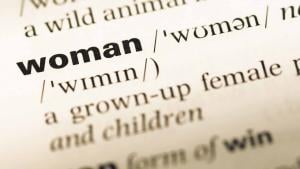
A close-up of the word “Woman,” as defined in the Oxford Dictionary (Image Credit: OED.com)
Here’s a dirty little secret of Bible translation: the men holding the pens got to decide what women preachers were called.
Take the Greek word Diakonos. When Paul uses it for himself, for Timothy, for Apollos — the men who “preach” — English Bibles render it “minister” or “servant-leader.” When Paul uses that exact same word for Phoebe in Romans 16:1, plenty of translations demote her to “helper.” Same Greek word. Different English destiny for a woman doing a preacher’s job.
Yes, that really happened in the Bible.
The NIV actually calls it straight: Phoebe is a deacon of the church at Cenchreae. Then Paul adds prostatis, a word meaning “patron,” “leader,” or “one who presides.” Scholar J. David Miller argues that pairing signals real and recognized authority. You know, not a nice lady who brought casseroles to the youth group bake sale.
Then there’s Apostolos.
In Romans 16:7, Paul greets Andronicus and Junia as “outstanding among the apostles.” For centuries, editors simply changed her name to the masculine “Junias” because a female apostle — a woman with functional ordination in the earliest church — was unthinkable. This was written as-is, even though no such male name reliably exists in the ancient record.
By 2010, the scholarly consensus, including complementarian voices like Thomas Schreiner, had swung back to what the fourth-century preacher John Chrysostom already knew: Junia was a woman, and Paul called her an apostle.
Words carry theology. So does the record of who received ordination and who didn’t. When the word is inconvenient, someone always tries to translate it away. That’s more welcoming than denying women preachers the title their work already earned. It happened to Phoebe and Junia.
And, the very same thing is happening at the Southern Baptist Convention right now.
The History: From Deborah to Junia, Leadership Never Waited for Permission
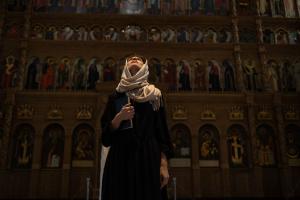
Women preachers made more than meals in the Bible; they made waves. (Image Credit: Ron Lach via Pexels)
Scripture doesn’t tuck women preachers into a footnote; it opens the whole story with female leadership.
Genesis calls Eve ezer kenegdo. This phrase is used elsewhere in the Old Testament almost exclusively to refer to God Himself, as Israel’s helper in battle. That’s not a subordinate’s title. That’s a warrior’s. And it belonged to a woman, SBC.
Fast-forward to Judges 4: Deborah is not merely a wife who happened to have opinions. She is a judge, a prophet, and a military strategist over all Israel. She was so important that General Barak refused to march to war without her. Nobody in the text questions her authority to lead. They followed because a woman showed up…and led.
Skip to the Gospels: women are the last at the cross and the first at the empty tomb. To cement their role in the early church, Jesus commissions Mary Magdalene to go tell the male disciples He’s alive.
None of the fellas got that job. It was a woman, and Jesus made her, functionally, the first person entrusted to preach the Resurrection. The early church called her apostola apostolorum, apostle to the apostles. That’s a woman, SBC.
Then Paul’s own ministry map is dotted with women preachers running things: Priscilla, who — alongside her husband Aquila — pulls the gifted preacher Apollos aside in Acts 18:26 and “explained to him the way of God more accurately.”
Her name comes first in four of six New Testament mentions.
If carrying, reading, and explaining the word of God to a room full of believers isn’t preaching, I don’t know what we’ve been doing on Sunday mornings. Much less what those fatcat preachers blather about in Orlando or their churches.
The Culture: Every Era Has Its Doorkeepers, and God Keeps Walking Past Them

Welcome to all who want to hear the Lord, except for you women who are interested. (Image Credit: @FranckV via Unsplash)
The pattern is too consistent throughout time to be a coincidence. Every movement of God seems to attract those who want to determine who is worthy and who is not. In their piety and sanctimony, they deem the people who are spiritual enough to cross the velvet stanchion and enter the room. And every century, the frowned-upon become the celebrated.
Junia’s name survives in Romans 16 long after the household codes that tried to silence her turned to dust. Aaron’s sister, Miriam, wasn’t just known for her family; she was known as a prophet in Exodus 15. So was Deborah in Judges 4. And Huldah in 2 Kings. Mary sat at Jesus’s feet in Luke 10:39 before anyone voted on whether she belonged there. These women preachers, and many more like them, didn’t wait to be told what they could not do for God; they just did what God said.
The women preaching in SBC-affiliated churches right now will likely outlast this amendment, just as they’ve outlasted every vote before it.
That’s the part the doorkeepers keep missing: they’re not the first ones holding this rope, and they won’t be the last ones to watch someone walk past it anyway. The call comes first. The committee always shows up late.
So no, culture didn’t invent women preachers, and it won’t get to retire them, either. It can deny ordination, pass amendments, and exercise its gatekeeping within denominational polity rather than under Roman law. Also, that stank culture can dress up as doctrine, but we all know it’s more about decorum. But the woman teaching a Bible study this Sunday should know something. You know? The one they won’t call “pastor” on paper?
She metaphorically stands at the front of a line you, SBC Member, can’t see. One that runs straight back through Miriam, Deborah, and Huldah. Through Junia and Mary of Bethany, and eventually to a rabbi who let her sit down and stay because God said so.
History isn’t on the side of the rope. It never has been.
The Call: Understanding, Not a Fight
Sometimes, all we need is a sign. (Image Credit: Binyamin Mellish via Pexels)
Now, before anybody fires off an angry comment — I’m not calling faithful Southern Baptist Convention believers heretics. Many hold this view with trembling, prayerful sincerity, and that conviction deserves respect, not ridicule.
This column has never been about winning an argument at a sister’s expense. I’ve covered the patchwork way modern Christians build belonging and the clumsy ways we package our faith for a watching world. We’re all just trying to get this right for God.
But here’s my close-to-home ask: read about Deborah and Phoebe again. Understand Junia’s name the way Paul wrote it. Ask whether “I do not permit” in 1 Timothy 2:12 was Paul’s timeless decree against women preachers or his pastoral word to one troubled church in Ephesus.
Why? Because even that verse says “I,” not “God.” Ask why ordination has always been a committee’s decision, never God’s. The Bible was never a barrier to women preachers. Our fear of what it says might be, and so might our committees.
SBC, don’t slam a pulpit door on a woman preacher. Open the Book instead. Let Deborah judge. Allow Phoebe to deliver the letter. Junia can keep her name and her ordination. Let the women called by God do what God already called them to do — preach.
All glory to God, the One who never asked a woman’s permission to use her. He just allowed them to do as they were called.
General Christian
Women in Religion

About Shawn Paul Wood
Shawn Paul Wood, Th.D., is an award-winning copywriter, contributor, and content strategist, and ghostwriter of several faith-based articles, speeches, columns, and books who has worked for some of the most admirable brands in their respective industries for over 20 years. As Founder of Woodworks Communications, he leads teams of content strategists and marketing professionals to expand the brands of corporate leaders, serial entrepreneurs, and respected ministers of the Gospel. He aims to help others develop self-discovery through stories and the written word to proclaim the Word to the world. For more information about his portfolio or help telling your story, visit WoodworksCommunications.com. You can read more about the author here.
Previous Post
July 9, 2026
Are We Really a Christian Nation, And Why is No the Answer?
Next Post

July 21, 2026 Evangelism Has Hit the Digital Mission Field Via Gaming
Recent Comments
Browse Our Archives
Select a Category Bible Business Church Editorial Education Entertainment History Lifestyle Music News Politics Uncategorized
Select a Month October 2026 September 2026 August 2026 July 2026 June 2026 May 2026 April 2026 March 2026 January 2026 December 2025 November 2025 September 2025 August 2025 July 2025 June 2025 May 2025 April 2025 March 2025 February 2025 January 2025 December 2024 November 2024 October 2024 September 2024 August 2024 July 2024 June 2024 May 2024 April 2024 March 2024 February 2024 January 2024 December 2023 November 2023 October 2023 September 2023
Follow Us!
TAKE THE
Religious Wisdom Quiz
What does "Golgotha" mean?
Select your answer to see how you score.
House of Bread Place of the Skull Mountain of God Valley of Death
Related posts from Close to Home

Prop Bet: Josh Howerton and Internet Trolls Who...

Christian Media Taught Us How to Respect with...

The Biblist: The Top 20 Words Jesus Said...

Baptist Church Pleads: "We're Not the Pastor's Wife...
TRENDING AT PATHEOS Evangelical

The Sermon on the Mount, Part I: Matthew...
The Sermon on the Mount, Part I (Matthew 4:12-5:12) St. Matthew moves...

What's up from Crossway: Reviewing some of their latest A few weeks...

Janie Learns the Way of the Cross: A...
Teaching children about Jesus' Passion can be challenging. Many parents and educators...

Looking For Good Catholic Writing - October 2026
He alone extends the heavens, and he walks upon the waves of...

In "Irreplaceable," our book on vocation and technology, Trevor Sutton and I...

I was strolling through the top floor of the brand new Parthenon...
view all Evangelical blogs
What Are Your Thoughts?leave a comment
Ad-Free & Subscriber Log-In Subscription Support
- About Us
- 2026 Calendar
- Videos
- Podcasts
- Library of World Religions
- Faith In Media Tracker
- Advertise With Us
- Write for Us
- Privacy Policy
- Terms of Service
- Do Not Sell My Data
- Contact Us
- Radiant Digital
- Manage Newsletter Subscriptions
- Unsubscribe From Notifications
- Sitemap
Copyright 2008-2026, Patheos. All rights reserved.
Subscription Support Ad-Free & Subscriber Log-In
Follow Patheos