
BuddhistCatholicContemplativeEvangelicalGeneral ChristianHinduJewishLatter-day SaintMuslimNew VisionsProgressive Christian
Beliefs
- Buddhist
- Catholic
- Contemplative
- Evangelical
- General Christian
- Hindu
- Jewish
- Latter-day Saint
- More Voices
- Muslim
- New Visions
- Pagan
- Progressive Christian
Topics
- Religion News
- Food and Religion
- Sports and Religion
- Religious Art
- Religious Music and Entertainment
- Religious Events
- History and Religion
- Style and Religion
- Politics and Religion
- Women in Religion
- Recreation Outdoors and Religion
- Business Finance and Religion
- Careers Workplace and Religion
- Education and Religion
- Family Parenting and Religion
- Health Fitness and Religion
- Home and Religion
- Relationships and Religion
- Technology and Religion
- Travel and Religion
Columnists
- Buddhist Columnists
- Business Finance and Religion Columnists
- Careers Workplace and Religion Columnists
- Catholic Columnists
- Contemplative Columnists
- Education and Religion Columnists
- Evangelists Columnists
- Family Parenting and Religion Columnists
- General Christian Columnists
- Health Fitness and Religion Columnists
- Hindu Columnists
- History and Religion Columnists
- Home and Religion Columnists
- Jewish Columnists
- More Voices Columnists
- Latter Day Columnists
- Muslim Columnists
- New Visions Columnists
- Nonreligious Columnists
- Pagan Columnists
- Politics and Religion Columnists
- Progressive Columnists
- Recreation Outdoors and Religion Columnists
- Relationships and Religion Columnists
- Religion News Columnists
- Religious Art Columnists
- Religious Events Columnists
- Religious Music and Entertainment Columnists
- Sports and Religion Columnists
- Style and Religion Columnists
- Technology and Religion Columnists
- Travel and Religion Columnists
- Women in Religion Columnists
Resource Library
- 2026 Calendar
- Library of World Religions
- The 100 Most Holy Places on Earth
- Patheos Answers
- Podcasts
- Videos
- Faith Leaders Database
- Anglican Episcopalian
- Bahai
- Baptist
- Buddhism
- Christianity
- Confucianism
- Eastern Orthodoxy
- Hinduism
- Holiness and Pentecostal
- ISKCON
- Islam
- Judaism
- Lutheran
- Methodist
- The Church of Jesus Christ of Latter-day Saints
- New Age
- Paganism
- Presbytarian and Reformed
- Protestantism
- Religion Behind the Scenes
- Roman Catholic
- Scientology
- Shia Islam
- Sikhism
- Sufism
- Sunni Islam
- Taoism
- Zen
- See all religions
Research Tools
 Ad-Free & Subscriber Log-In Subscription Support
Ad-Free & Subscriber Log-In Subscription Support
Follow Patheos 

- Trending:
- Forgiveness
- |
- Marriage
- |
- Consciousness
- |
- Death Penalty
- |
- Election
- |
- Halloween

- Home
- Pagan
- Home and Religion
- Finding Inner Peace in Pagan Contemplation
Finding Inner Peace in Pagan Contemplation
Last updated on: November 1, 2023 at 5:09 pm by Avallach Emrys
Finding Inner Peace in Pagan Contemplation 2023-11-01T17:09:32-04:00 Avallach Emrys
Patheos Explore the world's faith through different perspectives on religion and spirituality! Patheos has the views of the prevalent religions and spiritualities of the world.
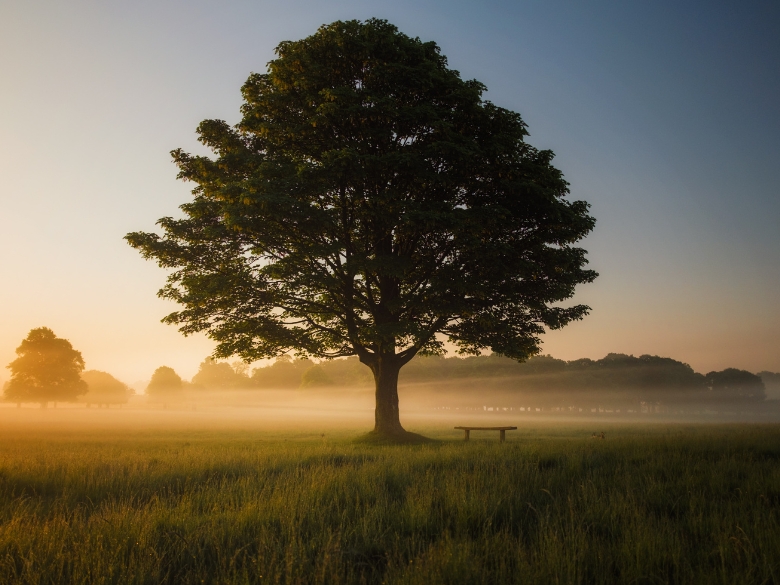
Simon Wilkes/Unsplash.com
I’ve always been on a quest for finding inner peace. When I took my vows earlier this year (May 1st, to be exact), I understood the reason for wanting to live a contemplative lifestyle. One of the major reasons was that I wanted more peace in my life. Sure, in comparison to the lives of many others, my life would be considered ‘peaceful’. But still, there was an inner peace that I longed for.
I had experienced inner peace and stillness many times, but they were fleeting moments that seemed to disappear just as quickly as they arrived. So, at least for me, a big motivation to step into a more monastic and contemplative lifestyle was to find a more permanent form of inner peace. What I found out is that in the pursuit of this seemingly lofty goal, my primary personal responsibility was not only to cultivate a sanctuary of peace within myself, but also to extend that tranquility outward, thereby affecting those around me with the same serene influence.
Back To The Source
Before I dive in too deeply, I want to play with a notion that I feel holds the most weight when looking back into the past. That’s the notion that most (if not all) cultures probably began as shamanistic tribes of people. It seems to me that most of the various ancient cultures that have been discovered and studied have had shamanistic roots. Not only did the Celtic tribes exist as a shamanistic culture, so too did the Aborigines of Australia and the San of the African continent.
So, what does that mean exactly? Well, if you were to ask any lay person today why they meditate, they’ll likely give you one or two reasons and one of them will probably have something to do with ‘finding more inner peace’. This isn’t surprising, but it speaks to the idea that by ‘going inward’, we are searching for a peace that already exists within us. In many cultures, what some describe as ‘going inward’ might also manifest as ‘going outward,’ often equated to ‘worldwalking.
The Shamanic Path
As described by columnist Michelle Fondin:
“Meditation connects you to all that is. We often look at meditation as a chance to unplug from the world, but in reality, we are plugging into the entire universe. By getting in touch with your soul, you can more easily match the vibe of the universal soul.”
As a Druid, one of the core tenants of modern Druidry is meditation and oftentimes Shamanism. While I think we all touch on Shamanism in our own way most times, a full Shamanic practice is typically undertaken by someone who is naturally gifted in that area. Not to say that we can’t sharpen our skills and learn Shamanism — but most of us tend to stay within the lane of our natural spiritual strengths.
In ancient times, the Druid Shamans would commune with the Gods and travel to the otherworld to gain insight and understanding and bring it back to the tribes in which they served. This gave them a blueprint for their rituals, beliefs, and morals. To be a Druid was to be a person of wisdom. It’s clear where that wisdom came from, but what might not be clear to most is how this ties in to finding inner peace. Stick with me and we’ll find out.
Practices & Prayers
So, now we know that the Druids were sources of wisdom for the Celtic tribes. The Druids obtained that wisdom through continual prayers to the Gods, rituals, and meditation, including shamanistic worldwalking. It stands to reason that in the process of obtaining wisdom through these practices, they were (and still are) ultimately in pursuit of finding inner peace. Your tradition might refer to it as ‘inner knowing’ which is quite fitting.
But that’s not where we stop. The inner peace that we can obtain, just like the Druids, serves a much bigger purpose within our communities. Whether our communities encompass only our families or extend to larger circles within spiritual traditions and our local neighborhoods, we have something to offer from the inner peace we discover.
In the Buddhist tradition, Siddhartha Gautama, who would become the Buddha, attained enlightenment and then chose to share his profound wisdom with others, which formed the foundation of Buddhism. This emphasizes the importance of sharing enlightenment to alleviate suffering, but also sharing peace with those around you.
Radiating Peace
Here’s where I can tell you all about how your inner peace actually changes the world around you. While it’s true, our inner peace is quite a comfort to those we come in contact with, what about those we don’t come in contact with?
An Indian Guru named Maharishi Mahesh Yogi popularized a meditation technique known as Transcendental Meditation (TM). Researchers have conducted documented scientific studies and analyses on TM’s effects when large groups of people practice it in specific locations.
This article reports on two studies that investigate the impact of collective stress on public health indicators such as infant mortality rate and drug-related fatality rate. The studies also analyze the effects of group practice of the TM-Sidhi program, an advanced practice of the Transcendental Meditation technique, on societal consciousness and quality of life.
The results indicate that practicing the TM-Sidhi program in groups correlates with decreased stress levels, enhanced quality of life, and a reduction in negative behaviors like crime and violence. These findings support the idea that inner peace can radiate outward to those around us, contributing to a more positive and harmonious society.
So, it seems that there is quite a compelling case for how we can radiate peace to the world from our own personal practice.
Final Thoughts
Delving into history’s wisdom and the soul’s quest for peace, it’s clear our search for inner calm is interconnected with the wider human experience. It’s not just about personal serenity; it’s about influencing the world’s energy for the better.
Drawing from Druidic practices, Buddhist teachings, and methods like Transcendental Meditation, we find a dual purpose: to create inner sanctuaries of peace and to act as stewards of serenity in an often chaotic world. By cultivating tranquility within, we become unexpected sources of harmony, guiding others simply through our presence and actions.
So, let’s remain committed to our reflective practices, mindful that the peace we foster within doesn’t just benefit us—it ripples outward, touching lives and shaping a more peaceful, coherent society. Our aim isn’t just to seek peace but to live it and share it, affecting the collective human spirit in ways we may never fully see but will certainly be felt.
Contemplative
Home and Religion
History and Religion
Previous Post

October 5, 2025
Sacred Anger: Resisting Tyranny
Next Post

November 2, 2023 New Beginnings: The Pagan New Year at Samhain
Recent Comments
"This is a very nice article, Avallach. Thanks for sharing your experience and wisdom. Namaste!"
Gnostic Integration: Bridging the Divine in ..."
"You know, you bring up a great point. In the book 'Earth, Our Original Monastery' ..."
"I was like, Pagan monastery? is that a thing? And then I read, nope, it's ..."
Browse Our Archives
Select a Category Afterlife Autumn Christmas Contemplation Current Events Divine Connection Emotions History & Religion Home and Religion Magick Pagan Devotion Pagan Monasticism Peace Prayer Samhain Silence Simplicity Sustainability Uncategorized Yule
Select a Month October 2025 September 2024 August 2024 May 2024 January 2024 December 2023 November 2023
Follow Us!
TAKE THE
Religious Wisdom Quiz
Who saw a vision of a pot boiling toward the north?
Select your answer to see how you score.
Zechariah Jeremiah Isaiah Habakkuk
Related posts from Cloistered Corridors

Sacred Anger: Resisting Tyranny

Nature Spirits: Pagan Rituals for National Wildlife Day
Kama͏la Harris: A Be͏a͏con of͏ Spiritual Renewal for...
Tu͏rning In͏ward: Preparing t͏he Inner Temple for͏ Autumn
TRENDING AT PATHEOS Pagan

I was recently chatting with someone on Instagram. She asked me what...

While there are many people who share their results, the end of...

On July 23, I saw Christopher Nolan's The Odyssey which is Homer’s...

As I write this two big events have just finished up. One...

Restoring the Watershed of Divine Love
Perhaps cooperation is not something we manufacture through legislation, ideology, or moral...

Many UUs don’t pray because of bad experiences in a previous religion,...
view all Pagan blogs
What Are Your Thoughts?leave a comment
Ad-Free & Subscriber Log-In Subscription Support
- About Us
- 2026 Calendar
- Videos
- Podcasts
- Library of World Religions
- Faith In Media Tracker
- Advertise With Us
- Write for Us
- Privacy Policy
- Terms of Service
- Do Not Sell My Data
- Contact Us
- Radiant Digital
- Manage Newsletter Subscriptions
- Unsubscribe From Notifications
- Sitemap
Copyright 2008-2026, Patheos. All rights reserved.
Subscription Support Ad-Free & Subscriber Log-In
Follow Patheos