
BuddhistCatholicContemplativeEvangelicalGeneral ChristianHinduJewishLatter-day SaintMuslimNew VisionsProgressive Christian
Beliefs
- Buddhist
- Catholic
- Contemplative
- Evangelical
- General Christian
- Hindu
- Jewish
- Latter-day Saint
- More Voices
- Muslim
- New Visions
- Pagan
- Progressive Christian
Topics
- Religion News
- Food and Religion
- Sports and Religion
- Religious Art
- Religious Music and Entertainment
- Religious Events
- History and Religion
- Style and Religion
- Politics and Religion
- Women in Religion
- Recreation Outdoors and Religion
- Business Finance and Religion
- Careers Workplace and Religion
- Education and Religion
- Family Parenting and Religion
- Health Fitness and Religion
- Home and Religion
- Relationships and Religion
- Technology and Religion
- Travel and Religion
Columnists
- Buddhist Columnists
- Business Finance and Religion Columnists
- Careers Workplace and Religion Columnists
- Catholic Columnists
- Contemplative Columnists
- Education and Religion Columnists
- Evangelists Columnists
- Family Parenting and Religion Columnists
- General Christian Columnists
- Health Fitness and Religion Columnists
- Hindu Columnists
- History and Religion Columnists
- Home and Religion Columnists
- Jewish Columnists
- More Voices Columnists
- Latter Day Columnists
- Muslim Columnists
- New Visions Columnists
- Nonreligious Columnists
- Pagan Columnists
- Politics and Religion Columnists
- Progressive Columnists
- Recreation Outdoors and Religion Columnists
- Relationships and Religion Columnists
- Religion News Columnists
- Religious Art Columnists
- Religious Events Columnists
- Religious Music and Entertainment Columnists
- Sports and Religion Columnists
- Style and Religion Columnists
- Technology and Religion Columnists
- Travel and Religion Columnists
- Women in Religion Columnists
Resource Library
- 2026 Calendar
- Library of World Religions
- The 100 Most Holy Places on Earth
- Patheos Answers
- Podcasts
- Videos
- Faith Leaders Database
- Anglican Episcopalian
- Bahai
- Baptist
- Buddhism
- Christianity
- Confucianism
- Eastern Orthodoxy
- Hinduism
- Holiness and Pentecostal
- ISKCON
- Islam
- Judaism
- Lutheran
- Methodist
- The Church of Jesus Christ of Latter-day Saints
- New Age
- Paganism
- Presbytarian and Reformed
- Protestantism
- Religion Behind the Scenes
- Roman Catholic
- Scientology
- Shia Islam
- Sikhism
- Sufism
- Sunni Islam
- Taoism
- Zen
- See all religions
Research Tools
 Ad-Free & Subscriber Log-In Subscription Support
Ad-Free & Subscriber Log-In Subscription Support
Follow Patheos 

- Trending:
- Forgiveness
- |
- Marriage
- |
- Consciousness
- |
- Death Penalty
- |
- Election
- |
- Halloween
 Cinemeditations
- Home
- Religious Music & Entertainment
- “Breaking Bad” Review: Stuck In A “Granite State”
“Breaking Bad” Review: Stuck In A “Granite State”
Last updated on: September 25, 2013 at 12:53 pm by Andrew Johnson
“Breaking Bad” Review: Stuck In A “Granite State” 2013-09-25T12:53:30-05:00 Andrew Johnson
Patheos Explore the world's faith through different perspectives on religion and spirituality! Patheos has the views of the prevalent religions and spiritualities of the world.
In recent weeks, as I watch Breaking Bad I find myself wondering if showrunner Vince Gilligan ever read Mere Christianity. He was raised Catholic, and he’s gone on record saying he’s drawn to the idea of “biblical atonement” and that immoral people should be punished for their actions. That philosophy has been on clear display throughout the course of the entire series, as Walter White and Jesse Pinkman gradually fell further and further down a slippery slope, unleashing a storm of events outside their control that eventually caused them to lose everything. “Granite State” finds Jesse forced to cook meth for Jack and his neo-Nazi gang, a slave for scum who will—and do—kill the people he loves if he doesn’t comply. Meanwhile, Walt is alone in New Hampshire with only his barrel of money and a DVD of Mr. Magorium’s Wonder Emporium to keep him company, trapped in a hell of his own making.
But I bring up Mere Christianity because one of my favorite passages in C.S. Lewis’ book is when he ruminates on pride. It is pride, he argues, that is the central sin, the “utmost evil” from which all other sins spring forth. Other vices are often enticing because they bring about good fellowship, or pleasure. But Pride brings only misery. As he puts it:
“According to Christian teachers, the essential vice, the utmost evil, is Pride. Unchastity, anger, greed, drunkenness, and all that, are mere fleabites in comparison: it was through Pride that the devil became the devil: Pride leads to every other vice: it is the complete anti-God state of mind.”
From the very first episode, Breaking Bad has been about the conflation of Walter White’s existential crisis with his pride. The realization that he might die before accomplishing not just something that would provide for his family, but something that would place him above others, is what first drove him down his path to destruction. It was pride that made him refuse money from Elliott and Gretchen. It was pride that led him into a dangerous cat-and-mouse game with Gus Fring. It was pride that made him view Jesse and the people around him merely as tools to advance his own agenda. Walt never just wanted the money; he wanted the recognition that came with it, the acknowledgement from those around him that he was the best meth cook in the business, a man with immeasurable power. Who is Heisenberg if not the embodiment of this pride, a name to be whispered between addicts, a persona of mythical stature through whose legacy Walt could live forever?
Some people have complained that “Granite State” is a disappointing episode because there are no big twists or intense pieces of action (aside from Andrea’s death, of course). I’d argue that yes, while it in many ways functions as a transitional episode, setting the pieces in place for a (hopefully) explosive finale, it’s also an extremely important episode, because this is the first time we see Walt stripped (or nearly stripped) of his pride. Heisenberg was born out of an attempt for Walt to reign in the unknowable, to control what little he could about his pending death. The opening scenes of this episode find him desperately clinging to that desire for control, badgering Saul to put together a team of hitmen to take out Jack’s gang. For a moment, Heisenberg rears his head, towering menacingly above Saul and growling orders, but he quickly dissipates in a fit of coughing. Walt’s pride has helped him do a lot of things, but it can’t cure cancer.
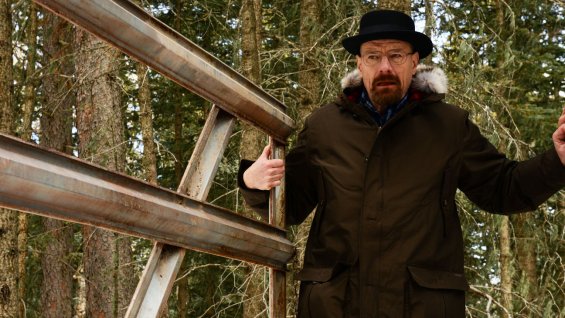
For the rest of the episode—at least until its final moments—Heisenberg is nowhere to be found. The iconic porkpie hat briefly brings back Walt’s delusions of grandeur, but the thought of having to leave what little he has left, even if it’s just a shack in the middle of nowhere, soon evaporates them. The title of this episode doesn’t just refer to the state of New Hampshire, it’s also a playful reference to a time when Walt was fully in control: his “fugue state.” That was a situation built on lies orchestrated entirely by Walt. Now, he can’t even muster up the ability to lie to himself and trust that the Vacuum Repair Guy (played by brilliant character actor Robert Forster) will take his money to his family once the cancer finally kills him. By the final scene of this episode, Walt seems to have finally given up. We don’t see him doing anything for himself; he can’t even draw his own blood or cut a deck of cards. He has finally relinquished all illusions of control.
There’s a part of me that thinks this could have worked well as a series finale. It seems appropriate for Walt to spend his last days alone, rejected by his family, with a pile of cash and nothing to spend it on. He makes one last attempt to send Walter Jr. some of his blood money, only to be rejected by his own son: “Just die!” He sits at the bar, ordering one last drink before the police arrive to take him into custody, with nothing left of the life he once had. He has nothing left to hope for, and his frustrated cries that “It can’t all be for nothing!” have made no difference. This is rock bottom. But I think Vince Gilligan may have something even more tragic in mind.
Breaking Bad is, among many things, a show about addiction. Jesse was addicted to drugs, but when he hit bottom he managed to get clean. Walt is addicted to his own pride and the illusion that the world owes him something. But unlike Jesse, he seems unable to break free from his addiction. This should be the moment when he finally does what Jesse did a few seasons ago, and accept that he himself is a flawed individual responsible for everything that’s happened.
But Gilligan understands that true humility is hard to achieve, and for Walt (like many addicts) it may be impossible. Just as he’s ready to cooperate with the authorities—something he always swore he would never do—he sees Elliott and Gretchen Schwartz on television. They’ve started a grant for drug rehab centers, and while sure, it’s arguably a PR move to distance themselves from Walt, it also effectively crushes what remains of his legacy. As terrible as it is to say, without meth-heads to buy Heisenberg Blue, Walt has nothing to leave behind.
While this should be another nudge pushing Walt towards self-realization and acceptance, it actually has the opposite effect. It’s never been clear what exactly happened all those years ago at Gray Matter and why Walt left the company. We only know that his bitterness about it decades later fueled the decision to refuse their money. Gretchen and Elliott are at the root of something that started to eat at him a long time ago, and seeing them deny his contribution to what became a multi-billion dollar business ignites the last remaining drops of pride he has left.
Next week’s series finale will prove whether or not I’m right, but if I had to guess at what’s going to happen based on this episode, I’d say that Walt is going to destroy himself. To bring it back to the idea of addiction, he’s going to overdose on pride. Rather than take responsibility for his actions, I think he’s going to fall back into old habits and blame other people for his problems. He blames Jack for what happened to Hank, and by extension his son’s rejection. And it’s possible he now blames Gretchen and Elliott for, well, everything. It’s easier to look back at something that happened years ago and say that’s what led to everything going wrong than it is to acknowledge one’s own guilt. We know that the gun and vial of ricin are meant for something. I think it’s possible he might decide to go out in a blaze of glory, wreaking violent retribution on the people he blames for the course his life took. This would be the most tragic ending of all, because it would mean that Walt’s story ends without him ever fully realizing his own culpability. He would live and die in denial, leaving everyone around him to suffer needlessly.
Walt might think he has nothing left to lose, but that’s not necessarily true. His pride is still there. And as the biblical proverb states, pride always comes before a fall.
—
What did you think of this episode of Breaking Bad? How do you think the series will end? Let me know in the comments section below!
—
Read More:
Breaking Bad Season 5 Episode 9: Blood Money.
Breaking Bad Season 5 Episode 10: Buried
Breaking Bad Season 5 Episode 11: Confessions
Breaking Bad Season 5 Episode 12: Rabid Dog
Breaking Bad Season 5 Episode 13: To’hajiilee
Breaking Bad Season 5 Episode 14: Ozymandias
Previous Post

September 24, 2013
Welcome to Cinemeditations!
Next Post

September 29, 2013 Review: There's More To "Masters Of Sex" Than Just Sex
Browse Our Archives
Select a Category Film Reviews Interviews Lists News TV Reviews
Select a Month January 2014 November 2013 September 2013
Follow Us!
TAKE THE
Religious Wisdom Quiz
What Christian celebration commemorates the resurrection of Jesus Christ?
Select your answer to see how you score.
Epiphany Christmas Easter Lent
Related posts from Cinemeditations

"Almost Human" Review: Can The Show Go More...

Review: "Almost Human" Finds Humanity Amidst Technology

"Breaking Bad" Review: "Felina" Redeems Walt... Or Does...
Review: There's More To "Masters Of Sex" Than...
TRENDING AT PATHEOS Religious Music & Entertainment

"Les Diabolique" and Transgression
Alongside something like Arrival, Vertigo, or Charade, Les Diaboliques is a...

"The Plague Dogs" and Mortality
So, flashback to the late 70s, early 80s. Walt Disney Studios is...

With the recent and highly successful release of Christopher Nolan’s epic film,...

"L'avventura" and Human Weakness
Today's piece is going to be a little different for a few...

I first want to apologize for not posting or writing anything. I'm...

I've engaged in the multi-year project of reading through the Church Fathers,...
view all Religious Music & Entertainment blogs
Ad-Free & Subscriber Log-In Subscription Support
- About Us
- 2026 Calendar
- Videos
- Podcasts
- Library of World Religions
- Faith In Media Tracker
- Advertise With Us
- Write for Us
- Privacy Policy
- Terms of Service
- Do Not Sell My Data
- Contact Us
- Radiant Digital
- Manage Newsletter Subscriptions
- Unsubscribe From Notifications
- Sitemap
Copyright 2008-2026, Patheos. All rights reserved.
Subscription Support Ad-Free & Subscriber Log-In
Follow Patheos