
BuddhistCatholicContemplativeEvangelicalGeneral ChristianHinduJewishLatter-day SaintMuslimNew VisionsProgressive Christian
Beliefs
- Buddhist
- Catholic
- Contemplative
- Evangelical
- General Christian
- Hindu
- Jewish
- Latter-day Saint
- More Voices
- Muslim
- New Visions
- Pagan
- Progressive Christian
Topics
- Religion News
- Food and Religion
- Sports and Religion
- Religious Art
- Religious Music and Entertainment
- Religious Events
- History and Religion
- Style and Religion
- Politics and Religion
- Women in Religion
- Recreation Outdoors and Religion
- Business Finance and Religion
- Careers Workplace and Religion
- Education and Religion
- Family Parenting and Religion
- Health Fitness and Religion
- Home and Religion
- Relationships and Religion
- Technology and Religion
- Travel and Religion
Columnists
- Buddhist Columnists
- Business Finance and Religion Columnists
- Careers Workplace and Religion Columnists
- Catholic Columnists
- Contemplative Columnists
- Education and Religion Columnists
- Evangelists Columnists
- Family Parenting and Religion Columnists
- General Christian Columnists
- Health Fitness and Religion Columnists
- Hindu Columnists
- History and Religion Columnists
- Home and Religion Columnists
- Jewish Columnists
- More Voices Columnists
- Latter Day Columnists
- Muslim Columnists
- New Visions Columnists
- Nonreligious Columnists
- Pagan Columnists
- Politics and Religion Columnists
- Progressive Columnists
- Recreation Outdoors and Religion Columnists
- Relationships and Religion Columnists
- Religion News Columnists
- Religious Art Columnists
- Religious Events Columnists
- Religious Music and Entertainment Columnists
- Sports and Religion Columnists
- Style and Religion Columnists
- Technology and Religion Columnists
- Travel and Religion Columnists
- Women in Religion Columnists
Resource Library
- 2026 Calendar
- Library of World Religions
- The 100 Most Holy Places on Earth
- Patheos Answers
- Podcasts
- Videos
- Faith Leaders Database
- Anglican Episcopalian
- Bahai
- Baptist
- Buddhism
- Christianity
- Confucianism
- Eastern Orthodoxy
- Hinduism
- Holiness and Pentecostal
- ISKCON
- Islam
- Judaism
- Lutheran
- Methodist
- The Church of Jesus Christ of Latter-day Saints
- New Age
- Paganism
- Presbytarian and Reformed
- Protestantism
- Religion Behind the Scenes
- Roman Catholic
- Scientology
- Shia Islam
- Sikhism
- Sufism
- Sunni Islam
- Taoism
- Zen
- See all religions
Research Tools
 Ad-Free & Subscriber Log-In Subscription Support
Ad-Free & Subscriber Log-In Subscription Support
Follow Patheos 

- Trending:
- Forgiveness
- |
- Marriage
- |
- Consciousness
- |
- Death Penalty
- |
- Election
- |
- Halloween
 Cinemeditations
- Home
- Religious Music & Entertainment
- “Breaking Bad” Review: “Felina” Redeems Walt… Or Does It?
“Breaking Bad” Review: “Felina” Redeems Walt… Or Does It?
Last updated on: September 30, 2013 at 5:38 am by Andrew Johnson
“Breaking Bad” Review: “Felina” Redeems Walt… Or Does It? 2013-09-30T05:38:55-05:00 Andrew Johnson
Patheos Explore the world's faith through different perspectives on religion and spirituality! Patheos has the views of the prevalent religions and spiritualities of the world.
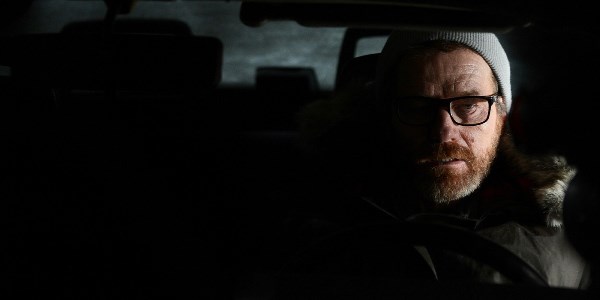
Well, it’s over. Five years and 62 episodes later, Breaking Bad has come to an end.
There’s a lot that can be said about this series finale, and I’m sure our perceptions of it will change the further away we get from it. Like all great works of art, Breaking Bad has left us in the best way possible: by mattering. Whether you loved the finale or hated it, there’s A Conversation waiting to be had in the weeks and years to come, and I’m eager to begin. This is a series that slowly but surely grew to dominate the culture discourse, and it’s changed the way we look at television. Only time will allow us the proper space we need to reflect, to ponder, and to figure out just what this show was all about, and whether it succeeded in being about it.
With all that said, here are my initial thoughts.
“Felina” is the messiest episode of the season. It might also be its best. It plays out just as methodically as we’ve come to expect from the series, but it’s also so unflinchingly optimistic that it almost feels like a different show. This is the happiest ending we could have gotten for everyone involved without it feeling completely unbelievable, and if there’s anything I felt sure of going into it, it’s that we wouldn’t get a happy ending. Is it my fault for thinking the show was going to go somewhere more tragic (and, to a certain extent, wanting it to happen), or is it fair to blame the show for seemingly not delivering what was promised?
Vince Gilligan said from the very beginning that Breaking Bad was going to be a show about Mr. Chips becoming Scarface. It was about a fall from grace, the corruption of one man’s soul so totally that the Walter White of Season 1 now seems like an entirely different person than the one in Season 5. But as I pointed out a few weeks ago, Breaking Bad has always been about the struggle between Walt’s dual natures, Walter White the family man versus Heisenberg the Devil himself. For 61 episodes, it looked like Heisenberg would be the ultimate winner. But here, in Episode 62, the original Walt makes a triumphant comeback.
It’s a dramatic shift that completely changes my interpretation of last week’s episode, “Granite State.” At first, I thought ending that episode with Walt leaving the bar after seeing Gretchen and Elliott on television was a sign that Heisenberg had returned, that deep down his pride couldn’t even be defeated by hitting rock bottom, and he was destined to fall even further and hurt more people on his way out. The final shot of the glass of alcohol being left on the bar suggested to me that Walt had left one vice for his original addiction, his ego, and that his final overdose was yet to come.
Now, though, it’s clear that was simply meant to symbolize that he has left his addiction behind. The Walter White of “Felina” has no pride left. He is completely repentant. He seeks only to apologize to the people he loves, secure their future, and obtain some sort of justice for the death of Hank. There have been several points during the series when characters directly stated that death would be too easy for Walt, too light a punishment, and that he’d be too cowardly to do it himself. In “Felina,” he does enough healing to earn a shuffle off this mortal coil, and he takes it like a man, standing upright.
It was Gilligan’s Catholic upbringing that partially inspired him to create a show that explores not just evil, but its consequences. We watched Walt gradually slide down a slippery slope until he seemed to be the Devil incarnate, and then we saw his empire crumble, the people he loved forever damaged, assuming they were even still alive. It was Old Testament judgment, an eye for an eye, and while it was tragic, it was also satisfying to see Walt get what he deserves.
But Catholicism is also about redemption. “Granite State” saw Walt leaving his ego behind, and “Felina” finds him receiving some of the grace that by definition he doesn’t deserve. His opening lines are a prayer—“Just get me home, I’ll do the rest”—and God, or the universe, or Vince Gilligan, grants him his wish. What follows is a twisted tale of self-sacrifice in which Walt assures his children’s financial future, reveals the location of Hank’s body, poisons Lydia, says goodbye to his wife and daughter and gets one last look at his son before saving Jesse’s life by taking out Uncle Jack and his gang.
It would be a mistake to interpret this as “Walt wins.” It’s more accurate to say that he dies knowing that he’s done pretty much everything he can to bring closure to the entire affair. He can never get his family back, Hank is still dead, and he’ll never get to enjoy spending all the money he made selling meth. But he finally admits his own guilt and does his best to act not in his own interests, but those of others. Before taking his last stand against Uncle Jack, he visits Skyler and finally says the confession two years in the making: “I did it for me. I liked it. I was good at it. And I was really… I was alive.” Later on, he rejects Jack’s offer to get back the tens of millions of dollars he lost. This is not the same Walter White that just two episodes ago was pushing his last barrel of money—his prized possession–through the desert. As was first stated in the pilot, chemistry is the study of change. Breaking Bad has been the study of Walter White’s transformation.
“Felina” has two main problems that prevent it from fully sticking the landing. The first is that it’s just a bit too neat, with several plotlines being wrapped up with little explanation as to how Walt pulled them off or why characters act the way they do. How did he track down Badger and Skinny Pete? How did he get the ricin into the packet of Stevia? What if someone else had sat down at Lydia’s table? And since when is Jack so concerned about his reputation that he’d take the time to pull in Jesse instead of killing Walt outright? You can feel Vince Gilligan at work behind the scenes, moving the pieces around instead of letting these situations play out organically.
The second problem is how this episode fits with the rest of the series. To use a Star Wars analogy, since that’s another cultural phenomenon that dealt heavily with themes of a Light Side and a Dark Side: We spent five years thinking we were watching Revenge of the Sith, only to have the final episode reveal we were actually watching Return of the Jedi. It’s not hard not to feel a bit cheated after such a sudden switch. But maybe that’s the point. By taking Walt to hell and back over the course of the final three episodes, Vince Gilligan confronts us with our own morality and sense of justice. Does Walt get off too easy? If we want him to suffer more, what does that say about us? Maybe this doesn’t feel satisfying because grace, in the Christian sense of the term, is never satisfying. That’s what makes it grace.
But maybe I’m reading this all wrong.
Is Walt really redeemed in the end? The more I think about it, the more I realize it’s possible to read this episode as the dark and tragic return of his ego. He goes from losing everything to solving all his problems (or at least, all the ones that are solvable) by sheer intellect, lying and outsmarting everyone to the bitter end. Everything Walt does in “Felina” is arguably motivated by the desire to justify his actions, to leave his children money and reclaim Heisenberg Blue as his recipe and his alone. Jesse is the Christ-like figure here, a bearded man who we’re reminded once wanted to be a carpenter, suffering for Walt’s sins. He doesn’t kill Walt when he has the chance, even though he has every reason to do so. He ends the series alive and free, and he’s managed to avoid losing his soul.
The closing scene finds Walt alone in the meth lab. This could be his last chance to consider the awful place this equipment led him, or it could represent the final triumph of Heisenberg. The last thing he does before collapsing on the floor is gaze at his reflection, once again entranced by himself. It was his brilliance that allowed him to take out Jack and his gang, and we shouldn’t forget that he did it both for revenge and so nobody else would ever get the credit for his meth recipe. Badfinger’s “Baby Blue” kicks in on the soundtrack, and the lyrics go, “Didn’t know you’d think that I’d forget or I’d regret the special love I had for you, my baby blue.” Is Walt truly redeemed, or was this all once again in the service of his own ego?
Maybe it’s a bit of both. The final shot finds the camera rising above him, peering down from a God’s-eye view. His arms are outstretched and he’s bleeding from the side, a clear reference to Christ. But then the metal fixtures form a cross over his body, and he doesn’t fit on it. He’s upside-down, and perfectly askew. He’s not the martyr or savior he views himself to be, he’s just a twisted imitation of one.
Perhaps Walt was so corrupt, not even death was enough to break the bad.
—
What do you think? Is “Felina” a satisfying finale? Has Walt redeemed himself as much as possible, or is Heisenberg still inside him pulling the strings? Let me know in the comments section below!
—
Read More:
Breaking Bad Season 5 Episode 9: Blood Money.
Breaking Bad Season 5 Episode 10: Buried
Breaking Bad Season 5 Episode 11: Confessions
Breaking Bad Season 5 Episode 12: Rabid Dog
Breaking Bad Season 5 Episode 13: To’hajiilee
Breaking Bad Season 5 Episode 14: Ozymandias
Breaking Bad Season 5 Episode 15: Granite State
Previous Post

September 29, 2013
Review: There's More To "Masters Of Sex" Than Just Sex
Next Post

November 4, 2013 The Wasted Potential of "Ender's Game"
Browse Our Archives
Select a Category Film Reviews Interviews Lists News TV Reviews
Select a Month January 2014 November 2013 September 2013
Follow Us!
TAKE THE
Religious Wisdom Quiz
What was the primary legal document?
Select your answer to see how you score.
Deed Contract Tablet Scroll
Related posts from Cinemeditations

"Almost Human" Review: Can The Show Go More...

Review: "Almost Human" Finds Humanity Amidst Technology
Review: There's More To "Masters Of Sex" Than...

"Breaking Bad" Review: Stuck In A "Granite State"
TRENDING AT PATHEOS Religious Music & Entertainment

"Les Diabolique" and Transgression
Alongside something like Arrival, Vertigo, or Charade, Les Diaboliques is a...

"The Plague Dogs" and Mortality
So, flashback to the late 70s, early 80s. Walt Disney Studios is...

With the recent and highly successful release of Christopher Nolan’s epic film,...

"L'avventura" and Human Weakness
Today's piece is going to be a little different for a few...

I first want to apologize for not posting or writing anything. I'm...

I've engaged in the multi-year project of reading through the Church Fathers,...
view all Religious Music & Entertainment blogs
Ad-Free & Subscriber Log-In Subscription Support
- About Us
- 2026 Calendar
- Videos
- Podcasts
- Library of World Religions
- Faith In Media Tracker
- Advertise With Us
- Write for Us
- Privacy Policy
- Terms of Service
- Do Not Sell My Data
- Contact Us
- Radiant Digital
- Manage Newsletter Subscriptions
- Unsubscribe From Notifications
- Sitemap
Copyright 2008-2026, Patheos. All rights reserved.
Subscription Support Ad-Free & Subscriber Log-In
Follow Patheos