
BuddhistCatholicContemplativeEvangelicalGeneral ChristianHinduJewishLatter-day SaintMuslimNew VisionsProgressive Christian
Beliefs
- Buddhist
- Catholic
- Contemplative
- Evangelical
- General Christian
- Hindu
- Jewish
- Latter-day Saint
- More Voices
- Muslim
- New Visions
- Pagan
- Progressive Christian
Topics
- Religion News
- Food and Religion
- Sports and Religion
- Religious Art
- Religious Music and Entertainment
- Religious Events
- History and Religion
- Style and Religion
- Politics and Religion
- Women in Religion
- Recreation Outdoors and Religion
- Business Finance and Religion
- Careers Workplace and Religion
- Education and Religion
- Family Parenting and Religion
- Health Fitness and Religion
- Home and Religion
- Relationships and Religion
- Technology and Religion
- Travel and Religion
Columnists
- Buddhist Columnists
- Business Finance and Religion Columnists
- Careers Workplace and Religion Columnists
- Catholic Columnists
- Contemplative Columnists
- Education and Religion Columnists
- Evangelists Columnists
- Family Parenting and Religion Columnists
- General Christian Columnists
- Health Fitness and Religion Columnists
- Hindu Columnists
- History and Religion Columnists
- Home and Religion Columnists
- Jewish Columnists
- More Voices Columnists
- Latter Day Columnists
- Muslim Columnists
- New Visions Columnists
- Nonreligious Columnists
- Pagan Columnists
- Politics and Religion Columnists
- Progressive Columnists
- Recreation Outdoors and Religion Columnists
- Relationships and Religion Columnists
- Religion News Columnists
- Religious Art Columnists
- Religious Events Columnists
- Religious Music and Entertainment Columnists
- Sports and Religion Columnists
- Style and Religion Columnists
- Technology and Religion Columnists
- Travel and Religion Columnists
- Women in Religion Columnists
Resource Library
- 2026 Calendar
- Library of World Religions
- The 100 Most Holy Places on Earth
- Patheos Answers
- Podcasts
- Videos
- Faith Leaders Database
- Anglican Episcopalian
- Bahai
- Baptist
- Buddhism
- Christianity
- Confucianism
- Eastern Orthodoxy
- Hinduism
- Holiness and Pentecostal
- ISKCON
- Islam
- Judaism
- Lutheran
- Methodist
- The Church of Jesus Christ of Latter-day Saints
- New Age
- Paganism
- Presbytarian and Reformed
- Protestantism
- Religion Behind the Scenes
- Roman Catholic
- Scientology
- Shia Islam
- Sikhism
- Sufism
- Sunni Islam
- Taoism
- Zen
- See all religions
Research Tools
 Ad-Free & Subscriber Log-In Subscription Support
Ad-Free & Subscriber Log-In Subscription Support
Follow Patheos 

- Trending:
- Forgiveness
- |
- Marriage
- |
- Consciousness
- |
- Death Penalty
- |
- Election
- |
- Halloween
 Church for Men
- Home
- Evangelical
- Why informality is suddenly OK
Why informality is suddenly OK
Last updated on: July 14, 2015 at 5:33 am by David Murrow
Why informality is suddenly OK 2015-07-11T18:35:29-09:00 David Murrow
Patheos Explore the world's faith through different perspectives on religion and spirituality! Patheos has the views of the prevalent religions and spiritualities of the world.
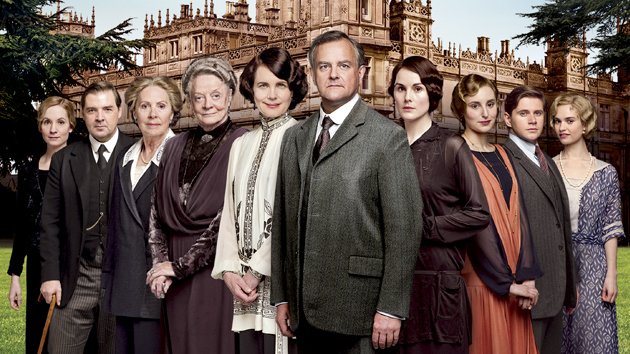 (Author’s note: I’m taking a summer break, reprinting posts from my blog at www.ChurchForMen.com. This post originally appeared in January 2013. It was part of a series about the huge changes that are rocking Western society – and their impact on men and the church. I am not advocating these changes; I’m simply trying to explain why they’re happening, to help believers respond with greater understanding to those they may disagree with.)
I’m one of the millions of viewers enchanted by TV’s hottest show – Downton Abbey. It’s the story of an aristocratic family and their servants, set in England a century ago. (Guys, I know it sounds boring, but it’s actually terrific.)
Downton takes us inside a society built on formality. Every human interaction is carefully scripted. There’s proper dress for every occasion. Dinner must be served an exact way. Conversations are diplomatic and indirect. People control their passions and lusts (for the most part). Manners matter. Duty reigns supreme. The characters consistently do what they think is right, even if it costs them everything.
But as the show progresses through the 1910s and 20s, the formal society slowly fades, yielding to the informal world we know today.
The Crawley family would not recognize the world we live in. There are no formal class distinctions. We say whatever we want. We rarely dress for any occasion. Manners matter little. We indulge ourselves. Etiquette, social conventions and duty have taken a backseat to familiarity, convenience and practicality. We celebrate the exploits of those who lack self-control.
Let me be clear: I do not mourn the passing of the Edwardian era. I see little value in changing clothes six times a day, following traditions that have lost all meaning, or beating about the bush. The servant-and-master model has run its course, and good riddance.
But I am curious as to why our world became so informal so fast. Why, even in my lifetime I’ve seen people stop dressing for all but the most solemn occasions. Why so many aspects of politeness have gone by the wayside. Why expediency almost always trumps “doing the right thing.”
Downton Abbey is so unusual because it runs counter to the informal, anti-institutional bias that’s been the lifeblood of television since 1970. Hit comedies such as M*A*S*H, All in the Family, The Simpsons and Seinfeld and won huge ratings by lampooning long held social norms. Meanwhile, TV dramas (viewer discretion advised) have been busy desensitizing audiences to mayhem, cruelty and unrestrained passion.
Then an uptight drama like Downton Abbey dominates the ratings. What gives?
I believe the success of Downton reflects a longing among Westerners for a more genteel, controlled era. Downton represents a time when the lines were bright and the penalties for stepping outside them were severe. Such rules may seem oppressive or silly to us, yet they fostered the peaceful, prosperous, liberal society we enjoy today. Only God knows how many of these rules can fall before our society falls as well.
And speaking of liberal, how is it that Downton has found an audience on PBS? Among its most ardent fans are the very counter-culturists who spent their youths rebelling against the oppressive social rules Downton celebrates. At some level liberals must realize the government they lionize cannot exist in a world with no cohesion. Someone has to maintain the institutions that make the welfare state possible.
One more thing Downton offers that almost no other show does – morally upright male characters. Lord Grantham and his heir, Matthew Crawley, are men of impeccable integrity. Their servants, Mr. Carson and Mr. Bates are equally principled. It’s been a long time since a TV drama offered such an array of kind, noble men in the lead roles. (Meanwhile, the show’s bad guy is a vindictive, devilish homosexual. Why liberals aren’t screaming about that plot element is a mystery to me.)
Lord Grantham, the patriarch, does his best to stand firm as the first waves of modernity begin washing away the foundations of the old agrarian order. (Spoiler alert: If you haven’t watched the show, don’t read the rest of this paragraph). His youngest daughter breaks social ranks and marries one of the servants. His eldest daughter has a one-night stand that threatens to bring disgrace on the family. And his middle daughter learns to drive a car and becomes a suffragette.
Lord Grantham objects vehemently as his daughters begin dismantling the cultural framework that underpins their noble status. Yet even as his children reject his ways, he does not reject them. Grantham is a true Christ figure – a loving father, a generous provider and a fierce advocate for his children. He clings to traditions not for traditions’ sake, but because he believes that’s what is best for his daughters.
That Downton Abbey is so popular tells us something about modern viewers. We long for men like Lord Grantham, Matthew, Carson and Bates. Our anything-goes generation is looking for limits. As the baby boomers age, that old agrarian ethos is looking better and better.
As C. S. Lewis said, the basic moral law is written on our hearts. We don’t really want to be our own gods. We’re like toddlers – eventually we tire of being in charge and we long to submit ourselves to a higher power that will take care of us and tell us what we’re supposed to do. We want a Lord in our lives who will look after us – whether his name is Grantham or Jesus.
The Gospel grants us freedom and autonomy – but it also provides a framework in which the followers of Jesus are supposed to live. Such a framework may seem oppressive in our choice-driven age. As Christians, we don’t always understand why God tells us to do certain things, but we walk by faith — not by sight. We do as our Lord commands, whether we understand or not.
Rather than weaken this framework (as some churches are doing in the name of “inclusiveness”) we would do well to maintain it. Obedience to God is not oppression – it’s the only way to experience true freedom. Like Lord Grantham, we must object vehemently when truth is compromised, while at the same time responding with love to all of God’s children.
 David Murrow is the author of the bestselling book, Why Men Hate Going to Church. David’s books have sold more than 175,000 copies in 12 languages. He speaks to groups around the world about Christianity’s persistent gender gap. He lives in Alaska with his wife of more than 30 years, professional silk artist Gina Murrow. Learn more about David at his Web site, www.churchformen.com, or join the conversation on his Facebook page, www.facebook.com/churchformen. Don’t forget to share this page by clicking on the links below, or scroll down and leave a comment (right below those annoying ads that pay for this blog).
Previous Post

July 7, 2015
Why extramarital sex is suddenly OK
Next Post

July 27, 2015 Comedy: the key to reaching young men?
Browse Our Archives
Select a Category boys Bullying children's ministry Church Church planting church structure Communication Conservatism devotion Discipleship eternity evangelism Family Fathers Feminism Feminization giving thanks God Humor Jesus Leadership Liberalism Marketing marriage masculinity men's ministry men's studies mission movies Parenting Pastoring persecution Politics pop culture Prayer Preaching and teaching Prison Ministry religion secularism sex spiritual growth sports women Worship youth culture youth ministry
Select a Month July 2020 April 2020 January 2020 December 2019 November 2019 August 2019 July 2019 June 2019 May 2019 April 2019 March 2019 February 2019 January 2019 December 2018 November 2018 October 2018 May 2016 April 2016 March 2016 February 2016 January 2016 December 2015 November 2015 October 2015 September 2015 August 2015 July 2015 June 2015 May 2015 April 2015 March 2015 February 2015 January 2015 December 2014 November 2014 October 2014 September 2014 August 2014 July 2014 June 2014 May 2014 April 2014 March 2014 February 2014 January 2014 December 2013 November 2013 October 2013 September 2013 August 2013 July 2013 June 2013 May 2013 April 2013 March 2013
Follow Us!
TAKE THE
Religious Wisdom Quiz
What nation captured Jerusalem and took Daniel captive?
Select your answer to see how you score.
Egypt Assyria Persia Babylonia
Related posts from Church for Men

Post-COVID Slump: Is it Just a Flesh Wound?

Why Evangelical Men Prefer Trump over Pence

Worship Leader Accused of Playing Well-Known Song

Flame-throwers in Church? How Much Stagecraft is too...
TRENDING AT PATHEOS Evangelical

The REST of Your Life: A Creative Wrestles...
This week I had a conversation with a good friend from church....

How the author of the world's best hymn...
I've been working with John Newton for a while now. This makes...

Long before this Lectio Divina, Psalm 130 - the song - started...

What About the Trees? Another Living Parable
After I finished writing the last article about falling leaves as a...

Why Classical Education Is a Conversation, Not a...
Come and Read: Joy in Classical Education When I was a little...

Cornell University has received a great deal of negative publicity and intense...
view all Evangelical blogs
Ad-Free & Subscriber Log-In Subscription Support
- About Us
- 2026 Calendar
- Videos
- Podcasts
- Library of World Religions
- Faith In Media Tracker
- Advertise With Us
- Write for Us
- Privacy Policy
- Terms of Service
- Do Not Sell My Data
- Contact Us
- Radiant Digital
- Manage Newsletter Subscriptions
- Unsubscribe From Notifications
- Sitemap
Copyright 2008-2026, Patheos. All rights reserved.
Subscription Support Ad-Free & Subscriber Log-In
Follow Patheos