
BuddhistCatholicContemplativeEvangelicalGeneral ChristianHinduJewishLatter-day SaintMuslimNew VisionsProgressive Christian
Beliefs
- Buddhist
- Catholic
- Contemplative
- Evangelical
- General Christian
- Hindu
- Jewish
- Latter-day Saint
- More Voices
- Muslim
- New Visions
- Pagan
- Progressive Christian
Topics
- Religion News
- Food and Religion
- Sports and Religion
- Religious Art
- Religious Music and Entertainment
- Religious Events
- History and Religion
- Style and Religion
- Politics and Religion
- Women in Religion
- Recreation Outdoors and Religion
- Business Finance and Religion
- Careers Workplace and Religion
- Education and Religion
- Family Parenting and Religion
- Health Fitness and Religion
- Home and Religion
- Relationships and Religion
- Technology and Religion
- Travel and Religion
Columnists
- Buddhist Columnists
- Business Finance and Religion Columnists
- Careers Workplace and Religion Columnists
- Catholic Columnists
- Contemplative Columnists
- Education and Religion Columnists
- Evangelists Columnists
- Family Parenting and Religion Columnists
- General Christian Columnists
- Health Fitness and Religion Columnists
- Hindu Columnists
- History and Religion Columnists
- Home and Religion Columnists
- Jewish Columnists
- More Voices Columnists
- Latter Day Columnists
- Muslim Columnists
- New Visions Columnists
- Nonreligious Columnists
- Pagan Columnists
- Politics and Religion Columnists
- Progressive Columnists
- Recreation Outdoors and Religion Columnists
- Relationships and Religion Columnists
- Religion News Columnists
- Religious Art Columnists
- Religious Events Columnists
- Religious Music and Entertainment Columnists
- Sports and Religion Columnists
- Style and Religion Columnists
- Technology and Religion Columnists
- Travel and Religion Columnists
- Women in Religion Columnists
Resource Library
- 2026 Calendar
- Library of World Religions
- The 100 Most Holy Places on Earth
- Patheos Answers
- Podcasts
- Videos
- Faith Leaders Database
- Anglican Episcopalian
- Bahai
- Baptist
- Buddhism
- Christianity
- Confucianism
- Eastern Orthodoxy
- Hinduism
- Holiness and Pentecostal
- ISKCON
- Islam
- Judaism
- Lutheran
- Methodist
- The Church of Jesus Christ of Latter-day Saints
- New Age
- Paganism
- Presbytarian and Reformed
- Protestantism
- Religion Behind the Scenes
- Roman Catholic
- Scientology
- Shia Islam
- Sikhism
- Sufism
- Sunni Islam
- Taoism
- Zen
- See all religions
Research Tools
 Ad-Free & Subscriber Log-In Subscription Support
Ad-Free & Subscriber Log-In Subscription Support
Follow Patheos 

- Trending:
- Forgiveness
- |
- Marriage
- |
- Consciousness
- |
- Death Penalty
- |
- Election
- |
- Halloween
 Christ Path Seminar
- Home
- New Visions
- Occupy Spirituality: A Dance between Body, Mind and Soul
Occupy Spirituality: A Dance between Body, Mind and Soul
Last updated on: September 12, 2013 at 2:02 pm by Matthew Fox
Occupy Spirituality: A Dance between Body, Mind and Soul 2013-09-12T14:02:46-04:00 Matthew Fox
Patheos Explore the world's faith through different perspectives on religion and spirituality! Patheos has the views of the prevalent religions and spiritualities of the world.
If the spirituality of the Occupy Generation as an ongoing dialogue between experience and concept – what is the nature of that experience? How is it grounded in daily practice? From our intensive conversations with many young people, we gained an exciting picture of solidly practical, embodied, and yet deeply mystical spirituality.
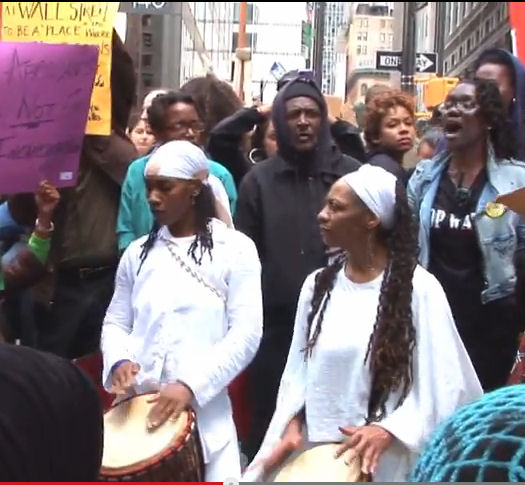
Drumming, singing, marching and dancing are all part of the embodied spirituality of the Occupy Generation.
An Excerpt from Chapter 2 of Occupy Spirituality: A Radical Vision for a New Generation
by Adam Bucko and Matthew Fox, published by North Atlantic Books, copyright © 2013. Reprinted by permission of publisher.
ADAM BUCKO: A third point in this new spirituality is that practice goes beyond traditional contemplative exercises. People still practice meditation and contemplative prayer, but this new spirituality understands that the journey needs to include good psychology and shadow work, as well as integration of the body through things like yoga, sacred sexuality, and deep human relationships. This includes conscious romantic relationships as a path into life and into spirituality. Basically this new spirituality expands the focus of transformation from just one dimension of our being—the soul—to all aspects of our being.
As one young woman told us: “The spirituality that my generation is interested in is personal, nonstructured and all-encompassing. We tend to use numerous methods to deepen spiritual experience, including nature, yoga, meditation, conscious-community, art, and activism. We take and blend what we believe serves our spiritual path from numerous sources, including religion, ritual, psychology, and movement. Because it is sourced from our personal experience, we don’t feel pressured or compelled to conform to a specific teaching or institution.”
MATTHEW FOX: Yes, and included too, I think, would be the role of creativity as a path, as a spiritual discipline, as a yoga—what I’ve called and practiced, through thirty-some years of teaching spirituality, “art as meditation.” So that focusing through clay, through dance, through painting, through music, and so forth—that too is meditation, and that too incorporates the body. All art is bodily. And that can be missed. Of course, for many people, it also includes athletics, sport—running or climbing or walking or hiking. These should not be denigrated as inferior, so long as you bring your heart and your focus to it.
I know people who run on a treadmill while listening to discourses on spirituality and mysticism and so forth. So again, I think the world has opened up so much, and part of it is the availability of electronic teaching devices—and music, of course—that there are so many more ways to practice spirituality. Massage too. And they’re all saying what you’re saying, that including the body is including the soul. It’s not leaving it at the door. And in a way, I think, we may be just beginning as a species to integrate in this regard.
ADAM BUCKO: I think it’s a completely new development as a species.
MATTHEW FOX: And yet, of course, if you look back to olden times, the work, for example, that the monks did, and the struggle to survive that our species has gone through at so many times in so many cultures, that very much included the body. The monastic vision was that work is prayer, too—working in the fields or carving the stones for the buildings in which you’re living, and so forth—that all of work can be prayer, as part of carrying your meditative consciousness with you. You can take that consciousness wherever you go.
As a Dominican, I was taught that study is also prayer, so study can be a spiritual practice—and needs to be. When we secularize study, which we ’ve done in our culture, you get bad results. You get very unhappy professors, you really do. You get people set up for addiction, and you have a joyless educational project. The joy is missing, because facts in themselves, knowledge in itself, does not satisfy the soul. There ’s something deeper that we yearn for and ache for, and that needs to be integrated in all of our life efforts.
In our next post we explore the Occupy Generation’s passionate blending of spirituality with service and activism: their belief that to be spiritual demands taking a stand for justice and for the earth.
Till then, we invite your thoughts: How do you ground your spirituality in experience? Do you experience your spirituality as an embodied part of your being, and physical practices as gateways to mystical experience?
__________________________________________________________
Don’t miss the Occupy Spirituality Book Club on Patheos, September 16-30!
See when Matthew Fox and Adam Bucko will be speaking about Occupy Spirituality in your area: http;//www.matthewfox.org/calendar
Previous Post

September 2, 2013
Faith in the Occupy Generation: Balancing Concept and Experience
Next Post
September 6, 2013 Spirituality Combined with A Call to Action
Browse Our Archives
Select a Category Andrew Harvey Christ Path program Community Creation Spirituality Deep Ecumenism Gail Ransom Gospel of Thomas Historical Jesus Matthew Fox Mysticism Occupy Generation Occupy Spirituality Phila Hoopes Sacred Activism Uncategorized Via Creativa Via Negativa Via Positiva Via Transformativa
Select a Month September 2013 August 2013 July 2013 June 2013
Follow Us!
TAKE THE
Religious Wisdom Quiz
Who said, "You come against me with sword and spear, but I come against you in the name of the Lord Almighty"?
Select your answer to see how you score.
David Eli Jonathan Saul
Related posts from Christ Path Seminar

Don't Just Read Occupy Spirituality - Live It!

The Difference Between Religion and Spirituality
Occupy Spirituality: Creating Communities in the Service of...

Occupy Spirituality: Redefining Leadership as Dynamic, Democratic and...
TRENDING AT PATHEOS New Visions

Did Prayer Cure His Cancer? Or Was It...
At 4 AM one morning, Joshua W. Brown’s wife awoke to a...

8 Ways a Near-Death Experience Rewires the Soul
Does Consciousness Survive Physical Death? After 50 Years of Research, Dr. Raymond...

Holy Longing: What Our Restlessness Is Telling Us
“One can find so many pains when the rain is falling.” -John...

What this is NOT about. This blog is definitely not about...

Who said the Israelites were God’s chosen? That’s right, they did. Who...

The Spirit World Is the Real World: God...
A Monk’s Wisdom on Body and Spirit I sit with Brother Martin...
view all New Visions blogs
Ad-Free & Subscriber Log-In Subscription Support
- About Us
- 2026 Calendar
- Videos
- Podcasts
- Library of World Religions
- Faith In Media Tracker
- Advertise With Us
- Write for Us
- Privacy Policy
- Terms of Service
- Do Not Sell My Data
- Contact Us
- Radiant Digital
- Manage Newsletter Subscriptions
- Unsubscribe From Notifications
- Sitemap
Copyright 2008-2026, Patheos. All rights reserved.
Subscription Support Ad-Free & Subscriber Log-In
Follow Patheos