
BuddhistCatholicContemplativeEvangelicalGeneral ChristianHinduJewishLatter-day SaintMuslimNew VisionsProgressive Christian
Beliefs
- Buddhist
- Catholic
- Contemplative
- Evangelical
- General Christian
- Hindu
- Jewish
- Latter-day Saint
- More Voices
- Muslim
- New Visions
- Pagan
- Progressive Christian
Topics
- Religion News
- Food and Religion
- Sports and Religion
- Religious Art
- Religious Music and Entertainment
- Religious Events
- History and Religion
- Style and Religion
- Politics and Religion
- Women in Religion
- Recreation Outdoors and Religion
- Business Finance and Religion
- Careers Workplace and Religion
- Education and Religion
- Family Parenting and Religion
- Health Fitness and Religion
- Home and Religion
- Relationships and Religion
- Technology and Religion
- Travel and Religion
Columnists
- Buddhist Columnists
- Business Finance and Religion Columnists
- Careers Workplace and Religion Columnists
- Catholic Columnists
- Contemplative Columnists
- Education and Religion Columnists
- Evangelists Columnists
- Family Parenting and Religion Columnists
- General Christian Columnists
- Health Fitness and Religion Columnists
- Hindu Columnists
- History and Religion Columnists
- Home and Religion Columnists
- Jewish Columnists
- More Voices Columnists
- Latter Day Columnists
- Muslim Columnists
- New Visions Columnists
- Nonreligious Columnists
- Pagan Columnists
- Politics and Religion Columnists
- Progressive Columnists
- Recreation Outdoors and Religion Columnists
- Relationships and Religion Columnists
- Religion News Columnists
- Religious Art Columnists
- Religious Events Columnists
- Religious Music and Entertainment Columnists
- Sports and Religion Columnists
- Style and Religion Columnists
- Technology and Religion Columnists
- Travel and Religion Columnists
- Women in Religion Columnists
Resource Library
- 2026 Calendar
- Library of World Religions
- The 100 Most Holy Places on Earth
- Patheos Answers
- Podcasts
- Videos
- Faith Leaders Database
- Anglican Episcopalian
- Bahai
- Baptist
- Buddhism
- Christianity
- Confucianism
- Eastern Orthodoxy
- Hinduism
- Holiness and Pentecostal
- ISKCON
- Islam
- Judaism
- Lutheran
- Methodist
- The Church of Jesus Christ of Latter-day Saints
- New Age
- Paganism
- Presbytarian and Reformed
- Protestantism
- Religion Behind the Scenes
- Roman Catholic
- Scientology
- Shia Islam
- Sikhism
- Sufism
- Sunni Islam
- Taoism
- Zen
- See all religions
Research Tools
 Ad-Free & Subscriber Log-In Subscription Support
Ad-Free & Subscriber Log-In Subscription Support
Follow Patheos 

- Trending:
- Forgiveness
- |
- Marriage
- |
- Consciousness
- |
- Death Penalty
- |
- Election
- |
- Halloween
 Christopher Closeup
- Home
- Catholic
- Religious Music & Entertainment
- The Beauty of Blessings & the Pain of the World: Mark Shriver Explores the Life of Pope Francis
The Beauty of Blessings & the Pain of the World: Mark Shriver Explores the Life of Pope Francis
Last updated on: November 28, 2016 at 9:44 am by Tony Rossi
The Beauty of Blessings & the Pain of the World: Mark Shriver Explores the Life of Pope Francis 2016-11-28T09:44:01-05:00 Tony Rossi
Patheos Explore the world's faith through different perspectives on religion and spirituality! Patheos has the views of the prevalent religions and spiritualities of the world.
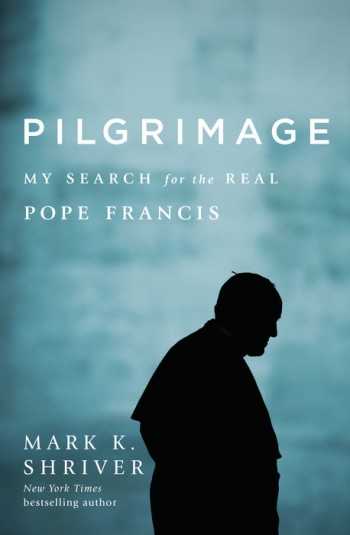 Most people in the United States didn’t know anything about Cardinal Jorge Mario Bergoglio until 2013, when he was elected to lead the Catholic church and became known as Pope Francis. The world slowly came to respect this humble and charismatic man who asked people to pray for him, paid his own hotel bill, and reached out to the most marginalized in society.
Christopher Award-winning author, Mark K. Shriver found himself captivated by Pope Francis as well and set out on a journey to learn more about the people, culture and experiences that formed him in Argentina. Along the way, Mark also found his own Catholic faith renewed.
He shares the pontiff’s story – and his own – in the book, “Pilgrimage, My Search for the Real Pope Francis.” Here is an edited version of our interview. The full podcast can be found at the end of this post.
Tony Rossi: This is a real in depth look into Pope Francis’s life, and it depended on a lot of research on your part. What made you decide to pursue such a big undertaking?
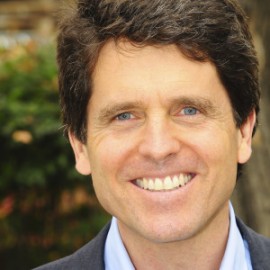 Mark K. Shriver: Pope Francis obviously is a Jesuit, and I went to a Jesuit high school here in Maryland, Georgetown Preparatory School. I went to a Jesuit college, Holy Cross College, up in Worcester, Massachusetts. I think they’re fantastic teachers.
He [also] had a series of gestures at the beginning of his papacy which caught me off guard, and caught my attention: asking the people to bless him before he gave the blessing the night he came out onto St. Peter’s; the trip to Lampedusa to talk about migrants; the washing of the kids’ feet at the juvenile facility, including a Muslim girl. I have worked with juvenile delinquents in Baltimore City for five or six years, and honestly, I wouldn’t get on the ground of one of those juvenile jails and wash the feet of kids.
He had a series of gestures that made me go, ‘Wow, Is this guy for real? Are these PR stunts?’ I wanted to dig in. I had this wonderful opportunity to talk to dozens of his friends, read his homilies, spend two and a half years trying to understand the man better. That’s the journey that’s revealed in this book, to try and figure out whether he is the real deal.
TR: You quote the pope’s childhood friend, Oscar Crespo, saying of him, “His concern for the poor wasn’t just for the poor of pocketbook, but the poor of soul.” What did “poor of soul” mean to Pope Francis?
Mark K. Shriver: I think what Crespo’s talking about is that Bergoglio, at a young age, knew that it wasn’t just poor kids that he knew who needed help. It was really all of us. Because we’re all sinners, right? We’ve all got problems. We all make mistakes. We all sin everyday. We’re all broken human beings.
I think what Francis has opened my eyes to is to the concept of mercy, which is to enter into another person’s chaos, to their pain, to their suffering, but also to their joys. That takes time and that takes a real commitment to a personal relationship. That’s what he’s talking about. How do we enter in and help each other? Not just poor people, because the poor have much to teach those that have financial resources, but the poor in spirit, the poor that are struggling with physical or psychological problems. That’s all of us. He’s [saying] that we need to be more merciful to each other, and we need to have a more intimate relationship, not only with each other, but with God.
TR: You just mentioned mercy, and we’re so used to Pope Francis emphasizing mercy, I was surprised to learn that early in his priestly ministry, he engaged in what you say is the sins of “heavy handedness and self certainty.” He was kind of an authoritarian. In what ways was he like that?
Mark K. Shriver: Those are the quotes that he said in an early interview that he gave in “America” magazine. He makes it pretty clear that he was made provincial of the Jesuits in Argentina when he was very young, in his early 30s. He had not developed the skills and the ability to consult with people before making decisions, so he ended up being, as you said, very heavy handed and very authoritarian.
I think that burned a lot of bridges with other folks, other Jesuits in Argentina at a very tumultuous time in the history of the country, at the height of the dirty war where there was a lot of confusion and chaos… The Jesuits won’t say that he was banished or exiled to Cordoba for two years, but essentially that is what happened…I think during those two years he realized that he needed to change the way he acted and interacted with people.
TR: Let’s go back to his early life a little bit, because one of the primary influences in his life was his grandmother Rosa. Tell us about her and their relationship.
Mark K. Shriver: It’s a great relationship. Here is a woman who was born and raised in Italy, a peasant woman who comes over with her husband, sells their coffee house in Turin, takes the profit, stuffs it in her coat and comes across the Atlantic Ocean to be with other members of her family in Argentina. They live in Argentina and moved to Buenos Aires to raise a family. Their oldest son is Pope Francis’s dad, and all the time, when Pope Francis’s parents would go to work, they’d leave little Jorge Mario Bergoglio with the grandma.
The grandma was a devout Catholic, had a ton of energy, stood up to Mussolini in Italy. Sounded like a real pistol, a lot of energy. The young Bergoglio was essentially raised by her and his parents. He talked Italian in the home and learned about the saints, learned about the rituals of the Catholic church at the knee of his grandma. It sounds almost as I wrote in the book, an idyllic situation where the parents are both loving and supportive of the kid, and then also this grandma who lived literally around the corner was a huge influence on his life right up until she died, and he had already become a priest.
TR: You mentioned the word “idyllic” about the pope’s early life, but you also note in the book that he revealed once that it was filled with some broken relationships between the people around him. How do you think those moments shaped him?
Mark K. Shriver: As I was writing, this note came out in which he expressed that he had a lot of very sad moments in his life. Ultimately, it shed more light on the man as compared to confusing me, which it did at the outset. It made it clearer that this guy understands both the beauty of all the blessings he’s received, but also he understands that there is pain in the world and that it’s very real and that a lot of kids are in much tougher situations than he is and therefore we all need that touch of mercy, that life of mercy that he has been pushing for not only as pope, but also as cardinal and bishop and as a priest.
TR: One of the things that struck me about him is his openness to so many different types of people. In the book, you write about his working in his young days in a chemical laboratory for a woman named Esther, who is a Marxist Atheist. Yet she and Bergoglio respected each other, they debated with each other. How do you think that relationship affected his approach to dealing with people who think differently than we do?
Mark K. Shriver: He has said that Esther had a huge impact on his life, that the study of science and the logic behind it also had a profound influence on his life. You see a man who’s very thoughtful in his reasoning, who’s very thoughtful intellectually, but who has been exposed in Buenos Aires, to people like Esther…You’d almost expect him to be the opposite of what he is. He grows up in a heavily Catholic country, male dominated society, where there is almost no separation between church and state. Yet he is open-minded. He is not part of the power structure in Argentina. As a matter of fact, he chastised the power structure to be more caring about the poor and the forgotten and the voiceless. He’s open to other religions, whether it’s Islam or Judaism or Atheism, as exampled in his relationship with Esther. I think she helped broaden his horizons in a very profound way, and that’s had an influence on all of us today.
TR: It sounds like a cliché to say people can disagree without being disagreeable, but it’s almost like he embodies that lesson in an age when we seem to be losing the ability to do that.
Mark K. Shriver: I was thinking when you asked that question, Tony, there’s so many of us today who, when you disagree with someone, everybody gets in a fight, calls them names and degrades them. In reality, I think Pope Francis is from the mindset of, ‘I don’t necessarily agree with you but I’m going to listen to you, I’m going to learn from you, I’m going to share my perspective with you and we’re going to grow as a community.’ It’s very civil in that regard.
TR: This kind of goes along with what we’re talking about, but two of my favorite Pope Francis moments came before his visits to the United States during an ABC News special. At one point, he affirmed our responsibility to care for immigrants, which is usually seen as a liberal issue. And at another point, he affirmed the life of the unborn child, which is usually seen as a conservative issue. Now here in America, where we like to slap political labels on each other to an almost simplistic level, what good do you see from Pope Francis’s refusal to fully fall into either category?
Mark K. Shriver: I think it’s great. I wrote the other day that when I first heard of Pope Francis and spent a little time looking at him, I’m in the wing of the church that believes strongly in the social justice component of the church. Pope Francis talks a lot about the church’s mission to be with immigrants, to be with the voiceless, to be on the frontiers, as the Jesuits have said for centuries.
On the other hand, he challenges me right to my core about other issues, that I may not agree with the church on. You know, he’s not a liberal. He’s not a conservative. He is really a disciple of Jesus, and Jesus was a radical teacher. He challenged people 2,000 years ago, and it’s the same with this guy. Somebody said to me, ‘The book is really about who he is.’ And the answer is, ‘It is about who he is, but it’s really about W-H-O-S-E he is. He’s Jesus’s.’ As corny as that sounds, it permeates this guy’s core.
Jesus was a challenging figure if you really read it and contextualize what he’s saying. So is Pope Francis. He challenges me as a so-to-speak progressive. He challenges me on a bunch of different issues. Am I really as committed to Christ as I think I am?
TR: In “Pilgrimage,” you write about talking to a couple of priests, and you quote them as saying Francis once told priests with clean shoes on a rainy day that they hadn’t done anything because they returned “without the smell of sheep.” What does that idea of “the smell of sheep” mean about his approach to the priesthood, do you think?
Mark K. Shriver: I think it means that you’ve got to get out of your comfort zone and you’ve got to be out in the streets where there is mud, where there are potholes, where there are people that are struggling. If you sit around in your comfortable rectory or if you sit around in your comfortable home, for me, you’re not out on the street. You’re not where Christ is calling you to go. That’s hard. It’s a challenge. Do you really want to smell like the sheep?
It doesn’t have to be about just the poor, as we talked about a couple minutes ago. There are people that look and dress well, that live in fancy homes, but they are crumbling from the inside because of psychological or spiritual problems. Do you want to enter into that chaos and help them deal with that? It makes you more merciful and makes you a better human being and it helps them. But that’s hard work
TR: Everything The Christophers do revolves around this idea that “it’s better to light one candle than to curse the darkness.” In having investigated Pope Francis’s life, do you see that idea of lighting a candle rather than cursing the darkness present in his own life?
Mark K. Shriver: Absolutely. I think he lived his life consistently before he became pope and he talked about small gestures of mercy. Mercy and love ought to be shown more in deeds than in words.
I’ve struggled with the question, ‘How do I make a big impact in the world?’ I’m learning by reading him that there are small little gestures that add up to be a wave of change. It is lighting one candle. It may not seem like a big deal because the candle is just that. It’s a small candle or a big candle, but it’s better to do that. And if everybody did that, the world would be a lot lighter.
(To listen to my full interview with Mark Shriver, click on the podcast link):

Browse Our Archives
Select a Category Act One American Idol Andy Griffith Show Audrey Assad Baseball Bible Books Catholic Charities Christmas Christopher Awards Christopher Closeup Christopher News Notes Current Events Down syndrome Education Father Jonathan Morris Father Keller Films Forgiveness Fringe Government Hallmark History Holidays Humor Inspiration Leadership Lost Marriage Media Medical Military Movies Music NY Med Once Upon a Time Once Upon a Time Parenting Patheos Movie Club Person of Interest Politics Pope Francis Prayer Pro Life Saints Senior Citizens Signed Sealed Delivered Special Needs Sports Three Minutes a Day TV Uncategorized Volunteering Women Youth
Select a Month March 2017 February 2017 January 2017 December 2016 November 2016 October 2016 September 2016 August 2016 July 2016 June 2016 May 2016 April 2016 March 2016 February 2016 January 2016 December 2015 November 2015 October 2015 September 2015 August 2015 July 2015 June 2015 May 2015 April 2015 March 2015 February 2015 January 2015 December 2014 November 2014 October 2014 September 2014 August 2014 July 2014 June 2014 May 2014 April 2014 March 2014 February 2014 January 2014 December 2013 November 2013 October 2013 September 2013 August 2013 July 2013 June 2013 May 2013 April 2013 March 2013 February 2013 January 2013 December 2012 November 2012 October 2012 September 2012 August 2012 July 2012 June 2012 May 2012 April 2012 March 2012 February 2012 January 2012
Follow Us!
TAKE THE
Religious Wisdom Quiz
According to 2 Thessalonians, what are believers told to stand firm and hold fast to?
Select your answer to see how you score.
The faith once delivered The traditions of the elders The teachings passed on to them The word of God
Related posts from Christopher Closeup

The 2017 Christopher Award winners for TV, Film,...

Mary Tyler Moore Provided Catholic Laughs in Two...
Phillip Phillips Sings His Hit "Home" at Steven...

'We're All Sick Pilgrims Drifting Toward God, Whether...
TRENDING AT PATHEOS Catholic

Rejecting Doom: Christian Hope And Human Action
Christianity is a religion of hope. We are to have hope and...

It’s What Comes From Within Which Matters
One of the most difficult things for us to understand is why...

Why I Choose the Eucharist Over the Sermon
Choose the Eucharist, Not the Sermon What are we supposed to get...

5 Design Elements Found in Spiritually Rooted Homes
Putting Spirituality Into Home Decor Our homes are more than our living...

Credo: A Story of God Told with the...
About 10 years ago, I began to imagine a personal "Credo" that...

The Anatomy of Divine Revelation in Catholic Thought
The claim that God has made Himself known to human beings is...
view all Catholic blogs
Ad-Free & Subscriber Log-In Subscription Support
- About Us
- 2026 Calendar
- Videos
- Podcasts
- Library of World Religions
- Faith In Media Tracker
- Advertise With Us
- Write for Us
- Privacy Policy
- Terms of Service
- Do Not Sell My Data
- Contact Us
- Radiant Digital
- Manage Newsletter Subscriptions
- Unsubscribe From Notifications
- Sitemap
Copyright 2008-2026, Patheos. All rights reserved.
Subscription Support Ad-Free & Subscriber Log-In
Follow Patheos