
BuddhistCatholicContemplativeEvangelicalGeneral ChristianHinduJewishLatter-day SaintMuslimNew VisionsProgressive Christian
Beliefs
- Buddhist
- Catholic
- Contemplative
- Evangelical
- General Christian
- Hindu
- Jewish
- Latter-day Saint
- More Voices
- Muslim
- New Visions
- Pagan
- Progressive Christian
Topics
- Religion News
- Food and Religion
- Sports and Religion
- Religious Art
- Religious Music and Entertainment
- Religious Events
- History and Religion
- Style and Religion
- Politics and Religion
- Women in Religion
- Recreation Outdoors and Religion
- Business Finance and Religion
- Careers Workplace and Religion
- Education and Religion
- Family Parenting and Religion
- Health Fitness and Religion
- Home and Religion
- Relationships and Religion
- Technology and Religion
- Travel and Religion
Columnists
- Buddhist Columnists
- Business Finance and Religion Columnists
- Careers Workplace and Religion Columnists
- Catholic Columnists
- Contemplative Columnists
- Education and Religion Columnists
- Evangelists Columnists
- Family Parenting and Religion Columnists
- General Christian Columnists
- Health Fitness and Religion Columnists
- Hindu Columnists
- History and Religion Columnists
- Home and Religion Columnists
- Jewish Columnists
- More Voices Columnists
- Latter Day Columnists
- Muslim Columnists
- New Visions Columnists
- Nonreligious Columnists
- Pagan Columnists
- Politics and Religion Columnists
- Progressive Columnists
- Recreation Outdoors and Religion Columnists
- Relationships and Religion Columnists
- Religion News Columnists
- Religious Art Columnists
- Religious Events Columnists
- Religious Music and Entertainment Columnists
- Sports and Religion Columnists
- Style and Religion Columnists
- Technology and Religion Columnists
- Travel and Religion Columnists
- Women in Religion Columnists
Resource Library
- 2026 Calendar
- Library of World Religions
- The 100 Most Holy Places on Earth
- Patheos Answers
- Podcasts
- Videos
- Faith Leaders Database
- Anglican Episcopalian
- Bahai
- Baptist
- Buddhism
- Christianity
- Confucianism
- Eastern Orthodoxy
- Hinduism
- Holiness and Pentecostal
- ISKCON
- Islam
- Judaism
- Lutheran
- Methodist
- The Church of Jesus Christ of Latter-day Saints
- New Age
- Paganism
- Presbytarian and Reformed
- Protestantism
- Religion Behind the Scenes
- Roman Catholic
- Scientology
- Shia Islam
- Sikhism
- Sufism
- Sunni Islam
- Taoism
- Zen
- See all religions
Research Tools
 Ad-Free & Subscriber Log-In Subscription Support
Ad-Free & Subscriber Log-In Subscription Support
Follow Patheos 

- Trending:
- Forgiveness
- |
- Marriage
- |
- Consciousness
- |
- Death Penalty
- |
- Election
- |
- Halloween
 Christopher Closeup
- Home
- Catholic
- Religious Music & Entertainment
- Behind All Joy Lies the Cross: A Review of the Film “The Innocents”
Behind All Joy Lies the Cross: A Review of the Film “The Innocents”
Last updated on: June 27, 2016 at 8:32 am by Tony Rossi
Behind All Joy Lies the Cross: A Review of the Film “The Innocents” 2016-06-27T08:32:13-05:00 Tony Rossi
Patheos Explore the world's faith through different perspectives on religion and spirituality! Patheos has the views of the prevalent religions and spiritualities of the world.
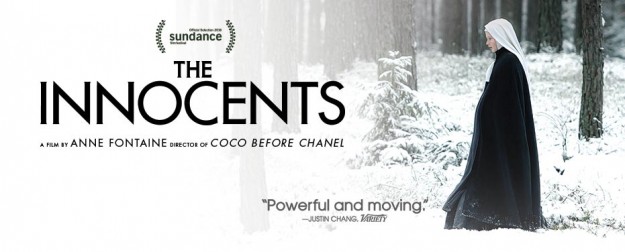 While the Soviets helped defeat the Nazis to secure a World War II victory for the Allies, they wound up bringing their own brand of vengeance and tyranny to the lands they took over in the ensuing years.
That is the starting point for a new inspired-by-a-true-story Polish/French film called “The Innocents,” which is set in motion by Soviet soldiers breaking into a convent and repeatedly raping the Sisters there over a period of three days, leaving several of them pregnant. (The sexual assaults take place before the movie begins and are only referred to in conversation, never depicted).
Here is the official synopsis:
Warsaw, December 1945: World War II is finally over, and Mathilde (Lou de Laâge), a young French Red Cross doctor, is treating the last of the French survivors of the German camps. When a panicked Benedictine nun appears at the clinic one night begging Mathilde to follow her back to the convent, what she finds there is shocking: a holy sister about to give birth and several more in advanced stages of pregnancy. A non-believer, Mathilde enters the sisters’ fiercely private world, dictated by the rituals of their order and the strict Rev. Mother (Agata Kulesza). Fearing the shame of exposure and the hostility of the new anti-Catholic Communist government, and facing an unprecedented crisis of faith, the nuns increasingly turn to Mathilde as their belief and traditions clash with harsh realities.
While the rape of the innocents is the story’s starting off point, the film isn’t about the soldiers but rather the after-effects on the victims, as well as the caring doctor who becomes their helper.
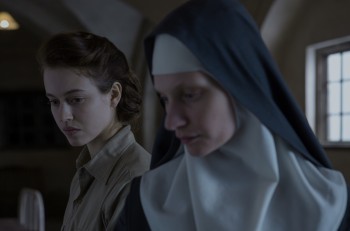 One of the film’s themes is that God can use anyone to bring His light into people’s lives. Though Mathilde is a nonbeliever, she serves as a role model of sorts to the Sisters that they don’t have to fear everyone and everything about the outside world. In addition to helping them deliver their babies, she provides them with understanding and compassion that offers them solace during the most trying time of their lives, after they’ve experienced the worst of humanity. And in one scene when Mathilde allows a pregnant Sister to listen to her baby’s heartbeat, joy intercedes in a situation in which there had only been darkness.
On the other hand, the Sisters reveal a spiritual side of life to Mathilde with which she may not have been familiar. In one scene, Mathilde listens to the Sisters singing their morning Lauds and she is obviously moved by the beauty of the harmony among them. She also senses a bond of community among the women that makes her long for something similar in her own life.
Through their interactions with each other, Mathilde and the Sisters become better human beings because they’ve been touched in their own unique way by beauty, truth, and goodness – all of which point to the divine.
Another noteworthy aspect of the film has to do with the culture’s attitude toward rape victims at that time – and within the religious community in particular. The Sisters feel like they have sinned by being raped and brought shame on themselves in the eyes of God and society.
While Mother Abbess says that God will help them through this ordeal, Mathilde insists, “God’s help won’t be enough. You need someone qualified. I can send a Polish Red Cross midwife.”
Mother Abbess responds, “If you do that, our convent will be shut down. If we’re evicted, our girls will be objects of shame. People will find out. Everyone will reject them. Many will die. My duty is to protect our secret.”
Mathilde agrees to secretly care for the pregnant Sisters herself, but the fact that she has to do it this way demonstrates how flawed everyone’s thinking is on this topic. These innocent women have enough pain to deal with in light of what happened. To be negatively judged by others is a grave injustice.
Along those same lines, the film also shows how a skewed adherence to rigid rules can lead down a hellish road. Without giving too much away, I’ll say that the story takes an unexpected turn in the final third of the movie. That turn is a result of the aforementioned shame and a total misunderstanding of what God wants from the lives of those devoted to serving Him. While some people believe that the modern Church indulges in an overabundance of mercy, “The Innocents” demonstrates the harm that a lack of mercy can do as well.
“The Innocents” also deserves credit for not whitewashing the effect this kind of crime can have on the faith of believers. Several of the Sisters struggle with doubt in the aftermath of the rapes, as revealed in this exchange:
Mathilde: Have none lost their faith?
Sister: You know, faith. At first you’re like a child, holding your father’s hand, feeling safe. Then a time comes – and I think it always comes – when your father lets go. You’re lost, alone in the dark. You cry out, but no one answers. Even if you prepare for it, you’re caught unawares. It hits you right in the heart. This is the cross we bear. Behind all joy lies the cross.
At the end of the film, the struggles with doubt aren’t resolved in some beatific vision from heaven, but rather in the choices the Sisters make regarding the best way to move forward with their lives – using love to navigate that fine line between faith and doubt.
Ultimately, “The Innocents” is a story of new life born out of horrific circumstances, a story of faith tested and distorted, and a story of the joy that can result when people choose love, service, and community.
“The Innocents” opens this Friday, July 1st, in New York and Los Angeles. Directed by Anne Fontaine. Written by Sabrine B. Karine, Alice Vial and Pascal Bonitzer. Cinematography by Caroline Champetier.
(Photos courtesy of Music Box Films)
Stay in touch! Like The Christophers on Facebook:

Next Post
July 8, 2016 Live Together or Die Alone: Reflecting on an Angry America
Browse Our Archives
Select a Category Act One American Idol Andy Griffith Show Audrey Assad Baseball Bible Books Catholic Charities Christmas Christopher Awards Christopher Closeup Christopher News Notes Current Events Down syndrome Education Father Jonathan Morris Father Keller Films Forgiveness Fringe Government Hallmark History Holidays Humor Inspiration Leadership Lost Marriage Media Medical Military Movies Music NY Med Once Upon a Time Once Upon a Time Parenting Patheos Movie Club Person of Interest Politics Pope Francis Prayer Pro Life Saints Senior Citizens Signed Sealed Delivered Special Needs Sports Three Minutes a Day TV Uncategorized Volunteering Women Youth
Select a Month March 2017 February 2017 January 2017 December 2016 November 2016 October 2016 September 2016 August 2016 July 2016 June 2016 May 2016 April 2016 March 2016 February 2016 January 2016 December 2015 November 2015 October 2015 September 2015 August 2015 July 2015 June 2015 May 2015 April 2015 March 2015 February 2015 January 2015 December 2014 November 2014 October 2014 September 2014 August 2014 July 2014 June 2014 May 2014 April 2014 March 2014 February 2014 January 2014 December 2013 November 2013 October 2013 September 2013 August 2013 July 2013 June 2013 May 2013 April 2013 March 2013 February 2013 January 2013 December 2012 November 2012 October 2012 September 2012 August 2012 July 2012 June 2012 May 2012 April 2012 March 2012 February 2012 January 2012
Follow Us!
TAKE THE
Religious Wisdom Quiz
How many visions does the book of Revelation contain?
Select your answer to see how you score.
12 7 10 5
Related posts from Christopher Closeup

The 2017 Christopher Award winners for TV, Film,...

Jimmy Kimmel Deserves an Emmy For His Job...

Mary Tyler Moore Provided Catholic Laughs in Two...

Phillip Phillips Sings His Hit "Home" at Steven...
TRENDING AT PATHEOS Catholic

Rejecting Doom: Christian Hope And Human Action
Christianity is a religion of hope. We are to have hope and...

It’s What Comes From Within Which Matters
One of the most difficult things for us to understand is why...

Why I Choose the Eucharist Over the Sermon
Choose the Eucharist, Not the Sermon What are we supposed to get...

5 Design Elements Found in Spiritually Rooted Homes
Putting Spirituality Into Home Decor Our homes are more than our living...

Credo: A Story of God Told with the...
About 10 years ago, I began to imagine a personal "Credo" that...

The Anatomy of Divine Revelation in Catholic Thought
The claim that God has made Himself known to human beings is...
view all Catholic blogs
Ad-Free & Subscriber Log-In Subscription Support
- About Us
- 2026 Calendar
- Videos
- Podcasts
- Library of World Religions
- Faith In Media Tracker
- Advertise With Us
- Write for Us
- Privacy Policy
- Terms of Service
- Do Not Sell My Data
- Contact Us
- Radiant Digital
- Manage Newsletter Subscriptions
- Unsubscribe From Notifications
- Sitemap
Copyright 2008-2026, Patheos. All rights reserved.
Subscription Support Ad-Free & Subscriber Log-In
Follow Patheos