
BuddhistCatholicContemplativeEvangelicalGeneral ChristianHinduJewishLatter-day SaintMuslimNew VisionsProgressive Christian
Beliefs
- Buddhist
- Catholic
- Contemplative
- Evangelical
- General Christian
- Hindu
- Jewish
- Latter-day Saint
- More Voices
- Muslim
- New Visions
- Pagan
- Progressive Christian
Topics
- Religion News
- Food and Religion
- Sports and Religion
- Religious Art
- Religious Music and Entertainment
- Religious Events
- History and Religion
- Style and Religion
- Politics and Religion
- Women in Religion
- Recreation Outdoors and Religion
- Business Finance and Religion
- Careers Workplace and Religion
- Education and Religion
- Family Parenting and Religion
- Health Fitness and Religion
- Home and Religion
- Relationships and Religion
- Technology and Religion
- Travel and Religion
Columnists
- Buddhist Columnists
- Business Finance and Religion Columnists
- Careers Workplace and Religion Columnists
- Catholic Columnists
- Contemplative Columnists
- Education and Religion Columnists
- Evangelists Columnists
- Family Parenting and Religion Columnists
- General Christian Columnists
- Health Fitness and Religion Columnists
- Hindu Columnists
- History and Religion Columnists
- Home and Religion Columnists
- Jewish Columnists
- More Voices Columnists
- Latter Day Columnists
- Muslim Columnists
- New Visions Columnists
- Nonreligious Columnists
- Pagan Columnists
- Politics and Religion Columnists
- Progressive Columnists
- Recreation Outdoors and Religion Columnists
- Relationships and Religion Columnists
- Religion News Columnists
- Religious Art Columnists
- Religious Events Columnists
- Religious Music and Entertainment Columnists
- Sports and Religion Columnists
- Style and Religion Columnists
- Technology and Religion Columnists
- Travel and Religion Columnists
- Women in Religion Columnists
Resource Library
- 2026 Calendar
- Library of World Religions
- The 100 Most Holy Places on Earth
- Patheos Answers
- Podcasts
- Videos
- Faith Leaders Database
- Anglican Episcopalian
- Bahai
- Baptist
- Buddhism
- Christianity
- Confucianism
- Eastern Orthodoxy
- Hinduism
- Holiness and Pentecostal
- ISKCON
- Islam
- Judaism
- Lutheran
- Methodist
- The Church of Jesus Christ of Latter-day Saints
- New Age
- Paganism
- Presbytarian and Reformed
- Protestantism
- Religion Behind the Scenes
- Roman Catholic
- Scientology
- Shia Islam
- Sikhism
- Sufism
- Sunni Islam
- Taoism
- Zen
- See all religions
Research Tools
 Ad-Free & Subscriber Log-In Subscription Support
Ad-Free & Subscriber Log-In Subscription Support
Follow Patheos 

- Trending:
- Forgiveness
- |
- Marriage
- |
- Consciousness
- |
- Death Penalty
- |
- Election
- |
- Halloween
 Christopher Closeup
- Home
- Catholic
- Religious Music & Entertainment
- Growing in Understanding of God’s Will: Father Jonathan Morris on #Synod14
Growing in Understanding of God’s Will: Father Jonathan Morris on #Synod14
Last updated on: October 23, 2014 at 8:58 am by Tony Rossi
Growing in Understanding of God’s Will: Father Jonathan Morris on #Synod14 2014-10-23T08:58:32-05:00 Tony Rossi
Patheos Explore the world's faith through different perspectives on religion and spirituality! Patheos has the views of the prevalent religions and spiritualities of the world.
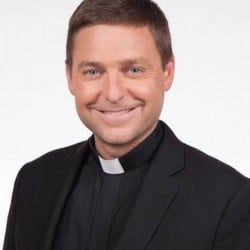 Christopher contributor Father Jonathan Morris spent last week in Rome while the Extraordinary Synod for the Family took place. Now that it’s over, he took some time to answer a few questions via an email interview:
TR: In brief layman’s terms, what is the purpose of having a synod on the family?
Father Jonathan: The history of “Synods” can be traced back to Pope Paul VI, whom Pope Francis just beatified in Rome. It comes from the Greek, meaning “journeying together.” Think, for example, of our English word, “synergy.” The Pope gathers with representatives from around the world to journey together toward a common goal. It is a meeting called by the pope. It consists of bishops, lay experts, and representatives of other faiths to dialogue about a particular topic. This time Pope Francis wanted a dialogue about how the Church can minister better to families. I think Pope Francis was particularly interested in discussing how the Church can help people who feel that they can no longer be fully part of our Church because of their own choices or the choices of others’.
TR: If the teachings of the Church are immutable, what changes can the synod bring about?
Father Jonathan: Well, not all of the Church’s “teachings” are unchangeable. A brief look at our history as a Church is enough to see how many Church practices have changed. But, you are right, not even the pope can change what the Bible says, or what the Church has always taught on areas of faith and morals. So the synod certainly wasn’t about changing doctrine. That said, I think the Church (including all of us individually) can and should grow in our understanding of the Bible and of God’s will for us in this very complex world we live in. I was so happy to see how Pope Francis was unafraid to revisit how we have approached pastoral challenges in the past – and his willingness to find new, fresh ways of applying Biblical principles. Pope Francis is not the first one to do this. I’m thinking, for example, of how the Church has grown in its understanding of suicide. At one point, the Church didn’t even allow for public, Christian funerals for someone who committed suicide. Thank God, we are beyond that. Our deeper understanding of the psychological sciences has opened our minds to the very real possibility that the tragic act of suicide does not always equal a free and final rejection of God.
TR: How difficult is it for the bishops and cardinals to walk the line between adhering to both the letter of the law and the spirit of the law?
Father Jonathan: Very difficult. I find it difficult even in my own life at a very simple level…For example, how do I “Honor the Lord’s Day?” Is this commandment just about going to mass on Sunday (or in my case, celebrating mass) or should it be a true day of rest and prayer that makes it different from all other days. In this synod the members were trying to find ways of bringing the light of Jesus to some of the most difficult areas of family relationships. How do we help, for example, a young woman in her twenties who was divorced after six months of marriage due to no fault of her own? How do we help her stay close to the Church if she can’t get an annulment and still wants to date and re-marry? These are not easy issues.
TR: After the relatio – the midway document – was released there was a lot of excitement: liberals loved it, conservatives hated it. What should both sides keep in mind when reading this document – or any document that comes out of this extraordinary synod?
Father Jonathan: In my opinion, the Synod organizers made a big mistake in releasing the “relatio” half way through the Synod, even if this was part of the agreed upon process used in previous synod meetings. The “relatio” can’t be considered an official Vatican “document” in any sense of the word, but this is how the media understood it. And understandably so. It was on the Vatican website. The “relatio” is actually a brief summary of the main points made by the synod members up to that point in the meetings. It was supposed to serve as a base upon which the Synod could prepare their final message. But the world doesn’t work like that. If the Vatican posts something on its website, most news outlets and most people will give it the weight of any other Vatican document. I’m sure it was a learning experience for everyone involved.
TR: There’s been a lot of media coverage of the “hot topics” discussed at the synod. But what about other issues? What issue or issues have been given short shrift by the media coverage?
Father Jonathan: Great question. Just think of your own family, or your friends’ families. While we all have challenges at home, the family unit is precious; it is where we first learn to love and be loved. When a husband and wife love each other in the good times and in the bad and together raise children in a loving environment, how beautiful is that! Thankfully, the final message of this synod focused a great deal on the positive elements of family life. I’m sure Pope Francis will underline this when he offers his contribution sometime after the conclusion of the second part of the Synod on the Family in October of 2015.
TR: I interviewed Protestant pastor Matthew Barnett last year and this quote of his stood out for me: “One thing that I love about Jesus is He allows people to belong in order to believe. He didn’t say, ‘When you believe, then we’ll let you belong.’ He allowed people to belong first in order that they may believe. And that’s one of the great things that compassion does. It opens up the door where people begin to understand that we’re gonna love them unconditionally, whether they receive the message of Christ and His compelling love for them, or if they don’t. But it gets hard not to believe when people have loved you so long and been so consistent in your life.” Is there anything in that quote that would apply to the synod process?
Father Jonathan: It’s right on. Just think of the family unit I described above. We come to know and love our family members by living with them, by shared experiences, both good and bad. Thanks to Pope Francis’ message and example of mercy, I as a priest will choose to err on the side of love and compassion every time. This doesn’t mean our message should be one of moral or religious relativism — “anything goes” — but it does invite us to lead with mercy. That means, no matter who walks into my church or into my life, I will try to find a way to connect with them on a personal level and only after that, discern how to lead them, and hopefully be led by them, toward the fullness of God’s truth and love.
Previous Post
October 22, 2014
How "New York Catholics" Built a Better Church and Society
Next Post
October 28, 2014 VIDEO: Father Jonathan Morris on Freedom in the Moral Life
Browse Our Archives
Select a Category Act One American Idol Andy Griffith Show Audrey Assad Baseball Bible Books Catholic Charities Christmas Christopher Awards Christopher Closeup Christopher News Notes Current Events Down syndrome Education Father Jonathan Morris Father Keller Films Forgiveness Fringe Government Hallmark History Holidays Humor Inspiration Leadership Lost Marriage Media Medical Military Movies Music NY Med Once Upon a Time Once Upon a Time Parenting Patheos Movie Club Person of Interest Politics Pope Francis Prayer Pro Life Saints Senior Citizens Signed Sealed Delivered Special Needs Sports Three Minutes a Day TV Uncategorized Volunteering Women Youth
Select a Month March 2017 February 2017 January 2017 December 2016 November 2016 October 2016 September 2016 August 2016 July 2016 June 2016 May 2016 April 2016 March 2016 February 2016 January 2016 December 2015 November 2015 October 2015 September 2015 August 2015 July 2015 June 2015 May 2015 April 2015 March 2015 February 2015 January 2015 December 2014 November 2014 October 2014 September 2014 August 2014 July 2014 June 2014 May 2014 April 2014 March 2014 February 2014 January 2014 December 2013 November 2013 October 2013 September 2013 August 2013 July 2013 June 2013 May 2013 April 2013 March 2013 February 2013 January 2013 December 2012 November 2012 October 2012 September 2012 August 2012 July 2012 June 2012 May 2012 April 2012 March 2012 February 2012 January 2012
Follow Us!
TAKE THE
Religious Wisdom Quiz
Who is known as the "weeping prophet"?
Select your answer to see how you score.
Ezekiel Jeremiah Isaiah Joel
Related posts from Christopher Closeup

The 2017 Christopher Award winners for TV, Film,...

Mary Tyler Moore Provided Catholic Laughs in Two...
Phillip Phillips Sings His Hit "Home" at Steven...

'We're All Sick Pilgrims Drifting Toward God, Whether...
TRENDING AT PATHEOS Catholic

The Parable Of The Sower And The Word...
One of Christ’s most famous parables is that of the sower who...

Rejecting Doom: Christian Hope And Human Action
Christianity is a religion of hope. We are to have hope and...

Why I Choose the Eucharist Over the Sermon
Choose the Eucharist, Not the Sermon What are we supposed to get...

5 Design Elements Found in Spiritually Rooted Homes
Putting Spirituality Into Home Decor Our homes are more than our living...

Credo: A Story of God Told with the...
About 10 years ago, I began to imagine a personal "Credo" that...

The Anatomy of Divine Revelation in Catholic Thought
The claim that God has made Himself known to human beings is...
view all Catholic blogs
Ad-Free & Subscriber Log-In Subscription Support
- About Us
- 2026 Calendar
- Videos
- Podcasts
- Library of World Religions
- Faith In Media Tracker
- Advertise With Us
- Write for Us
- Privacy Policy
- Terms of Service
- Do Not Sell My Data
- Contact Us
- Radiant Digital
- Manage Newsletter Subscriptions
- Unsubscribe From Notifications
- Sitemap
Copyright 2008-2026, Patheos. All rights reserved.
Subscription Support Ad-Free & Subscriber Log-In
Follow Patheos