
BuddhistCatholicContemplativeEvangelicalGeneral ChristianHinduJewishLatter-day SaintMuslimNew VisionsProgressive Christian
Beliefs
- Buddhist
- Catholic
- Contemplative
- Evangelical
- General Christian
- Hindu
- Jewish
- Latter-day Saint
- More Voices
- Muslim
- New Visions
- Pagan
- Progressive Christian
Topics
- Religion News
- Food and Religion
- Sports and Religion
- Religious Art
- Religious Music and Entertainment
- Religious Events
- History and Religion
- Style and Religion
- Politics and Religion
- Women in Religion
- Recreation Outdoors and Religion
- Business Finance and Religion
- Careers Workplace and Religion
- Education and Religion
- Family Parenting and Religion
- Health Fitness and Religion
- Home and Religion
- Relationships and Religion
- Technology and Religion
- Travel and Religion
Columnists
- Buddhist Columnists
- Business Finance and Religion Columnists
- Careers Workplace and Religion Columnists
- Catholic Columnists
- Contemplative Columnists
- Education and Religion Columnists
- Evangelists Columnists
- Family Parenting and Religion Columnists
- General Christian Columnists
- Health Fitness and Religion Columnists
- Hindu Columnists
- History and Religion Columnists
- Home and Religion Columnists
- Jewish Columnists
- More Voices Columnists
- Latter Day Columnists
- Muslim Columnists
- New Visions Columnists
- Nonreligious Columnists
- Pagan Columnists
- Politics and Religion Columnists
- Progressive Columnists
- Recreation Outdoors and Religion Columnists
- Relationships and Religion Columnists
- Religion News Columnists
- Religious Art Columnists
- Religious Events Columnists
- Religious Music and Entertainment Columnists
- Sports and Religion Columnists
- Style and Religion Columnists
- Technology and Religion Columnists
- Travel and Religion Columnists
- Women in Religion Columnists
Resource Library
- 2026 Calendar
- Library of World Religions
- The 100 Most Holy Places on Earth
- Patheos Answers
- Podcasts
- Videos
- Faith Leaders Database
- Anglican Episcopalian
- Bahai
- Baptist
- Buddhism
- Christianity
- Confucianism
- Eastern Orthodoxy
- Hinduism
- Holiness and Pentecostal
- ISKCON
- Islam
- Judaism
- Lutheran
- Methodist
- The Church of Jesus Christ of Latter-day Saints
- New Age
- Paganism
- Presbytarian and Reformed
- Protestantism
- Religion Behind the Scenes
- Roman Catholic
- Scientology
- Shia Islam
- Sikhism
- Sufism
- Sunni Islam
- Taoism
- Zen
- See all religions
Research Tools
 Ad-Free & Subscriber Log-In Subscription Support
Ad-Free & Subscriber Log-In Subscription Support
Follow Patheos 

- Trending:
- Forgiveness
- |
- Marriage
- |
- Consciousness
- |
- Death Penalty
- |
- Election
- |
- Halloween
 Christopher Closeup
- Home
- Catholic
- Religious Music & Entertainment
- Reflections on the Advent of Christ
Reflections on the Advent of Christ
Last updated on: October 7, 2014 at 2:47 pm by Tony Rossi
Reflections on the Advent of Christ 2014-10-07T14:47:19-05:00 Tony Rossi
Patheos Explore the world's faith through different perspectives on religion and spirituality! Patheos has the views of the prevalent religions and spiritualities of the world.
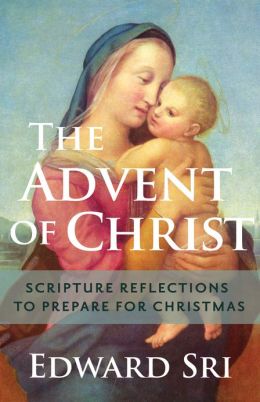
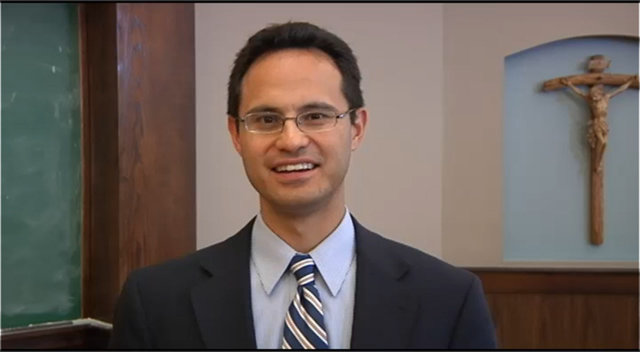 Author and theologian Dr. Edward Sri knows we’re all familiar with the Christmas story, but he also thinks we can be so familiar with it that we miss a lot of its important points. That’s why he wrote a book of daily reflections called “The Advent of Christ: Scripture Reflections to Prepare for Christmas.”
Dr. Sri is a popular speaker who appears regularly on EWTN; he’s a founding leader of the Fellowship of Catholic University Students; he teaches theology and Scripture at the Augustine Institute; and he’s posting weekly Advent videos on his Facebook page. He recently joined me for an interview to discuss “The Advent of Christ,” so here is an excerpt of our conversation:
Tony Rossi: Though I really hadn’t considered it before I read it in your introduction, I think you’re right in saying that we may be so familiar with the Christmas story that we don’t realize how groundbreaking it was at the time. Was this lack of a full understanding of the story of Advent something you experienced yourself or saw in the people around you?
Edward Sri: I think maybe myself growing up. I grew up in a good Catholic home. We celebrated Christmas, and I remember as a child being so fascinated by the Christmas story. And all through my life, I knew about the shepherds, about an angel coming to Mary, about Magi coming and Mary having to go to Bethlehem. So I knew the basics of the story, and I think that’s the experience of many Catholics. We know the basics of the Nativity story. But we’re so familiar with it that we may miss out on just how startling it would have been for the original eyewitnesses to these events. And that’s what I do in the book. I try to draw people into these Biblical accounts with the eye of a first century Jew.
TR: Another phrase that we Catholics can be overly familiar with are, “Hail Mary, full of grace.” When Gabriel greeted Mary with those words, you write there was something unique and special about them. Tell us about that.
Edward Sri: First of all, the opening line “Hail” could be translated as “Rejoice.” It comes from a number of prophecies in the Old Testament where God was announcing to Jerusalem that the Savior, the King, was coming. So I think even the opening words – Rejoice or Hail – would signal to Mary that there’s something great happening on the horizon. God’s saving plan is coming. But I think for us as Catholics to [better understand] Mary, we could see in the language of the angel the words “full of grace” something very beautiful. The word in Greek for “full of grace” is a word that describes an action that began in the past and continues to have its effects in the present. It describes the life of God, the work of redemption and forgiveness of sins. And so it’s as if the angel – if you wanted to give a really rough translation, you could translate it as, “You who have been and continue to be graced.” I wouldn’t use this as a proof text, but I certainly think it points to the doctrine of Mary’s Immaculate Conception because the angel doesn’t say, “Hail, you who are going to be graced when you conceive this child.” Or “Hail, you who have grace right now in my presence.” The angel is pointing out that Mary already has the life of grace in her, before Gabriel ever came to her. She already has the life of redemption and forgiveness of sins within her.
TR: In the book, you note that Matthew’s gospel says that Jesus will save people from their sins. But to a group of people who have been oppressed as long and terribly as the Jewish people have, why is that more important than freeing them from foreign oppression?
Edward Sri: The Jews of the first century have been suffering for about six centuries because one nation after another has been ruling over them, and they have not had a king sitting on their throne. They’re longing for this because God promised way back – 1,000 years before Christ – He promised David there would be this everlasting dynasty, giving them a longing for the coming of a king. And there were various prophecies about a new son of David, a new King who would come to rebuild the Kingdom and rescue Israel from their enemies. In the first century, there would be many Jews that are assuming that that kind of redemption and rescuing from enemies would have been overthrowing the political powers of the day, whether it be the oppression of Herod or the Roman Empire. But what you do see, even in the Old Testament and some of the prophecies, is that God wants to do a greater redemption. He wants to bring about a deeper exodus, so to speak. And it’s not one that’s outside in the political world, but rather one that’s in our own souls, that we may be liberated from sin. And you get glimpses of this in some of the prophecies in the Old Testament, and that’s certainly what Jesus is coming to do. He announces the Kingdom of God is at hand, but He’s emphasizing that the Kingdom begins within. It begins with a transformation in our own souls as we turn away from sin and turn back to God.
TR: Let’s go back a little bit to Elizabeth and Zechariah, who we meet at the beginning of Luke’s gospel. What facts about them would have stood out to Jewish audiences at the time that we might miss today?
Edward Sri: A couple of things. Zechariah and Elizabeth are being introduced as noble characters. They are righteous before God, they’re blameless. Zechariah is a priest, and his wife also is from the line of Aaron. She’s a descendant of the first great high priest, Aaron. I think a Jew reading about this would say, “Wow, what a remarkable family! This is an honorable family, so we really want to pay attention here.” But then you get the little detail that comes in Luke 1:7 saying, “But they had no children because Elizabeth was barren.” I think Luke goes out of his way in the opening verses of his gospel to paint that picture of Zechariah and Elizabeth as honorable because some Jews night think, “Oh, they don’t have any children. Uh oh, that’s because they must be some bad sinners.” And Luke is trying to say, “No, no, no, that’s not the issue here. They just happen to be barren and God’s going to do some great work in their lives now.”
TR: One of the things that always struck me as a little peculiar about Zechariah and his meeting with Gabriel in the temple is when Zechariah questioned Gabriel and Gabriel struck him mute. Was there some kind of deeper purpose behind that? Or is it a straightforward punishment?
Edward Sri: I definitely think that Biblical scholars will point out that this is a punishment because he’s given this great revelation by an angel and he doesn’t believe. In Luke 1:18, he says, “How shall I know this? I’m an old man and my wife is advanced in years.” So I like to say that Zechariah is sent on a nine month silent retreat to contemplate the angel’s words. He’s the first person to hear the angel’s message in Luke’s gospel, but he doesn’t believe it. What’s beautiful is he gets a second chance. Later, at the end of chapter one, after the child is born, they’re deciding what the child’s name should be. And he reveals the name that the angel had told him nine months before in the temple: “His name shall be John.” At that moment, suddenly he’s able to speak again. He praises God. Everybody sees this is an extraordinary event, and that there’s some providential child in their midst. He gets a second chance and comes out as a faithful man. A great lesson for us: we make mistakes, but God can give us a second chance. let’s do it right the second time.
TR: You also talk about in the book the gospel of Matthew, which begins with the beginning of Jesus’s life, and it starts with the genealogy of Jesus which can come across to us today as one of the most tedious gospel readings because it’s one name begetting another. But the Jews at the time would have heard it very differently. Why were all those names meaningful to them?
Edward Sri: Yeah, we’re going to see coming up here in Advent – I think it’s the third week of Advent – where we have this reading from Scripture, and you’re confronted with 42 generations. I love sitting in the back of church wondering, “What’s Father going to do with this one?” (laughs) Whenever I assign a Biblical text [in class] and there’s a genealogy, my students are always tempted to fast forward or skip that song and go on to the next passage. And I tell them, “No, no, the genealogies are key, and every name tells a story.” For the Jews, every name there would bring to mind some of the heroes from the Old Testament, or certain pivotal moments from their history. This particular genealogy traces Jesus’s ancestry all the way back to Abraham. Abraham was promised a number of things: that his descendants would become a great nation, they would become a great kingdom, and eventually they would become an instrument for blessing the world. Jews in Jesus’s day know, “We became a nation a long time ago in the time of Moses and Joshua when we were liberated from Egypt – and we became a kingdom in the time of David and we’re waiting for the kingdom to be restored. But that third promise, that’s the one we’ve been longing for – that we would bring blessing to all the nations.” So I think that just by opening up by making the connection with Jesus back to Abraham could spark a certain excitement. Could this be THE Son of Abraham, the Promised One who would be that instrument for blessing the world?
TR: I want to touch on one of the quiet heroes of the Christmas story: Joseph. You name one reflection about him, “Silent Knight, Holy Knight” like knights of the round table. Why is Joseph like a knight in your eyes?
Edward Sri: He’s the man who protects the Holy Family. He’s the man who makes many sacrifices, bringing them to Egypt, bringing them back. But he’s in the background. In all of the New Testament, he never gets a single line or says a single word. But yet we revere him. Certainly as a father, I turn to Joseph many times every day and ask his intercession that I may be a good husband, a good father for my family. So I love thinking about Joseph here in Matthew’s gospel, quietly doing the will of the Lord even when it would mean much difficulty and sacrifice on his part.
TR: In mythology, we often see knights as rescuing damsels in distress. In one way, it could be easy to see Mary in that light, but she’s also a strong young woman in her own right who accepts this responsibility of bearing the Messiah. What does that say not just about Mary’s meekness, but her strength?
 Edward Sri: First of all, let’s contextualize it. Coming back to Luke’s gospel, Mary is described as someone who’s betrothed. That’s the first stage of marriage. When most Jewish women would have been betrothed, they would have been about 13 or 14-years-old probably, a very young age by our standards. And all these dramatic things are happening in her life. The angel comes and announces this extraordinary pregnancy and she’s got to deal with that, thinking, “I’m having a child that’s conceived by the Holy Spirit. But I’m not yet with my husband. How is this going to go over?” There’s all the stresses of that. I like to think of Mary as being indomitable. She chooses to go all the way down to visit Elizabeth in the Visitation scene. That wasn’t a little weekend trek. That was probably a four day trip down south. She goes to serve, she wants to help Elizabeth. We see her having to make another four day trip later on at the end of her pregnancy. There’s no welcoming. She has to give birth to this child in poor conditions and lay the baby in a manger. That would have been really hard for her. She goes to the temple and hears these stark words from Simeon about a sword piercing her soul, and her son is going to be hated and is going to be killed. And in Matthew’s gospel we have Herod coming to kill the babies.
All along the way, Mary remains quietly faithful. You never hear her complaining or despairing or getting discouraged. You never see her breaking down. It wasn’t easy. She had unique graces, but she’s still human so this would all be very hard. I like to think about the one response we get from her amidst all of this. In Luke 2:19, it says, “Mary kept all these things and pondered them in her heart.” Basically, she’s turning inward and prayerfully reflecting, “Lord, what are You trying to teach me? What are You showing me here? How am I supposed to respond?” That’s a great model for us because when we have chaos going on around us and things don’t work out the way we want or life takes an unexpected turn, we often panic or get discouraged or complain. But we want to be like Mary and keep it in our heart, prayerfully turning to the Lord and saying, “Lord, what are you trying to show me? This is hard, but I believe there’s some good you can bring out of this for me and my soul: maybe to grow in patience or trust or humility.” Whatever it is, there’s always some good that God wants to bring about in our own spiritual development. That’s what Mary’s doing. She trusts that God’s hand is in this. She may not fully understand what’s happening, but she surrenders to the mystery – and that’s what we need to do.
(To listen to my full interview with Dr. Edward Sri, click on the podcast link:)
Christopher Closeup podcast – Guest: Edward Sri
Previous Post
December 3, 2013
VIDEO: Father Jonathan Morris on Leading with Mercy
Next Post

December 6, 2013 A Modern Heir to St. Nicholas
Browse Our Archives
Select a Category Act One American Idol Andy Griffith Show Audrey Assad Baseball Bible Books Catholic Charities Christmas Christopher Awards Christopher Closeup Christopher News Notes Current Events Down syndrome Education Father Jonathan Morris Father Keller Films Forgiveness Fringe Government Hallmark History Holidays Humor Inspiration Leadership Lost Marriage Media Medical Military Movies Music NY Med Once Upon a Time Once Upon a Time Parenting Patheos Movie Club Person of Interest Politics Pope Francis Prayer Pro Life Saints Senior Citizens Signed Sealed Delivered Special Needs Sports Three Minutes a Day TV Uncategorized Volunteering Women Youth
Select a Month March 2017 February 2017 January 2017 December 2016 November 2016 October 2016 September 2016 August 2016 July 2016 June 2016 May 2016 April 2016 March 2016 February 2016 January 2016 December 2015 November 2015 October 2015 September 2015 August 2015 July 2015 June 2015 May 2015 April 2015 March 2015 February 2015 January 2015 December 2014 November 2014 October 2014 September 2014 August 2014 July 2014 June 2014 May 2014 April 2014 March 2014 February 2014 January 2014 December 2013 November 2013 October 2013 September 2013 August 2013 July 2013 June 2013 May 2013 April 2013 March 2013 February 2013 January 2013 December 2012 November 2012 October 2012 September 2012 August 2012 July 2012 June 2012 May 2012 April 2012 March 2012 February 2012 January 2012
Follow Us!
TAKE THE
Religious Wisdom Quiz
What does "Pentateuch" mean in Greek?
Select your answer to see how you score.
Stories of heroes Book of peace Five scrolls First law
Related posts from Christopher Closeup

The 2017 Christopher Award winners for TV, Film,...

Mary Tyler Moore Provided Catholic Laughs in Two...

Phillip Phillips Sings His Hit "Home" at Steven...

'We're All Sick Pilgrims Drifting Toward God, Whether...
TRENDING AT PATHEOS Catholic

Rejecting Doom: Christian Hope And Human Action
Christianity is a religion of hope. We are to have hope and...

It’s What Comes From Within Which Matters
One of the most difficult things for us to understand is why...

Why I Choose the Eucharist Over the Sermon
Choose the Eucharist, Not the Sermon What are we supposed to get...

5 Design Elements Found in Spiritually Rooted Homes
Putting Spirituality Into Home Decor Our homes are more than our living...

Credo: A Story of God Told with the...
About 10 years ago, I began to imagine a personal "Credo" that...

The Anatomy of Divine Revelation in Catholic Thought
The claim that God has made Himself known to human beings is...
view all Catholic blogs
Ad-Free & Subscriber Log-In Subscription Support
- About Us
- 2026 Calendar
- Videos
- Podcasts
- Library of World Religions
- Faith In Media Tracker
- Advertise With Us
- Write for Us
- Privacy Policy
- Terms of Service
- Do Not Sell My Data
- Contact Us
- Radiant Digital
- Manage Newsletter Subscriptions
- Unsubscribe From Notifications
- Sitemap
Copyright 2008-2026, Patheos. All rights reserved.
Subscription Support Ad-Free & Subscriber Log-In
Follow Patheos