
BuddhistCatholicContemplativeEvangelicalGeneral ChristianHinduJewishLatter-day SaintMuslimNew VisionsProgressive Christian
Beliefs
- Buddhist
- Catholic
- Contemplative
- Evangelical
- General Christian
- Hindu
- Jewish
- Latter-day Saint
- More Voices
- Muslim
- New Visions
- Pagan
- Progressive Christian
Topics
- Religion News
- Food and Religion
- Sports and Religion
- Religious Art
- Religious Music and Entertainment
- Religious Events
- History and Religion
- Style and Religion
- Politics and Religion
- Women in Religion
- Recreation Outdoors and Religion
- Business Finance and Religion
- Careers Workplace and Religion
- Education and Religion
- Family Parenting and Religion
- Health Fitness and Religion
- Home and Religion
- Relationships and Religion
- Technology and Religion
- Travel and Religion
Columnists
- Buddhist Columnists
- Business Finance and Religion Columnists
- Careers Workplace and Religion Columnists
- Catholic Columnists
- Contemplative Columnists
- Education and Religion Columnists
- Evangelists Columnists
- Family Parenting and Religion Columnists
- General Christian Columnists
- Health Fitness and Religion Columnists
- Hindu Columnists
- History and Religion Columnists
- Home and Religion Columnists
- Jewish Columnists
- More Voices Columnists
- Latter Day Columnists
- Muslim Columnists
- New Visions Columnists
- Nonreligious Columnists
- Pagan Columnists
- Politics and Religion Columnists
- Progressive Columnists
- Recreation Outdoors and Religion Columnists
- Relationships and Religion Columnists
- Religion News Columnists
- Religious Art Columnists
- Religious Events Columnists
- Religious Music and Entertainment Columnists
- Sports and Religion Columnists
- Style and Religion Columnists
- Technology and Religion Columnists
- Travel and Religion Columnists
- Women in Religion Columnists
Resource Library
- 2026 Calendar
- Library of World Religions
- The 100 Most Holy Places on Earth
- Patheos Answers
- Podcasts
- Videos
- Faith Leaders Database
- Anglican Episcopalian
- Bahai
- Baptist
- Buddhism
- Christianity
- Confucianism
- Eastern Orthodoxy
- Hinduism
- Holiness and Pentecostal
- ISKCON
- Islam
- Judaism
- Lutheran
- Methodist
- The Church of Jesus Christ of Latter-day Saints
- New Age
- Paganism
- Presbytarian and Reformed
- Protestantism
- Religion Behind the Scenes
- Roman Catholic
- Scientology
- Shia Islam
- Sikhism
- Sufism
- Sunni Islam
- Taoism
- Zen
- See all religions
Research Tools
 Ad-Free & Subscriber Log-In Subscription Support
Ad-Free & Subscriber Log-In Subscription Support
Follow Patheos 

- Trending:
- Forgiveness
- |
- Marriage
- |
- Consciousness
- |
- Death Penalty
- |
- Election
- |
- Halloween
 Christopher Closeup
- Home
- Catholic
- Religious Music & Entertainment
- In the End, It’s About a Father’s Love: Reflecting on “Fringe’s” Series Finale (& Why More Christians Didn’t Watch a Show with Such Relevant Christian Themes)
In the End, It’s About a Father’s Love: Reflecting on “Fringe’s” Series Finale (& Why More Christians Didn’t Watch a Show with Such Relevant Christian Themes)
Last updated on: January 1, 2015 at 11:26 am by Tony Rossi
In the End, It’s About a Father’s Love: Reflecting on “Fringe’s” Series Finale (& Why More Christians Didn’t Watch a Show with Such Relevant Christian Themes) 2015-01-01T11:26:26-05:00 Tony Rossi
Patheos Explore the world's faith through different perspectives on religion and spirituality! Patheos has the views of the prevalent religions and spiritualities of the world.
Walter Bishop (John Noble) asked for a sign that God would forgive him. Specifically, he requested a white tulip because it didn’t grow during that time of year. Receiving one would be an unusual-enough occurrence to signal a miracle of sorts.
Why was Walter asking God’s forgiveness during this season two episode of the sci-fi TV series “Fringe?” As a formerly atheistic, ends-justifies-the-means scientist who worshiped his own intellect – once even declaring, “There’s only room for one God in this lab” – Walter finally acknowledged God’s existence after discovering an alternate universe in which his young son, Peter, didn’t die from a fatal disease.
Though he was motivated by love, Walter broke the laws of physics and the laws of conscience by kidnapping Peter from that universe and raising him as his own. Those choices eventually drove him into a mental asylum, until he was recruited by the F.B.I.’s Fringe Science Division years later, allowing him to reconnect with Peter (Joshua Jackson), along with the agent who would become like a daughter to him, Olivia Dunham (Anna Torv). When Walter received his white tulip, he saw it as a sign that he could be forgiven by both God and Peter.
That white tulip came into play once again in Season Five in the “Fringe” series finale, reflecting both God’s continued presence and the ways in which Walter had changed in the ensuing years. It was a change grounded in the selfless love of his son.
In the Beginning
When “Fringe” began five years ago, I gave it a chance because it was created by J.J. Abrams,who had also created “Lost,” my favorite show at the time. I liked Abrams’ work because, even though the stories could turn dark, there was always an element of hope at their foundation, an acknowledgment that good would beat evil in the end even if there was a cost.
Abrams work also tends to include an acknowledgment and appreciation of “mystery,” reflected in his life by an unopened “mystery box” of magic tricks he bought as a kid. In explaining why he never opened it, he said at a TED conference, “It represents infinite possibility. It represents hope; it represents potential… mystery is the catalyst for imagination… maybe there are times where mystery is more important than knowledge.”
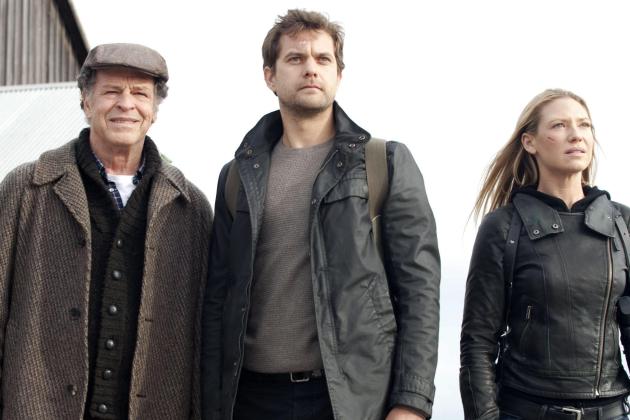 “Fringe” sought its own identity during its first season and part of its second. At first, it felt reminiscent of “The X Files” with its monster-of-the-week stories, frequent goriness, and hinted-at mythology. Yet the main characters of Peter, Walter and Olivia were so well written and acted – and even hysterically funny at times – that they mattered more than the scripts’ occasional shortcomings. Like a lot of the best stories, this one was about the creation of a family and all the challenges that entails. (Plus, Walter had a pet cow named Gene, which is always a plus.)
It was during Season Two that “Fringe” found its true path, following the repercussions of Walter’s “breaking the universe” and how it affected the people he loved, along with many innocent victims. “Fringe” still had mysteries of the week, but they fit seamlessly into that larger plotline and mythology.
In a sense, “Fringe” took the opposite track of “Lost” which began as a very focused show in its first season, then created a much more sprawling storyline in order to sustain multi-year storytelling. As much as I loved “Lost,” I admit they untangled too many plot threads that were never tied up.
“Fringe,” on the other hand, started off unsure of itself, then became more focused as time went on. Though it created a new plotline for its final season, it also tied up some old ones, bringing back elements and characters from all its previous seasons. Major credit goes to the various Executive Producers over its five year history including co-creators Alex Kurtzman and Roberto Orci, Bryan Burk, Joe Chapelle, Jeff Pinkner, and J.H. Wyman.
The God and Science Factor
Best of all, the show addressed themes like sacrifice, scientific ethics, and God throughout its run – not typical fare for network television. Christians often complain that there aren’t any shows on TV that reflect their values. Yet “Fringe” tackled themes that are incredibly relevant to our times and our lives as Christians. I’m left to wonder why it didn’t garner a huge audience among the religious. Was it because the faithful couldn’t see through the sci-fi/horror aspects? The genre may not be to everybody’s taste, but for a certain type of viewer, it’s a great entry point to exploring the show’s deeper moral and spiritual facets, especially on DVD.
As Houston Chronicle writer Ken Chitwood recently commented:
“The spiritual appeared on the periphery from time-to-time. Then there were the glyphs, the frogs and leaves blipping on the screen at commercial breaks. Decoded, some of them read, “grace” or “faith,” “hope” and “love.” Other times, the divine overtones were more direct, as Walter confessed a former atheism only to reveal a renewed sense of a need for forgiveness that ultimately lead him to kneel before a cross and beg God to spare humanity from his faulty experimentations. Most intriguing is when Fringe’s plot-lines challenged the very science that in every episode seemed the savior. Throughout the show, the characters and villains pressed the margins of science and reality and inadvertently revealed science’s limits and more pointedly, the dangers of science’s blindly devoted disciples.”
No Greater Love
 I’ve written about this season’s storyline and themes several times, but the love of family was once again at the show’s heart. Peter and Olivia had an emotional reunion with their now-adult daughter, Etta, who was stolen from them by the Observers when she was a child. They worked with her for several episodes in her role as a rebel leader, then watched her die at the hands of their enemies. Devastated by her loss, the couple wondered why they would be allowed to find her only to lose her again.
Walter felt their pain because he knew what it was like to lose a child – and what lengths a parent could go to in order to deal with that pain. He and Olivia saw Peter, who took Etta’s loss harder than anyone, giving in to a desire for revenge which was disguising itself as love. It was an appeal of real love, however, that kept Peter from following through on his plans and losing the best parts of himself in the process.
(Finale Spoilers Ahead) When Walter and the now-human Observer, September, devised a plan to reset time in a way that would prevent the Observers from ever invading, Walter knew he had to pursue it because it would give Peter and Olivia the opportunity to raise their daughter. The goal became personal once again. It wasn’t just about saving the world; it was about parents saving their child.
In order for this to happen, Walter would need to make a tremendous sacrifice. Though he wouldn’t die, it would prevent him from ever seeing Peter again. When Peter objects to losing the father he’s grown to love after so many years of resenting him, Walter responds, “I know in my soul this is what I’m supposed to do. I want you to give Olivia your daughter back. I want to give you your life back. As a father, how could I not do that for you?”
Walter was once a man willing to break the universe and allow others to suffer so he could have a son. Now he’s willing to give up his greatest happiness – his relationship with Peter – in order to bring about a greater good and a greater happiness for the people he loves. He’s come to live out the words of John 15:13, “No one has greater love than this, to lay down one’s life for one’s friends.” His actions are also reminiscent of the St. Therese quote, “Love is fed by and develops from sacrifice.” In a series finale filled with emotional moments, Walter’s scenes with Peter should earn John Noble a long-deserved Emmy.
The theme of a fathers’ love ran through the episode in other ways as well, including September’s relation to Michael, the child Observer whose existence and power could be considered the “mystery box” element of this final season. September is willing to give up everything for the opportunity to be a father to Michael, who was revealed to be his son, because “it’s about hope and protecting our children.”
And of course, Peter’s greatest wish is to be the father to Etta that he never fully had the chance to be.
We see this kind of love in daily life as well through fathers’ daily sacrifices for their children – and in extraordinary acts like Rick Van Beek carrying his cerebral palsy-afflicted daughter in triathlons. Even Lance Armstrong, who didn’t exactly give emotional apologies for his drug use, got choked up at the thought of telling his son that he had lied to him.
Consider the powerful pull all these fathers feel for their children. Then multiply it to infinity to imagine the love God the Father has for all His children – how much He desires a relationship with each of us and the selfless lengths He’ll go through to get it.
In the show’s final minutes, Walter heartwrenchingly leaves his loved ones behind as he enters the future with Michael and reboots time. The next scene is the same one that started off this final season: a young Etta in a park running toward Peter’s arms while Olivia relaxes in the background. Only in the original scene, Etta never got to Peter because the Observers invaded and took her. This time, she arrives in her father’s arms and gets a big hug from him. Walter’s plan worked. Peter got his family back.
When they all arrive home from the park, Peter finds a letter from Walter. He opens it to find a picture of a white tulip that has somehow managed to cross time and space. Peter seems not to know exactly what it means, but loyal fans of the show do: God is present and love remains.
That’s because, in the end, “Fringe” was all about a father’s love. And in the end, it’s about a Father’s love for all of us.
Previous Posts About “Fringe:”
– Eliminating Love, Sex & God in Pursuit of Progress: A Look at “Fringe: The Boy Must Live”
– “Fringe” Explores Love, Humanity, & Destroying Children Who Are “Chromosomal Mistakes”
– Tyranny, Hope, and Family in the Fifth Season Premiere of “Fringe”
– The Hubris of Trying to Improve Upon God
Previous Post

January 22, 2013
A Woman of Mercy Offers Pregnancy Choices
Next Post
January 24, 2013 "Somebody's Got to Do It, and Why Can't It Be Us?" - An Adoption Story
Browse Our Archives
Select a Category Act One American Idol Andy Griffith Show Audrey Assad Baseball Bible Books Catholic Charities Christmas Christopher Awards Christopher Closeup Christopher News Notes Current Events Down syndrome Education Father Jonathan Morris Father Keller Films Forgiveness Fringe Government Hallmark History Holidays Humor Inspiration Leadership Lost Marriage Media Medical Military Movies Music NY Med Once Upon a Time Once Upon a Time Parenting Patheos Movie Club Person of Interest Politics Pope Francis Prayer Pro Life Saints Senior Citizens Signed Sealed Delivered Special Needs Sports Three Minutes a Day TV Uncategorized Volunteering Women Youth
Select a Month March 2017 February 2017 January 2017 December 2016 November 2016 October 2016 September 2016 August 2016 July 2016 June 2016 May 2016 April 2016 March 2016 February 2016 January 2016 December 2015 November 2015 October 2015 September 2015 August 2015 July 2015 June 2015 May 2015 April 2015 March 2015 February 2015 January 2015 December 2014 November 2014 October 2014 September 2014 August 2014 July 2014 June 2014 May 2014 April 2014 March 2014 February 2014 January 2014 December 2013 November 2013 October 2013 September 2013 August 2013 July 2013 June 2013 May 2013 April 2013 March 2013 February 2013 January 2013 December 2012 November 2012 October 2012 September 2012 August 2012 July 2012 June 2012 May 2012 April 2012 March 2012 February 2012 January 2012
Follow Us!
TAKE THE
Religious Wisdom Quiz
Who climbed a sycamore tree to see Jesus?
Select your answer to see how you score.
Zacchaeus Simon Nicodemus Bartimaeus
Related posts from Christopher Closeup

The 2017 Christopher Award winners for TV, Film,...

Jimmy Kimmel Deserves an Emmy For His Job...

Discerning God's Will & Adopting Potatoes in "Signed,...

Bringing the Future to Hope Valley: A Look...
TRENDING AT PATHEOS Catholic

Creation, Preservation, and Teleology in Catholic Theology
As I write this, it is very early Monday morning. Like millions...

The Parable Of The Sower And The Word...
One of Christ’s most famous parables is that of the sower who...

Rejecting Doom: Christian Hope And Human Action
Christianity is a religion of hope. We are to have hope and...

Why I Choose the Eucharist Over the Sermon
Choose the Eucharist, Not the Sermon What are we supposed to get...

5 Design Elements Found in Spiritually Rooted Homes
Putting Spirituality Into Home Decor Our homes are more than our living...

Credo: A Story of God Told with the...
About 10 years ago, I began to imagine a personal "Credo" that...
view all Catholic blogs
Ad-Free & Subscriber Log-In Subscription Support
- About Us
- 2026 Calendar
- Videos
- Podcasts
- Library of World Religions
- Faith In Media Tracker
- Advertise With Us
- Write for Us
- Privacy Policy
- Terms of Service
- Do Not Sell My Data
- Contact Us
- Radiant Digital
- Manage Newsletter Subscriptions
- Unsubscribe From Notifications
- Sitemap
Copyright 2008-2026, Patheos. All rights reserved.
Subscription Support Ad-Free & Subscriber Log-In
Follow Patheos