
BuddhistCatholicContemplativeEvangelicalGeneral ChristianHinduJewishLatter-day SaintMuslimNew VisionsProgressive Christian
Beliefs
- Buddhist
- Catholic
- Contemplative
- Evangelical
- General Christian
- Hindu
- Jewish
- Latter-day Saint
- More Voices
- Muslim
- New Visions
- Pagan
- Progressive Christian
Topics
- Religion News
- Food and Religion
- Sports and Religion
- Religious Art
- Religious Music and Entertainment
- Religious Events
- History and Religion
- Style and Religion
- Politics and Religion
- Women in Religion
- Recreation Outdoors and Religion
- Business Finance and Religion
- Careers Workplace and Religion
- Education and Religion
- Family Parenting and Religion
- Health Fitness and Religion
- Home and Religion
- Relationships and Religion
- Technology and Religion
- Travel and Religion
Columnists
- Buddhist Columnists
- Business Finance and Religion Columnists
- Careers Workplace and Religion Columnists
- Catholic Columnists
- Contemplative Columnists
- Education and Religion Columnists
- Evangelists Columnists
- Family Parenting and Religion Columnists
- General Christian Columnists
- Health Fitness and Religion Columnists
- Hindu Columnists
- History and Religion Columnists
- Home and Religion Columnists
- Jewish Columnists
- More Voices Columnists
- Latter Day Columnists
- Muslim Columnists
- New Visions Columnists
- Nonreligious Columnists
- Pagan Columnists
- Politics and Religion Columnists
- Progressive Columnists
- Recreation Outdoors and Religion Columnists
- Relationships and Religion Columnists
- Religion News Columnists
- Religious Art Columnists
- Religious Events Columnists
- Religious Music and Entertainment Columnists
- Sports and Religion Columnists
- Style and Religion Columnists
- Technology and Religion Columnists
- Travel and Religion Columnists
- Women in Religion Columnists
Resource Library
- 2026 Calendar
- Library of World Religions
- The 100 Most Holy Places on Earth
- Patheos Answers
- Podcasts
- Videos
- Faith Leaders Database
- Anglican Episcopalian
- Bahai
- Baptist
- Buddhism
- Christianity
- Confucianism
- Eastern Orthodoxy
- Hinduism
- Holiness and Pentecostal
- ISKCON
- Islam
- Judaism
- Lutheran
- Methodist
- The Church of Jesus Christ of Latter-day Saints
- New Age
- Paganism
- Presbytarian and Reformed
- Protestantism
- Religion Behind the Scenes
- Roman Catholic
- Scientology
- Shia Islam
- Sikhism
- Sufism
- Sunni Islam
- Taoism
- Zen
- See all religions
Research Tools
 Ad-Free & Subscriber Log-In Subscription Support
Ad-Free & Subscriber Log-In Subscription Support
Follow Patheos 

- Trending:
- Forgiveness
- |
- Marriage
- |
- Consciousness
- |
- Death Penalty
- |
- Election
- |
- Halloween
 Christopher Closeup
- Home
- Catholic
- Religious Music & Entertainment
- Redemption Is a Universal Theme: A Discussion with the Filmmaker of “Vito Bonafacci”
Redemption Is a Universal Theme: A Discussion with the Filmmaker of “Vito Bonafacci”
Last updated on: June 5, 2012 at 5:00 am by Tony Rossi
Redemption Is a Universal Theme: A Discussion with the Filmmaker of “Vito Bonafacci” 2012-06-04T13:31:42-05:00 Tony Rossi
Patheos Explore the world's faith through different perspectives on religion and spirituality! Patheos has the views of the prevalent religions and spiritualities of the world.
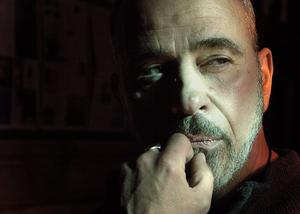 Like a lot of people, John Martoccia got caught up in the world’s definition of success when he was younger, so he didn’t make room for God in his life. That changed after John had a conversion experience which led him to becoming a more Christ-centered person. He even felt called to become a filmmaker to tell a story inspired by his own experiences. That movie, called “Vito Bonafacci,” is now being discussed as part of the Patheos Movie Club. I interviewed John last year about the film and his spiritual journey. Here’s what he had to say:
TR: What is your spiritual background? Were you raised Catholic and then drifted away from the faith, or was it never particularly important in your home?
JM: I went through Confirmation, but in our family there was no Mass attendance, no prayer before dinner. It was a secularized Catholic background.
TR: I’ve interviewed a number of people who either didn’t think much about God – or if they did, it was very much on the surface of their lives. Then they had something happen to them that was like God hitting them with a spiritual two-by-four, something that may have been a tough experience but ultimately deepened their faith lives. Has God ever hit you with a spiritual two-by-four?
JM: Most definitely. Within a two-year period, I went through a divorce, my father died of a brain tumor, my mother became mentally ill after my father’s death. She was in and out of psychiatric hospitals. I had some problems with the IRS. I was separated from my kids because of the divorce. It was a lot of adversity in a short period of time. The things that were most important to me were slipping away.
TR: So how did God insert His way into that situation?
JM: At the time I started drinking heavily. Over time though, I started to dig deep into my soul. I began painting. Through the painting and digging deep into my soul, I started to look up. I came to accept the truths of God. You know, Scripture says, “The proud in spirit will be brought low.” I was very proud. The Bible also says, “The lowly in spirit will be exalted.” Through the lowliness, I looked up towards God. That was the beginning.
TR: The basics of the story of “Vito Bonafacci” sound like they found their seeds in your own life. What are the basics of Vito’s story and how it relates to you?
JM: Vito is essentially going through the world thinking that what he needs to be happy are the things of the world: success, money, power, status, the material possessions that go with what society conditions us to believe that we need. Then he has this dream, which is like a death experience, and he comes to realize there’s something more important than the material realm. He digs into his soul and begins his conversion.
TR: One of the struggles that people of faith have is sharing that faith with others in a way that takes root in them. Looking back on your own life, was there any approach that the agnostic version of yourself would have listened to that would have made you take God more seriously back then – or did you have to go through the suffering and the creative process?
JM: When I look back, I think the examples of good people in my life like my mother and father [made a difference]. I don’t think when I was younger that preaching would have worked. Even though my parents did not practice their faith, they were good, solid, hard-working, honest people. It was that example along with the prayers of others who loved me that brought me [to God]. Obviously, it would have been nice if I was introduced through my parents to going to Mass, but for whatever reason, that didn’t happen in my life. But I know people who were brought up as practicing Catholics with very devout parents – and they’ve left the faith. So it’s relative. This is the road the good Lord has chosen for me.
TR: Sometimes when people undergo a conversion like you did, the people around them aren’t always on board. Some people can lose friends. Did you lose any friends or family once you started taking the faith seriously?
JM: In my situation, the opposite happened. I think that through my faith, people saw a transformation, they saw a person that was better than the old person. Instead of repelling people like I used to, I started attracting people. I have better relationships with family members, I have tons of Catholic and non-Catholic friends now. And that’s the thing that really overwhelms me…When my father died before I had faith, I got very little response from friends, very few Mass cards. After my conversion when my mother died, I had tons of friends show up and I got Mass cards. I was overwhelmed. I wondered, “Where did all these friends come from?” …God has really blessed me with tremendous people. They support me, they pray for me, and I feel God’s love through the community.
TR: You talked earlier about how the creative process helped you find God. You did it through your painting. When you see a project like “Vito Bonafacci,” what do you hope the audience gets out of it? Is it primarily for Catholics or could it generate wider interest?
JM: I would hope it would generate wider interest. Redemption is a universal theme, so I think the call to understand something beyond our temporal existence is universal to all faiths and even people without faith…What motivated this character to go through this transformation? What motivates people to seek a higher calling? This story is a conversion through the eyes of a Catholic. Hopefully it will get other people to question the purpose of their existence.
 This post is part of the Patheos Movie Club for “Vito Bonafacci,” a sponsored conversation in partnership with the filmmakers.
Previous Post

June 4, 2012
The Opposite of Bullying
Next Post
June 6, 2012 A Prayer for Unity
Browse Our Archives
Select a Category Act One American Idol Andy Griffith Show Audrey Assad Baseball Bible Books Catholic Charities Christmas Christopher Awards Christopher Closeup Christopher News Notes Current Events Down syndrome Education Father Jonathan Morris Father Keller Films Forgiveness Fringe Government Hallmark History Holidays Humor Inspiration Leadership Lost Marriage Media Medical Military Movies Music NY Med Once Upon a Time Once Upon a Time Parenting Patheos Movie Club Person of Interest Politics Pope Francis Prayer Pro Life Saints Senior Citizens Signed Sealed Delivered Special Needs Sports Three Minutes a Day TV Uncategorized Volunteering Women Youth
Select a Month March 2017 February 2017 January 2017 December 2016 November 2016 October 2016 September 2016 August 2016 July 2016 June 2016 May 2016 April 2016 March 2016 February 2016 January 2016 December 2015 November 2015 October 2015 September 2015 August 2015 July 2015 June 2015 May 2015 April 2015 March 2015 February 2015 January 2015 December 2014 November 2014 October 2014 September 2014 August 2014 July 2014 June 2014 May 2014 April 2014 March 2014 February 2014 January 2014 December 2013 November 2013 October 2013 September 2013 August 2013 July 2013 June 2013 May 2013 April 2013 March 2013 February 2013 January 2013 December 2012 November 2012 October 2012 September 2012 August 2012 July 2012 June 2012 May 2012 April 2012 March 2012 February 2012 January 2012
Follow Us!
TAKE THE
Religious Wisdom Quiz
Who was killed for touching the Ark of the Covenant?
Select your answer to see how you score.
Uzzah Ahio Shimei Abinadab
Related posts from Christopher Closeup

The 2017 Christopher Award winners for TV, Film,...

Jimmy Kimmel Deserves an Emmy For His Job...

Bringing the Future to Hope Valley: A Look...

Discerning God's Will & Adopting Potatoes in "Signed,...
TRENDING AT PATHEOS Catholic

The Parable Of The Sower And The Word...
One of Christ’s most famous parables is that of the sower who...

Rejecting Doom: Christian Hope And Human Action
Christianity is a religion of hope. We are to have hope and...

Why I Choose the Eucharist Over the Sermon
Choose the Eucharist, Not the Sermon What are we supposed to get...

5 Design Elements Found in Spiritually Rooted Homes
Putting Spirituality Into Home Decor Our homes are more than our living...

Credo: A Story of God Told with the...
About 10 years ago, I began to imagine a personal "Credo" that...

The Anatomy of Divine Revelation in Catholic Thought
The claim that God has made Himself known to human beings is...
view all Catholic blogs
Ad-Free & Subscriber Log-In Subscription Support
- About Us
- 2026 Calendar
- Videos
- Podcasts
- Library of World Religions
- Faith In Media Tracker
- Advertise With Us
- Write for Us
- Privacy Policy
- Terms of Service
- Do Not Sell My Data
- Contact Us
- Radiant Digital
- Manage Newsletter Subscriptions
- Unsubscribe From Notifications
- Sitemap
Copyright 2008-2026, Patheos. All rights reserved.
Subscription Support Ad-Free & Subscriber Log-In
Follow Patheos