
BuddhistCatholicContemplativeEvangelicalGeneral ChristianHinduJewishLatter-day SaintMuslimNew VisionsProgressive Christian
Beliefs
- Buddhist
- Catholic
- Contemplative
- Evangelical
- General Christian
- Hindu
- Jewish
- Latter-day Saint
- More Voices
- Muslim
- New Visions
- Pagan
- Progressive Christian
Topics
- Religion News
- Food and Religion
- Sports and Religion
- Religious Art
- Religious Music and Entertainment
- Religious Events
- History and Religion
- Style and Religion
- Politics and Religion
- Women in Religion
- Recreation Outdoors and Religion
- Business Finance and Religion
- Careers Workplace and Religion
- Education and Religion
- Family Parenting and Religion
- Health Fitness and Religion
- Home and Religion
- Relationships and Religion
- Technology and Religion
- Travel and Religion
Columnists
- Buddhist Columnists
- Business Finance and Religion Columnists
- Careers Workplace and Religion Columnists
- Catholic Columnists
- Contemplative Columnists
- Education and Religion Columnists
- Evangelists Columnists
- Family Parenting and Religion Columnists
- General Christian Columnists
- Health Fitness and Religion Columnists
- Hindu Columnists
- History and Religion Columnists
- Home and Religion Columnists
- Jewish Columnists
- More Voices Columnists
- Latter Day Columnists
- Muslim Columnists
- New Visions Columnists
- Nonreligious Columnists
- Pagan Columnists
- Politics and Religion Columnists
- Progressive Columnists
- Recreation Outdoors and Religion Columnists
- Relationships and Religion Columnists
- Religion News Columnists
- Religious Art Columnists
- Religious Events Columnists
- Religious Music and Entertainment Columnists
- Sports and Religion Columnists
- Style and Religion Columnists
- Technology and Religion Columnists
- Travel and Religion Columnists
- Women in Religion Columnists
Resource Library
- 2026 Calendar
- Library of World Religions
- The 100 Most Holy Places on Earth
- Patheos Answers
- Podcasts
- Videos
- Faith Leaders Database
- Anglican Episcopalian
- Bahai
- Baptist
- Buddhism
- Christianity
- Confucianism
- Eastern Orthodoxy
- Hinduism
- Holiness and Pentecostal
- ISKCON
- Islam
- Judaism
- Lutheran
- Methodist
- The Church of Jesus Christ of Latter-day Saints
- New Age
- Paganism
- Presbytarian and Reformed
- Protestantism
- Religion Behind the Scenes
- Roman Catholic
- Scientology
- Shia Islam
- Sikhism
- Sufism
- Sunni Islam
- Taoism
- Zen
- See all religions
Research Tools
 Ad-Free & Subscriber Log-In Subscription Support
Ad-Free & Subscriber Log-In Subscription Support
Follow Patheos 

- Trending:
- Forgiveness
- |
- Marriage
- |
- Consciousness
- |
- Death Penalty
- |
- Election
- |
- Halloween
 Christopher Closeup
- Home
- Catholic
- Religious Music & Entertainment
- A Journey Through the Bible: Part 2
A Journey Through the Bible: Part 2
Last updated on: April 25, 2012 at 8:46 am by Tony Rossi
A Journey Through the Bible: Part 2 2012-04-25T08:46:12-05:00 Tony Rossi
Patheos Explore the world's faith through different perspectives on religion and spirituality! Patheos has the views of the prevalent religions and spiritualities of the world.
 Yesterday, I featured some excerpts of my “Christopher Closeup” interview with Scripture scholar Dr. Tim Gray who co-authored a book with Jeff Cavins called “Walking with God: A Journey Through the Bible.” It uses the latest Biblical scholarship to analyze both the Old and New Testaments. Dr. Gray addressed some commonly asked questions, some of which are excerpted below including 1) Does Eve being created from Adam’s rib mean that the Bible is saying women are inferior to men? and 2) Why does God ask Abraham to sacrifice Isaac?
TR: Another common misconception people have from the Old Testament is that Genesis sets up a template in which women are somehow inferior to men because of the way Eve was created. You contradict that notion in the book so talk a little about that.
Tim Gray: It’s a beautiful story in Genesis 2 where God creates Eve. God puts Adam to sleep and takes a rib out of his side. There’s a beautiful old rabbinic quote that says, “God didn’t take Eve from Adam’s foot that she should be under him, or from his head that she should be above him, but from a rib so that she should be beside him, close to his heart.” The Biblical story gives such a dignity to women that you don’t find in most ancient cultures.
TR: One of the many eye-openers for me in the book is your evaluation of the story of God telling Abraham to kill Isaac, his only son, as a sacrifice. It’s a story that never fully made sense to me until I read how you related it to the story that comes before it about Abraham sending his illegitimate son, Ishmael, away to die. Would you talk about the connection between those two stories?
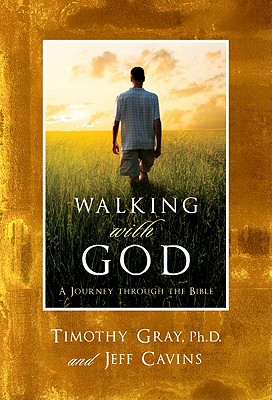 Tim Gray: Absolutely! I love that story because, like many stories in the Old Testament, there’s some stories that are hard for us to digest and follow. What we like to do is break those stories down into parts and show what really is going on. This is a classic example. This idea of God saying “Take your son, your beloved son, your only son Isaac on this mountain and sacrifice him to me,” that seems to depict God as a tyrant. When we get into the narrative, we realize that in the story before that, which Genesis 22 connects by saying “After these things, God said to Abraham…” – well what are “these things” that sparked this command for Abraham to take his son Isaac to Mount Moriah. And what happened before that is Abraham takes Hagar (his wife’s maidservant) and Ishmael, his son, and sends them out of the camp into the wilderness with only one water-skin and no provisions. Basically he’s giving Ishmael a death sentence. Ishmael was going to die but the angel of the Lord intervened and saved Ishmael. What God is teaching Abraham is ‘You just sent Hagar and her only beloved son on this doomed expedition into the wilderness. Now you’re going to experience what that’s like by having a son on a journey that seems to be doomed.’ So it’s basically about Abraham learning what he did with Ishmael was wrong by having him have a similar fate apparently for Isaac. But just as Ishmael was saved by the angel of the Lord, so will Isaac be.
TR: One of the other things you point out in the book is that originally those stories were more connected because the chapters which were later imposed on the Bible weren’t there in the beginning. Were the stories more easily connected in the earlier days?
Tim Gray: Absolutely. It’s going to be around the 9th century A.D. when chapters are added to the Bible. They weren’t there originally at all. One of the things we try to train our readers to see is these connections between stories, that we don’t just move from one story to a different story but that there’s an integration and a connection between these episodes. It changes the whole way you read the Bible.
TR: It seems like a lot of the misconceptions that arise about the Bible come when people take stories in isolation and don’t look at the big picture. What would you say is the big picture of the Bible?
Tim Gray: There’s 73 books in the Bible. Ultimately, all 73 books and all the different characters and subplots are actually serving one larger story, one big plot. As Paul would say in Ephesians, that story is unveiled to be about Jesus. What we’re trying to do is show people what that bigger story is – and that the fall is the problem to which Jesus is the solution. We like to simplify it. 73 books, one story, but at the heart of a story is the plot. And at the heart of a plot is the conflict or problem. Every plot is about a problem that has to be resolved.
TR: In “Walking with God’s” introduction, you write about Jesus revealing the big picture of Scripture to the disciples on the road to Emmaus and how it set their hearts on fire. Do you remember when you first understood the big picture of the Bible and how you reacted?
Tim Gray: It changed my life. I was a freshman in college and decided from that moment on I wanted to study Scripture. It gave me a whole sense of my own identity that I didn’t have. Personally and professionally in teaching Scripture, the most exciting thing about Scripture’s story – it’s 73 books, one story but then we like to tell people, ‘It’s your story.’ When you learn the plot of Scripture, you’re not just learning the plot of a great story; you’re learning your own plot…What a plot is to a story, an identity is to a person. We all need an identity, and our identity is our own personal plot. God gives us an incredible plot in His Scripture and we’ve got to hear that.
To hear the full interview with Tim Gray, visit The Christophers’ podcast page and scroll down to the near-bottom of the page.
Previous Post

April 24, 2012
A Journey Through the Bible: Part 1
Next Post
April 26, 2012 A Man Forever Changed
Browse Our Archives
Select a Category Act One American Idol Andy Griffith Show Audrey Assad Baseball Bible Books Catholic Charities Christmas Christopher Awards Christopher Closeup Christopher News Notes Current Events Down syndrome Education Father Jonathan Morris Father Keller Films Forgiveness Fringe Government Hallmark History Holidays Humor Inspiration Leadership Lost Marriage Media Medical Military Movies Music NY Med Once Upon a Time Once Upon a Time Parenting Patheos Movie Club Person of Interest Politics Pope Francis Prayer Pro Life Saints Senior Citizens Signed Sealed Delivered Special Needs Sports Three Minutes a Day TV Uncategorized Volunteering Women Youth
Select a Month March 2017 February 2017 January 2017 December 2016 November 2016 October 2016 September 2016 August 2016 July 2016 June 2016 May 2016 April 2016 March 2016 February 2016 January 2016 December 2015 November 2015 October 2015 September 2015 August 2015 July 2015 June 2015 May 2015 April 2015 March 2015 February 2015 January 2015 December 2014 November 2014 October 2014 September 2014 August 2014 July 2014 June 2014 May 2014 April 2014 March 2014 February 2014 January 2014 December 2013 November 2013 October 2013 September 2013 August 2013 July 2013 June 2013 May 2013 April 2013 March 2013 February 2013 January 2013 December 2012 November 2012 October 2012 September 2012 August 2012 July 2012 June 2012 May 2012 April 2012 March 2012 February 2012 January 2012
Follow Us!
TAKE THE
Religious Wisdom Quiz
What does Paul tell Timothy to guard in 1 Timothy?
Select your answer to see how you score.
The gospel His heart The church What has been entrusted to his care
Related posts from Christopher Closeup

After Escaping North Korea, One Woman's Act of...


A Deacon's Tools to Build Spiritual Resilience After...
TRENDING AT PATHEOS Catholic

The Parable Of The Sower And The Word...
One of Christ’s most famous parables is that of the sower who...

Rejecting Doom: Christian Hope And Human Action
Christianity is a religion of hope. We are to have hope and...

Why I Choose the Eucharist Over the Sermon
Choose the Eucharist, Not the Sermon What are we supposed to get...

5 Design Elements Found in Spiritually Rooted Homes
Putting Spirituality Into Home Decor Our homes are more than our living...

Credo: A Story of God Told with the...
About 10 years ago, I began to imagine a personal "Credo" that...

The Anatomy of Divine Revelation in Catholic Thought
The claim that God has made Himself known to human beings is...
view all Catholic blogs
Ad-Free & Subscriber Log-In Subscription Support
- About Us
- 2026 Calendar
- Videos
- Podcasts
- Library of World Religions
- Faith In Media Tracker
- Advertise With Us
- Write for Us
- Privacy Policy
- Terms of Service
- Do Not Sell My Data
- Contact Us
- Radiant Digital
- Manage Newsletter Subscriptions
- Unsubscribe From Notifications
- Sitemap
Copyright 2008-2026, Patheos. All rights reserved.
Subscription Support Ad-Free & Subscriber Log-In
Follow Patheos