
BuddhistCatholicContemplativeEvangelicalGeneral ChristianHinduJewishLatter-day SaintMuslimNew VisionsProgressive Christian
Beliefs
- Buddhist
- Catholic
- Contemplative
- Evangelical
- General Christian
- Hindu
- Jewish
- Latter-day Saint
- More Voices
- Muslim
- New Visions
- Pagan
- Progressive Christian
Topics
- Religion News
- Food and Religion
- Sports and Religion
- Religious Art
- Religious Music and Entertainment
- Religious Events
- History and Religion
- Style and Religion
- Politics and Religion
- Women in Religion
- Recreation Outdoors and Religion
- Business Finance and Religion
- Careers Workplace and Religion
- Education and Religion
- Family Parenting and Religion
- Health Fitness and Religion
- Home and Religion
- Relationships and Religion
- Technology and Religion
- Travel and Religion
Columnists
- Buddhist Columnists
- Business Finance and Religion Columnists
- Careers Workplace and Religion Columnists
- Catholic Columnists
- Contemplative Columnists
- Education and Religion Columnists
- Evangelists Columnists
- Family Parenting and Religion Columnists
- General Christian Columnists
- Health Fitness and Religion Columnists
- Hindu Columnists
- History and Religion Columnists
- Home and Religion Columnists
- Jewish Columnists
- More Voices Columnists
- Latter Day Columnists
- Muslim Columnists
- New Visions Columnists
- Nonreligious Columnists
- Pagan Columnists
- Politics and Religion Columnists
- Progressive Columnists
- Recreation Outdoors and Religion Columnists
- Relationships and Religion Columnists
- Religion News Columnists
- Religious Art Columnists
- Religious Events Columnists
- Religious Music and Entertainment Columnists
- Sports and Religion Columnists
- Style and Religion Columnists
- Technology and Religion Columnists
- Travel and Religion Columnists
- Women in Religion Columnists
Resource Library
- 2026 Calendar
- Library of World Religions
- The 100 Most Holy Places on Earth
- Patheos Answers
- Podcasts
- Videos
- Faith Leaders Database
- Anglican Episcopalian
- Bahai
- Baptist
- Buddhism
- Christianity
- Confucianism
- Eastern Orthodoxy
- Hinduism
- Holiness and Pentecostal
- ISKCON
- Islam
- Judaism
- Lutheran
- Methodist
- The Church of Jesus Christ of Latter-day Saints
- New Age
- Paganism
- Presbytarian and Reformed
- Protestantism
- Religion Behind the Scenes
- Roman Catholic
- Scientology
- Shia Islam
- Sikhism
- Sufism
- Sunni Islam
- Taoism
- Zen
- See all religions
Research Tools
 Ad-Free & Subscriber Log-In Subscription Support
Ad-Free & Subscriber Log-In Subscription Support
Follow Patheos 

- Trending:
- Forgiveness
- |
- Marriage
- |
- Consciousness
- |
- Death Penalty
- |
- Election
- |
- Halloween
 Christopher Closeup
- Home
- Catholic
- Religious Music & Entertainment
- The Coach As Wounded Healer
The Coach As Wounded Healer
Last updated on: January 1, 2015 at 11:07 am by Tony Rossi
The Coach As Wounded Healer 2015-01-01T11:07:53-05:00 Tony Rossi
Patheos Explore the world's faith through different perspectives on religion and spirituality! Patheos has the views of the prevalent religions and spiritualities of the world.
Christopher Closeup Podcast – Guest: Joe Ehrmann
You might think that a former defensive lineman for the Baltimore Colts and Detroit Lions would believe a coach’s job—especially a coach of young people—is to teach them to win games. Joe Ehrmann, however, says, “The greatest crisis in America today is a crisis of masculinity…A coach’s responsibilities include helping young people to confront and comprehend the toxic culture that is trying to seduce and shape them.”
Ehrmann came to that belief due to the male influences in his life when he was growing up. When I interviewed him on Christopher Closeup, he explained that he had an angry, verbally abusive, mostly absent father who only gave him approval when he succeeded at a sport. The picture of manhood his father passed on to him was that men were rough, tough and unemotional. In addition, Ehrmann was beaten and raped by a stranger at the age of twelve, leaving him physically and emotionally wounded.
False images of manhood were reflected by coaches for whom Ehrmann played as well. He recalled a basketball game when he was 10-years-old: “The player on top of me wouldn’t allow me to inbound that ball. The coach called time-out…and told me to bring that ball over my head and bring it down on that kid’s face as hard as I could. I knew that didn’t feel right, [but] to validate myself in that coach’s eyes, I went ahead and did that. I split that boy’s nose. He went down on the floor screaming. There was blood everywhere. Afterwards in the locker room, my coach held me up as the epitome of what it means to be a player [that demonstrated] manhood.”
Ehrmann’s propensity for anger and violence lasted many years despite a few positive coaching influences along the way. His healing finally started with help from his wife, Paula, a psychologist. Reading Henri Nouwen’s book, “The Wounded Healer,” was also a major turning point. Ehrmann explains, “All of us, as we go through life…get wounded…Nouwen makes the point that…we really have two choices. One, you can ignore, deny or repress your own woundedness. If you do that, you’ll continue to wound other people with your unhealed wounds…The other choice is to take your own wounds, accept them, bring healing and wholeness into them, then use them as an opportunity to offer other people the chance to heal. So I became a wounded healer.”
One of Ehrmann’s coaching role models is Moses. Though we don’t usually think of the Old Testament prophet in that way, the analogy works. Ehrmann says, “Moses was given this unbelievably difficult coaching job of taking two million people that have just come out of 430 years of slavery, and building them into a team that’s going to represent God’s values. The manifesto of the team is to love God with all your heart, soul, mind and strength—and love your neighbor as yourself. So Moses has to take these relationally, spiritually, and psychologically broken people—and he’s got to rebuild them, help them reformulate who they are.”
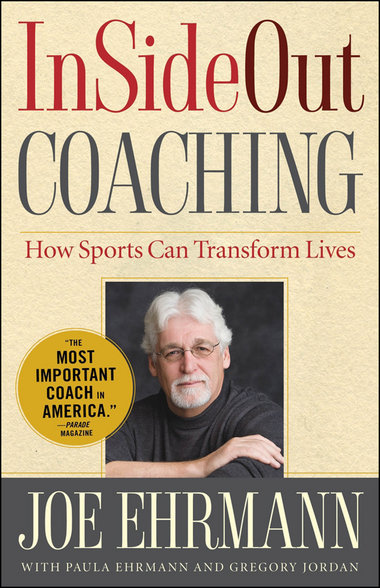 Ehrmann—dubbed “The Most Important Coach in America” by Parade magazine—has now written a book called “InSide Out Coaching: How Sports Can Transform Lives.” He’s also been working with young people, their coaches and even the NFL to promote better coaching philosophies. He says, “I coach to help boys become men of empathy and integrity who will lead, be responsible and change the world for good. That [dictates] how I run my drills, talk to my players, and how I integrate with their parents as well.”
Ehrmann also believes this approach can influence the way young men treat women, saying, “Once you redefine masculinity for boys—understanding that it doesn’t mean power, dominance and control over women, but learning how to be allies and support them—that’s how you bring about radical change [in society].”
Listen to the complete interview with Joe Ehrmann: Christopher Closeup Podcast – Guest: Joe Ehrmann
Photos courtesy Simon and Schuster
Previous Post

February 7, 2012
Saving the Part of Yourself That Matters Most
Next Post
February 9, 2012 Let Freedom Ring
Browse Our Archives
Select a Category Act One American Idol Andy Griffith Show Audrey Assad Baseball Bible Books Catholic Charities Christmas Christopher Awards Christopher Closeup Christopher News Notes Current Events Down syndrome Education Father Jonathan Morris Father Keller Films Forgiveness Fringe Government Hallmark History Holidays Humor Inspiration Leadership Lost Marriage Media Medical Military Movies Music NY Med Once Upon a Time Once Upon a Time Parenting Patheos Movie Club Person of Interest Politics Pope Francis Prayer Pro Life Saints Senior Citizens Signed Sealed Delivered Special Needs Sports Three Minutes a Day TV Uncategorized Volunteering Women Youth
Select a Month March 2017 February 2017 January 2017 December 2016 November 2016 October 2016 September 2016 August 2016 July 2016 June 2016 May 2016 April 2016 March 2016 February 2016 January 2016 December 2015 November 2015 October 2015 September 2015 August 2015 July 2015 June 2015 May 2015 April 2015 March 2015 February 2015 January 2015 December 2014 November 2014 October 2014 September 2014 August 2014 July 2014 June 2014 May 2014 April 2014 March 2014 February 2014 January 2014 December 2013 November 2013 October 2013 September 2013 August 2013 July 2013 June 2013 May 2013 April 2013 March 2013 February 2013 January 2013 December 2012 November 2012 October 2012 September 2012 August 2012 July 2012 June 2012 May 2012 April 2012 March 2012 February 2012 January 2012
Follow Us!
TAKE THE
Religious Wisdom Quiz
I went uninvited before the king, risking death, saying 'If I perish, I perish.' Who am I?
Select your answer to see how you score.
Ruth Esther Deborah Vashti
Related posts from Christopher Closeup

The 2017 Christopher Award winners for TV, Film,...

Jimmy Kimmel Deserves an Emmy For His Job...

Bringing the Future to Hope Valley: A Look...

Discerning God's Will & Adopting Potatoes in "Signed,...
TRENDING AT PATHEOS Catholic

Rejecting Doom: Christian Hope And Human Action
Christianity is a religion of hope. We are to have hope and...

It’s What Comes From Within Which Matters
One of the most difficult things for us to understand is why...

Why I Choose the Eucharist Over the Sermon
Choose the Eucharist, Not the Sermon What are we supposed to get...

5 Design Elements Found in Spiritually Rooted Homes
Putting Spirituality Into Home Decor Our homes are more than our living...

Credo: A Story of God Told with the...
About 10 years ago, I began to imagine a personal "Credo" that...

The Anatomy of Divine Revelation in Catholic Thought
The claim that God has made Himself known to human beings is...
view all Catholic blogs
Ad-Free & Subscriber Log-In Subscription Support
- About Us
- 2026 Calendar
- Videos
- Podcasts
- Library of World Religions
- Faith In Media Tracker
- Advertise With Us
- Write for Us
- Privacy Policy
- Terms of Service
- Do Not Sell My Data
- Contact Us
- Radiant Digital
- Manage Newsletter Subscriptions
- Unsubscribe From Notifications
- Sitemap
Copyright 2008-2026, Patheos. All rights reserved.
Subscription Support Ad-Free & Subscriber Log-In
Follow Patheos